U.S.-Iran War Escalates Amid Growing Fears of Regional Instability and Rises In Arbitrary Executions

U.S.-Iran War Escalates Amid Growing Fears of Regional U.S.-Iran War Escalates Amid Growing Fears of Regional

IInternational experts have reported a uptick of human rights violations committed in Iran, notably arbitrary executions of protestors since January 2026. Credit: Amir Sarabadani/Wikimedia Commons

By Oritro Karim
UNITED NATIONS, Aug 3 2026 – Over the past several weeks, the humanitarian landscape in the Middle East has deteriorated significantly, exacerbated by escalating security concerns and serious human rights violations. In late July, the United Nations (UN) highlighted a sharp uptick in hostilities between the United States and Iran, alongside growing concerns over wider regional instability.

On July 30, the Office for the Coordination of Humanitarian Affairs (OCHA) warned that the “humanitarian consequences of the Middle East escalation are worsening by the day.” The conflict between the United States and Iran has grown increasingly volatile over recent months, with both parties intermittently resuming bombardment following the breakdown of the April ceasefire.

On July 28, Iranian forces attempted a series of ballistic missile attacks targeting U.S. bases in Jordan and vessels in the Strait of Hormuz. This prompted an immediate military response from the U.S. military, with defense officials confirming that it had completed a “heavy wave” of airstrikes targeting numerous bases affiliated with Iran’s Islamic Revolutionary Guard Corps (IRGC).

This recent wave of airstrikes in Iran affected numerous provinces—including Hormozgan, Bushehr, Fars, and Khuzestan—notably impacting the country’s primary oil-producing region. According to the Iranian Ministry of Health, at least 60 civilian deaths and 670 injuries have been recorded over the past month alone. On July 30, a strike in Qeshm in Hormozgan province hit a residential building, killing three civilians, including a two-year-old child.

This conflict has severely disrupted global shipping and oil production, driving a considerable increase in domestic gasoline prices in the U.S. and compounding Iran’s economic collapse. On July 29, United Nations Secretary-General António Guterres expressed concern about the risk of a broader regional conflict if effective diplomacy is not established soon.

Deputy Spokesperson for the Secretary-General, Farhan Haq, told reporters that current developments are “not positive”, noting that Guterres is hoping for an immediate cessation of hostilities. “The Secretary-General has been worried for some time that if the parties do not return to negotiations, you could have a widening of the conflict, and that seems to be what has been happening in recent hours,” said Haq at a press briefing at the UN Headquarters.

“These are not positive developments, and he wants to make sure that the parties can cease fighting and again return to the diplomatic efforts, including the mediation efforts being pressed forward by Pakistan, Qatar and others…Having more parties involved in the fighting, having the fighting spread to a larger number of countries, all of these are adverse developments and could get us into a much worse situation even than before.”

Following discussions with regional allies, U.S. President Donald Trump told reporters on August 1 that he had halted planned military strikes against Iran as negotiations toward a de-escalation of hostilities are scheduled to pick up on August 3. Contingent on both sides “rapidly” securing a deal, Trump told reporters that these plans include frameworks for the reopening of the Strait of Hormuz, which would allow for the immediate decongestion of stalled global cargo traffic and the resumption of commercial oil shipments.

In response, Iranian officials confirmed that Tehran did not ask the U.S. to halt these strikes, stating that Iran remains “on high alert and ready for any eventuality.” As of August 3, no new negotiations were held between the U.S. and Iran. Esmail Baghaie, the spokesperson for Iran’s foreign ministry, has said that there are no plans to send an Iranian delegation, nor to receive any delegations, however diplomatic engagement is ongoing.

Although the Strait of Hormuz is currently closed, Jordan and Egypt remain critical lifelines for humanitarian aid deliveries and medical evacuations for struggling Iranian communities.

Furthermore, Iran continues to grapple with a sharp rise in human rights violations recorded over the course of 2026. Since March 19, the Center for Human Rights in Iran recorded the executions of at least 46 civilians on politically motivated charges. Reflecting a considerable surge in the use of the death penalty to repress civilian dissent, at least 23 of those convicted were protestors arrested during the protests in January.

On July 23, the UN Independent International Fact-Finding Mission on Iran urged Iranian authorities to halt all executions and establish frameworks on the use of the death penalty in accordance with international humanitarian law. The Mission condemned the arbitrary executions of two young protestors, 18-year old Erfan Esfandiari and 23-year old Mohammad Mohammadi on July 19.

In the wake of these executions, Iranian authorities proceeded to publicly execute protestors Amir Hossein Safari and Abolfazl Sepahi following what Amnesty International described as a “grossly unfair mass trail involving dozens of defendants.” Ten additional Iranian men now face an imminent threat of arbitrary execution over their involvement in the January demonstrations, with the Mission calling for an immediate halt to these executions.

“The Iranian authorities are unleashing a horrifying wave of executions and death sentences to punish and suppress dissent and project an image of strength and absolute control in the wake of the January popular uprising and amid ongoing attacks by US and Israeli forces,” said Heba Morayef, Regional Director for the Middle East and North Africa at Amnesty International.

“The muted response from the international community emboldens the Iranian authorities to continue their deadly rampage. UN member states must take urgent coordinated diplomatic action to press the Iranian authorities to halt further executions. They must place Iran’s human rights and impunity crisis high on their agenda, support the creation of an independent international justice mechanism for Iran and urge the UN Security Council to refer the situation in Iran to the International Criminal Court.”

IPS UN Bureau Report


!function(d,s,id){var js,fjs=d.getElementsByTagName(s)[0],p=/^http:/.test(d.location)?’http’:’https’;if(!d.getElementById(id)){js=d.createElement(s);js.id=id;js.src=p+’://platform.twitter.com/widgets.js’;fjs.parentNode.insertBefore(js,fjs);}}(document, ‘script’, ‘twitter-wjs’);  



“Kingston’s Disappointment Should Not Extinguish Our Hope for the Deep Ocean”

“Kingston’s Disappointment Should Not Extinguish Our Hope for the Deep Ocean”

Credit: Joseph Barrientos on Unsplash

By James Alix Michel
VICTORIA, Seychelles, Aug 3 2026 – Earlier this year, I called publicly for a precautionary pause on deep-sea mining, arguing that it is not a rejection of progress, but a commitment to sound science.

I made that appeal because I believed governments meeting this year at the International Seabed Authority (ISA) would finally choose caution over haste. Watching the results emerge from Kingston, Jamaica, over these past weeks, I must admit to real disappointment.

But I want to be equally clear: disappointment is not defeat, and there is still every reason for hope.

The 31st session of the ISA concluded its work in Kingston with the Council ending two weeks of negotiations on 24 July without adopting the long-debated Mining Code. Unresolved issues, ranging from environmental safeguards and liability to inspection, compliance and benefit-sharing, remain exactly that: unresolved.

Governments including France, Costa Rica, South Africa, Mexico, Germany, Palau and Brazil rightly insisted these gaps must be closed before any commercial mining is contemplated. That the Authority could not bridge them after fifteen years of negotiation tells its own story about how far science and governance still lag behind commercial ambition.

James Alix Michel

What troubles me more is what happened alongside those talks. In the same fortnight, the Council extended by five years the exploration contract of Nauru Ocean Resources Inc., a subsidiary of The Metals Company, even as an inquiry into the contractor’s possible non-compliance with its obligations under the UN Convention on the Law of the Sea remained open. This came days after the Seabed Disputes Chamber of the International Tribunal for the Law of the Sea, in Hamburg, ordered the ISA to guarantee the company due process. The optics were unfortunate: an institution meant to safeguard the common heritage of humankind appeared to bend under commercial pressure at the very moment its credibility needed reinforcing.

That pressure has an external source too. The United States, which is not a party to the Law of the Sea Convention and sits outside the ISA altogether, has continued to advance its own unilateral licensing process for the Clarion-Clipperton Zone, the vast Pacific seabed that holds the largest concentration of exploration contracts on Earth. Five applications are already on record, with reports suggesting more may follow. When a single state can simply step outside a multilateral framework and issue permits for a shared global commons, it does not just threaten the ocean floor; it threatens the very idea that humanity can govern anything collectively. That, to me, is Kingston’s deeper failure: not that a code went unfinished, but that the multilateral system protecting our common heritage was tested, and did not hold as firmly as it should.

And yet.

I have spent much of my life in rooms where the odds seemed stacked against the ocean, and I have learned that setbacks in these negotiations are rarely the last word. There is real cause for hope in what else happened in Kingston.

When four deep-sea mining companies sought observer status at the Assembly, dozens of governments pushed back, and the decision was postponed rather than rushed through. Vanuatu brought forward an agenda item on “Ensuring Adequate Scientific Understanding to Support Informed Decision-Making,” precisely the argument I have been making since earlier this year: that we cannot regulate what we do not yet understand. And crucially, the Council did not simply walk away. It agreed a roadmap for further work, inviting states and observers to submit written proposals on the outstanding issues by 1 October 2026. The door to a properly safeguarded process remains open. It has not been slammed shut.

Most encouraging of all is the growing number of nations refusing to be rushed. When I first raised this call earlier this year, more than 40 countries had already backed a moratorium or precautionary pause. Today that number stands at 45, including seven Pacific nations, alongside outright bans by France and by Palau and New Caledonia within their own waters. They are joined by more than 70 companies, 82 financial institutions representing some €24 trillion in assets, and over 900 scientists from more than 70 countries, all saying the same thing: we do not yet know enough to proceed safely.

This is not an anti-mining movement. It is a pro-science movement. Nobody serious is arguing that the world will never need these minerals, or that the seabed must remain untouched forever. What I am arguing, and what the evidence increasingly supports, is that decisions with potentially irreversible consequences for ecosystems we have barely begun to map should not be made under commercial or geopolitical pressure. Scientists directly observed less than a tenth of the size of Belgium’s worth of deep seafloor before these negotiations began. This year’s IUCN Red List found that 62 percent of molluscs known only from hydrothermal vents are now at risk of extinction, many of them identified within the last decade. We are still discovering what we might destroy, and we are only beginning to understand the deep seabed’s role in storing carbon and regulating ocean chemistry.

I say this as someone who has governed a small island nation whose entire future is tied to the health of its ocean. Seychelles did not treat marine protection and economic progress as opposing forces. Through marine spatial planning protecting thirty percent of our waters, and the world’s first sovereign blue bond, we showed precaution can be financed and delivered without halting development. That experience is precisely why I believe a precautionary pause on deep-sea mining is a down payment on progress, not a brake on it.

Small island developing states cannot afford to gamble with the ocean systems that feed us and anchor our economies. I say this with humility: Seychelles has banned deep-sea mining in its own waters under our Marine Spatial Plan, yet is not among the 45 nations formally backing the international moratorium. That gap between what we protect at home and what we champion abroad is one I hope Seychelles, and others like it, will now close.

So my message to fellow leaders, particularly across Africa and the small island states that depend most on healthy oceans, is this:

Kingston’s disappointment is real, but it is not the end of the story. Forty-five nations have already shown that caution and ambition can coexist. I urge every government that has not yet done so, especially those still weighing their position ahead of the October deadline for written proposals, to add its voice to that growing coalition. This is not about obstructing progress; it is about demanding the evidence that ensures whatever progress we make does no lasting harm to the seabed we all share. I also urge regional bodies, from the African Union to Pacific and Caribbean groupings, to adopt common positions, so no single small state stands alone against powerful commercial interests.

The common heritage of humankind deserves patience as much as ambition. Kingston reminded us how much work remains. It also reminded us how many are still willing to do it.

James Alix Michel is the former President of Seychelles (2004-2016), Founder of the James Michel Foundation and the University of Seychelles, and a global advocate for the blue economy, ocean conservation and climate resilience.

IPS UN Bureau


!function(d,s,id){var js,fjs=d.getElementsByTagName(s)[0],p=/^http:/.test(d.location)?’http’:’https’;if(!d.getElementById(id)){js=d.createElement(s);js.id=id;js.src=p+’://platform.twitter.com/widgets.js’;fjs.parentNode.insertBefore(js,fjs);}}(document, ‘script’, ‘twitter-wjs’);  



Saudi Arabia Forms Multinational Red Sea Defence Alliance as U.S.-Iran War Threatens Global Shipping

Galala city, Egypt, the southern exit to the Suez Canal. Credit: Unsplash/M abnodey

By Maximilian Malawista
UNITED NATIONS, Aug 3 2026 – As the United States and Iran continue to escalate with military strikes across both fronts, the conflict took a new turn with Saudi Arabia becoming militarily involved on July 29, following coordinated airstrikes with U.S. Central Command according to the Saudi Ministry of Defence.

These strikes were carried out under what the Kingdom says was its right to self-defense, recognized under Article 51 of the Charter of the United Nations, with the Saudi armed forces coordinating with U.S. Central Command to target Iranian-backed proxies operating from Iraqi territory, after interception of several UAVs which were attempting to target oil facilities in Eastern and Riyadh regions. The Kingdom reiterated that it does not seek escalation but will respond decisively to any aggression directed against it, according to the Saudi Press Agency (SPA).

On Saturday, August 1, U.S. President Donald Trump announced on his platform, Truth Social, that Iran and other Middle Eastern Countries have asked the U.S. to “hold off any attack in that the perimeters of a deal has been agreed to.” Trump added that “This would include the Immediate, Complete, and Total OPENING OF THE HORMUZ STRAIT, and an end to Iran’s nuclear threat.” Following this, the U.S. has canceled a planned attack on Iran, but Tehran still has not claimed that these talks are ongoing, let alone any measure of mediation. The cancellation of the planned attack, however, does not mean U.S. military operations have ceased.

On Sunday, August 2, The Saudi Press Agency reported that HRH Crown Prince Mohammad bin Salman spoke by phone with U.S. President Trump and “stressed the need to prioritize dialogue to reduce escalation and the importance of making every possible effort to achieve calm that paves the way for diplomatic solutions” in order to preserve both regional and international security. Prior to these latest updates, Washington has maintained that the U.S. and Iran were already engaged in what was described as “very friendly negotiations” following a pause in military strikes. However, Tehran had publicly denied holding direct talks with Washington. According to Axios, Oman is leading the mediation effort, with Qatar, Pakistan and Egypt involved alongside Washington envoys.

Last week on July 30, Saudi Arabia announced a multinational Red Sea maritime defense alliance, seeking the support of over 50 countries and organizations. Thirteen countries other than Saudi Arabia have already signed on, including Türkiye, Pakistan, Egypt, Qatar, Kuwait, Bahrain, Nigeria, Jordan, Bangladesh, Yemen, Djibouti and Somalia. Other participating countries have also expressed support and are in the process of completing their internal procedures and approvals to join the declaration.

The declaration remains open to other interested parties. The Gulf states of the United Arab Emirates and Oman have not yet signed, despite having similar security objectives. Representatives from 43 of the 51 countries and organizations invited to join the alliance attended a meeting on Thursday in Riyadh, the headquarters of the operation.

The initiative effectively places Saudi Arabia at the center of multinational maritime security in the Red Sea at a time when U.S. naval resources are increasingly divided between deterring Iran in the Gulf and protecting commercial shipping.

The Saudi Defence Ministry noted that the EU already has a naval protection mission in the Red Sea, with a delegation from the European Union being present at the meeting. Saudi Defence Minister Prince Khalid bin Salman also held a meeting with President Trump and Vice President JD Vance on Wednesday, however he reportedly told Washington that the Kingdom was opposed to further escalation of the wider U.S.-Israel war, and its objective is to “defend itself”.

The Kingdom reportedly told Washington that it can manage the situation with the Houthis in Yemen itself, and does not need the U.S. to get involved.

Why is the Red Sea so crucial?

The Red Sea forms part of the maritime corridor leading to the Suez Canal, through which around 15 percent of global maritime trade moves. When security in the Strait cannot be guaranteed, shipping carriers are rerouted around the Cape of Good Hope to avoid sailing through an active military zone, where cargo is at risk and war-risk insurance premiums can increase significantly.

Beginning in 2023, Houthi attacks on commercial vessels similarly targeted carriers in the Red Sea, which reduced container tonnage moving through the Suez Canal by 82 percent, and increased booking a voyage on short notice from Shanghai to Europe by 256 percent.

The Houthis demonstrated in that conflict that they did not need to strike every ship in order to create an incentive to avoid the Strait. However, when carriers chose to avoid the Strait, major consequences arose, significantly increasing the cost of every ton of cargo.

Rerouting around the Cape of Good Hope can add roughly 3,000 to 3,500 nautical miles, approximately seven to 10 days in additional sailing time, for a Europe to Singapore voyage. For some routes, consequences are substantially greater. A tanker carrying Saudi crude from Yanbu to Taiwan that avoids the Bab el-Mandeb Strait could extend the voyage from 19 to 48 days, adding roughly USD 2.5 million in cost, according to a Reuters analysis based on Kpler and LSEG data.

All of this is compounded by the severe disruption of the Strait of Hormuz, where on Aug 2, only 19 ships transited in 24 hours, representing only 31 percent of pre-conflict traffic, which has limited deadweight tonnage throughput (DWT) to 3.2 million of the 10.3 million pre-conflict average. However, this is an increase from Friday, August 1, where only 10 transits were recorded in 24 hours, marking only 11.4 percent of transits and 1.2 million DWT compared to pre-conflict levels.

Before the conflict, 25 percent of global seaborne oil trade moved through the Strait, alongside 29 percent of global liquefied natural gas trade, 38 percent of liquefied petroleum gas trade, 19 percent of crude oil trade, 19 percent of refined petroleum products trade, and 13 percent of chemical trade. Together, severe disruption of the Strait of Hormuz and Bab el-Mandeb would simultaneously constrain Gulf energy exports and render the shortest maritime route connecting Asia and Europe increasingly untenable for commercial shipping.

IPS UN Bureau Report


!function(d,s,id){var js,fjs=d.getElementsByTagName(s)[0],p=/^http:/.test(d.location)?’http’:’https’;if(!d.getElementById(id)){js=d.createElement(s);js.id=id;js.src=p+’://platform.twitter.com/widgets.js’;fjs.parentNode.insertBefore(js,fjs);}}(document, ‘script’, ‘twitter-wjs’);  



WeRide and GreenMobility Announce Strategic Partnership to Advance Level 4 Autonomous Mobility in Denmark, Marking WeRide’s Entry into the Nordic Region

COPENHAGEN, Denmark, Aug. 03, 2026 (GLOBE NEWSWIRE) — WeRide (Nasdaq: WRD, HKEX: 0800), a global leader in autonomous driving technology, and GreenMobility (Nasdaq Copenhagen: GREENM), Denmark's leading shared electric mobility provider, today announced a strategic partnership to deploy autonomous shared mobility services in Denmark.

The partnership combines WeRide's globally validated Level 4 autonomous driving technology with GreenMobility's leading local fleet operations and shared mobility expertise, making the companies the first to pursue commercial autonomous mobility deployment in Denmark, subject to regulatory approvals.

Illustration of WeRide and GreenMobility's GXR in Copenhagen

Under the partnership, the companies aim to launch public service in the first half of 2027, and all riders will be able to request a ride fulfilled by the GXR, WeRide's latest generation, EU-compliant fully self-driving vehicle.

Denmark marks the sixth European market for WeRide, following recent expansion into Spain and Slovakia. This parallel rollout across multiple markets demonstrates WeRide's ability and ambition to scale autonomous driving globally through an asset-light expansion model built on partnering with leading local mobility operators and fleet owners.

Denmark's advanced digital infrastructure, premium mobility market, leading EV adoption, and progressive regulatory environment makes it an ideal market for autonomous mobility. Together, the companies aim to accelerate the deployment of safe, sustainable, and accessible autonomous transportation while supporting Denmark's broader smart mobility ambitions.

The project will be developed with public sector involvement and in close collaboration with the Danish Road Directorate (Vejdirektoratet), the Danish Road Traffic Authority (Færdselsstyrelsen), with all testing and deployment conducted in accordance with applicable Danish and European Union regulations.

“This partnership marks WeRide's first entry into the Nordic region and another important milestone in our European expansion. By combining WeRide's autonomous driving technology with GreenMobility's local operating capabilities, we are establishing a scalable model for deploying autonomous mobility in new international markets. We look forward to delivering safe, reliable and sustainable autonomous mobility services while helping shape the future of urban transportation in Denmark,” said Tony Han, Founder and CEO of WeRide.

Kasper Gjedsted, Group CEO of GreenMobility, said, “GreenMobility has built operational excellence across millions of shared car trips in Denmark. This partnership lets us take that experience directly into our next growth phase in autonomous mobility. We are proud to team up with a world-class partner like WeRide, whose technology is among the most advanced in the industry, as we together plan to bring autonomous shared vehicles to Denmark.”

Today, WeRide’s autonomous driving products are deployed in more than 40 cities across 12 countries, supported by autonomous driving permits in 8 countries and a global Level 4 fleet of more than 3,000 vehicles. GreenMobility operates the largest free-floating car-sharing network in the Nordic region, with a fleet of more than 1,500 electric vehicles.

Additional information on the launch of the autonomous shared mobility services in Denmark will be communicated in the coming months.

About WeRide

WeRide is a global leader and pioneer in autonomous driving technology, and the world's first publicly listed AV company. Its autonomous vehicles have been deployed across more than 40 cities in 12 countries. Powered by the intelligent, versatile and highly adaptable WeRide One platform, the company provides autonomous driving products and services ranging from Level 2 to Level 4, addressing mobility, logistics and urban services.

About GreenMobility

GreenMobility offers modern urbanites easy, flexible, and sustainable transport in the form of 1,500 electric shared city cars and vans in Copenhagen and Aarhus, Denmark. By combining shared electric fleets with advanced Level 4 autonomous driving technology, GreenMobility is redefining urban transit with safe, accessible, and highly efficient autonomous mobility services.

Media Contacts

WeRide: [email protected]

Green Mobility: [email protected]; +4521418030

Safe Harbor Statement

This press release contains statements that may constitute “forward-looking” statements pursuant to the “safe harbor” provisions of the U.S. Private Securities Litigation Reform Act of 1995. These forward-looking statements can be identified by terminology such as “will,” “expects,” “anticipates,” “aims,” “future,” “intends,” “plans,” “believes,” “estimates,” “likely to,” and similar statements. Statements that are not historical facts, including statements about WeRide’s beliefs, plans, and expectations, are forward-looking statements. Forward-looking statements involve inherent risks and uncertainties, and are subject to regulatory approvals. Further information regarding these and other risks is included in WeRide’s filings with the U.S. Securities and Exchange Commission and announcements on the website of the Hong Kong Stock Exchange.

This press release does not constitute a company announcement under the rules of Nasdaq Copenhagen or the EU Market Abuse Regulation (MAR), and any inside information relating to GreenMobility is or will be disclosed separately through a company announcement via Nasdaq's Company News Service in accordance with GreenMobility's disclosure obligations as an issuer on Nasdaq Copenhagen. Further information regarding risks relating to GreenMobility is included in its company announcements and annual/interim reports, available at greenmobility.com/investors.

All information provided herein is as of the date of this press release. WeRide and/or GreenMobility do not undertake any obligation to update any forward-looking statement, except as required under applicable law.

A photo accompanying this announcement is available at https://www.globenewswire.com/NewsRoom/AttachmentNg/67199eac-af1a-49e4-a59d-de558f59eee2


GLOBENEWSWIRE (Distribution ID 9802309)

Rohingya Repatriation: A Roadmap Without a Road

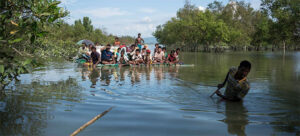
Rohingya refugees cross the Naf River on a makeshift raft while fleeing violence in Myanmar, on their way to Bangladesh. Credit: UNICEF/Mackenzie Knowles-Coursin

By Mohammad Zaman
VANCOUVER B.C., Canada, Aug 3 2026 – The Rohingya crisis remains one of the most enduring humanitarian and political failures in South and Southeast Asia. Since the 2017 mass expulsion from Myanmar’s Rakhine State, Bangladesh has hosted more than one million refugees in Cox’s Bazar and Bhasan Char, while Myanmar has failed to create conditions for safe return. What began as an emergency response has hardened into protracted displacement marked by statelessness, insecurity, aid dependency, and diplomatic fatigue. Repatriation is repeatedly presented as the preferred durable solution, yet every major attempt has failed because the core political question remains unresolved: the Rohingya cannot safely return to a state that denies them citizenship, protection, and equal belonging.

In 2017, only months after the largest influx, Bangladesh and Myanmar signed a bilateral Memorandum of Arrangement. It promised a time-bound repatriation process, but it was non-binding, weakly enforced, and silent on the guarantees most essential to return: citizenship, freedom of movement, property restitution, and independent monitoring inside Rakhine. Bangladesh, facing demographic, environmental, and political pressure, needed a pathway to reduce the burden of hosting refugees. Myanmar, by contrast, had incentives to delay, control, and symbolically manage the process without addressing the legal and security conditions that caused the exodus.

Three major repatriation efforts since 2017 reveal the same pattern. Attempts in 2018 and 2019 collapsed because refugees refused to return without credible guarantees of safety, citizenship, and dignity. A China-facilitated initiative in 2023 proposed a pilot return of several thousand people and arranged verification visits by Rohingya representatives to Rakhine. It also stalled. Cyclone damage, renewed fighting, and widening armed conflict made even limited returns impractical. More importantly, refugees remained unconvinced. Their reluctance was not resistance to return; it was a rational response to risk. Returning to fenced villages, transit camps, or controlled areas without rights would merely convert exile in Bangladesh into containment in Myanmar.

Dr Mohammad Zaman

These failures expose the central flaw in the repatriation agenda: it has prioritized the movement of people over the creation of a solution. Success cannot be measured by border crossings alone, but by whether returnees can live safely as citizens with restored rights, homes, livelihoods, and community security. For the Rohingya, Myanmar’s 1982 citizenship framework, restrictions on movement, communal segregation, and discriminatory administration remain decisive barriers. The 2021 military coup further weakened prospects for accountability and reform. Since then, Myanmar has fragmented into multiple conflict zones, and Rakhine has become a battlefield involving the military, the Arakan Army, and other armed actors. Bangladesh is therefore no longer dealing only with a reluctant state authority; it must navigate a shifting territorial reality in which non-state actors control or contest areas central to any return.

The political problem is both domestic and regional. Domestically, Myanmar’s state-building project has excluded the Rohingya by portraying them as outsiders rather than citizens. Without recognition of Rohingya identity and legal status, administrative repatriation will remain cosmetic. Regionally, the crisis is shaped by strategic interests. China has mediated because stability in Myanmar affects its investments and influence, but its diplomacy has emphasized state-to-state negotiation more than rights-based accountability. India has balanced humanitarian concern with security and geopolitical interests, while ASEAN has struggled to move beyond cautious consensus and non-interference. Western governments have condemned atrocities and supported accountability efforts, but sanctions and legal cases have not changed conditions on the ground. The result is a fragmented diplomatic landscape in which no actor has combined sufficient leverage, consistency, and political will to compel Myanmar toward a rights-based solution.

Bangladesh’s position is increasingly difficult. Its initial humanitarian generosity has become a long-term national burden. The camps place pressure on land, forests, water, public services, and local labour markets. Security concerns have grown as trafficking, armed activity, and criminal networks exploit a population with limited mobility, education, and livelihood opportunities. Declining humanitarian funding has deepened frustration: reduced food rations, health services, and education increase despair and encourage dangerous onward movement by sea to Indonesia, Malaysia, and Thailand, where conditions are often insecure. Yet Bangladesh’s legitimate burden cannot justify premature repatriation. Any return must be voluntary, safe, rights-based, and dignified.

A critical analysis must also recognize the limits of humanitarianism. Aid keeps people alive, but it cannot resolve statelessness or political exclusion. The international response has often separated relief, justice, and diplomacy into disconnected tracks: humanitarian agencies sustain survival in Bangladesh; lawyers pursue accountability; diplomats negotiate repatriation frameworks; and development actors support host communities. Each track is necessary, but together they have not formed a coherent strategy. The Rohingya have too often been treated as beneficiaries rather than political stakeholders. A durable solution requires their participation in defining return conditions, monitoring mechanisms, citizenship pathways, education policy, and community security arrangements. The newly formed Rohingya Repatriation Committee has to address all of the above in finding a sustainable solution.

The road ahead must be realistic rather than rhetorical. Repatriation should remain the long-term objective, but only when it is safe, voluntary, dignified, and sustainable. This requires verifiable changes inside Rakhine: citizenship or a credible pathway to citizenship, freedom of movement, access to services, restoration or compensation for property, and protection from military, police, and armed-group abuse. Any future framework must include independent international monitoring with meaningful access to return areas. Diplomacy must also adapt to Myanmar’s altered conflict map by engaging relevant actors without legitimizing abuses or abandoning principles. Bangladesh will need pragmatic but principled engagement with the junta, the Arakan Army, regional powers, and international organizations.

Meanwhile, the camps in Bangladesh cannot remain waiting rooms for an indefinitely delayed return. Refugees need education, skills training, legal protection, and limited livelihood opportunities to prevent social deterioration and prepare for eventual reconstruction in Rakhine. These measures should not be framed as local integration against Bangladesh’s wishes, but as human-capital preservation and crisis management. International burden-sharing must become concrete: donors should sustain aid, expand resettlement for vulnerable cases, support host communities, and coordinate pressure on Myanmar. Accountability mechanisms should continue because impunity is one reason repatriation remains unsafe.

Ultimately, the Rohingya repatriation crisis is not a logistical failure but a political one. Buses, refugee lists, reception centres, and pilot projects cannot substitute for rights, security, and recognition. Bangladesh seeks relief, Myanmar seeks control, regional powers seek stability, and donors seek a manageable humanitarian file. The Rohingya seek what repatriation is supposed to mean: return to their homeland as citizens with dignity. Until diplomacy is anchored in that principle, repatriation attempts will continue to produce announcements without arrivals, agreements without trust, and roadmaps without roads. The way forward requires pressure, patience, and a shift from counting potential returnees to building the conditions under which return becomes a restoration of justice rather than an act of desperation.

Dr. Mohammad Zaman is an internationally recognized expert in resettlement and development. He has contributed many op-eds on the Rohingya crisis. Dr. Zaman’s recent edited book (co-editors Robert Anderson and Kawser Ahmed) is titled Rohingya Stories: History and Geopolitics in a Multipolar World (Springer, 2025).

IPS UN Bureau


!function(d,s,id){var js,fjs=d.getElementsByTagName(s)[0],p=/^http:/.test(d.location)?’http’:’https’;if(!d.getElementById(id)){js=d.createElement(s);js.id=id;js.src=p+’://platform.twitter.com/widgets.js’;fjs.parentNode.insertBefore(js,fjs);}}(document, ‘script’, ‘twitter-wjs’);