East Asia and Pacific Faces a USD 900 Billion Maritime Investment Challenge

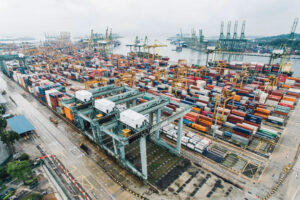
A container port in Bukit Merah, Singapore. Credit: Unsplash/CHUTTERSNAP

By Maximilian Malawista
UNITED NATIONS, Jul 31 2026 – East Asia and the Pacific’s (EAP) maritime system has powered the region’s rise as the world’s largest trading and manufacturing center, but the infrastructure supporting that system has become increasingly vulnerable.

According to a new World Bank report, EAP will require nearly USD 900 billion in maritime investment through 2040, as aging vessels, growing trade volumes, and the transition towards alternative fuels place pressure on vital shipping networks propping up the region’s rapid economic growth.

Container trade across the region is projected to grow by 3.5 percent to 4 percent annually over the next decade, meaning ports have to build the additional capacity to accommodate approximately 300 million twenty-foot equivalent units (TEUs) by 2040. The World Bank estimates that modernizing ports will require USD 180 billion through 2040, while more than USD 280 billion will be needed to replace and upgrade regional and domestic fleets.

Such investment comes as maritime transport remains a major contributor to economic activity across the region. Maritime trade in the region supports up to USD 3.7 trillion in economic activity, moving over 6 billion tons of cargo, approximately half of the entire seaborne cargo trade. For every ton of cargo moved through the region’s ports, approximately USD 155 in overall economic output is generated, alongside USD 75 in direct GDP. A ton of imported steel, for example, can become an input for manufacturers producing automobiles, machinery or construction materials, generating additional economic activity well beyond the initial movement of the cargo through the port.

EAP’s role in global maritime trade is particularly significant when looking at the countries that border the Strait of Malacca, where an estimated 38 percent of global maritime trade passed through in 2023, according to the OECD. More than 100,000 vessels transit the Strait of Malacca annually, making it the busiest maritime chokepoint globally, with more than twice the traffic of the Strait of Hormuz under normal conditions.

In Singapore, merchandise trade–the combined value of goods imported and exported– reached USD 964 billion in 2024, equivalent to approximately 179 percent of the country’s USD 540 billion GDP. Singapore’s ports simultaneously handled approximately 41 million TEUs of container traffic, and processed 295 million tons of seaborne trade, making it the second busiest container port in the world. In neighboring Malaysia, merchandise trade reached approximately USD 631 billion, equivalent to nearly 150 percent of its USD 422 billion GDP, while its ports handled another 28 million TEUs, processing 447 million tons of seaborne trade, with Port Klang, Malaysia’s main port, being the 10th-busiest port in the world. Indonesia processed the greatest volume of the three nations, at 900 million tons.

China demonstrates the scale at which the region’s largest ports are already operating, and how investment in automation and digital infrastructure can increase their capacity. The Port of Shanghai became the first in the world to handle more than 50 million TEUs in 2024, while its newest automated terminals require approximately 70 percent less labor while achieving 30 percent higher productivity. Container vessels spend an average of only 1 to 1.2 days at Chinese ports, compared with the Port of Los Angeles where container vessels spend an average of two days. For reference, six of the top 10 busiest ports in the world are located in China, demonstrating its role in global maritime connectivity.

Beyond the direct costs of port operations, ships can spend up to 9 percent of their time waiting at anchorage. These delays can leave vessels with less time to complete subsequent legs of a voyage, encouraging higher sailing speeds and increasing fuel consumption and operating costs. An IMO-backed study found that optimizing container-ship speeds around expected port arrival times could reduce average fuel consumption by approximately 14 percent per voyage. Greater predictability and faster turnaround can therefore allow ports and vessels to move cargo more efficiently while reducing fuel costs and emissions—an increasingly important advantage as EAP prepares to accommodate an additional 300 million TEUs by 2040.

While premier global ports require significant investments in automation and new technology to increase efficiency and expand potential TEU throughput, smaller ports can achieve substantial results through simpler, less capital-intensive infrastructure improvements.

At the Port of Funafuti in Tuvalu, improvements as basic as paving cargo-handling areas and improving drainage reduced cargo-handling breakdowns by 80 percent and cut average vessel turnaround from seven days to between two and three days. These gains show that the approach to modernizing ports in the region is not uniform. Some ports will require more advanced technology and higher investment while others simply need to revitalize their existing systems, in accordance with the volume of cargo their ports already receive.

Modernizing ports, however, addresses only one side of the region’s maritime infrastructure challenge. The vessels docking at ports are themselves aging. Replacing and upgrading vessels operating within and between economies across EAP will require more than USD 280 billion through 2040. Of that total, approximately USD 150 billion will be needed to renew domestic fleets and another USD 97 billion to replace regional vessels, with dual-fuel capability adding USD 36.5 billion in additional costs.

The investment is not solely about expanding capacity. Significant portions of the region’s fleets are already more than 25 years old, making vessels more expensive to maintain, less fuel efficient and more susceptible to breakdowns and accidents. The World Bank estimates that replacing just 30 percent of domestic vessels by 2035 with ships meeting international standards could cut accident rates in half.

The reliability of these vessels also carries consequences beyond the shipping industry, particularly for the region’s archipelagic economies. In the Philippines, 98 percent of inter-island trade in food, fuel, and other goods depends on domestic shipping. Across Southeast Asia in general, maritime networks are critical to regional food trade, with rice shipments alone supplying more than 60 million people across EAP.

Disruptions caused by aging or unreliable vessels can therefore extend beyond higher costs for shipping companies, affecting the movement and price of essential goods in communities dependent on maritime transport.

Yet the largest individual component of the region’s maritime investment requirement lies not in ports or vessels, but in the fuels that will power them.

Developing supply chains for alternative marine fuels could require approximately USD 433 billion through 2040. Green ammonia alone could require approximately USD 310 billion, followed by USD 81 billion for green methanol and USD 42 billion for renewable liquefied natural gas (LNG).

The scale of the required investment reflects how early the transition remains. More than 99 percent of marine fuel consumed in 2025 was still conventional fuel, while fuel accounts for approximately 40 to 60 percent of vessel operating costs, according to the report.

Transitioning away from those fuels requires more than replacing engines. New fuels must be produced, transported, stored, and ultimately supplied to vessels through new bunkering infrastructure at ports, effectively requiring the development of new maritime energy supply chains alongside the existing system.

The transition also presents a coordination challenge. Shipowners have limited incentive to pay premiums for dual-fuel vessels without confidence that alternative fuels will be widely available, while ports and fuel producers face similar uncertainty about investing in bunkering and production infrastructure without sufficient demand. The World Bank argues that predictable regulation and coordinated investment will be necessary to develop vessels, fuel production and port infrastructure simultaneously.

The nearly USD 900 billion investment requirement ultimately extends across every link of the maritime system. Ports will have to accommodate hundreds of millions of additional containers through a combination of new capacity, automation and basic infrastructure improvements, while aging domestic and regional fleets will require replacement on a massive scale. At the same time, the transition toward alternative fuels will require not only new vessels, but the development of entirely new production, storage, transport and bunkering networks.

Financing this maritime venture through 2040 is not the only challenge. The investment must be coordinated across ports, vessels, and fuel supply chains so that each leg of the network can develop alongside others, matching the volume of cargo that moves through rapidly growing region.

IPS UN Bureau Report


!function(d,s,id){var js,fjs=d.getElementsByTagName(s)[0],p=/^http:/.test(d.location)?’http’:’https’;if(!d.getElementById(id)){js=d.createElement(s);js.id=id;js.src=p+’://platform.twitter.com/widgets.js’;fjs.parentNode.insertBefore(js,fjs);}}(document, ‘script’, ‘twitter-wjs’);  


US Casualty Figures Keep Fluctuating in War with Iran

Images of the Pentagon, Washington DC. Credit: Kevin Doyle / Unsplash

By Thalif Deen
UNITED NATIONS, Jul 31 2026 – An age-old axiom in Statistics reads : Figures Cannot Lie, But Liars Can Figure.

And more so, in military conflicts, including the five-month-old US-Iran war, where casualty figures are difficult to track down because of lack of transparency and false accounting.

According to CNN, the Pentagon updated its war casualty database last week, recording more than 140 additionally wounded, and restoring the four soldiers killed due to Iranian strikes amid questions about a lack of transparency over the war’s toll.

The Pentagon drew scrutiny from media outlets and lawmakers last week when the number of US troops killed and wounded decreased in the Defense Casualty Analysis System, or DCAS, as Iranian attacks continued. CNN observed fluctuating casualty totals when monitoring the site on a minute-by-minute basis last week.

Pentagon updates Iran war casualty count to 624, restoring 4 deaths to tally, CNN’s Davis Winkie reports on why casualty numbers decreased & were later revised.

The Iranian government, not surprisingly, hasn’t provided any casualty figures at all.

In a bygone era, the United States reportedly suffered 58,281 military deaths in the Vietnam War and 2,459 military deaths during the war in Afghanistan.

The exact breakdown of total casualties—including deaths and those wounded in action (WIA)—differs significantly between the two conflicts:

Stephen Zunes, a professor of Politics at the University of San Francisco specializing in Middle Eastern politics, told Inter Press Service (IPS) many thousands of Iranians, Lebanese, and others have been killed as a result of the U.S. war on Iran but Americans–as in previous wars–tend to focus on U.S. casualties. Though they have thankfully been limited, the eighteen fatalities and more than 600 wounded–some of them seriously–have become a major focus of war opponents.

Trump has tried to downplay and manipulate these figures by comparing the casualties with other U.S. wars which included significant ground operations, claiming without evidence that the dead soldiers strongly supported the war, and undercounting those wounded by initially only listing those with severe injuries, said Zunes.

More recently, he pointed out, the administration was caught placing those killed and wounded, subsequent to the collapse of the Memorandum of Understanding with Iran, in a separate category than those killed and wounded during the first phase of the war, thereby lessening the overall total.

“Such efforts are only strengthening antiwar sentiment in Washington and elsewhere, adding to the upset by veterans and others over Trump’s draft dodging during the Vietnam War and his insults of those who fought in unpopular conflicts, including war heroes”.

During his 2016 campaign against Hillary Clinton, and to a somewhat lesser extent in his 2024 campaign against Kamala Harris, he portrayed himself as the antiwar candidate who opposed Democrats’ “forever wars” and who as a president would “bring our troops home.” As U.S. casualties in the Middle East mount, his credibility will only be eroded further, declared Zunes.

Meanwhile, a group of Democratic Senators sent a letter last week to Defense Secretary Pete Hegseth requesting a “comprehensive accounting” about the number of service members wounded or killed.”

The Senators wrote: “First, we wish to honor the service members who have lost their lives in Operation Epic Fury and extend our deepest condolences to their families. We thank all those who continue to serve in harm’s way. Their sacrifice is why we write to express our concern regarding the Department of Defense’s (DoD or the Department) public reporting and statements on U.S. military casualties associated with Operation Epic Fury.

We formally request a comprehensive accounting of the number of service members who have been killed, wounded, or injured in support of the operation. The American people, Congress, service members, and their families are entitled to a full and accurate accounting of the human costs of war. The information currently available to the public suggests that the Department has not consistently provided timely and comprehensive public casualty reporting throughout the conflict.

The Pentagon’s Defense Casualty Analysis System (DCAS), which the Department has described as being “regularly updated,” has reported inconsistent casualty figures, raising additional questions about the transparency and reliability of the Department’s public reporting and statement.”

IPS UN Bureau Report


!function(d,s,id){var js,fjs=d.getElementsByTagName(s)[0],p=/^http:/.test(d.location)?’http’:’https’;if(!d.getElementById(id)){js=d.createElement(s);js.id=id;js.src=p+’://platform.twitter.com/widgets.js’;fjs.parentNode.insertBefore(js,fjs);}}(document, ‘script’, ‘twitter-wjs’);  


Univar Solutions Recognizes Top Transportation Partners at Annual Carrier Awards

DOWNERS GROVE, Ill., July 30, 2026 (GLOBE NEWSWIRE) — Univar Solutions LLC (“Univar Solutions” or “the Company”), a leading global solutions provider to users of specialty ingredients and chemicals, today announced the recipients of its annual Carrier Awards, recognizing transportation solution providers that demonstrate outstanding performance, partnership and commitment to safe, reliable service across North America.

Presented during the Company’s annual carrier recognition event, the awards celebrate carriers whose service excellence help Univar Solutions keep essential chemicals and ingredients moving for customers and suppliers. Honorees are selected for their strong performance in areas such as safety, on-time delivery, responsiveness, capacity support, data connectivity and overall customer experience.

“Reliable transportation is essential to how we serve our customers and suppliers every day,” said Rob McRae, Vice President of Transportation, North America for Univar Solutions. “This year’s award recipients consistently showed what strong carrier partnerships look like—operating safely, communicating clearly and bringing practical solutions that help us deliver with confidence in a dynamic supply chain environment.”

As Univar Solutions continues to deliver on its commitment to reliability through safety, service and expertise, the annual Carrier Awards recognize partners across key transportation categories, including regional, bulk, truckload and less-than-truckload (LTL) service.

The Most Valuable Partner award is presented annually to the carrier that goes above and beyond to support Univar Solutions and its customers through exceptional service, creative problem solving and a strong commitment to partnership.

The 2026 MVP Carrier: Addison Transportation

The 2026 Award Segment Winners

  • Connected Carrier of the Year – For Outstanding Performance in Status Event Compliance: Barto Trucking
  • Always On Time Award – For Outstanding Performance in On-Time Delivery: Southeastern Freight Lines
  • ChemCare East Region Carrier of the Year: Freehold Cartage
  • ChemCare West Region Carrier of the Year: Steve Forler
  • ITS Carrier of the Year: Roar Logistics
  • Canada East Region Carrier of the Year: Soobz Transport
  • Canada West Region Carrier of the Year: T.E.A.M.S Transport

Honorable Mentions – Excellence in Service and Partnership

  • Superior Excellence in Service and Partnership:
    • R & L Transport
    • James J Williams Bulk Service Transport
    • Roughrider
    • Old Dominion Freight Line
    • SAIA
    • Hazpro Transportation
    • Oak Harbor Freight Lines
    • Reliable Liquid Transport
    • Dixon Bros.
  • Excellence in Service and Partnership:
    • Highway Transport
    • Apex Logistics
    • Ross Express
    • PITT OHIO
    • A. Duie PYLE
    • Quality Carriers
    • Harms Pacific Transport
    • Midcork Transport
    • Quest Liner

“We are grateful for the dedication of our carrier network and proud to recognize this year’s award winners,” said Travis Vedral, Senior Director of Transportation, Systems and Strategies for Univar Solutions. “Their focus on safe operations, disciplined execution and responsive service strengthens the experience we provide to customers and suppliers. Congratulations to each honoree and thank you for helping us raise the standard for transportation performance.”

About Univar Solutions
Univar Solutions is a leading global specialty chemical and ingredient distributor representing a premier portfolio from the world’s leading producers. With one of the industry’s largest private transportation fleets and technical sales force, unparalleled logistics know-how, deep market and regulatory knowledge, formulation and recipe development, and leading digital tools, the Company is well-positioned to offer tailored solutions and value-added services to a wide range of markets, industries, and applications. While fulfilling its purpose to help keep communities healthy, fed, clean, and safe, Univar Solutions is committed to helping customers and suppliers innovate and focus on Growing Together. Learn more at univarsolutions.com.

Forward-Looking Statements
This communication contains “forward-looking statements” under applicable law regarding financial and operating items relating to the Company’s business. Forward-looking statements generally can be identified by words such as “believes,” “expects,” “may,” “will,” “should,” “could,” “seeks,” “intends,” “plans,” “estimates,” “anticipates” or other comparable terms. All forward-looking statements made in this communication are qualified by this cautionary language.

Forward-looking statements are subject to known and unknown risks and uncertainties, many of which may be beyond the Company's control, that could result in expectations not being realized or could otherwise materially and adversely affect the Company's business, financial condition, results of operations or cash flows. Although the forward-looking statements are based on what management believes to be reasonable assumptions, we caution you that the forward-looking information presented in this communication is not a guarantee of future events or results, and that actual events or results may differ materially from those made in or suggested by the forward-looking information contained in this communication. For additional information regarding factors that could affect the Company, please see the Company's most recent annual report and other financial reports, including the information set forth under the caption “Risk Factors.” Any forward-looking statements represent the Company's views only as of the date of this communication and should not be relied upon as representing the Company's views as of any subsequent date, and the Company undertakes no obligation, other than as may be required by law, to update any forward-looking statement.

FOR ADDITIONAL INFORMATION:

Media Relations
Dwayne Roark
+1 331-777-6031
[email protected]

A photo accompanying this announcement is available at https://www.globenewswire.com/NewsRoom/AttachmentNg/fc6c8c44-4fed-4968-92e3-6589571a57c4


GLOBENEWSWIRE (Distribution ID 9801362)

GTCFX Wraps Two Days of Market Dialogue at Wiki Finance Expo Hong Kong 2026

DUBAI, United Arab Emirates, July 30, 2026 (GLOBE NEWSWIRE) — GTCFX concluded its participation in Wiki Finance Expo Hong Kong 2026 on 24 July, closing two days at the Hopewell Hotel in Wan Chai that brought the broker face-to-face with traders, investors, and industry professionals from across the region and beyond.

GTCFX welcomed visitors and functioned as a WikiEXPO HK 2026 Influence Partner. Discussions covered market conditions, developments in trading technology, and opportunities for collaboration across the brokerage and fintech.

Jameel Ahmed, Global Chief Analyst at GTCFX, contributed to the expo's speaking programme through a panel discussion about “Global Financial Markets Outlook H2 2026,” which examined prevailing market conditions and the macroeconomic themes shaping the remainder of the year.

Speaking on the panel, Ahmed pointed to the role that in-person events continue to play in an industry that has moved almost entirely online.

“In an increasingly digital and virtual world, meeting face to face is still how relationships get built,” he said. “Investment is ultimately a form of trust, and an event like this is where the foundation for a long-term relationship starts. Being able to sit down with a prospective broker or client in person is about as transparent as it gets.”

He also noted the value of bringing multiple providers into the same room. “Attendees can speak to a range of investment providers over the course of two days and compare what each of them offers. Competition is good for any industry, and that supports healthy market development.”

Asked what individual investors should focus on in a fast-moving market environment, Ahmed avoided technical prescriptions in favour of a simpler point.

“Client education and market knowledge never stop, and GTCFX invests heavily in this, because no two days — and no two trading sessions — in this market are ever the same,” he said. “Consider how much the world has changed over the past couple of years, including the most recent geopolitical developments. Investors need to stay alert to shifts in market sentiment, both for their own understanding and for how they think about their strategies.”

Across the two days, GTCFX met traders exploring new opportunities, affiliate and B2B partners, and professionals working across the wider services community, intending to continue well beyond the expo floor.

Media Contact

Website: https://www.gtcfx.com/

Email: [email protected]

Photos accompanying this announcement are available at 
https://www.globenewswire.com/NewsRoom/AttachmentNg/5671228d-6f85-4623-8acc-5df15e76a10b
https://www.globenewswire.com/NewsRoom/AttachmentNg/66068e0c-e852-47c3-9f04-38266feab4a3


GLOBENEWSWIRE (Distribution ID 9800948)

تم اختيار Changan ضمن قائمة Kantar BrandZ لأفضل 50 علامة تجارية صينية عالمية للعام الثالث على التوالي

دبي, July 30, 2026 (GLOBE NEWSWIRE) —

أُدرجت Changan Automobile ضمن تصنيف Kantar BrandZ Top 50 Chinese Global Brand Builders   لعام 2026، ولذك للعام الثالث على التوالي، مواصلةً تقدمها في الترتيب، كما حجزت مكانًا لها ضمن قائمة Top 10 Chinese Global Auto Brands لعام 2026.

استنادًا إلى تحليل متعدد الأبعاد لبيانات السوق، ورؤى المستهلكين، وقوة العلامة التجارية، وحضورها العالمي، يُقيّم التصنيف العلامات التجارية الصينية عبر 11 سوقًا رئيسة و15 فئة أساسية. ويعكس إدراج Changan في التصنيف للعام الثالث على التوالي تنامي حضور علامتها التجارية لدى المستهلكين حول العالم، ليس فقط بصفتها شركة مصنّعة للسيارات، بل أيضًا باعتبارها رائدة في مجالات التكنولوجيا والاستدامة والتصميم.

حضور عالمي وجذور محلية وتميّز قائم على التكنولوجيا

شهدت Changan خلال الاثني عشر شهرًا الماضية محطات عالمية بارزة، من بينها شراكتها الاستراتيجية مع منتخب البرتغال لكرة القدم، وإطلاق مركبتها الثلاثين مليونًا من علامتها التجارية الخاصة. واليوم، يمتد حضور Changan إلى 129 دولة ومنطقة، مدعومًا بـ22 قاعدة تصنيع خارجية للمركبات، و93 منشأة إنتاج، وأكثر من 19 ألف نقطة بيع وخدمة. كما تستند ركائزها التقنية الثلاث الأساسية   SDA Intelligence، وBlueCore، وGolden Shield Battery إلى اختبارات صارمة في ظروف التشغيل الفعلية، بدعم من شبكة عالمية تعاونية للبحث والتطوير تمتد عبر ست دول وعشرة مواقع، تشمل الصين وإيطاليا والمملكة المتحدة ودولًا أخرى.

من مجرد حضور إلى قبول واسع: زخم Changan في الشرق الأوسط وأفريقيا

في منطقة الشرق الأوسط وأفريقيا، وسّعت Changan شبكة وكلائها، وأطلقت طرازات جديدة مصممة بما يتوافق مع تفضيلات الأسواق المحلية، كما استثمرت في شراكات رياضية، ومنافسات شبابية، ومبادرات للتعليم التكنولوجي، لتنتقل علامتها التجارية منمرئيةإلىمحطّ ترحيب وقبول“.

وقال السيد Xiao، المدير العام لوحدة أعمال Changan في الشرق الأوسط وأفريقيا:

إن وجودنا ضمن قائمة BrandZ Top 50 لثلاث سنوات متتالية، وانضمامنا اليوم إلى قائمة أفضل 10 علامات سيارات صينية عالمية، يعكس الثقة التي يضعها العملاء في Changan. وفي مختلف أنحاء الشرق الأوسط وأفريقيا، يختار المزيد من السائقين سياراتنا، وينضم المزيد من الشركاء إلى شبكتنا. كما تؤكد المكانة المرموقة لتصنيف BrandZ التزامنا الطويل الأمد تجاه هذه المنطقة.”

Vast Ocean Plan 2.0 محطة تعكس تحولًا أوسع

في عام 2023، أطلقت Changan مبادرة “Vast Ocean Plan”، والتي جرى تطويرها استراتيجيًا إلى “Vast Ocean Plan 2.0” في أبريل من هذا العام. ويُدخل هذا التطور عناصر التنمية الطويلة الأمد، والتوطين، وبناء القدرات المؤسسية، وممارسات الأعمال المسؤولة ضمن الإطار الاستراتيجي للمبادرة. كما يوسّع مسار العولمة لدى Changan ليتجاوز تصدير المنتجات، ويشمل التصنيع، والتجارة، والاستثمار، والخدمات.

ويجسد استمرار حضور Changan وتحسن ترتيبها في تصنيف Kantar BrandZ Top 50 Chinese Global Brand Builders تحولًا نوعيًا في مسيرة العلامات التجارية الصينية، من مجردالتوسع عالميًاإلىترسيخ جذور محليةفي الأسواق الدولية. وانطلاقًا من هدفها المتمثل في بيع 1.5 مليون مركبة خارج الصين بحلول عام 2030، تواصل Changan بناء علاقات قوية وذات معنى مع المستهلكين في مختلف الأسواق العالمية، مع تركيز خاص على منطقة الشرق الأوسط وأفريقيا.

معلومات الاتصال:

Chongqing Changan Automobile Co., Ltd.

البريد الإلكتروني:  [email protected]

ثمّة صورة مرفقة بهذا الإعلان على:

https://www.globenewswire.com/NewsRoom/AttachmentNg/5082a7a9-7fbe-4567-9be6-838b27453847 


GLOBENEWSWIRE (Distribution ID 9800944)

Lantronix and Swarmer Collaborate to Create Custom Compute Module for Group 1 Unmanned Aerial Systems

IRVINE, Calif., July 30, 2026 (GLOBE NEWSWIRE) — Lantronix Inc. (Nasdaq: LTRX), a global provider of Edge AI and Industrial IoT solutions that power NDAA-compliant unmanned systems, critical infrastructure, and resilient enterprise networks, today announced a collaboration with Swarmer, Inc (Nasdaq: SWMR), a drone autonomy software company whose technology has supported more than 100,000 real-world combat missions in Ukraine since April 2024, to create a custom compute platform optimized for Group 1 UAS. Both companies are focused on accelerating deployment of FPV and other small, low-cost drones for Ukraine, U.S. and allied defense programs.

“Autonomy software only proves itself once it’s deployed on hardware that’s actually flying,” said Saleel Awsare, president and CEO of Lantronix. “A production-ready NDAA-compliant Lantronix compute platform with Swarmer’s combat-proven software provides operators with roughly four times the processing power to optimize its visual navigation, automated target recognition, pixel lock and advanced teaming algorithms.”

The integration of Lantronix's Open-Q™ 6490CS System-on-Module is designed to provide Group 1 UAS with the identical connectivity options along with a significant increase in onboard computing capability, enabling more advanced artificial intelligence, computer vision and autonomous mission execution at the tactical edge. The additional processing capacity will support more sophisticated swarming behaviors, sensor fusion and real-time decision-making while providing a production-ready platform designed for long-term deployment.

For military operators, this will result in the ability to field increasingly autonomous, software-defined Group 1 UAS that can adapt to evolving mission requirements through software updates rather than hardware replacement, extending operational capability while reducing lifecycle complexity.

“With more than seven million drones projected to be manufactured this year alone, we believe that every one of them could potentially run our AI and collaborative autonomy software,” said Alex Fink, president and U.S. CEO of Swarmer. “Our collaboration with Lantronix will produce a compute platform that is capable of running AI models on the edge in a small form factor that is optimized for Group 1 UAS. We believe this will become the new industry standard compute solution for small unmanned systems, and every unit will arrive pre-populated with Swarmer OS and Swarmer’s cutting-edge autonomy.”

Founded in Austin, Texas, in May 2023, Swarmer deployed its autonomy software in combat operations in Ukraine in April 2024 and has since flown missions with nearly 50 Ukrainian military units in active electronic warfare and GNSS-denied environments. Swarmer’s software is designed to run across any type of drone — from fixed-wing and rotary-wing aircraft to ground vehicles and sea vessels. The Swarmer solution based on Lantronix Open-Q™ 6490CS SOM will support all of these platforms, allowing a single operator to plan, monitor and execute missions involving hundreds of drones from one hardware base.

How Lantronix Technology Benefits Swarmer
The Open-Q™ 6490CS SOM enables Swarmer to deploy its autonomy software on a production-ready compute platform that improves performance, reduces cost and operational inefficiencies, optimizes SWaP and accelerates deployment across multiple unmanned platforms. On-device AI processing is built for GPS-denied and contested environments, where cloud-dependent compute isn’t reliable.

Sustained production support and NDAA compliance also eliminates supply chain uncertainty, enabling Swarmer to scale deployments across U.S. and allied government customers without hardware availability concerns.

Key Investor Takeaways

Expanded platform opportunity: Broadens Lantronix's role within autonomous defense systems by improving AI compute for multi-platform autonomy software across air, ground and maritime unmanned systems. 

Replaces Soon-to-be Obsolete Technology: Current onboard compute systems are becoming increasingly expensive and unable to match pace with the speed of AI. This customized platform is designed to provide roughly four times the processing power to optimize visual navigation, automated target recognition, pixel lock and advanced teaming algorithms. 

Long-term program support: NDAA compliance and a 10-year-plus production commitment position Lantronix for recurring, long-term revenue as Swarmer secures extended defense contracts, de-risking platform adoption in the defense autonomy market.

Validated, scaling partner: Swarmer (Nasdaq: SWMR) is a publicly traded, combat-proven operator with more than 100,000 missions flown across nearly 50 military units, reducing execution risk on the demand side of the partnership.

About Swarmer

Swarmer™ (Nasdaq: SWMR) is a defense technology company that specializes in vendor-agnostic software which allows one operator to intuitively control hundreds of autonomous platforms in real time. Swarmer’s primary mission areas include autonomous swarm coordination, integration of multi-domain unmanned systems and AI-powered autonomy software for distributed operations. Swarmer is not a drone manufacturer and does not depend on any single platform, supplier or hardware lifecycle. Instead, Swarmer operates at the intelligence layer, developing autonomy, coordination and decision-making software that enables large numbers of low-cost unmanned systems to operate collectively as one coherent, resilient force. Swarmer’s technology has been rigorously validated in real-world kinetic environments and was first deployed in combat operations in Ukraine in April 2024. Since then, it has completed more than 100,000 combat missions, generating terabytes of proprietary data that informs its machine-learning models and enables the replication of advanced pilot performance at scale. Swarmer’s routine use in combat missions generates continuous streams of telemetry, sensor data and operational feedback which are then used to refine performance, increase resilience and accelerate learning. Swarmer has headquarters in Austin, Texas, and maintains operations and teams in Ukraine, Poland and Estonia. For more information, visit www.getswarmer.com.

About Lantronix

Lantronix Inc. (Nasdaq: LTRX) is a global leader in Edge AI and Industrial IoT solutions, delivering intelligent computing, secure connectivity and remote management for mission-critical applications. Serving high-growth markets, including smart cities, enterprise IT and commercial and defense unmanned systems, including drones, Lantronix enables customers to optimize operations and accelerate digital transformation. Its comprehensive portfolio of hardware, software and services powers applications from secure video surveillance and intelligent utility infrastructure to resilient out-of-band network management. By bringing intelligence to the network edge, Lantronix helps organizations achieve efficiency, security and a competitive edge in today’s AI-driven world. For more information, visit the Lantronix website.

“Safe Harbor” Statement under the Private Securities Litigation Reform Act of 1995: This news release contains forward-looking statements within the meaning of federal securities laws, including, without limitation, statements concerning a potential collaboration between Lantronix and Swarmer and Lantronix’s positioning to capitalize on opportunities for long-term growth in the drone and defense technology markets. These forward-looking statements are based on our current expectations and are subject to substantial risks and uncertainties that could cause our actual results, future business, financial condition, or performance to differ materially from our historical results or those expressed or implied in any forward-looking statement contained in this news release. The potential risks and uncertainties include, but are not limited to, such factors as the effects of negative or worsening regional and worldwide economic conditions or market instability on our business, including effects on purchasing decisions by our customers; our ability to mitigate any disruption in our and our suppliers’ and vendors’ supply chains due to changes in U.S. or foreign government trade policies, including recently increased or future tariffs, a pandemic or other outbreaks, wars and recent conflicts in Europe, Asia and the Middle East, or other factors; future responses to and effects of public health crises; cybersecurity risks; changes in applicable U.S. and foreign government laws and regulations; the risk that no definitive agreement between Lantronix and Swarmer is reached; our ability to successfully implement our acquisitions strategy or integrate acquired companies; difficulties and costs of protecting patents and other proprietary rights; the level of our indebtedness, our ability to service our indebtedness and the restrictions in our debt agreements; and any additional factors included in our Annual Report on Form 10-K for the fiscal year ended June 30, 2025, filed with the Securities and Exchange Commission (the “SEC”) on Aug. 29, 2025, including in the section entitled “Risk Factors” in Item 1A of Part I of that report, as well as in our other public filings with the SEC. Additional risk factors may be identified from time to time in our future filings. In addition, actual results may differ as a result of additional risks and uncertainties about which we are currently unaware or which we do not currently view as material to our business. For these reasons, investors are cautioned not to place undue reliance on any forward-looking statements. The forward-looking statements we make speak only as of the date on which they are made. We expressly disclaim any intent or obligation to update any forward-looking statements after the date hereof to conform such statements to actual results or to changes in our opinions or expectations, except as required by applicable law or the rules of the Nasdaq Stock Market LLC. If we do update or correct any forward-looking statements, investors should not conclude that we will make additional updates or corrections.

©2026 Lantronix, Inc. All rights reserved. Lantronix is a registered trademark. Other trademarks and trade names are those of their respective owners.

Investor Contact (Lantronix):
Matt Glover and Greg Robles
Gateway Group, Inc.
[email protected]

Investor Contact (Swarmer):
[email protected] 

Media Contact (Lantronix):
Diana Puckett
[email protected]

Media Contact (Swarmer): 
[email protected] 


GLOBENEWSWIRE (Distribution ID 9800930)

Selon un rapport de CoinGlass, Bitget se classe au deuxième rang pour la profondeur de liquidité de l'ETH au premier semestre 2026

VICTORIA, Seychelles, 30 juill. 2026 (GLOBE NEWSWIRE) — Bitget, la plus grande plateforme d'échange universelle (UEX) au monde, s'est classée parmi les principales plateformes en termes de liquidité des produits dérivés du BTC et de l'ETH au premier semestre 2026, selon le rapport semestriel 2026 de CoinGlass sur le marché des produits dérivés de cryptomonnaies. Ce classement souligne le rôle croissant de la plateforme dans le soutien d'une exécution fluide pour les principaux actifs cryptographiques, alors que les marchés des produits dérivés devenaient plus sélectifs.

Le rapport a révélé que Bitget a enregistré une profondeur de carnet d'ordres en ETH de 81,37 millions de dollars US dans une fourchette de ±1 % autour du prix médian, ce qui représente une part de 21,4 % parmi les plateformes cotées et le place au deuxième rang, derrière Binance. Pour le BTC, Bitget a enregistré une profondeur de carnet d'ordres de 71,70 millions de dollars US dans une fourchette de ±1 %, ce qui représente une part de 13,4 % et le classe au quatrième rang des plateformes cotées.

Ces données surviennent à une période où le marché global des produits dérivés est devenu plus sélectif à l'égard des principaux actifs cryptographiques. Selon CoinGlass, le volume total des produits dérivés cryptos a reculé de 15,7 % sur un an au premier semestre 2026, tandis que l'intérêt ouvert quotidien moyen a baissé dans une moindre mesure, de 10,0 %. Cet écart suggère que l'activité de négociation s'était ralentie plus rapidement que l'exposition au risque en cours, conférant ainsi une importance accrue à la profondeur de la liquidité et à la qualité d'exécution pour les acteurs du marché.

« Les marchés des produits dérivés restent sensibles à la volatilité, même lorsque l'activité globale de trading ralentit », a déclaré Gracy Chen, PDG de Bitget« Dans ce contexte, la profondeur de la liquidité est devenue un indicateur clé de la fiabilité et de la performance d'une plateforme d'échange. »

La performance de Bitget en matière de liquidité reflète également ses progrès constants pour répondre à une demande de trading plus sophistiquée. Selon les données internes de Bitget, la part du volume de transactions au comptant (spot) des investisseurs institutionnels a atteint 82 % en décembre 2025, soulignant la participation croissante de ces acteurs sur la plateforme. Pour soutenir sa croissance, Bitget a fait évoluer le cadre de ses programmes PRO et d'incitation à la liquidité au début du mois de juillet, améliorant ainsi les structures de coûts de négociation, les mesures incitatives liées à la liquidité et les conditions de tenue de marché, tant pour les produits liés aux cryptomonnaies que pour ceux des marchés financiers traditionnels. Ces initiatives visent à faire de Bitget une plateforme plus compétitive, tant pour les investisseurs institutionnels que pour les particuliers.

Au-delà de la liquidité des crypto-actifs, le rapport de CoinGlass a également mis en évidence l'empreinte croissante de Bitget sur les produits de trading de la finance traditionnelle (TradFi). Au premier semestre 2026, Bitget a enregistré un volume de 66,41 milliards de dollars US sur les contrats perpétuels de la finance traditionnelle (TradFi), représentant une part de 5,5 % parmi les cinq plateformes d'échange analysées dans le rapport. Cela met en évidence une demande croissante pour une exposition à la TradFi via une infrastructure nativement crypto, venant compléter la forte liquidité de Bitget sur les principaux actifs numériques.

Ces résultats s'appuient sur l'investissement continu de Bitget dans l'infrastructure de trading. Alors que Bitget fait progresser son modèle de plateforme d'échange universelle — réunissant crypto-actifs, actifs tokenisés et accès aux marchés financiers traditionnels au sein d'un environnement de trading unique —, la plateforme développe l'infrastructure d'exécution, de liquidité et de tarification nécessaire pour soutenir la prochaine génération de trading multi-actifs.

À propos de Bitget

Bitget est la plus grande bourse universelle (UEX) au monde. Au service de plus de 125 millions d’utilisateurs, elle donne accès à plus de 2 millions de jetons crypto et à plus de 500 actions tokenisées, ETF, matières premières, devises et métaux précieux comme l’or. L’écosystème s’engage à aider les utilisateurs à trader plus intelligemment grâce à son agent IA qui copilote l’exécution des transactions. Bitget entend promouvoir l’adoption des cryptomonnaies grâce à des partenariats stratégiques tels que MotoGP™. En accord avec sa stratégie d’impact mondial, Bitget s’est associée à l’UNICEF pour soutenir la formation à la blockchain auprès de 1,1 million de personnes d’ici à 2027. Actuellement leader sur le marché de la finance traditionnelle tokenisée, Bitget propose les frais les plus bas du secteur et la liquidité la plus élevée dans plus de 150 régions du monde.

Pour en savoir plus, veuillez consulter : Website | X | Telegram | LinkedIn | Discord

Pour toute demande média, veuillez nous contacter à l’adresse suivante : [email protected] 

Mise en garde sur les risques : les cours des actifs numériques peuvent fluctuer et connaître une forte volatilité. Il est conseillé aux investisseurs de n’engager que les fonds qu’ils peuvent se permettre de perdre. La valeur de votre investissement peut être affectée et il est possible que vous n’atteigniez pas vos objectifs financiers ou que vous ne parveniez pas à récupérer votre investissement principal. Il est toujours recommandé de solliciter l’avis d’un spécialiste financier indépendant et de tenir compte de votre expérience et de votre situation financière personnelles. Les performances passées ne préjugent pas des résultats futurs. Bitget décline toute responsabilité en cas de pertes potentielles. Les informations figurant dans le présent communiqué ne constituent en aucun cas un conseil financier. Pour tout complément d’information, veuillez consulter nos Conditions d’utilisation.

Une photo annexée au présent communiqué est disponible à l’adresse : http://www.globenewswire.com/NewsRoom/AttachmentNg/849b0697-a356-43d5-b90a-6cb13314c0d1


GLOBENEWSWIRE (Distribution ID 1001255233)

Dual Crises in Eastern DRC as Ebola Surges and Hunger Deepens

By Shuli Wong
UNITED NATIONS, Jul 30 2026 – The Democratic Republic of Congo (DRC) is battling the fastest-growing Ebola outbreak on record, with United Nations officials warning that hunger is actively undermining efforts to contain the spread.

“Ebola feeds on delay, fear and hunger,” said Carl Skau, acting director of the World Food Programme (WFP) on Wednesday, July 29.

The current outbreak, declared on May 15th and caused by the Bundibugyo species of Ebola, is the third largest outbreak ever recorded, said Dr. Chikwe Ihekweazu, Executive Director of the World Health Organization’s (WHO) Health Emergencies Programme. The outbreak in the DRC is reaching unprecedented levels, Dr. Ihekweazu noted. “Over the last few days, we’ve seen some of the highest numbers of new infections in a single day.”

As of July 29th, the DRC outbreak has reached over 3,200 cases, with the virus spreading to 48 health zones across five provinces in eastern DRC. Unfortunately, WHO’s modeling has indicated that the true scale of the outbreak could be two to four times higher than the reported cases. Furthermore, 80 percent of new cases are coming from unknown chains of transmission, and many newly reported deaths are from people who never reached a health care facility or received care.

Julien Harneis, the UN’s Senior Ebola Coordinator, discussed how a critical driver for Ebola transmission is the fact that people are dying in their communities rather than in the care of a hospital or treatment center.

“Roughly 60 percent of deaths are occurring in the community, at the point when viral load — and risk to caregivers — is highest,” said Mr. Harneis.

WHO officials have mirrored this concern, calling deaths that occur outside of health facilities “the most alarming finding.” While there is no approved treatment for the Bundibugyo species of Ebola, the chances of survival are significantly higher with early supportive care.

On top of the outbreak is a severe hunger crisis that is exacerbating the impact and spread of Ebola. Across eastern DRC, nearly 10 million people are facing crisis- or emergency-level hunger. Ituri, the epicenter of the outbreak, is also the DRC’s most severe hunger hotspot, with 1.9 million people at crisis levels of food insecurity or worse. Mr. Skau emphasized how “food assistance is frontline Ebola containment. It helps families stay home, supports safe isolation, builds trust with communities and keeps health teams moving.”

The WFP has already delivered more than 160,000 hot meals to patients and frontline workers across 17 treatment and isolation centers. Dry food rations have been provided to 23,000 people, including 14,000 under quarantine, and an additional 36,000 people in Ebola-affected zones have been provided general food assistance. While discussing WFP’s work, Mr. Skau stressed how food logistics support is central to containing the outbreak. “You cannot force people to choose between hunger and health,” he said.

However, funding to tackle the interconnected hunger and Ebola crisis remains critically underfunded. WFP needs USD 293.6 million over the next six months to sustain all operations in DRC, including $76 million for the regional Ebola responses and $50 million for food and nutrition assistance.

“$76 million is the ask and that’s frankly just peanuts, if you look at the bigger scheme of things,” said Mr. Skau. Furthermore, while WFP’s logistics have been somewhat funded, the food element has received no funding. Mr. Skau emphasized, “if you want to be effective, you need to have an all rounded response. It’s not only the health response that is needed to be able to contain that.” Mr. Harneis added that in addition to the food assistance needed, the broader $1 billion Humanitarian Needs and Response Plan is only 45 percent funded.

WHO and WFP officials are urging the international community not to lose focus, as Dr. Ihekweazu warned: “now is not the time to drop the ball.” Mr. Harneis and Mr. Skau called for further action and to “scale up the Ebola response, three, four, five times of what we are doing now.”

Mr. Skau linked the urgent funding need to a broader appeal for political attention, describing the DRC as “exhausted from years of conflict, from repeated displacement, from crisis after crisis after crisis.” He argued that ending the outbreak will require more than just medical and food assistance: “We need peace, we need security…for all of this, we need funding…the funding that is coming here is far from enough and we need political attention.” In the weeks ahead, a rapid increase in funding and political will is needed to change the outbreak’s trajectory.

IPS UN Bureau Report


!function(d,s,id){var js,fjs=d.getElementsByTagName(s)[0],p=/^http:/.test(d.location)?’http’:’https’;if(!d.getElementById(id)){js=d.createElement(s);js.id=id;js.src=p+’://platform.twitter.com/widgets.js’;fjs.parentNode.insertBefore(js,fjs);}}(document, ‘script’, ‘twitter-wjs’);  


From the Foothills of Mount Kilimanjaro, Magnolia Athletics Camp Is Helping Girls Stay in School, Pursue Athletics and Escape the Pressures of Harmful Traditional Practices

Josephine Sembeyo (in blue) competes during Kenya's World Athletics Under-20 trials in May, where she qualified for the World Athletics Under-20 Championships in Oregon. Credit: Robert Kibet/IPS

Josephine Sembeyo (in blue) competes during Kenya’s World Athletics Under-20 trials in May, where she qualified for the World Athletics Under-20 Championships in Oregon. Credit: Robert Kibet/IPS

By Robert Kibet
OLOITOKTOK, Kenya, Jul 30 2026 – Before sunrise each morning, 19-year-old Josephine Sembeyo joins dozens of teenage runners leaving Magnolia Athletics Camp for training beneath the shadow of Mount Kilimanjaro.

The quiet morning air is broken only by the rhythm of footsteps along the dusty roads that have shaped generations of Kenyan distance runners.

But for Sembeyo, every kilometre represents far more than preparation for the 2026 World Athletics Under-20 Championships, where she will represent Kenya in the 1,500 metres.

Running has given her a chance she once feared might never come: to complete her education, support her family and make choices about her own future.

“Life hasn’t been easy for us. My father married a second wife and left my mother to raise us on her own. Seeing everything my mother has gone through motivates me every day. I want to succeed in athletics and education so that one day I can support her and my siblings and give them a better life,” Sembeyo says.

Girls from Magnolia Athletics Camp during a daily road training session in Oloitokitok, Kenya. Credit: Robert Kibet/IPS

Girls from Magnolia Athletics Camp during a daily road training session in Oloitokitok, Kenya. Credit: Robert Kibet/IPS

A Camp Creating New Possibilities

Sembeyo is among 45 girls from pastoralist communities living and training at Magnolia Athletics Camp in Oloitokitok, near Kenya’s border with Tanzania.

The camp provides full scholarships covering education, accommodation, meals, athletics training and safeguarding support.

For many of the girls, athletics is not only about competition. It has become a pathway to education, confidence and opportunities that might otherwise remain out of reach.

The girls’ journey comes as they mark the International Day for Women and Girls of African Descent on July 25, a day that recognises the contributions, resilience and experiences of women and girls of African descent while highlighting the need to address discrimination and inequality.

For girls growing up in marginalised communities, access to education, safe spaces and opportunities can be a powerful tool for breaking cycles of poverty and exclusion.

Coach Andrew Lesuuda says Magnolia was created not only to identify talented runners but also to give girls a safe environment where they can develop academically and personally.

“When we started Magnolia Athletics Camp, our vision was not only to identify talented runners. We wanted to create an environment where girls could discover their potential, stay in school and believe that they can achieve more in life,” Lesuuda says.

“Athletics gives them an opportunity to dream, but education gives them the foundation to build a future beyond sport.”

Sports Against Early Marriage and FGM

Many of the girls joining Magnolia come from communities where opportunities for girls remain limited and where some continue to face risks linked to female genital mutilation (FGM) and child marriage.

According to UNICEF, more than 230 million girls and women alive today have undergone FGM. The United Nations says progress towards ending the practice remains too slow to meet the Sustainable Development Goal target of eliminating FGM and child marriage by 2030.

Kenya outlawed FGM in 2011 and has made progress through legislation and awareness campaigns, but the practice continues in some communities, particularly among sections of pastoralist populations.

The struggles facing girls in vulnerable communities are part of a wider global challenge.

Sarah Hendriks, a UN Women spokesperson, in a recent press conference said no country in the world has achieved full legal equality between women and men, leaving millions of girls exposed to harmful practices and unequal opportunities.

“No country in the world has achieved full legal equality between women and men. More than half of the world’s countries do not actually define rape by law on the basis of consent. Nearly three-quarters — 74% of the world’s countries — still allow child marriage by law, allowing girls to be married as children,” Hendriks said.

At Magnolia, athletics has become a tool for changing that reality by keeping girls in school and giving them opportunities beyond traditional expectations.

A Second Chance Through Running

Before joining Magnolia, Sembeyo feared her education could end early and that she might face an early marriage.

Today, she believes the camp has transformed her future.

“Had it not been for Magnolia Athletics Camp, I believe my life would have been very different. I was at risk of an early and forced marriage, but coming here gave me the chance to stay in school, train and dream about a better future. Today, I’m happy because I know my life has a direction,” she says.

Her daily routine starts before sunrise with training, followed by school and another athletics session in the afternoon before homework in the evening.

“Every morning when I train, I remind myself why I’m doing it. I know every session brings me closer to my dream and gives me another opportunity to change my family’s life,” she says.

When Climate Change Threatens Dreams

Sembeyo is joined at Magnolia by Jeska Lenawatop, a 1,500-metre runner from Lkuroto village in Samburu County, a pastoralist region in northern Kenya.

Before joining the camp, Jeska’s life revolved around helping her family care for goats and sheep, the main source of livelihood for many pastoral households.

But recurring droughts have devastated livestock and deepened economic hardship for communities that depend on animals for survival.

“Before Magnolia, my life was mainly about grazing goats and sheep. With droughts destroying livestock, our family’s main source of income, I had little hope for the future. This camp gave me a chance to stay in school and pursue my dreams,” Jeska says.

Through athletics and education, Jeska now sees a future beyond the challenges facing her community.

Building Confidence Through Education

Another athlete benefiting from Magnolia is Felister Naimutie, a 400 m and 800 m runner from Lolgorian village in Kilgoris.

She says drought and limited opportunities affected many girls growing up in her community.

“Growing up, I saw how drought affected our families and made life difficult. Many girls had few choices beyond pastoral duties and early marriage. Magnolia gave me hope through education and athletics,” Felister says.

For her, the camp represents more than a training facility. It is a place where she can continue learning while pursuing her sporting ambitions.

Beyond the Finish Line

Barnaba Korir, Athletics Kenya’s Youth Development Director, says community-based programmes, such as Magnolia, complement national efforts to identify young talent while ensuring athletes remain in school.

He says sport can build confidence, leadership and opportunities for young people.

At Magnolia, parents, teachers, community leaders and anti-FGM advocates also engage with families to promote girls’ education and challenge harmful practices.

As another training session ends beneath Mount Kilimanjaro, the girls jog back to camp laughing and encouraging one another.

For Sembeyo, the finish line is no longer defined only by medals.

Her selection to represent Kenya at the World Athletics Under-20 Championships has strengthened her belief that athletics can transform not only her life but also those of her family.

“Being selected to represent Kenya at the World Under-20 Championships means everything to me. It’s proof that hard work pays off, and I believe it is opening opportunities that can change my life. I want to make my family proud and show other girls that they should never give up on their dreams,” she says.

One day, she hopes to stand on an international podium wearing Kenya’s colours.

But her greatest ambition goes beyond medals.

“I want girls from communities like mine to know that education and sport can change their lives. If someone believes in you and gives you an opportunity, you can achieve your dreams. My dream is not only to win medals for Kenya but also to make sure my mother and my siblings have a better life,” Sembeyo says.

Perhaps Magnolia’s greatest achievement will not be measured by medals but by the number of girls who leave the camp with education, confidence and the freedom to choose the futures they want.

IPS UN Bureau Report


!function(d,s,id){var js,fjs=d.getElementsByTagName(s)[0],p=/^http:/.test(d.location)?’http’:’https’;if(!d.getElementById(id)){js=d.createElement(s);js.id=id;js.src=p+’://platform.twitter.com/widgets.js’;fjs.parentNode.insertBefore(js,fjs);}}(document, ‘script’, ‘twitter-wjs’);


 

Financing Africa’s Digital Future: Institutions Push for Smarter, Coordinated Funding

An expert panel segment during the Fifty-eighth session of the Economic Commission for Africa Conference of African Ministers of Finance, Planning and Economic Development, held from 28 March to 3 April 2026 in Tangier, Morocco. Credit: UNECA

By United Nations Economic Commission for Africa
ADDIS ABABA, Ethiopia, Jul 30 2026 – Africa’s digital revolution is gathering pace, but the financing needed to sustain it remains uneven, fragmented, and often out of reach.

To bridge this gap, African multilateral financial institutions, policymakers, development partners, and private sector leaders are calling for a more coordinated, innovative, and better-structured financing approach to support Africa’s digital and technological transformation.

That was the central message from policymakers, financiers and development partners who convened on the sidelines of the 58th session of the United Nations Economic Commission for Africa Conference of African Ministers of Finance, Planning and Economic Development, held in Morocco in April 2026.

Their conclusion was clear: Africa does not lack capital—it lacks the right kind of capital, deployed in the right way.

From artificial intelligence to digital infrastructure, the continent’s innovation sectors are expanding rapidly. Yet, access to affordable, long-term financing remains a major bottleneck, constraining growth and limiting impact.

Hanan Morsy, UN ECA’s Deputy Executive Secretary and Chief Economist

“Africa’s innovation challenge is not a shortage of ideas,” said Hanan Morsy, UN ECA’s Deputy Executive Secretary and Chief Economist, “It is a shortage of long-term, affordable, and well-structured financing.”

That gap, experts say, is holding back productivity gains, job creation and broader economic transformation.

Capital vs opportunity

Africa’s financial landscape is not devoid of resources. In fact, speakers at the event repeatedly emphasized a paradox: capital exists, but it is not flowing into innovation-driven sectors at the required scale.

According to Haytham Elmaayergi of the African Export-Import Bank, one of the continent’s leading multilateral lenders, the issue lies in the pipeline of viable investments.

“One of Africa’s key challenges is not a lack of capital, but a shortage of bankable projects and stronger institutional collaboration to scale investment,” he said, pointing to weak project preparation and limited institutional coordination as key constraints.

This disconnect is further compounded by high borrowing costs, currency volatility, and insufficient mechanisms to share risk—factors that deter both public and private investment.

For early-stage innovators, the challenge is even more acute. Venture financing remains thin, and traditional lenders are often reluctant to support projects perceived as high-risk.

“In the technology space, risk is harder to structure,” said Adeniran Aderogba, head of the Regional Maritime Development Bank, “we need more creative financing models and dedicated funds to support early-stage innovation.”

Africa’s innovation challenge is not a shortage of ideas. It is a shortage of long-term, affordable, and well-structured financing.

Rethinking how Africa finances innovation

Participants agreed that solving these challenges will require a shift away from traditional financing approaches toward more flexible, blended models.

Blended finance—combining public and private capital, guarantees and technical support—was highlighted as a critical tool to reduce risk and attract investment into emerging sectors. Co-financing arrangements and tailored instruments that reflect the unique risk-return profile of digital investments are also gaining traction.

But financing alone is not enough.

“Technology and innovation go beyond digital,” noted Robert Lisinge of UNECA. “We are talking about a broader ecosystem—including infrastructure, energy, and emerging technologies.”

This broader lens underscores the need for complementary investments in enabling systems: reliable electricity, robust connectivity, and supportive regulatory frameworks. Without these, even well-financed projects struggle to scale.

The role of African institutions

At the center of the conversation was the growing importance of African-led financial institutions in shaping the continent’s development trajectory.

The Alliance of African Multilateral Financial Institutions—also known as the Africa Club—has emerged as a key platform for coordination. Established in 2024, the alliance brings together major African financial institutions with a combined balance sheet exceeding $70 billion.

Its members—including Afreximbank, the Africa Finance Corporation, and the Trade and Development Bank—are increasingly seen as critical players in mobilizing capital for large-scale development projects.

By strengthening collaboration among these institutions, participants said, Africa can better align financing with its strategic priorities and reduce reliance on external funding models that may not fully reflect local realities.

From dialogue to delivery

The Tangier discussions ended with a strong call for action: move beyond diagnosis and toward implementation.

Key priorities include reducing the cost of capital, expanding risk-sharing mechanisms, improving project preparation, and mobilizing long-term funding at scale. Equally important is strengthening collaboration among governments, financial institutions and development partners.

For Africa’s digital transformation to deliver on its promise, participants agreed, financing must become more coordinated, more innovative—and more responsive to the continent’s realities.

The stakes are high. With one of the world’s youngest populations and a rapidly expanding digital economy, Africa has a unique opportunity to leapfrog traditional development pathways.

But as the Tangier meeting made clear, realizing that potential will depend not just on how much money is available—but on how effectively it is used.

IPS UN Bureau


!function(d,s,id){var js,fjs=d.getElementsByTagName(s)[0],p=/^http:/.test(d.location)?’http’:’https’;if(!d.getElementById(id)){js=d.createElement(s);js.id=id;js.src=p+’://platform.twitter.com/widgets.js’;fjs.parentNode.insertBefore(js,fjs);}}(document, ‘script’, ‘twitter-wjs’);