Hunger in Latin America Keeps Falling – Now Healthy Diets Must Become Affordable

Affordable healthy diets are Latin America's next food challenge as high costs keep nutritious food out of reach despite falling hunger

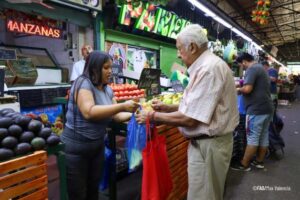
Latin America and the Caribbean has the world’s most expensive healthy diet. Credit: Max Valencia / FAO

By Máximo Torero
ROME, Jul 23 2026 – Hunger is falling across most of Latin America and the Caribbean. The region’s next challenge is harder: ensuring that everyone can afford a healthy diet, not merely enough calories to survive.

The regional hunger rate fell for a fifth consecutive year in 2025, reaching a record low of 4.8 percent, down from the pandemic peak of 6.1 percent in 2020. About 32 million people faced hunger, more than 1 million fewer than in 2024 and 7.5 million fewer than in 2020. Moderate or severe food insecurity, which includes people forced to skip meals or eat less, also fell to 22.9 percent, below its 2015 level of 23.4 percent. The region’s share of the world’s hungry has remained at about 5 percent for 15 years.

This progress was not accidental. It reflects sustained investment in agricultural productivity and stronger social protection, including the cash transfer and school feeding programs developed by Brazil and Mexico.

Poor roads, limited rail networks, inadequate cold storage, unreliable energy, inefficient markets and post harvest losses raise costs as nutritious food moves through storage, processing, transportation, wholesale and retail

The countries recording the largest gains differ greatly, but their policies reveal a consistent pattern. Brazil, Chile, Costa Rica, the Dominican Republic, Guyana and Uruguay have reduced hunger below 2.5 percent, the level below which the Food and Agriculture Organization of the United Nations reports the estimate simply as “less than 2.5 percent.” Since the mid 2000s, Peru has cut its rate from 17.9 to 5.7 percent; Bolivia, from 27.6 to 19.5 percent; Colombia, from 11.0 to 4.1 percent; and Panama, from 14.8 to 4.7 percent.

These findings, from the 2026 edition of The State of Food Security and Nutrition in the World, show that hunger falls when agricultural, economic and social policies reinforce one another. Social protection preserves purchasing power. Agricultural investment raises productivity. Rural infrastructure connects farmers to markets. School meals and cash transfers protect vulnerable families while creating demand for locally produced food.

The gains, however, remain fragile and uneven.

The 2026 Middle East crisis poses a less uniform threat here than in Africa or Asia. Latin America and the Caribbean produces more crude oil than it consumes, and some energy exporters could benefit from higher prices. But this regional average conceals the exposure of many Central American and Caribbean economies that depend heavily on imported fuels and remain vulnerable to rising energy, fertilizer, transportation and food import costs. The crisis will create winners and losers within the region, not leave it untouched.

The sharpest divide is in the Caribbean. Its hunger rate edged up to 16.6 percent in 2025, nearly five times the rate in South America, while moderate or severe food insecurity reached 52 percent, the highest of any subregion.

Haiti is the most extreme case. Its hunger rate rose from 47.7 to 51.4 percent, and more than half the population faces acute food insecurity. Haiti is the only country in the Americas, and one of five globally, where people face catastrophic levels of hunger. Armed violence, institutional breakdown, economic decline and climate shocks are erasing years of development, even without a formally declared war.

But hunger captures only one dimension of deprivation. The cost of a healthy diet reveals a larger structural problem.

Latin America and the Caribbean has the world’s most expensive healthy diet. In 2025, it cost an average of 4.91 purchasing power parity dollars per person per day, compared with 4.35 in Africa, 4.33 in Asia and 3.64 in Northern America and Europe. In the Caribbean, the cost reached 6.04 purchasing power parity dollars, the highest of any subregion, compared with 4.66 in Central America.

Because regional incomes are higher on average, the share of people unable to afford a healthy diet, 25.7 percent, remains far below Africa’s 66.1 percent and has been declining since 2021. But averages again conceal severe deprivation. In Haiti, 88.9 percent of people cannot afford a healthy diet.

Latin America and the Caribbean has therefore made genuine progress against calorie deprivation. But sufficient calories are no longer its only, or even its largest, food challenge. A diet that prevents hunger does not necessarily prevent anaemia, child stunting, obesity, diabetes and other forms of malnutrition. A healthy diet requires adequate fruits, vegetables and animal source foods, yet that diet costs more here than anywhere else.

The region’s high diet costs are driven particularly by vegetables and by what happens after food leaves the farm. Poor roads, limited rail networks, inadequate cold storage, unreliable energy, inefficient markets and post harvest losses raise costs as nutritious food moves through storage, processing, transportation, wholesale and retail. This is not simply a production problem. It is a midstream problem.

The policy response must therefore be more precise than simply spending more on agriculture. Broad farm subsidies will not repair broken supply chains. Governments should invest in horticultural productivity, rural roads, rail connections, cold chains, storage, packhouses, reliable energy, wholesale markets and competitive transportation. These investments would reduce losses, expand supply and lower the price of fruits, vegetables and other nutrient rich foods.

Sequencing also matters. Expanding school meals, cash transfers or food vouchers before supply can respond may raise local prices and exclude the consumers these programs are intended to support. Investment in production and supply chains must precede, or at least accompany, measures that stimulate demand.

A decade ago, Brazil, Peru, the Dominican Republic and Colombia might have appeared to be unrelated success stories. We now know that their gains came from deliberate investments in social protection and agricultural productivity.

Making healthy diets affordable will require the same determination, directed this time toward the infrastructure, logistics and markets that move nutritious food to consumers. The immediate priority is to extend the region’s progress to the Caribbean and, most urgently, to Haiti.

Latin America and the Caribbean has shown that hunger can fall. It must now prove that a healthy diet need not remain a privilege.

Excerpt:

Máximo Torero is the Chief Economist of the Food and Agriculture Organization of the United Nations


Trump’s Authoritarian Gambit to Muzzle the Foreign Press

Credit: Mauricio Morales Source UNESCO

By Alon Ben-Meir
NEW YORK, Jul 23 2026 – Under a new rule proposed by the Department of Homeland Security, the duration of “I visas” for foreign media will be slashed from renewable multi year periods—often up to five years—to a maximum of 240 days, and just 90 days for Chinese journalists. Renewals would no longer be a routine administrative step tied to continued employment and compliance with the law, but a discretionary privilege the government can grant or withhold at will.

Turning Journalist Visas into a Weapon

The Foreign Press Association and other media organizations have warned that such a regime will make it “impossible” for correspondents to do their jobs: they cannot build sources, understand the country’s complex politics, or maintain anything resembling a family life if their legal status expires every few months and is constantly subject to political whim. The Association of Foreign Press Correspondents in the United States rightly calls this a “flagrant attack on press freedom” designed to chill coverage by making unfavorable reporting a potential visa liability.

An Assault on the Spirit of the First Amendment

Formally, the First Amendment binds Congress, not consular officers or immigration regulators. But in substance, the proposed rule is a direct affront to the First Amendment’s core principle: that a free press must be able to scrutinize those in power without fear of retaliation.

By conditioning a journalist’s ability to live and work in the United States on repeated, discretionary renewals, the administration is creating precisely the climate of self censorship that the First Amendment was meant to prevent. If a reporter knows that a critical story about the president or his allies might translate into a denied extension, the line between immigration policy and political reprisal evaporates.

This is not a hypothetical danger. The rule expressly allows the government to scrutinize the “content” a journalist is covering when deciding whether to grant an extension, opening the door to ideological filtering of who gets to report from the United States. That logic is indistinguishable from the methods long used by authoritarian regimes that the United States has historically condemned.

A Tool for Selective Punishment

The proposal also creates a ready made instrument for selective punishment of journalists from countries with which the Trump administration has tense or adversarial relations. The singling out of Chinese journalists for especially harsh 90 day limits is an explicit signal that Washington is prepared to wield visa policy as a geopolitical stick, not a neutral administrative tool.

Once this precedent is established, nothing prevents the administration from tightening the screw further on reporters from other states whose governments it wishes to pressure—or punish. The result would be a two tiered press landscape in which journalists from favored countries enjoy relative stability, while those from disfavored states face constant uncertainty and the implicit demand to “behave.”

Collateral Damage to US Society and Industry

The damage, however, would not be confined to newsrooms. International coverage of the United States is a critical artery for sectors that depend on global visibility and confidence, including finance, higher education, entertainment, sports, tourism, and cultural institutions. If it becomes prohibitively expensive or logistically impossible for foreign outlets to station correspondents in the US for more than a few months, many will simply relocate their hubs elsewhere.

That relocation carries a cost: fewer nuanced stories about American democracy, markets, universities, and culture, and more reliance on second hand or adversarial narratives. For a country that still claims leadership of a “free world,” deliberately undermining the global visibility of its own society is more than self defeating; it is profoundly hypocritical.

Undermining Treaty Commitments and Global Standing

There is an additional, often overlooked dimension: these restrictions risk clashing with US obligations under the UN Headquarters Agreement and related arrangements governing access for foreign journalists covering the United Nations. New York is not only an American city; it is the seat of an international organization whose work depends on open media access from all member states.

For decades, Washington has rightly insisted that host states of international institutions must guarantee access to the press and avoid politicizing visas. If the United States itself begins to weaponize journalist visas, it hands every authoritarian government a ready made excuse to do the same, eroding what remains of an already fragile global norm.

What Must Be Done

This proposal is not inevitable. It is a regulatory measure that can be challenged, delayed, and ultimately defeated through a combination of legal action, congressional oversight, diplomatic pressure, and public mobilization. Media organizations, civil liberties groups, universities, and US industries that depend on international coverage should submit formal complaints, petition Congress to block implementation, and prepare litigation arguing that the rule is arbitrary, discriminatory, and incompatible with the constitutional protection of a free press.

Foreign governments and international bodies, including the UN, should make it clear that undermining foreign press access in the United States will invite reciprocal restrictions on American journalists abroad—further isolating US audiences from the world. And American citizens, who ultimately bear the cost of an information starved public sphere, must insist that their government not abuse immigration law as a backdoor censorship tool.

It is no accident that Trump, who is openly hostile to independent media, now seeks to transform visas into levers of control over who may report on it. If this rule stands, it will not only harm thousands of foreign journalists and their families; it will further entrench a creeping authoritarianism in America that fears scrutiny above all else, and that is precisely why it must be stopped.

Dr Alon Ben-Meir is President, Institute for Humanitarian Conflict Resolution

IPS UN Bureau


!function(d,s,id){var js,fjs=d.getElementsByTagName(s)[0],p=/^http:/.test(d.location)?’http’:’https’;if(!d.getElementById(id)){js=d.createElement(s);js.id=id;js.src=p+’://platform.twitter.com/widgets.js’;fjs.parentNode.insertBefore(js,fjs);}}(document, ‘script’, ‘twitter-wjs’);  


Excerpt:

For nearly a century, foreign correspondents have come to the United States precisely because this country prided itself on welcoming scrutiny. Now, the Trump administration proposes to turn that legacy on its head—by transforming visas for international journalists into instruments of control

Mavenir Classificada como Muito Forte na Avaliação do Cenário Competitivo do Núcleo de IMS e Voz da GlobalData em 2026

RICHARDSON, Texas, July 23, 2026 (GLOBE NEWSWIRE) — A Mavenir, empresa de software que desenvolve redes móveis nativas da nuvem, com foco em telecomunicações e IA integrada desde a concepção, anunciou hoje que a GlobalData classificou sua solução MAVcore (IMS e serviços de voz nativos da nuvem) como “Muito Forte” na sua avaliação de IMS and Voice Core: Competitive Landscape Assessment (junho de 2026), ranking a Mavenir entre os fornecedores de IMS e Voice Core mais bem avaliados do setor, ao lado de Nokia, ZTE e Ericsson.

O relatório avaliou fornecedores em cinco dimensões: arquitetura da solução, plataforma e desempenho, suporte a recursos e aplicativos, interoperabilidade e experiência de implantação. O MAVcore obteve uma classificação de Forte a Muito Forte em todos as cinco.

Fonte: GlobalData, IMS and Voice Core Competitive Landscape Assessment, June, 2026.

Arquitetura da solução: Muito Forte. O MAVcore foi projetado do zero como um IMS baseado em microsserviços e nativo da nuvem, criado especificamente para VoLTE e voz 5G, com uma única base de código unificada que facilita a migração de implantações baseadas em NFV para versões totalmente em contêiner.

Plataforma e desempenho: Muito Forte. A arquitetura altamente decomposta é dimensionada independentemente por função, viabilizando que as operadoras otimizem recursos por caso de uso e se adaptem aos padrões de tráfego em mudança sem degradar o desempenho.

Interoperabilidade: Muito Forte. O MAVcore oferece integração comprovada de vários fornecedores em ecossistemas de políticas, sinalização, mídia e dispositivos, uma exigência essencial para redes de vários fornecedores que a maioria das operadoras executa atualmente.

Suporte a recursos e aplicativos: Forte. O MAVcore oferece os principais recursos de IMS e os serviços suplementares que as operadoras exigem para implantações de voz VoLTE e 5G.

Experiência de implantação: Forte. A Mavenir expandiu sua empresa de voz para mais de 50 clientes em todo o mundo, incluindo implantações greenfield de alto perfil e projetos de transformação de voz com provedores de serviços de comunicações (CSPs) estabelecidos.

Além das cinco dimensões classificadas, a GlobalData destacou o roteiro de IA da Mavenir. A Mavenir está focada em serviços de IA em chamada, incluindo tradução simultânea, assistentes SMB agênticos e transcrição, visando o que a GlobalData identifica como a oportunidade de serviço de voz que mais cresce. Os recursos de segurança de sinalização, detecção de spam e gerenciamento de fraudes da Mavenir adicionam uma camada extra de diferenciação e uma base para serviços de valor agregado.

Com a evolução das chamadas de voz da interação entre humanos para a interação entre humanos e agentes, a Mavenir continuará a investir em arquitetura nativa da nuvem e serviços habilitados para IA que ajudam as operadoras a modernizar suas redes de voz e capturar novas fontes de receita.

“A nossa classificação de Muito Forte pela GlobalData valida o investimento que a Mavenir tem feito na arquitetura de voz nativa da nuvem”, disse Sachin Karkala, EVP e Gerente Geral, IMS & RAN, Mavenir. “Com as operadoras em todo o mundo desativando redes legadas e buscando monetizar a voz por meio de serviços habilitados para IA, a abordagem nativa em nuvem da Mavenir possibilita que nossos clientes se movam mais rapidamente e em escala com confiança.”

“A Mavenir projetou sua solução Cloud-Native IMS do zero para VoLTE e voz 5G”, disse Andy Hicks, Analista Principal Sênior da GlobalData. “Essa arquitetura e a base da empresa de mais de 50 clientes de voz em todo o mundo estão entre os fatores que deram à Mavenir uma classificação muito forte na avaliação deste ano.”

Sobre a Mavenir

A Mavenir habilita redes inteligentes, automatizadas e programáveis por meio do desenvolvimento de soluções de software de IA por design, nativas da nuvem, para operadoras de telefonia móvel. A profunda experiência com domínio de telecomunicações da empresa foi comprovada por meio de implantações em mais de 300 operadoras em todo o mundo em mais de 120 países, que juntas atendem mais de 50% dos assinantes de todo o mundo. A Mavenir combina sua profunda experiência em telecomunicações com a experiência em nuvem e TI, e conjuntos de habilidades em ciência de dados essenciais para resolver desafios reais dos clientes. Suas soluções de software comprovadas são IA por design, oferecendo o futuro nativo da IA e a evolução das operadoras para TechCos. Para mais informação, visite www.mavenir.com

Contato com a Mídia:

Emmanuela Spiteri
[email protected]

Foto deste comunicado disponível em https://www.globenewswire.com/NewsRoom/AttachmentNg/2e640084-bb33-4433-baf4-c7d47f00ac15


GLOBENEWSWIRE (Distribution ID 9766952)

Mavenir von GlobalData im Competitive Landscape Assessment 2026 für IMS- und Voice-Core-Lösungen mit „sehr gut“ bewertet

RICHARDSON, Texas, July 23, 2026 (GLOBE NEWSWIRE) — Mavenir, das Softwareunternehmen, das Telco-First-, cloud-native und AI-by-Design-Mobilfunknetze entwickelt, hat heute bekanntgegeben, dass GlobalData seine cloud-native IMS- und Voice-Services-Plattform MAVcore im Bericht IMS and Voice Core: Competitive Landscape Assessment (Juni 2026) mit „sehr gut“ bewertet hat. Damit zählt Mavenir gemeinsam mit Nokia, ZTE und Ericsson zu den am höchsten bewerteten Anbietern von IMS- und Voice-Core-Lösungen der Branche.

Der Bericht bewertete die Anbieter anhand von fünf Kriterien: Lösungsarchitektur, Plattform und Performance, Funktions- und Anwendungsunterstützung, Interoperabilität sowie Implementierungserfahrung. MAVcore erhielt in allen fünf Kategorien eine Bewertung von „gut“ bis „sehr gut“.

Quelle: GlobalData, IMS and Voice Core Competitive Landscape Assessment, Juni 2026.

Lösungsarchitektur: sehr gut. MAVcore wurde von Grund auf als cloud-native, auf Microservices basierende IMS-Lösung entwickelt, die speziell für VoLTE- und 5G-Sprachdienste konzipiert ist. Eine einheitliche Codebasis erleichtert die Migration von NFV-basierten Bereitstellungen zu vollständig containerisierten Versionen.

Plattform und Performance: sehr gut. Die hochgradig entkoppelte Architektur lässt sich für jede Funktion unabhängig skalieren. Dadurch können Netzbetreiber ihre Ressourcen je nach Anwendungsfall optimieren und sich an veränderte Datenverkehrsmuster anpassen, ohne Leistungseinbußen hinnehmen zu müssen.

Interoperabilität: sehr gut. MAVcore bietet bewährte Multi-Vendor-Integration über Richtlinien-, Signalisierungs-, Medien- und Geräteökosysteme hinweg – eine entscheidende Voraussetzung für die Multi-Vendor-Netze, die heute von den meisten Netzbetreibern eingesetzt werden.

Funktions- und Anwendungsunterstützung: gut. MAVcore bietet die zentralen IMS-Funktionen und Zusatzdienste, die Netzbetreiber für VoLTE- und 5G-Sprachdienste benötigen.

Implementierungserfahrung: gut. Mavenir hat sein Sprachgeschäft auf mehr als 50 Kunden weltweit ausgebaut, darunter bedeutende Greenfield-Implementierungen sowie Sprachtransformationsprojekte mit etablierten Kommunikationsdienstleistern (CSPs).

Neben den fünf bewerteten Kategorien hob GlobalData zudem die KI-Roadmap von Mavenir hervor. Im Fokus stehen KI-gestützte Dienste für Telefongespräche, darunter Simultanübersetzung, agentenbasierte Assistenten für kleine und mittlere Unternehmen (KMU) sowie Transkriptionsfunktionen. Damit adressiert Mavenir nach Einschätzung von GlobalData das derzeit am schnellsten wachsende Marktsegment im Bereich Sprachdienste. Darüber hinaus sorgen die Lösungen von Mavenir für Signalisierungssicherheit, Spam-Erkennung und Betrugsprävention für eine zusätzliche Differenzierung und schaffen die Grundlage für innovative Mehrwertdienste.

Da sich die Sprachkommunikation zunehmend von der Interaktion zwischen Menschen hin zur Interaktion zwischen Menschen und KI-Agenten entwickelt, wird Mavenir auch künftig in cloud-native Architekturen und KI-gestützte Dienste investieren. Damit unterstützt das Unternehmen Netzbetreiber dabei, ihre Sprachnetze zu modernisieren und neue Umsatzpotenziale zu erschließen.

„Die Auszeichnung mit der Bewertung ,sehr gut' durch GlobalData bestätigt unsere Investitionen in eine cloud-native Spracharchitektur“, so Sachin Karkala, EVP & General Manager, IMS & RAN bei Mavenir. „Während Netzbetreiber weltweit ihre veralteten Netze außer Betrieb nehmen und Sprachdienste mithilfe KI-gestützter Anwendungen monetarisieren möchten, schafft der konsequent cloud-native Ansatz von Mavenir die Voraussetzungen dafür, dass unsere Kunden Innovationen schneller umsetzen und ihre Netze zuverlässig skalieren können.“

„Mavenir hat seine cloud-native IMS-Lösung von Grund auf für VoLTE- und 5G-Sprachdienste entwickelt“, so Andy Hicks, Senior Principal Analyst bei GlobalData. „Diese Architektur sowie der Kundenstamm von inzwischen mehr als 50 Sprachkunden weltweit gehören zu den Faktoren, die Mavenir in der diesjährigen Bewertung die Einstufung ,sehr gut' eingebracht haben.“

Über Mavenir

Mavenir ermöglicht intelligente, automatisierte und programmierbare Netzwerke durch die Entwicklung von telekommunikationsorientierten, cloud-nativen und KI-basierten Softwarelösungen für Mobilfunkbetreiber. Die umfassende Expertise des Unternehmens im Telekommunikationsbereich zeigt sich in Implementierungen bei mehr als 300 Netzbetreibern in über 120 Ländern – gemeinsam versorgen sie über 50 % der weltweiten Mobilfunkteilnehmer. Mavenir vereint dabei seine umfassende Telekommunikationsexpertise mit tiefgehendem Cloud- und IT-Know-how sowie ausgeprägten Kompetenzen im Bereich Datenwissenschaft – Fähigkeiten, die entscheidend sind, um reale Herausforderungen der Kunden erfolgreich zu lösen. Die bewährten Softwarelösungen sind KI-basiert und ebnen den Weg für eine KI-native Zukunft sowie die Weiterentwicklung traditioneller Netzbetreiber zu Technologieunternehmen. Weitere Informationen finden Sie unter www.mavenir.com

Medienkontakt:

Emmanuela Spiteri
[email protected]

Ein Foto zu dieser Meldung ist verfügbar unter https://www.globenewswire.com/NewsRoom/AttachmentNg/2e640084-bb33-4433-baf4-c7d47f00ac15


GLOBENEWSWIRE (Distribution ID 9766952)

Mavenir obtient la mention très performant dans l’évaluation 2026 du paysage concurrentiel IMS et Voice Core de GlobalData

RICHARDSON, Texas, 23 juill. 2026 (GLOBE NEWSWIRE) — Mavenir, éditeur de logiciels développant des réseaux mobiles conçus prioritairement pour les télécoms, cloud natifs et intégrant l’intelligence artificielle dès leur conception, a annoncé aujourd’hui que GlobalData a attribué à sa solution MAVcore Cloud-Native IMS and Voice Services la mention très performant dans son rapport IMS and Voice Core: Competitive Landscape Assessment (juin 2026), plaçant Mavenir parmi les fournisseurs de solutions IMS et Voice Core les mieux notés du secteur aux côtés de Nokia, ZTE et Ericsson.

Le rapport a évalué les fournisseurs selon cinq critères : l’architecture de la solution, la plateforme et les performances, les fonctionnalités et le support applicatif, l’interopérabilité ainsi que l’expérience de déploiement. MAVcore a obtenu une note allant de performant à très performant dans chacune de ces cinq catégories.

Source : GlobalData, IMS and Voice Core Competitive Landscape Assessment, juin 2026.

Architecture de la solution : très performant. MAVcore a été conçu dès l’origine comme une solution IMS cloud native reposant sur une architecture de microservices, spécifiquement développée pour la VoLTE et la voix 5G. La plateforme s’appuie sur une base de code unifiée qui facilite la migration des déploiements basés sur la NFV vers des versions entièrement conteneurisées.

Plateforme et performances : très performant. Son architecture hautement décomposée permet une montée en charge indépendante de chaque fonction, offrant aux opérateurs la possibilité d’optimiser les ressources selon les cas d’usage et de s’adapter à l’évolution des schémas de trafic sans dégradation des performances.

Interopérabilité : très performant. MAVcore offre une intégration éprouvée dans des environnements multi-fournisseurs couvrant les politiques réseau, la signalisation, les médias et les écosystèmes d’appareils, une exigence essentielle dans les réseaux multi-constructeurs exploités aujourd’hui par la plupart des opérateurs.

Fonctionnalités et support applicatif : performant. MAVcore fournit les principales fonctionnalités IMS ainsi que les services complémentaires nécessaires aux déploiements VoLTE et voix 5G des opérateurs.

Expérience de déploiement : performant. Mavenir a développé son activité dans le domaine de la voix jusqu’à compter plus de 50 clients dans le monde, notamment à travers des déploiements « greenfield » de grande envergure et des projets de transformation des services vocaux réalisés avec des fournisseurs de services de communication (CSP) déjà établis.

Au-delà de ces cinq critères évalués, GlobalData a également mis en avant la feuille de route de Mavenir en matière d’intelligence artificielle. L’entreprise concentre ses efforts sur les services d’IA intégrés aux appels, notamment la traduction simultanée, les assistants autonomes destinés aux PME et les services de transcription, ciblant ainsi ce que GlobalData identifie comme l’opportunité de croissance la plus importante dans le domaine des services vocaux. Les capacités de Mavenir en matière de sécurité de la signalisation, de détection des appels indésirables et de gestion de la fraude constituent également un élément différenciateur supplémentaire et une base solide pour le développement de services à valeur ajoutée.

Alors que les communications vocales évoluent d’interactions entre personnes vers des interactions entre humains et agents intelligents, Mavenir indique qu’elle poursuivra ses investissements dans les architectures cloud natives et les services enrichis par l’intelligence artificielle afin d’aider les opérateurs à moderniser leurs réseaux vocaux et à générer de nouvelles sources de revenus.

« Être reconnu comme étant très performant par GlobalData valide les investissements réalisés par Mavenir dans les architectures vocales cloud natives », a déclaré Sachin Karkala, vice-président exécutif et directeur général IMS & RAN chez Mavenir. « Alors que les opérateurs du monde entier mettent progressivement hors service leurs réseaux historiques et cherchent à monétiser les services vocaux grâce à l’intelligence artificielle, l’approche cloud native de Mavenir, conçue dès l’origine selon ce modèle, permet à nos clients d’accélérer leur transformation et de se développer en toute confiance. »

« Mavenir a conçu sa solution IMS cloud native dès le départ pour la VoLTE et la voix 5G », a expliqué Andy Hicks, analyste principal senior chez GlobalData. « Cette architecture, associée à une base de plus de 50 clients dans le domaine des services vocaux à travers le monde, fait partie des éléments qui ont permis à Mavenir d’obtenir la mention très performant dans l’évaluation de cette année. »

À propos de Mavenir

Mavenir développe des réseaux intelligents, automatisés et programmables grâce à des solutions logicielles cloud native, conçues avec l’IA dès la conception et destinées aux opérateurs mobiles. L’expertise approfondie de l’entreprise dans le domaine des télécoms a été démontrée par des déploiements auprès de plus de 300 opérateurs dans plus de 120 pays, qui desservent ensemble plus de 50 % des abonnés dans le monde. Mavenir allie une expertise approfondie des télécommunications à des compétences en informatique, en cloud et en science des données, des atouts essentiels pour relever les défis concrets de ses clients. Ses solutions logicielles éprouvées sont conçues avec l’IA dès la conception, offrant aux entreprises technologiques un avenir basé sur l’IA et l’évolution des opérateurs. Pour en savoir plus, consultez le site www.mavenir.com

Contact presse :

Emmanuela Spiteri
[email protected]

Une photo annexée au présent communiqué est disponible à l’adresse suivante : https://www.globenewswire.com/NewsRoom/AttachmentNg/2e640084-bb33-4433-baf4-c7d47f00ac15


GLOBENEWSWIRE (Distribution ID 9766952)

Food and Transport Costs through Strait of Hormuz Remain High, Burdening Vulnerable Economies

Amir Saeid Iravani, Permanent Representative of Iran to the United Nations, addresses the Security Council high-level debate on the safety of global waterways, amid growing concerns over threats to shipping and freedom of navigation, held on April 27, 2026. Credit: UN Photo/Mark Garten

By Maximilian Malawista
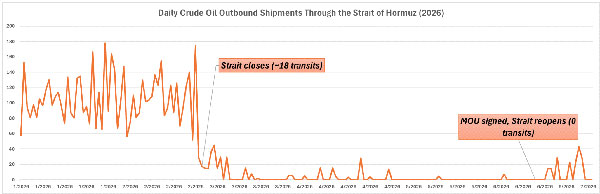
UNITED NATIONS, Jul 23 2026 – Prior to the latest round of hostilities between the United States and Iran, freight traffic had been increasing in the Strait of Hormuz, and negotiations were underway for a new agreement to fully restore trade through this channel.

According to UN Trade and Development (UNCTAD), energy markets were likely to bounce back to normal pre-conflict levels faster than that of food, public finance, and transport, leaving many vulnerable economies worse off. UNCTAD research shows a change from about 125 daily ship transits through the Strait of Hormuz in 2026, January 1st through February 27th, to a drop of around 10 daily transits from February 28th through June 14th during the conflict, marking a 92 percent decrease in overall transit ability.

According to UNCTAD and the Strait of Hormuz monitor, levels on June 2nd recorded around 40 ship transits, with an average of 60 through the days after signing the MOU (The Memorandum of Understanding signed by both US and Iranian delegations). This represents roughly half of pre-conflict transit levels.


Source: Author’s visualizations using data from Strait of Hormuz Trade Tracker (WTO)
Note: Daily outbound shipments represent AIS-traceable crude oil tanker departures from the Strait of Hormuz to destinations outside the Persian Gulf. Additionally, this graph is roughly similar to overall shipments of LNG, fertilizer, and Agricultural products through the same period.

Following the closure of the Strait, the daily price of crude oil jumped to USD 120 per barrel, to then an average around USD 100 per barrel through the conflict. The daily price of crude oil has now fallen to on average USD 70 per barrel, roughly returning to pre-conflict levels, indicating that energy markets recovered quickly.

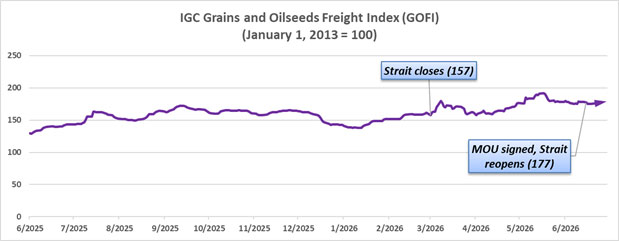
On the contrary, the IGC Grains and Oilseeds Freight index (GOFI), indicates a slow decrease of the heightened costs of transporting both grains and oilseeds by sea (e.g., Wheat, Corn, Barley, Sorghum, Soybeans, Rapeseed (canola), Sunflower seed), across 68 key exporting origins in the regions of the United States, The European Union, Canada, the Black Sea region, Brazil, Australia, and Argentina.


Source: Author’s visualizations using data from the International Grains Council (IGC).
Note: The index is normalized so that 100 represents the average grain and oilseed freight rate on January 1, 2013. During the conflict, the index rose to approximately 190, representing a 90 percent increase relative to the base value and a 30 percent increase from the beginning of the conflict on February 28, 2026.

As a result of the heightened price of grains and oilseeds, among other agriculture components, UNCTAD says, “Past input price shocks remain a risk to future food security,” laying out the cycle in which costs can amount:

    1. Traffic through the strait was disrupted.
    2. Limited freight traffic constricts the availability and raises the cost of oil, gas and nitrogenous fertilizer.
    3. A decrease in energy exports creates higher energy prices, increasing transport and shipping costs.
    4. Further fuel inflation slows down the global economy.
    5. Agricultural production costs increase.
    6. Food production may be affected by the increased cost of agricultural components such as fertilizer, pushing domestic food prices further up.
    7. Vulnerable populations may face greater food insecurity and hunger, as a result of the heightened cost of importing food, and domestic agriculture production.

This process has exposed 61 vulnerable economies to dual impact of higher oil and cereal import prices. (e.g., wheat, rice, corn, barley, oats, sorghum, millet, rye) These countries consist of 35 least developed countries and 26 small island states, with seven of those countries being both least developed and small island developing states.

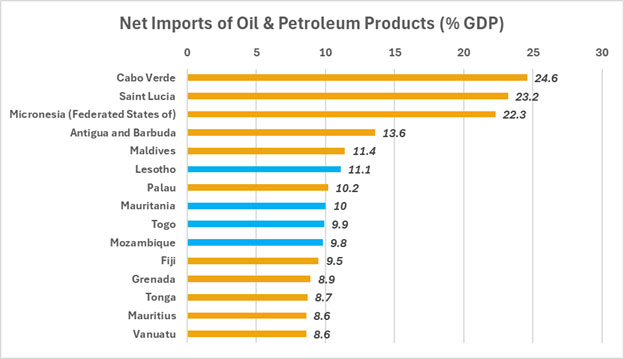
According to UNCTAD, the pressure is “sharpest for economies that rely heavily on imported fuel”, citing an example in Cabo Verde where net imports of oil and petroleum products averaged 24.6 percent of GDP within recent years. This dependence on fuel imports means that those extra costs can quickly make food prices, electricity, transport, and public finances more expensive.


Source: Author’s visualizations using data from UNCTADStat.
Notes: Orange countries are small island states, and blue countries are least developed countries (LDCs).

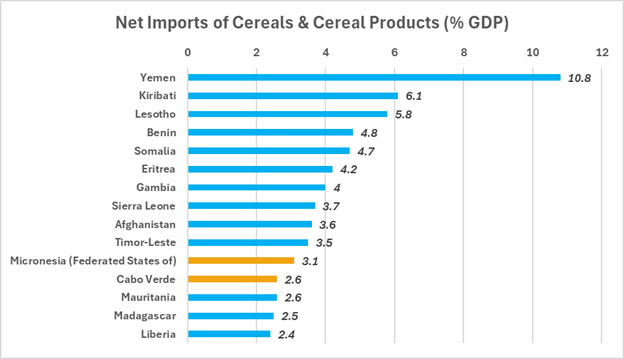
Yemen was also cited to be at high risk, with analysis showing that net imports of cereal and cereal products averaged 10.8 percent of GDP. For countries like Yemen dealing with conflict, hyperinflation, debt pressure, and limited public financing, a higher import bill for grain compounds an already declining situation.


Source: Author’s visualizations using data from UNCTADStat.
Notes: Orange countries are small island states, and blue countries are least developed countries (LDCs).

UNCTAD analysis indicates that a real increase of food cost by just 5 percent is associated with a higher risk of child wasting (a life-threatening form of acute malnutrition), especially among poor children and children living in rural landless households.

While restoring full trade through the strait is a necessary step to recovery, this will not undo the aftermath that higher import bills, delayed shipments, and higher priced food and energy have on the global economy, especially vulnerable economies.

“The policy task is therefore broader than reopening a route. Vulnerable economies need support to manage higher import bills, protect households from food and fuel shocks, and invest in systems that reduce exposure before the next disruption hits household budgets,” said UNCTAD, indicating the importance for vulnerable economies to develop supply chain resilience, sustainable systems, and have less reliance on concentrated international trade for vital goods such as food and energy, among financial support from the international system.

IPS UN Bureau Report


!function(d,s,id){var js,fjs=d.getElementsByTagName(s)[0],p=/^http:/.test(d.location)?’http’:’https’;if(!d.getElementById(id)){js=d.createElement(s);js.id=id;js.src=p+’://platform.twitter.com/widgets.js’;fjs.parentNode.insertBefore(js,fjs);}}(document, ‘script’, ‘twitter-wjs’);  


World's Largest Cabinet Maker OPPEIN Deepens Middle East Footprint with Custom Offerings

DUBAI, United Arab Emirates, July 23, 2026 (GLOBE NEWSWIRE) — OPPEIN Home Group Inc., the world's largest cabinetry manufacturer, is expanding its presence across the Middle East with showrooms in Gulf countries. “We're committed to fully realizing this market's potential, and given our current momentum, this represents a clear win-win,” said Mr. Niu, head of OPPEIN's sales department.

Over the past few years, OPPEIN has built a strong reputation among Middle Eastern customers. Its whole-house solution showroom model has reinvented the local shopping experience by offering complete home furnishings in one place, including cabinets, furniture, and doors, all in cohesive styles. This disrupts the traditional market where homeowners once coordinated multiple contractors for kitchens, wardrobes, and bathrooms. Now, customers can walk into showrooms and customize every piece for their entire home. The brand also offers a turnkey service covering design, measurement, production, delivery, installation, and after-sales support.

“It was such a relief that OPPEIN could handle it all! Their range and service genuinely impressed me,” commented by a local buyer.

The Middle East expansion strategy relies heavily on local franchise partners. Showrooms operate in the UAE, Saudi Arabia, Kuwait, and Qatar, bringing custom furnishings within reach. GCC markets show the strongest alignment with the one-stop service model. Importantly, local showrooms enable the company to understand regional preferences and develop tailored products. On-site feedback directly informs adaptation, as seen in the recent introduction of WPC doors, a line developed specifically for regional material tastes.

Beyond retail, B2B engagement has grown considerably. Over 2,000 projects have been completed across the region, spanning apartments, villas, hotels, and resorts. Delivery capacity supports this growth: a daily output of 25,000 cabinets, backed by 1.4 million sqm of smart manufacturing floor space, ensures tight construction timelines. Recent completed projects include Qatar's Al Shahad Tower and Bahrain's Massarah Al Seef commercial tower. OPPEIN's cabinetry and whole-home solutions were chosen for functionality and interior design contribution.

Today, OPPEIN operates more than 8,000 showrooms and has completed over 18,000 projects globally. International expansion continues, with product development, production consistency, and after-sales support as core pillars. For developers, distributors, or investors, OPPEIN offers sector expertise, scalable production, an established franchise system, and supply-chain resilience. Detailed information on franchise program and project collaboration is available at www.oppeinhome.com.

Contact

Lily
OPPEIN Home
+86 20 3673 0513
[email protected]

A photo accompanying this announcement is available at https://www.globenewswire.com/NewsRoom/AttachmentNg/2b8c3aac-879d-4daf-82c3-e4ce30777e61


GLOBENEWSWIRE (Distribution ID 9766943)

Don’t Cry for Milei, Argentina

By Jomo Kwame Sundaram and Iggy Rodriguez
KUALA LUMPUR, Malaysia, Jul 23 2026 – Sunday’s World Cup final focused world attention on the stench of corruption, past and current, surrounding some of its main protagonists, including Argentina, and the presidents of FIFA, Argentina and the main host nation.

Jomo Kwame Sundaram

Messi football
Nick Corbishley has exposed the corruption of World Cup football and Argentina’s Milei government, enthusiastically supported by US President Trump’s ‘Donroe Doctrine’.

In the run-up, Argentina committed the most fouls — largely in midfield to disrupt their opponents’ play — but only received a controversial red card in the final. It had the most opponents’ goals disallowed but never conceded a penalty.

Of course, there are always subjective elements in applying football rules, and it is difficult to prove foul play. But it is suspicious when referees refuse to use a video-assisted referee (VAR) to check for fouls.

In Argentina’s first game, Messi stepped on an Algerian opponent’s Achille’s tendon with his studs up. Such an offence would typically get a red card, but in this case, there was no card or VAR check.

As many presume, FIFA would not allow the biggest star of world football, now playing in the US league, to get a match ban at the start of the tournament; it would have been a business disaster.

Many believe the ‘inconsistent’ use of rules and VAR checks helped Argentina reach yet another World Cup final. With VAR, the inconsistent application of rules and procedures, such as awarding cards, can tip games with narrow margins in a team’s favour.

Iggy Rodriguez

Considering the history of FIFA corruption and its willingness to bend rules at President Trump’s behest, such suspicions are rife. Worse, the Argentine Football Association is reportedly under Federal Bureau of Investigation (FBI) investigation for fraud and money laundering.

While controversial refereeing and VAR decisions were common in this tournament, Argentina has been accused more than any other team. Many believe the level football field was tilted to favour Argentina and its superstar, Messi.

Such advantages only work at the World Cup level if the team is highly competent and competitive, which Argentina certainly is. The latest World Cup has seriously tarnished the reputation of FIFA and football itself.

Billionaire haven
Meanwhile, Argentine President Javier Milei is trying to remove most remaining restrictions on foreign ownership of Argentine land.

A day after the England semi-final, the Argentine Senate began debating Milei’s bill on the “inviolability of private property”. If passed, it would repeal a 2011 law limiting the acquisition and ownership of rural land by foreigners.

As foreign purchases of Argentine land surged after its late 20th century crisis, its Congress limited sales to foreigners. Already, 13.2 million hectares, or 5% of Argentina, are foreign owned. The Milei government now wants to eliminate remaining restrictions on land sales to foreigners.

Foreign ownership of Argentine land is concentrated in specific areas such as Patagonia, rich in energy and mineral resources. Once approved, the bill will allow foreigners to own such strategic areas with water, minerals and foreign borders.

Peter Thiel, famous for arguing ‘competition is for losers’, is promoting the privatisation of public land by creating charter cities such as Prospera Inc in Honduras.

Thiel recently moved to Buenos Aires, where he is believed to be advising the Milei government. Apparently, he envisions Argentina as an economic haven cum ‘laboratory’ for his investments.

Forbes reports Milei is trying to attract billionaires like Thiel to his “new land of freedom” with a full-citizenship-by-investment scheme and by eliminating property ownership restrictions.

Milei scolded Argentina’s footballers and fans for protesting Britain’s ongoing rule of the Falkland Islands at the England semi-final as his government tries to sell off the most valuable rural Argentine land.

As the dispute between Honduras and Prospera Inc. has shown, once sovereign land is transferred into foreign hands protected by international investment treaties, getting that land back is nearly impossible.

From Nazi to Zionist refuge
Milei enjoys Netanyahu’s and Trump’s support, both of whom want him to stay in power.

Asked why he supported Argentina in the World Cup, Netanyahu made clear it had more to do with Milei than Messi. “Milei is a huge friend of Israel”, recently calling himself the “most Zionist president on the planet”.

Patagonia was identified as a possible site for the establishment of a Jewish State by Theodor Herzl, the father of political Zionism, in the late 19th century. After World War Two, the southern cone of South America became a haven for fascist war criminals fleeing Europe.

Milei’s government has cut public spending and welfare benefits for Argentine citizens. During the last Argentine summer from December to February, vast Patagonian forests went up in flames after Milei cut Argentina’s fire-fighting budget by 80%!

Many believe the government has agreed to allow Israeli settlement on the scorched earth after an Israeli was caught setting fire to 17,000 acres in Chilean Patagonia over a decade ago.

Milei has already signed agreements with the Netanyahu government to grant Israeli citizens living in Argentina access to all government benefits, including pensions, maternity leave and disability allowance.

In the final, Argentina went down to Spain, one of a few European countries to oppose Israel’s genocide in Gaza and the US-Israeli war against Iran, despite repeated threats by Trump.

Despite Spain’s conquistador and fascist past, much of the world supported Spain today against the land of Maradona and Messi, two of the most popular icons of the beautiful game.

Iggy Rodriguez is a Filipino artist and football enthusiast. His solo exhibition in Kuala Lumpur, ‘Under a Borrowed Sun’, runs till mid-August.

IPS UN Bureau


!function(d,s,id){var js,fjs=d.getElementsByTagName(s)[0],p=/^http:/.test(d.location)?’http’:’https’;if(!d.getElementById(id)){js=d.createElement(s);js.id=id;js.src=p+’://platform.twitter.com/widgets.js’;fjs.parentNode.insertBefore(js,fjs);}}(document, ‘script’, ‘twitter-wjs’);  


Egg Medical Declares New Era in Fluoroscopy Lab Safety Following Joint Consensus Statement

MINNEAPOLIS, July 22, 2026 (GLOBE NEWSWIRE) — Egg Medical, a global leader in radiation protection, announced its alignment with the landmark expert consensus statement published in JSCAI. This historic document declares that traditional reliance on heavy lead aprons is no longer an acceptable standard, calling for urgent changes to protect clinical staff. Earlier this year, SCAI launched its ALARA+ initiative to update the interpretations of federal ALARA (As Low as Reasonably Achievable) regulations. With modern ERPDs, what is considered reasonable must evolve.

“For decades, the interventional community has accepted the risks of cancer, cataracts and orthopedic injury as inevitable consequences of an interventional career. I, like many others, paid the toll for wearing heavy, protective lead aprons over the years. These very real and dangerous risks must no longer be ignored,” said Dr. Dean Kereiakes, co-author of the consensus statement and Chairman of The Christ Hospital Heart and Vascular Institute. “This multi-society consensus statement presents a mandate that with the availability of ERPDs such as EggNest Complete, workplace safety is no longer an option, but instead, a moral imperative going forward.”

EggNest Complete 360 Degree Team Wide Safety Solutions
The EggNest Complete, is designed specifically to overcome these traditional barriers:

  • 360 Degree Protection: The system provides integrated 360-degree protection around the table, safeguarding everyone.
  • Zero Workflow Disruption: It integrates directly into the existing table, eliminating floor clutter, and tripping hazards common with rolling shields.
  • Eliminates Construction: EggNest Complete requires no ceiling construction or lab downtime, something unique to Egg Medical. Labs remain fully operational, deploying safety without any clinical interruption and saving the hospital money.
  • Apron-Free Options: EggNest data supports the use of no lead aprons or ultralight lead aprons, depending on the clinician’s personal choice.

Egg Medical delivers a solution that meets ALARA+ standards, helping hospitals protect their most valuable assets—their people.

Media & Supporting Resources:

  • Audio Segment: Listen to Dr. Dean Kereiakes discuss the consensus statement on SiriusXM’s Doctor Radio (Channel 110 / NYU Langone Health).
  • Case Video Asset: Presentation on achieving near-zero radiation in complex interventions by Dr. Santiago Garcia at SOLACI 2026 available in the press kit upon request.

Contact: Susan Storm, [email protected]

A photo accompanying this announcement is available at https://www.globenewswire.com/NewsRoom/AttachmentNg/a2d2fbe4-a85c-4596-830d-044a6205e62d


GLOBENEWSWIRE (Distribution ID 9766582)

EXEED VPD Conquers the Heat: Smart Parking Tech Begins Middle East Trials

WUHU, China, July 22, 2026 (GLOBE NEWSWIRE) — On July 23, eight test vehicles equipped with EXEED VPD (Valet Parking Driver) technology were already on their way to Saudi Arabia. They are scheduled to undergo localized validation in August in both Saudi Arabia and the UAE under high-temperature and complex road conditions. The technology aims to transform parking from a chore that requires personal effort into a service fully managed by the vehicle. Subsequently, the VPD feature will make its global debut on the ET 2026 model, allowing users to park with ease whether in Dubai’s bustling commercial districts or along Abu Dhabi’s Corniche.

At midday in summer, a parking garage is the last place anyone wants to be. Hotel lobbies stay cool and comfortable, but step into the garage and it's a different world—the pavement blistering under trapped heat. In Saudi Arabia, where EXEED's test vehicles are heading, July and August temperatures frequently soar to 40°C–50°C or higher, with ground temperatures approaching a scorching 70°C. EXEED's VPD system features a “One-Touch Recall” function that makes “the vehicle comes to you” a daily reality. Simply summon your vehicle from the app while you wait in the air-conditioned lobby. The vehicle navigates out of its parking spot—even from deep within a multi-level structure—and pulls up right where you are. When you open the door, you are greeted by a cabin already pre-cooled to your preferred temperature. VPD technology elevates this brief “micro-journey”—from indoors to inside the vehicle—into a seamless, protected experience, free from sudden weather changes or uncomfortable conditions.

EXEED VPD technology answered a deeper question: When a vehicle can move on its own, just how much of the user's time and mental energy can be freed up. From the fatigue of trekking to a distant parking spot, to the anxiety of curbside stops, and the frustration of searching for a vehicle in the summer heat—behind each pain point lies real wear and tear on the user experience. With EXEED VPD, the vehicle evolves from a tool that requires constant attention into a proactive travel partner that lightens the load—ensuring that a truly premium experience stays effortless, from start to finish.

EXEED INTERNATIONAL

https://www.exeedinternational.com/

For more information, please visit
https://www.exeedinternational.com/
Contact: Jade Jiang
Email: [email protected]

A photo accompanying this announcement is available at https://www.globenewswire.com/NewsRoom/AttachmentNg/5cf9259c-378d-41d6-b1a5-fe0870f1a38f


GLOBENEWSWIRE (Distribution ID 9766364)