MOVA AtomForm Debuts Palette 300 on Rapid + TCT Boston 2026, Featuring 12-Nozzle Automatic Swapping Technology

BOSTON, April 22, 2026 (GLOBE NEWSWIRE) — MOVA AtomForm, a 3D printing brand within the MOVA technology ecosystem, debuted its flagship Palette 300 at RAPID + TCT Boston 2026, signaling its expansion into the North American market. At the Thomas M. Menino Convention and Exhibition Center, the company showcased its latest innovations through live demonstrations, attracting significant interest from professional engineers, designers, and potential partners.

The Palette 300, a recipient of the 2026 iF Design Award and MUSE Gold Award, addresses the core inefficiencies of desktop 3D printing. Unlike traditional systems that rely on high-waste “purge towers,” the Palette 300 utilizes an OmniElement™ 12-nozzle automatic swapping mechanism. By transitioning directly between 12 independently heated nozzles, the system enables the simultaneous use of 12 distinct materials and up to 36-color printing, reducing material waste while drastically increasing switching speeds.

Beyond mechanical innovation, the system integrates an automated oversight layer featuring an internal network of over 50 sensors and four high-definition cameras. This “Always-On” sensory array provides real-time monitoring and smart auto-correction of print deviations, ensuring industrial-grade consistency without the need for manual intervention. These hardware features are complemented by the AtomForm Studio software, which streamlines slicing and print management, and AtomVerse, an integrated creative platform designed to empower creators with a vast, open library of shared models and assisted design tools for every skill level.

During the RAPID + TCT exhibition, these capabilities were verified through live on-site demonstrations. Attendees observed the Palette 300 navigating multi-material workflows and automated transitions, confirming the system’s ability to bypass legacy printing bottlenecks through its unique nozzle-switching architecture.

The event served as a launchpad for MOVA AtomForm’s broader North American strategy. Following strong industry reception and coverage in outlets such as Geeky Gadgets and The Gadget Flow, the company is scaling its operations for commercial and consumer sectors. Pre-orders for the AtomForm Palette 300 are scheduled to begin in Q2 2026.

About MOVA AtomForm

MOVA AtomForm is the 3D printing arm of the MOVA Group, a global leader in AI smart living. Backed by MOVA’s expertise in intelligent ecosystems, AtomForm is dedicated to making the creative process faster, easier, and smarter for designers and makers worldwide.

More information about MOVA AtomForm can be found on the official website and social media channels, or by contacting at [email protected].

Photos accompanying this announcement are available at:
https://www.globenewswire.com/NewsRoom/AttachmentNg/dc90ba75-b3f4-480a-b519-d1ccb09802bc
https://www.globenewswire.com/NewsRoom/AttachmentNg/4e7293ae-14eb-4698-855d-91bdaf813747
https://www.globenewswire.com/NewsRoom/AttachmentNg/75dc1581-116e-4c95-baa3-6ccd2890da1b


GLOBENEWSWIRE (Distribution ID 9693787)

Anaqua Cria Novo Padrão de Proteção Moderna de Marca com Soluções Orientadas por IA

BOSTON, April 21, 2026 (GLOBE NEWSWIRE) — A Anaqua, principal fornecedora de tecnologia e serviços de gerenciamento de inovação e propriedade intelectual (PI), anunciou hoje que expandiu sua proteção de marca comprovada, orientada por IA e em escala empresarial nas soluções da Anaqua, estabelecendo ainda mais um novo padrão na proteção moderna da marca. Com a confiança das principais marcas globais e escritórios de advocacia, a solução agora conecta dados ,monitoramento e fiscalização de marcas comerciais em um ambiente único e unificado.

A solução de Proteção de Marca da Anaqua agora oferece monitoramento expandido em mercados, sites, domínios, mídias sociais e escritórios de marcas comerciais. Além disso, a filtragem de relevância orientada por IA e fluxos de trabalho de aplicação conectados ao portfólio, resultam em uma ação mais rápida e maior confiança para as empresas que protegem suas marcas e marcas comerciais online.

“A proteção da marca passou a ser um grande desafio de alto risco para as empresas hoje em dia”, disse Toni Nijm, diretora de produtos da Anaqua. “A integração da Proteção da Marca nas soluções da Anaqua reflete o nosso foco em ajudar os clientes a passar perfeitamente da propriedade da marca comercial para a proteção real e escalável, com a tecnologia de IA que está profundamente conectada aos seus dados de PI.”

A solução de Proteção de Marca da Anaqua é amplamente usada pelas principais empresas e escritórios de advocacia em todo o mundo, operando em escala em portfólios complexos e multijurisdicionais de marcas comerciais, apoiando milhões de resultados anualmente. A integração em todo o portfólio da Anaqua se baseia nessa base estabelecida, oferecendo inteligência orientada por IA e integração mais profunda de plataforma para fluxos de trabalho nos quais as empresas já usam todos os dias. As empresas que usam a solução podem alcançar consistentemente taxas de sucesso de remoção superiores a 95%, beneficiando-se de uma combinação de automação, filtragem de relevância orientada por IA e análise de analistas.

Além disso, a versão mais recente do produto oferece novos aprimoramentos projetados para eliminar o atrito, aumentar a precisão e acelerar a aplicação, incluindo:

  • Trademark Watch Mais Inteligente
    O recurso Trademark Watch agora aplica pontuação de similaridade baseada em IA para priorizar os conflitos mais relevantes, reduzindo resultados irrelevantes. Pedidos de Trademark Watch podem ser criados diretamente a partir dos registros das marcas comerciais, eliminando a entrada duplicada de dados e acelerando o tempo de proteção.
  • Monitoramento Mais Preciso do Mercado
    As marcas podem alinhar o monitoramento com as categorias de marcas comerciais relevantes, para que os resultados do mercado reflitam o risco real do produto e não mercadorias não relacionadas. Os dados de registro de marca comercial são automaticamente levados para fluxos de trabalho de aplicação, permitindo envios de reclamações mais rápidos e precisos.
  • Monitoramento de Sites e Mecanismos de Pesquisa
    Novos mecanismos de pesquisa e recursos de monitoramento de sites identificam sites suspeitos, como lojas de produtos falsificados, páginas de phishing e golpes, quando surgem nos resultados da pesquisa e em toda a web aberta, muitas vezes antes da interação com os consumidores.
  • Monitoramento Expandido de Nomes de Domínio
    O monitoramento aprimorado de domínios recém-registrados ajuda a identificação dos primeiros sinais de atividade de cybersquatting, falsificação de identidade e phishing.

Ao contrário das ferramentas de monitoramento de marca independentes, o Anaqua Brand Protection é totalmente integrado aos fluxos de trabalho de gerenciamento e aplicação de portfólio de marcas registradas da Anaqua, e unifica o monitoramento, dados de direitos e ações em uma única plataforma.

Essa integração mais profunda permite que as empresas que já usam as soluções Anaqua ampliem a proteção sem afetar as operações de PI existentes, reduzindo a fragmentação e acelerando o tempo entre a detecção e a aplicação da proteção, incluindo o seguinte:

  • Geração automatizada de reclamações usando dados de direitos verificados
  • Fluxos de trabalho de aplicação consistentes e auditáveis
  • Painéis e relatórios em tempo real em todos os canais
  • Colaboração perfeita entre equipes jurídicas, analistas e consultores

Com as infrações online tornando-se cada vez mais rápidas, abrangentes e mais automatizadas, a Anaqua está redefinindo a proteção de marcas por meio da IA, com uma capacidade proativa e orientada por inteligência que vai além da aplicação legal, oferecendo suporte para equipes de marketing, e-commerce e gestão de riscos de marca.

“As marcas querem mais do que simples alertas. Eles querem resultado”, disse Timmi Rysgaard, Proprietário de Produto, Brand Protection da Anaqua. “Este lançamento envolve clareza, velocidade e confiança. Com o monitoramento dos canais certos, os riscos reais são sinalizados e a ação acontece rapidamente.”

A Anaqua atende empresas de todos os setores, incluindo bens de consumo, moda, tecnologia, mídia, varejo, ciências da vida e esportes, bem como escritórios de advocacia que fornecem serviços de vigilância de marca comercial e proteção de marca para seus clientes.

Para mais informações, participe no próximo webinar: “AI in Brand Protection: Moving Faster Without Losing Control” (IA Protegendo Marcas: Rápida Ação sem Perda de Controle) no dia 28 de abril às 10h ET e 15h GMT. 

Para se inscrever no webinar: Clique em Link

Sobre a Anaqua
A Anaqua, Inc. é fornecedora líder de soluções e serviços de tecnologia de gerenciamento de propriedade intelectual integrada (IP) para corporações e escritórios de advocacia. Suas soluções de software de gerenciamento de PI, AQX®  e PATTSY WAVE®, oferecem fluxos de trabalho das melhores práticas com análise de big data e serviços habilitados para tecnologia, para a criação de um ambiente inteligente projetado para informar a estratégia de PI, viabilizar a tomada de decisões de PI e simplificar as operações de PI, adaptadas às necessidades de cada segmento. Atualmente quase metade dos 100 principais candidatos a patentes e marcas globais dos EUA, bem como um número crescente de escritórios de advocacia em todo o mundo, usam as soluções da Anaqua. Mais de dois milhões de executivos de PI, advogados, assistentes jurídicos, administradores e inovadores usam a plataforma para suas necessidades de gerenciamento de PI. As operações globais da empresa estão localizadas na sede em Boston, além dos escritórios nos EUA, Europa, Ásia e Austrália. Para mais informações, visite anaqua.com, ou o LinkedIn da Anaqua.

CONTATO COM A MÍDIA:

Jean Kondo
Anaqua
+1-617-375-5808
[email protected]


GLOBENEWSWIRE (Distribution ID 9694147)

Anaqua établit une nouvelle norme en matière de protection moderne des marques grâce à des solutions optimisées par l’IA

BOSTON, 21 avr. 2026 (GLOBE NEWSWIRE) — Anaqua, leader des technologies et services de gestion de l’innovation et de la propriété intellectuelle (PI), annonce ce jour l’intégration de nouvelles fonctionnalités spécifiques à la protection des marques à grande échelle et alimentées par l’intelligence artificielle au sein de sa gamme de solutions. Cette avancée vient établir une nouvelle norme en la matière. Déjà adoptée par de grandes marques internationales et des cabinets d’avocats de premier ordre, cette solution permet aujourd’hui de regrouper les données de marque, les outils de surveillance et la mise en œuvre des droits au sein d’un environnement unique et homogène.

La solution dédiée à la protection des marques développée par Anaqua étend désormais le périmètre de surveillance aux places de marché, sites Internet, noms de domaine, réseaux sociaux et bureaux d’enregistrement des marques et brevets. Elle s’appuie également sur un filtrage de pertinence optimisé par l’IA et des flux de travail de mise en œuvre des droits raccordés directement aux portefeuilles de droits pour permettre aux entreprises de réagir plus rapidement et avec une plus grande certitude dans la protection de leurs marques et marques commerciales en ligne.

Pour Toni Nijm, directeur produits chez Anaqua, « La protection des marques est devenue un enjeu majeur, assorti d’un niveau de risque élevé pour les entreprises d’aujourd’hui. Intégrer ces nouvelles fonctionnalités à toute notre gamme de solutions maison illustre bien notre volonté d’accompagner nos clients dans une transition sereine, les faisant passer de la simple notion de détention de marques à celle de protection effective à grande échelle, en se reposant sur une technologie d’IA étroitement liée à leurs données de propriété intellectuelle. »

De grandes entreprises internationales et des cabinets d’avocats de premier ordre exerçant leurs activités à grande échelle à raison de portefeuilles de marques complexes et multi-juridictionnels font déjà confiance à la solution de protection signée Anaqua, qui leur permet de traiter des millions de détections chaque année. Cette intégration commune à toute la gamme d’Anaqua s’appuie sur des fondations solides et apporte une intelligence alimentée par l’IA, ainsi qu’une intégration plus poussée au sein de la plateforme, jusqu’aux flux de travail que les entreprises utilisent quotidiennement. En combinant automatisation, filtrage intelligent et analyse humaine, la solution permet aux utilisateurs d’atteindre régulièrement des taux de retrait supérieurs à 95 %.

Par ailleurs, la dernière version du produit introduit de nouvelles améliorations destinées à réduire la complexité, gagner en précision et accélérer les actions. Il s’agit notamment des critères suivants :

  • Une surveillance des marques plus intelligente
    La fonctionnalité de surveillance suit désormais un indice de similarité basé sur l’IA visant à prioriser les conflits les plus pertinents en limitant les résultats superflus. Il est possible d’activer une demande de surveillance directement à partir des fiches marques, ce qui élimine la duplication de saisie et accélère la mise sous protection.
  • Une surveillance des places de marché plus aiguë
    Les marques peuvent aligner la surveillance sur des marques commerciales bien précises pour les résultats qui révèlent les risques produits réels en neutralisant les articles sans lien. Les données des marques sont automatiquement intégrées dans les flux de travail de mise en œuvre des droits pour apporter des alertes à la fois plus rapides et plus fines.
  • Une surveillance propre aux sites Internet et moteurs de recherche
    De nouvelles fonctionnalités permettent d’identifier des sites suspects comme des boutiques de contrefaçon, pages de phishing ou autres escroqueries dès leur apparition dans les résultats de recherche et en ligne, et bien souvent avant même toute interaction des consommateurs.
  • Une surveillance renforcée des noms de domaine
    Le nouveau protocole de suivi des nouveaux noms de domaine permet de détecter les signes de cybersquattage, d’usurpation d’identité et de hameçonnage en amont.

À l’inverse des outils de surveillance autonomes, la solution signée Anaqua est pleinement intégrée à la gestion des portefeuilles de marques et aux flux de travail de mise en œuvre des droits pour centraliser la surveillance, les données de droits et les actions au sein d’une seule plateforme.

Cette intégration poussée permet aux entreprises qui se reposent déjà sur les solutions Anaqua de renforcer leur niveau de protection sans rupture sur leurs opérations de PI, réduire les effets de fragmentation et passer plus rapidement du constat de détection à l’action, notamment grâce à :

  • la génération automatisée de plaintes à partir de données de droits vérifiées ;
  • des flux de travail de mise en œuvre des droits à la fois cohérents et auditables ;
  • des tableaux de bord et des productions de rapports en temps réel sur l’ensemble des canaux ; et
  • une fluidité de collaboration entre les équipes de juristes, analystes et conseillers.

À l’heure où les atteintes aux droits en ligne prennent de la vitesse, se développent et s’automatisent chaque jour davantage, Anaqua repense la protection des marques pour en faire une arme proactive optimisée par les données et l’intelligence artificielle, et permettant de dépasser le seul environnement juridique pour également profiter aux équipes dédiées au marketing, à l’e-commerce et à la gestion des risques de marque.

« Les marques ne sont plus seulement en quête d’alertes, mais de résultats concrets », souligne Timmi Rysgaard, responsable produit – protection des marques chez Anaqua. « Ces avancées privilégient la clarté, la rapidité et la confiance. Savoir que les bons canaux sont surveillés permet d’identifier les risques réels et d’engager des mesures sans attendre. »

Anaqua accompagne des acteurs de nombreux secteurs, comme les biens de consommation, la mode, la technologie, les médias, la distribution, les sciences de la vie ou le sport, mais aussi des cabinets d’avocats spécialisés dans la fourniture de services de surveillance des marques et de protection.

Pour en savoir plus, participez au webinaire « AI in Brand Protection: Moving Faster Without Losing Control », le 28 avril prochain à 10 heures, heure de New York ou 15 heures, heure de Londres. 

Pour vous inscrire, cliquez sur ce lien

À propos d’Anaqua
Anaqua, Inc. est un fournisseur de premier ordre de solutions technologiques et de services intégrés de gestion de la propriété intellectuelle (PI), destinés aux entreprises et aux cabinets d’avocats. Ses plateformes logicielles de gestion de la propriété intellectuelle AQX®, PATTSY WAVE®, et RightHub® proposent des flux de travail conformes aux meilleures pratiques et enrichis par l’analyse de mégadonnées et des services technologiques en vue d’apporter un environnement de travail intelligent conçu pour éclairer les stratégies de propriété intellectuelle, faciliter la prise de décisions et rationaliser les opérations qui y sont liées en fonction des besoins de chaque département. Aujourd’hui, près de la moitié des 100 principaux déposants de brevets américains et des grandes marques mondiales, ainsi qu’un nombre croissant de cabinets d’avocats à travers le monde utilisent les solutions d’Anaqua. Plus de deux millions de professionnels de la propriété intellectuelle, d’avocats, d’assistants juridiques, d’administrateurs et d’innovateurs se reposent sur la plateforme pour répondre à la gestion de leurs besoins en la matière. La société est domiciliée à Boston, et exploite un réseau de bureaux implantés aux États-Unis, en Europe, en Asie et en Australie. Pour obtenir de plus amples informations, veuillez consulter le site anaqua.com ou la page LinkedIn d’Anaqua.

CONTACT MÉDIAS :

Jean Kondo
Anaqua
+1-617-375-5808
[email protected]


GLOBENEWSWIRE (Distribution ID 9694147)

Anaqua setzt mit KI-gestützten Lösungen neue Maßstäbe für modernen Markenschutz

BOSTON, April 21, 2026 (GLOBE NEWSWIRE) — Anaqua, der führende Anbieter von Technologien und Dienstleistungen für Innovations- und Intellectual-Property (IP)-Management, hat heute bekannt gegeben, dass das Unternehmen seinen bewährten, KI-gestützten Markenschutz auf Unternehmensebene über seine gesamte Lösungslandschaft hinweg weiter ausgebaut hat und damit einmal mehr Maßstäbe im modernen Markenschutz setzt. Die Lösung, der bereits große globale Marken und führende Kanzleien vertrauen, verknüpft nun Markendaten, Monitoring und Durchsetzung in einer einheitlichen, integrierten Umgebung.

Die Markenschutzlösung von Anaqua bietet jetzt ein erweitertes Monitoring über Marktplätze, Websites, Domains, soziale Medien und Markenämter hinweg. Zudem wird sie durch KI-gestützte Relevanzfilter sowie durchsetzungsorientierte Workflows ergänzt, die direkt mit dem Portfolio verknüpft sind. Das ermöglicht Unternehmen, die ihre Marken und Warenzeichen online schützen, schneller zu handeln und mit größerer Sicherheit zu agieren.

„Markenschutz hat sich für moderne Unternehmen zu einer Herausforderung mit hohem Arbeitsaufwand und hohem Risiko entwickelt“, so Toni Nijm, Chief Product Officer bei Anaqua. „Die Integration des Markenschutzes in alle Lösungen von Anaqua spiegelt unseren Anspruch wider, Kunden dabei zu unterstützen, nahtlos vom bloßen Besitz von Markenrechten zu einem echten, skalierbaren Schutz überzugehen – mithilfe von KI-Technologie, die eng mit ihren IP-Daten verknüpft ist.“

Die Markenschutzlösung von Anaqua wird bereits aktiv von führenden globalen Unternehmen und Kanzleien in großem Maßstab für komplexe, länderübergreifende Markenportfolios eingesetzt und liefert jährlich Millionen von Ergebnissen. Die Integration über das gesamte Portfolio von Anaqua hinweg baut auf diesem bewährten Fundament auf und erweitert bestehende Arbeitsabläufe, auf die sich Unternehmen bereits täglich verlassen, um KI-gesteuerte Analysen und eine tiefere Plattformintegration. Unternehmen, die die Lösung nutzen, erreichen bei Takedowns konstant Erfolgsquoten von über 95 % und profitieren dabei von einer Kombination aus Automatisierung, KI-gestützter Relevanzfilterung und Analystenprüfung.

Darüber hinaus umfasst die neueste Produktversion Verbesserungen, die Reibungsverluste beseitigen, die Genauigkeit erhöhen und die Durchsetzung beschleunigen sollen:

  • Intelligentere Markenüberwachung
    Die Markenüberwachungsfunktionen wenden nun eine KI-basierte Ähnlichkeitsbewertung an, um die relevantesten Konflikte zu priorisieren und irrelevante Ergebnisse deutlich zu reduzieren. Aufträge zur Markenüberwachung können direkt aus Markeneintragungen erstellt werden, wodurch doppelte Dateneingaben entfallen und die Zeit bis zum Schutz verkürzt wird.
  • Präziseres Monitoring von Marktplätzen
    Marken können das Monitoring an relevante Warenklassen anpassen, sodass die Marktplatz-Ergebnisse tatsächliche Produktrisiken widerspiegeln und nicht auf irrelevante Artikel verweisen. Markendaten werden automatisch in Durchsetzungsworkflows übernommen, was schnellere und genauere Beschwerdeeinreichungen ermöglicht.
  • Monitoring von Websites und Suchmaschinen
    Neue Funktionen zur Überwachung von Suchmaschinen und Websites identifizieren verdächtige Seiten – etwa Shops mit gefälschten Produkten, Phishing-Seiten und Betrugsmaschen – bereits dann, wenn sie in Suchergebnissen oder im offenen Web erscheinen, häufig noch bevor Verbraucher mit ihnen in Kontakt kommen.
  • Erweitertes Domain-Monitoring
    Die verbesserte Überwachung neu registrierter Domains trägt dazu bei, erste Anzeichen von Cybersquatting, Identitätsmissbrauch und Phishing-Aktivitäten frühzeitig zu erkennen.

Im Gegensatz zu eigenständigen Tools zur Markenüberwachung ist die Markenschutzlösung von Anaqua vollständig in das Markenportfoliomanagement und die Durchsetzungsworkflows von Anaqua integriert und vereint Monitoring, Rechtedaten und Maßnahmen auf einer einzigen Plattform.

Dank dieser umfassenden Integration können Unternehmen, die bereits Lösungen von Anaqua nutzen, diesen Schutz nahtlos auf ihre bestehenden IP-Prozesse ausweiten, wodurch Fragmentierung reduziert und die Zeit von der Erkennung bis zur Durchsetzung verkürzt wird – unter anderem durch:

  • automatisierte Erstellung von Beschwerden auf Basis verifizierter Rechtedaten
  • konsistente und auditierbare Durchsetzungsworkflows
  • Echtzeit-Dashboards und kanalübergreifende Berichterstellung
  • nahtlose Zusammenarbeit zwischen Rechtsteams, Analysten und Beratern

Angesichts der Tatsache, dass Online-Markenverletzungen immer schneller, weitreichender und zunehmend automatisiert auftreten, definiert Anaqua Markenschutz neu: als proaktive, intelligenzgestützte Fähigkeit, die über die rechtliche Durchsetzung hinausgeht und auch Marketing-, E-Commerce- und Brand-Risk-Teams unterstützt.

„Marken erwarten nicht nur Warnmeldungen. Sie erwarten Ergebnisse“, so Timmi Rysgaard, Product Owner für Markenschutz bei Anaqua. „Bei diesem Launch geht es um Klarheit, Geschwindigkeit und Vertrauen. Weil man weiß, dass die richtigen Kanäle überwacht werden, die tatsächlichen Risiken erkannt werden und schnell gehandelt wird.“

Anaqua unterstützt Unternehmen aus verschiedenen Branchen einschließlich Konsumgüter, Mode, Technologie, Medien, Einzelhandel, Biowissenschaften und Sport sowie Anwaltskanzleien, die ihren Mandanten Dienste zur Markenüberwachung und zum Markenschutz anbieten.

Weitere Informationen erhalten Sie im kommenden Webinar: „AI in Brand Protection: Moving Faster Without Losing Control“ am 28. April um 10 Uhr ET und 15 Uhr GMT. 

Zur Webinar-Anmeldung: Link

Über Anaqua
Anaqua, Inc. ist ein führender Anbieter von integrierten Technologielösungen und Dienstleistungen für das Management von geistigem Eigentum (IP) für Unternehmen und Anwaltskanzleien. Die IP-Management-Softwareplattformen AQX®, PATTSY WAVE® und RightHub® bieten Best-Practice-Workflows mit Big-Data-Analysen und technologiegestützten Dienstleistungen. Ziel ist es, eine intelligente Umgebung zu schaffen, die IP-Strategien aufzeigt, IP-Entscheidungen ermöglicht und IP-Abläufe optimiert – zugeschnitten auf die Bedürfnisse jedes einzelnen Segments. Inzwischen nutzen fast die Hälfte der 100 größten US-Patentanmelder und globalen Marken sowie eine wachsende Zahl von Anwaltskanzleien weltweit die Lösungen von Anaqua. Über zwei Millionen IP-Führungskräfte, Anwälte, Rechtsanwaltsfachangestellte, Administratoren und Innovatoren nutzen die Plattform für ihre Anforderungen im IP-Management. Das Unternehmen hat seinen Hauptsitz in Boston und unterhält Niederlassungen in den USA, Europa, Asien und Australien. Weitere Informationen finden Sie unter anaqua.com oder auf dem LinkedIn-Profil von Anaqua.

MEDIENKONTAKT:

Jean Kondo
Anaqua
+1-617-375-5808
[email protected]


GLOBENEWSWIRE (Distribution ID 9694147)

Anaqua Sets a New Standard for Modern Brand Protection with AI-driven Solutions

BOSTON, April 21, 2026 (GLOBE NEWSWIRE) — Anaqua, the leading provider of innovation and intellectual property (IP) management technology and services, today announced that it has expanded its proven, AI-driven, enterprise-scale brand protection across Anaqua’s solutions, further setting a new standard in modern brand protection. Already trusted by major global brands and law firms, the solution now connects trademark data, monitoring, and enforcement within a single, unified environment.

Anaqua’s Brand Protection solution now offers expanded monitoring across marketplaces, websites, domains, social media and trademark offices. It is also paired with AI-driven relevance filtering and portfolio-connected enforcement workflows, leading to faster action and greater confidence for organizations protecting their brands and trademarks online.

“Brand protection has become a high-volume, high-risk challenge for today’s organizations,” said Toni Nijm, chief product officer at Anaqua. “The integration of Brand Protection across the Anaqua solutions reflects our focus on helping clients move seamlessly from trademark ownership to real, scalable protection, using AI technology that’s deeply connected to their IP data.”

Anaqua’s Brand Protection solution has been in active use by leading global enterprises and top law firms, operating at scale across complex, multijurisdictional trademark portfolios, supporting millions of findings annually. The integration across Anaqua’s portfolio builds on this established foundation, bringing AI-driven intelligence and deeper platform integration to workflows that organizations already rely on every day. Organizations using the solution can consistently achieve takedown success rates exceeding 95%, benefiting from a combination of automation, AI-driven relevance filtering, and analyst review.

In addition, the latest product release introduces new enhancements designed to eliminate friction, improve accuracy and accelerate enforcement, including the following:

  • Smarter Trademark Watch
    The Trademark Watch capability now applies AI-based similarity scoring to prioritize the most relevant conflicts, reducing irrelevant results. Trademark Watch orders can be created directly from trademark records, which eliminates duplicate data entry and speeding time to protection.
  • More Precise Marketplace Monitoring
    Brands can align monitoring with relevant trademark classes, ensuring marketplace results reflect real product risk and not unrelated merchandise. Trademark record data is automatically pulled into enforcement workflows, enabling faster, more accurate complaint submissions.
  • Website and Search Engine Monitoring
    New search engine and website monitoring capabilities identify suspicious websites such as counterfeit shops, phishing pages, and scams as they appear in search results and across the open web, often before consumers engage.
  • Expanded Domain Name Watch
    Enhanced monitoring of newly registered domains helps identify early signs of cybersquatting, impersonation and phishing activity.

Unlike standalone brand monitoring tools, Anaqua Brand Protection is fully integrated with Anaqua’s trademark portfolio management and enforcement workflows, unifying monitoring, rights data, and action within a single platform.

This deeper integration enables organizations already using Anaqua solutions to extend protection seamlessly across their existing IP operations, reducing fragmentation and accelerating time from detection to enforcement, including the following:

  • Automated complaint generation using verified rights data
  • Consistent and auditable enforcement workflows
  • Real-time dashboards and reporting across channels
  • Seamless collaboration between legal teams, analysts and advisors

With online infringement becoming faster, broader and increasingly automated, Anaqua is redefining brand protection with AI as a proactive, intelligence-driven capability, extending beyond legal enforcement to support marketing, ecommerce and brand risk teams.

“Brands aren’t just looking for alerts. They’re looking for outcomes,” said Timmi Rysgaard, Product Owner for Brand Protection at Anaqua. “This launch is about clarity, speed and confidence. By knowing the right channels are monitored, the real risks are flagged and action happens fast.”

Anaqua serves organizations across industries including consumer goods, fashion, technology, media, retail, life sciences and sports, as well as law firms delivering trademark watch and brand protection services to their clients.

To learn more, attend the upcoming webinar: “AI in Brand Protection: Moving Faster Without Losing Control” on April 28 at 10 am ET and 3 pm GMT. 

To register for the webinar: Click Link

About Anaqua
Anaqua, Inc. is a premier provider of integrated intellectual property (IP) management technology solutions and services for corporations and law firms. Its IP management software platforms, AQX®, PATTSY WAVE®, and RightHub® offer best practice workflows with big data analytics and tech-enabled services to create an intelligent environment designed to inform IP strategy, enable IP decision-making, and streamline IP operations, tailored to each segment’s needs. Today, nearly half of the top 100 U.S. patent filers and global brands, as well as a growing number of law firms worldwide use Anaqua’s solutions. Over two million IP executives, attorneys, paralegals, administrators, and innovators use the platform for their IP management needs. The company’s global operations are headquartered in Boston, with offices across the U.S., Europe, Asia, and Australia. For additional information, please visit anaqua.com, or on Anaqua's LinkedIn.

MEDIA CONTACT:

Jean Kondo
Anaqua
+1-617-375-5808
[email protected]


GLOBENEWSWIRE (Distribution ID 9693322)

Meltwater and YouGov Release Global Report on Consumer Perception of Generative AI

SAN FRANCISCO, April 21, 2026 (GLOBE NEWSWIRE) — Meltwater, a global leader in media, social, and consumer intelligence, and YouGov, the international research and data analytics group, today released Trust in the Age of Generative AI, a new report exploring how the rapid rise of AI-generated video, audio, images and text is shaping consumer trust in brands and content. The study analyzed consumer attitudes toward generative AI (GenAI) and the media environments influencing those perceptions, offering insights for brands navigating this emerging landscape.

As GenAI becomes more integrated into marketing and communications, the report’s findings reveal a pivotal moment for brands, not only in how they adopt AI, but in how it redefines their approach to building trust with audiences. Drawing on insights from nearly 10,000 consumers across seven global markets, the research explores what the expectations are around transparency, authenticity, and credibility as AI adoption increases.

Rather than signaling risk alone, the findings also point to a meaningful opportunity: consumers want brands to be transparent, intentional, and audience-first in their use of AI – and those that are could differentiate themselves and build stronger, more trusted relationships with their audiences.

Key findings from the report include:

  • A clear path to trust: 86% of consumers say AI-generated content should be disclosed, signaling a strong opportunity for brands to lead with transparency.
  • Closing the trust gap through intention: While 32% say they would trust brands less if content is AI-generated, 15% would trust them more, highlighting the importance of how AI is used and communicated.
  • Skepticism outweighs excitement: While 39% of consumers are excited about AI, 51% disagree.
  • AI awareness is rising: 58% believe they can identify AI-generated content, while online mentions have risen 53%, with media driving 34% of coverage.
  • Misinformation is a key concern: While 73% are concerned about misinformation, this creates space for brands to stand out as trusted, reliable sources.
  • Context matters: Acceptance of AI is higher in entertainment (53%) and advertising (47%), but very low in news (21%) and influencer content (28%).
  • Driving the conversation: Most high-impact conversations around AI are driven by individual creators on social media (92% of top posts), rather than traditional news media (8%).
  • AI video leads engagement and growth: Posts referencing AI video tripled and engagement surged (557%) from March ’25 to Feb ’26, outperforming other formats in positive sentiment and engagement.

“These insights show that trust is not being lost, it’s being redefined,” said Chris Hackney, Chief Product Officer at Meltwater. “Generative AI gives brands a powerful new way to connect with audiences, but success will depend on how transparently and thoughtfully it’s used. The brands that lead with clarity and accountability have a real opportunity to build deeper trust than ever before.”

“Generative AI has moved from novelty to normality at remarkable speed,” said Andrew Farmer, Global Head of PR and Editorial at YouGov. “PR and brand professionals now operate in a landscape where the line between human and machine-generated content is increasingly blurred. It is important for comms teams and brand insight analysts to understand how Generative AI is shaping how audiences interpret authenticity, credibility and trust. YouGov’s data suggests that ultimately, the brands that succeed in the generative era may not simply be those that adopt AI fastest, but those that earn and maintain the trust of the audiences they serve.”

To download the full report, visit: https://www.meltwater.com/en/resources/you-gov-public-perception-ai-generated-content

For more information, please contact:
Stacy Slayden
Communications Manager
[email protected]

About Meltwater
Meltwater empowers companies with a suite of solutions that spans media, social and consumer intelligence. By analyzing ~1 billion pieces of content each day and transforming them into vital insights, Meltwater unlocks the competitive edge needed to drive results. With 27,000 global customers, 50 offices across six continents, and 2,200 employees, Meltwater is the industry partner of choice for global brands making an impact. Learn more at meltwater.com.

About YouGov

YouGov is a global research data and analytics group. Our mission is to offer unparalleled insight into what the world really thinks and does. With operations in the US, the Americas, Europe, the Middle East, India and Asia Pacific, we have one of the world’s largest research networks.

Above all, YouGov is powered by reality. That stems from a unique panel of millions of registered members across 64 markets, encapsulating some 18 million shopping trips and millions of interconnected data points. Our unique approach to recruiting and engaging with our panel, combined with our state-of-the-art technology platforms, enables us to deliver real-world, real-time insights that lead to better decision-making and a competitive advantage for our clients.

As innovators and pioneers of online market research, we have a strong reputation as a trusted source of accurate data and insights. Testament to this, YouGov data is regularly referenced by the global press, and we are consistently one of the most quoted market research sources in the world.

For further information, visit yougov.com 


GLOBENEWSWIRE (Distribution ID 9693734)

Global Shipping Reforms Cast Shadow Over Tanzania’s Fishing Communities

At dawn, as the sun rises across the Indian Ocean, Venance Shayo perches on the edge of his boat, hauling in a net. The sea gently ripples under the breeze and the sound of revving engines. Barefoot, the 56-year-old pulls the net into the boat as flashes of silver pounce in the tightening mesh. For […]

Trump’s Apocalyptic Rhetoric Echoes Nuclear Annihilation

Trump’s Apocalyptic Rhetoric Echoes Nuclear Annihilation

Injured civilians, having escaped the raging inferno, gathered on a pavement west of Miyuki-bashi in Hiroshima, Japan, at about 11 a.m. on 6 August 1945. Credit: UN Photo/Yoshito Matsushige

By Alon Ben-Meir
NEW YORK, Apr 21 2026 – It is hard to exaggerate the dire implications of Trump’s April 7 post on Truth Social, stating that a civilization will die tonight, never to be brought back again,” if no deal is reached with Iran. Such a damning statement implies that he would use ‘weapons of mass destruction,’ i.e., nuclear, to execute his threat.

Obviously, he cannot destroy such a huge country and annihilate a population of 95 million with conventional weapons. Even though Trump was unlikely to carry out his threat, what he said was not taken lightly by either Iran or much of the international community.

International Outrage Over Trump’s Threat

Trump’s outrageous statement has drawn an extraordinary wave of condemnation, from Tehran to the Vatican to international rights bodies.

Amnesty International’s Secretary General denounced Trump’s screed as an “apocalyptic threat,” warning that his vow to end “a whole civilization” exposes “a staggering level of cruelty and disregard for human life” and should trigger urgent global action to prevent atrocity crimes.

Pope Leo XIV called the language “truly unacceptable,” and UK Prime Minister Starmer condemned Trump’s threat, stating that “they are not words I would use — ever use — because I come at this with our British values and principles.”

Together, these reactions, among many others, underscore that Trump’s rhetoric is not being treated as mere bombast, but a genocidal threat that shreds basic norms of international law.

Iranian Officials’ Reaction to Trump’s Statements

The Iranian Embassy in Pakistan mocked the idea that Trump could erase a culture that survived Alexander and the Mongols, insisting that civilizations “are not born over a night and will not die over a night.”

Trump’s vows to “bring [Iranians] back to the Stone Ages” and to let “a whole civilization…die” have, indeed, landed in Tehran not as an outburst. Iranian leaders are treating this language as an open admission of an intent to commit war crimes—and they are already treating it as a narrative of existential struggle with Washington.

In the hands of the Revolutionary Guard, the “Stone Age” threat becomes a propaganda gift: it is proof, they claim, that the United States does not merely oppose the regime, but dreams of erasing an entire people.

The IRGC’s response has been defiant rather than cowed, promising “stronger, wider, and more destructive” retaliation and signaling that any American escalation will be met in kind.

To be sure, many Iranian leaders see Trump’s posts as desperate brinkmanship—a schoolyard bully bluffing nuclear annihilation he cannot deliver. That interpretation may calm nerves around the country, but it might also tempt Tehran to call his bluff, raising the risk of miscalculation.

Under any circumstance, Trump has provided Iran’s rulers the opportunity to claim that any concession wrung from Washington under such apocalyptic pressure is not capitulation. Still, Iran’s millennium-old history attests that these proud people with the richest civilization will not succumb to any threat.

The Iranian Public’s Reaction

Trump’s promise to “hit Iran extremely hard” also operates as psychological warfare against an already exhausted society. They place the threat of physical destruction on top of years of sanctions, economic meltdown, and repression.

For many Iranians, especially parents and the elderly, hearing a US president casually warn that “a whole civilization will die tonight” converts abstract geopolitics into an intimate dread they can imagine and quantify: hospitals without power, children without food and water, people starving to death, and cities lying in ruins.

This deepens their anxiety, concerns, and a sense that they are being collectively punished for decisions made by a mad authoritarian whose genocidal tone hardens a defensive nationalism. Even the Iranians who despise the regime still view the threat as an assault on a 3,000-year-old culture. They would rally around the flag, as they see their own lives as expendable in a struggle where the alternative, as Trump himself spells out, is civilizational extinction.

On the Iranian street and in the diaspora, one hears echoes of Trump’s rhetoric triggering a volatile mix of fear, fury, and contempt that the regime can readily weaponize. For some Iranians, talk of a “civilization” dying reopens the psychic wounds of crippling sanctions and war, making American threats feel dreadfully real, not figurative.

For others, it’s an insufferable insult to an ancient culture that predates the United States by millennia, reinforcing national pride and engendering support even among critics of the clerics.

Trump’s Fitness to Command American Power

These Iranian reactions rebound into US politics because a president whose threats are interpreted abroad as genocidal, unhinged, or clearly insane is not projecting resolve but publicizing volatility and strategic incoherence.

This inevitably undermines deterrence and hands Iran both a recruitment tool and a pretext for escalation if they must.

On the home front, the perception of a man on the loose feeds directly into already fierce debates over Trump’s mental fitness to command American power—arming critics who argue that his apocalyptic language is not just morally repugnant but operationally unthinkable.

This led even some Republicans and national security conservatives to ask whether a commander in chief who casually talks of destroying a “civilization” and whose finger is on the nuclear button can be trusted with the judgment, discipline, and national security on which the US ultimately depends.

When a president of the United States threatens that a whole civilization will die, the world must listen—not because the threat is necessarily credible, but because it exposes the peril of letting unrestrained rhetoric shape global realities.

Trump’s words are not the tantrum of a man out of power; they echo a worldview that wields extinction as diplomacy and gambles civilization itself for theatrical dominance and projection of raw power.

Trump’s declaration that millions might perish is not merely the ravings of an unbalanced mind—it is a chilling testament to how easily words can imperil peace when uttered by one who commands the world’s most formidable military.

His invocation of civilizational death transcends political recklessness; it reveals a moral collapse that renders him ominously unfit to wield influence over American power and global order.

There seems to be no level of disgrace that Trump will not embrace. One day, he threatens to wipe out a whole civilization and exterminate 95 million Iranians; the next, he portrays himself in an AI-generated image as Jesus Christ-like savior healing the sick—a blasphemy that only Trump can commit, debasing the exalted and sublime values of Christianity only to feed his sick soul.

What was once dismissed as bluster must now be recognized for what it is—a warning that when dangerous mendacity meets bottomless ego, humanity itself becomes collateral. The world cannot allow a madman’s narrative to become the language of statecraft.

Dr. Alon Ben-Meir is a retired professor of international relations, most recently at the Center for Global Affairs at NYU. He taught courses on international negotiation and Middle Eastern studies.

IPS UN Bureau


!function(d,s,id){var js,fjs=d.getElementsByTagName(s)[0],p=/^http:/.test(d.location)?’http’:’https’;if(!d.getElementById(id)){js=d.createElement(s);js.id=id;js.src=p+’://platform.twitter.com/widgets.js’;fjs.parentNode.insertBefore(js,fjs);}}(document, ‘script’, ‘twitter-wjs’);  

No Bones Broken, No Crime Committed: Inside the Taliban’s New Rules on Violence Against Women

The Taliban domestic violence law 2026 grants Afghan husbands the legal right to beat their wives — as long as no bones are broken. Signed by Mullah Hibatullah Akhundzada in January 2026, the new penal code has drawn worldwide condemnation from human rights organisations

A woman sits in a public space in Kabul. Under new Taliban laws, a wife who visits her relatives without her husband’s permission faces up to three months in prison. Credit: Learning Together.

By External Source
KABUL, Apr 21 2026 – The Taliban have announced new laws that effectively legalise domestic violence against women and children. Afghanistan’s supreme leader, Mullah Hibatullah Akhundzada, signed a decree introducing a new criminal code in January. It contains three parts, ten chapters, and 119 articles that legalise violence, codify social inequality, and introduce punitive measures widely condemned as a return to slavery.

“The laws are yet another attack on women and they blatantly violate human rights,” says Mitra (name changed for privacy), a women’s rights activist based in Afghanistan.

The laws, which were leaked to the public by various organizations and media outlets, have left people, especially women, in shock. Yet they are unable to act or even raise their voices. Under the new code, opposing or speaking negatively about Taliban rule is considered a crime and can lead to criminal punishment.

According to Article 32 of the Taliban’s penal code, husbands have the right to physically discipline their wives and children. As long as no bones are broken and no visible bleeding occurs, man’s actions are not considered a crime and carry no criminal punishment.

Even if it is proved in court that violence inflicted on a woman has caused visible injuries or broken bones, the man faces a maximum sentence of only 15 days in prison.

This Taliban law has effectively legalized domestic violence and blocked women’s access to justice.

According to Article 32 of the Taliban’s penal code, husbands have the right to physically discipline their wives and children. As long as no bones are broken and no visible bleeding occurs, man’s actions are not considered a crime and carry no criminal punishment

According to Article 34 of the Taliban’s penal code, if a woman repeatedly visits her father’s home or relatives without her husband’s permission and does not return to her husband’s house, this is considered a crime for both the woman and her family members. The punishment can be up to three months in prison.

A husband has the right to violently assault his wife if she disobeys, according to the new law.

This Taliban decree forces women to remain in their homes under all circumstances, even in the face of threats and domestic violence. Women can no longer seek protection or shelter in their own family homes.

According to documents from the human rights organization Rawadari, the Taliban’s penal code, was signed into law by Mullah Hibatullah Akhundzada on January 7, 2026, and subsequently distributed to provincial judicial institutions for implementation.

The decrees issued by the Taliban are usually kept secret within their judicial institutions and communicated to the public only through mosques and community elders. The public learns of them only when the media and rights organization gain access and publish them.

Taliban rule has effectively divided Afghan society into four classes, with punishment for a crime determined not by the nature of the crime but by the offender’s social status. At the top are religious scholars, who receive advice and caution rather than criminal punishment.

Next comes the elite, which includes those in the ruling class, such as village elders and wealthy merchants. They are subject to a lighter punishment scale and usually avoid prison sentences, for example.

The middle class faces more severe punishment. At the bottom of the ladder is the lower class whose punishment can include public flogging and harsh prison terms.

The new law also employs a term referring to slaves as distinct from free people. Slavery was officially abolished in Afghanistan in 1923. Under the new code, treating people as slaves is back to normal practice. For example, a master has the legal right to discipline his subordinate and a husband his wife. It effectively dismantles the principle of equality before the law.

Mitra says these Taliban laws are a clear attack on women and violate all their human rights. By enforcing these rules, the Taliban have confined women to the four walls of their homes, forcing them to endure any kind of abuse in silence.

“What the Taliban have stated in Articles 32 and 34 makes your hair stand on end. The Taliban see women only as sexual objects. These laws legitimise all forms of violence against women, and they cannot even seek justice or take refuge in their father’s or brother’s home. In effect, this officially imprisons women under the full weight of domestic violence,” she says.

All these provisions were drafted without discussion and have come into force with little discussion and no public input. Their existence only became known when the human rights organization Rawadari obtained the laws and published them on its Pashtun language website. Soon after being signed, they were immediately sent to the provinces to be processed by Taliban-run courts.

As Maryam, a resident of Ragh District in Badakhshan, points out, once the Taliban’s laws are announced in mosques by the local mullahs, they are immediately enforced in districts and villages, and all cases are judged under those rules.

“Most people in our village are illiterate, and even those who are educated or know about women’s rights cannot say anything out of fear. If they even utter one word, the local people turn against them, and trouble follows. Women are forced to accept whatever their husbands say because they have no other choice,” she says.

Since the Taliban took control of Afghanistan, they have been issuing and enforcing decrees and laws that have consistently violated human rights, confining women to the four walls of their homes. But this time, they have gone further, granting legal legitimacy to all forms of violence against women.

Mitra is calling on all human rights organizations and the international community to stand against the Taliban’s actions and not allow them to drag women into a system of slavery from the early centuries. She warns that if the world does not stand with Afghan women, they will be pushed toward destruction and face a major humanitarian catastrophe.

Excerpt:

The author is an Afghanistan-based female journalist, trained with Finnish support before the Taliban take-over. Her identity is withheld for security reasons

The Middle East War Triggers a Move to Boost North Korea’s Nuclear Arsenal

The Middle East War Triggers a Move to Boost North Korea’s Nuclear Arsenal

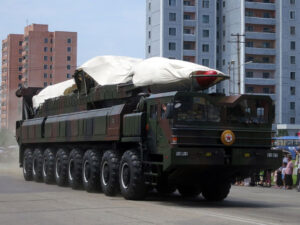
North Korea’s ballistic missile. Credit: Wikipedia

By Thalif Deen
UNITED NATIONS, Apr 21 2026 – The ongoing military conflicts in the Middle East—involving the US, Israel, Palestine, Iran and Lebanon—have indirectly bolstered North Korea’s plans to expand its nuclear arsenal.

North Korean leader Kim Jong-un is quoted as saying the American attacks on Iran justified his decision to strengthen his military power and would eventually make his country safe in a world shaped by President Trump’s foreign policy.

The headline in a New York Times article last week read: “North Korea Tests New Weapons, Drawing Lessons from War in the Middle East”.

Among the weapons tested were missiles carrying cluster munition and graphite bomb payloads, much like weapons that have appeared in the Middle East, the Times said.

The testing signals that North Korea is trying to learn from the Middle East war.

Responding to President Trump’s interest in meeting with him, the North Korean leader has said he would agree to a meeting, only if the US formally recognizes his country as a nuclear power—and argued that leaders of Iraq and Libya would have survived US attacks if they possessed a nuclear deterrent.

“I don’t see any reason not to get along well with the United States if it withdraws its hostile policy towards us and respects our current (nuclear) status”, he said in a speech last February.

Trump met with the North Korean leader three times during his first term in office (2017–2021), including summits in Singapore (June 2018) and Hanoi (February 2019), followed by a brief meeting at the DMZ (June 2019), where Trump became the first sitting U.S. president to enter North Korea.

Meanwhile, the Washington-based Stimson Center points out that despite stringent international economic sanctions imposed primarily through the UN Security Council, North Korea’s progress in nuclear and missile development as well as in its nuclear doctrine has been remarkable, particularly since negotiations with the Trump administration stalled in 2018-19.

North Korea’s position that denuclearization is non-negotiable was again emphasized at their most recent Party Congress held in February 2026.

Dr M.V. Ramana, Professor and Simons Chair in Disarmament, Global and Human Security, Director pro tem, School of Public Policy and Global Affairs at the University of British Columbia, Vancouver, told Inter Press Service the attacks by the United States and Israel on Iran are unprovoked and further add to the incentive for countries to acquire nuclear weapons.

“There is no way to be sure that such acquisition would shield such countries under all circumstances, especially when military powers like the United States act with such belligerence”.

But rather than go down that direction, he pointed out, “our efforts should be focused on ensuring that countries do not resort to military violence and attacking other countries, and differences are settled through peaceful and diplomatic means.

While the current leaderships in many countries might not be inclined to act in such ways, it is up to civil society and social movements to help steer governments in a more peaceful direction, declared Dr Ramana.

North Korea has made “very serious” progress in its ability to produce more nuclear weapons, the head of the UN’s nuclear watchdog has said, in another sign that the regime is seeking to use its nuclear arsenal to ensure its survival, according to the London Guardian.

North Korea is thought to have assembled about 50 nuclear warheads, although some experts are skeptical of its claims that it is able to miniaturize them so they can be attached to long-range ballistic missiles.

Speaking during a visit to Seoul, Rafael Grossi, the head of the International Atomic Energy Agency (IAEA), confirmed reports of a rapid rise in activity at North Korea’s main nuclear complex, Yongbyon.

Grossi said work had intensified at Yongbyon’s 5MW reactor, reprocessing unit, light water reactor and other facilities, and the country was believed to possess several dozen nuclear warheads.

In an interview with IPS, Alice Slater, who serves on the Boards of World Beyond War and the Global Network Against Weapons and Nuclear Power in Space and is also a UN NGO Representative for the Nuclear Age Peace Foundation, told IPS “once again, North Korea is being singled out as a rogue state for complaining that its plans to strengthen its military capacity is justified given the US destruction of Iraq and Libya which never made any effort to go nuclear as North Korea did.”

It was widely unreported, she said, that North Korea was the only nuclear country to support a vote in 2016 at the UN First Committee that authorized negotiations to go forward on a treaty to ban nuclear weapons which resulted in the 2017 adoption of the Treaty for the Prohibition of Nuclear Weapons.

Every single nuclear state as well as the states sheltering under the US nuclear umbrella, she pointed out, boycotted the meeting (except the Netherlands which was ordered to attend the UN meeting by a vote of its Parliament).

Which ones were the real rogue states? she asked.

While the news, dominated by what has been described by Ray McGovern founder of Veterans Intelligence Professions for Sanity as part of the MICIMATT (the Military Industrial Congressional Intelligence Media Academic Think Tank complex), is now trumpeting the new nuclear dangers and the frightening prospects of potential proliferation of nuclear weapons to additional nations, no attention is being paid to the opportunities to put a halt to the burgeoning nuclear arms race and the US race to weaponize space, characterized most recently by US plans for a “Golden Dome” estimated to cost 1.5 billion over the next years.

“There is a clear connection,” said Slater, “between maintaining space for peace and the willingness of Russia and China to negotiate for nuclear disarmament, going back to the time when Gorbachev proposed to Reagan that the US and Russia eliminate their nuclear arsenals provided the US gave up its plans to dominate and control space in its Vision 2020 document.”

While Reagan liked the idea of nuclear abolition, he refused to give up his Star Wars plans. Russia and China tabled a draft treaty in the consensus-bound UN Committee in Geneva in 2014 and 2018 which the US blocked, refusing to allow any discussion.

This past May 2025, on the 80th Anniversary of WWII, they issued a stunning proposal calling for global cooperation, supporting the “central coordinating role of the UN” and asking for a number of steps that could increase “strategic stability

In particular, they criticized the US Golden Dome program, urging the need for the early launch of negotiations to conclude a legally binding multilateral instrument based on their draft treaty on the prevention of weapons and the use of force in outer space. They even pledged to promote an international commitment “not to be the first to deploy weapons in outer space”.

“Were the peace and arms control movements in the world to take up this extraordinary call and opportunity to reverse the disastrous course we appear to be plummeting towards—and demand that our governments enter negotiations on a treaty to guarantee that we will maintain a weapons and war free environment in space, there is little doubt that a new path will also be opened to finally ban the bomb”.

Time to give peace a chance, declared Slater.

Meanwhile, States Parties to the Nuclear Nonproliferation Treaty (NPT) will be meeting at the United Nations for the 2026 NPT Review Conference April 27-May 22.

The Review Conference comes at a time of increased nuclear threats arising from armed conflicts involving nuclear armed States, in particular the Russian invasion of Ukraine and the US/Israel invasion of Iran.

“This will make the deliberations and negotiations in New York very difficult, but also extremely important”, according to Parliamentarians for Nuclear Non-proliferation and Disarmament (PNND).

The PNND says it will be actively involved in the Review Conference – in conjunction with activities in parliaments around the world – to support the NPT by advancing nuclear risk-reduction, nuclear arms control, common security and the global elimination of nuclear weapons.

IPS UN Bureau Report


!function(d,s,id){var js,fjs=d.getElementsByTagName(s)[0],p=/^http:/.test(d.location)?’http’:’https’;if(!d.getElementById(id)){js=d.createElement(s);js.id=id;js.src=p+’://platform.twitter.com/widgets.js’;fjs.parentNode.insertBefore(js,fjs);}}(document, ‘script’, ‘twitter-wjs’);