HKTB Taps Hong Kong Sevens’ 50th Anniversary to Promote Hong Kong as the “Events Capital of Asia”

HONG KONG, April 17, 2026 (GLOBE NEWSWIRE) — Cathay/HSBC Hong Kong Sevens is celebrating its 50th anniversary this year. By bundling a series of mega events under the promotional platform “Hong Kong Mega 8”, the Hong Kong Tourism Board (HKTB) is showcasing to global audiences Hong Kong’s diverse and vibrant appeal as the “Events Capital of Asia” to attract visitors to the city. As a long-time supporter of this world-class sporting event, HKTB is introducing China-made robots previously featured on CCTV’s Spring Festival Gala to perform and cheer at the opening ceremony, offering audiences worldwide a fresh experience that brings together sports, innovative technology and culture.

Dr Peter Lam, HKTB Chairman, said, “This year marks a significant milestone for the Hong Kong Sevens as it celebrates its 50th anniversary. Over the past half-century, the Hong Kong Sevens has witnessed the development of rugby in Hong Kong, while also becoming a major annual international sporting event that draws worldwide attention, successfully attracting visitors from around the world to be part of it. With the strong support of China Media Group, HKTB has arranged for China-made robots previously featured in CCTV’s Spring Festival Gala to appear as special guest performers, adding a new highlight to the event. While enjoying world-class rugby, audiences can also experience the global-leading capabilities of China’s robotics, as well as Hong Kong's distinctive charm as the ‘Events Capital of Asia’, where sports, innovative technology and culture come together.”
        
Secretary for Culture, Sports and Tourism Rosanna Law said: “I am very grateful to Hong Kong China Rugby and the Hong Kong Tourism Board for their efforts in adding so many exciting elements to this year’s 50th anniversary of the Hong Kong Sevens. The robots’ performance was truly fun and full of energy. I hope local and visiting fans will come together this weekend to join the Hong Kong Sevens party.”

Blending tradition with innovative elements, the opening performance of the 50th edition was packed with highlights. Following a dragon dance, 10 robots teamed up seamlessly with a cheerleading squad, kicking off the event with dynamic choreography and precise coordination, hyping up the crowd in the stadium.

Immediately following the innovative cheerleading performance, lasers danced across the Main Stadium pitch, displaying the participating nations over the years, the names of legendary Sevens players, and the effect of twin dragons soaring over Hong Kong, celebrating 50 years of golden development for the Hong Kong Sevens. The closing ceremony on Sunday will feature a spectacular pyrotechnic display launched from the stadium roof, bringing the three-day tournament to a dazzling finale.

Robots produced by Chinese Mainland company Unitree Robotics perform as special guests at the opening ceremony of the Hong Kong Sevens.

HKTB also brought the robots to the Avenue of Stars in Tsim Sha Tsui and the East Coast Boardwalk in North Point to film promotional footage showcasing Hong Kong.

For overseas promotion, HKTB partnered with the Hong Kong China Rugby (HKCR) to invite a number of international key opinion leaders (KOLs) to visit Hong Kong and experience the mega-event appeal of the Hong Kong Sevens. Among them were three athletes who appeared in Netflix Korea’s Physical: 100Noh Sung-yul, a South Korean fitness YouTuber with over 10 million followers; artist Justin John Harvey; and well-known actor Lee Jae-yoon. In addition to appearing at Kai Tak Sports Park and the Hong Kong Sevens Fan Village to experience the event’s vibrant atmosphere, the trio explored various Hong Kong landmarks and checked out a series of distinctive experiences combining fitness challenges with local food culture, filming promotional content for HKTB and expanding the international exposure of both the Hong Kong Sevens and Hong Kong tourism. At the same time, HKTB invited partners from the local travel trade, the MICE (meetings, incentive travels, conventions and exhibitions) and cruise sectors, and overseas travel agency representatives and media, to attend the event to witness this annual international sporting highlight and experience Hong Kong’s charm as the “Events Capital of Asia”.

Members of the media can download the photos and videos from the following link:
https://assetlibrary.hktb.com/assetbank-hktb/action/browseItems?categoryId=2402&categoryTypeId=2 

For media inquiries, please contact:

Mr Cameron Tong Tel: 2807 6367                Email: [email protected]
Mr Chokie Cheng Tel: 2807 6342                Email: [email protected]

Photos accompanying this announcement are available at:

https://www.globenewswire.com/NewsRoom/AttachmentNg/d0cc62f7-1664-44e2-9a1a-2cf813eb1ad3

https://www.globenewswire.com/NewsRoom/AttachmentNg/83545924-55d4-4da7-b005-2105354cd985

https://www.globenewswire.com/NewsRoom/AttachmentNg/585cd706-2a8e-4b1c-930f-007251131c0a


GLOBENEWSWIRE (Distribution ID 9692113)

JETOUR تستعرض تشكيلتها الكاملة من السيارات الهجينة في معرضAuto China 2026 المرتقب

بكين, April 17, 2026 (GLOBE NEWSWIRE) —

مع اقتراب معرض بكين الدولي للسيارات 2026 (Auto China 2026)، تعتزم JETOUR International تنظيم ظهورًا مشتركًا لأول مرة لعلامتي JETOUR وSOUEAST، لاستعراض إنجازات الشركة التقنية في قطاع المركبات الهجينة الكهربائية المخصصة للطرق الوعرة.

ومن المقرر أن تشمل الطرازات المشارِكة في المعرض SOUEAST S08 DM، وJETOUR T1 i-DM، وT2 i-DM، وG700، بالإضافة إلى مجموعة مختارة من الطرازات التجريبية المستقبلية. وعلاوةً على ذلك، ستعرض JETOUR منظومتها التقنية للمركبات الهجينة الكهربائية المخصصة لجميع التضاريس والطرق الوعرة، بما في ذلك بنية GAIA، وتقنية الهجين عالية الكفاءة C-DM، ونظام الدفع الرباعي الذكي الأوتوماتيكي بالكامل XWD.

يُبرز هذا الظهور المشترك الأول للعلامتين في معرض Auto China 2026 التطور المستمر لاستراتيجية “Travel+” الخاصة بشركة JETOUR، حيث تعمل علامتا JETOUR وSOUEAST بتناغم كهيكل متكامل للعلامتين التجاريتين. تركز علامة SOUEAST على حلول التنقل داخل المدن، فيما تضم علامة JETOUR سلسلتين متميزتين من المنتجات: حيث تُصنّف سلسلة T ضمن الفئة المُصممة لتكون خفيفة على الطرق الوعرة، بينما سلسلة G مخصصة للأداء المتميز على الطرق الوعرة. وتشكل هذه السلاسل الثلاث معًا محفظة منتجات متميزة بوضوح، تغطي بدقة كافة متطلبات التنقل – من الرحلات البسيطة داخل المدن إلى مغامرات الطرق الوعرة ذات المستوى الاحترافي.

وخلال المعرض، ستستضيف JETOUR أكثر من 200 صحفي ومؤثر من مختلف أنحاء العالم في بكين. وستغتنم JETOUR هذه الفرصة لاستعراض المرحلة الجديدة من استراتيجية “Travel+” بشكل شامل، من خلال التعاون بين مختلف القطاعات والتفاعل مع وسائل الإعلام العالمية.

[email protected] – JETOUR international

JETOUR AUTO
طريق جينهوا، حي جيوجيانغ
ووهو، آنهوي، 241000
الصين
Tina Liu        

الصورة المصاحبة لهذا البيان الصحفي متاحة على: https://www.globenewswire.com/NewsRoom/AttachmentNg/a3bc287e-f61f-4eb5-8652-bc44159f5ba5 


GLOBENEWSWIRE (Distribution ID 9691986)

The Grocery Bill Is Calm – The AgriFood System Is Not

Global food price crisis may be closer than it appears, as stable grocery costs mask rising fertilizer, energy, and supply chain pressures that could trigger significant food price increases by 2027

If you are reading commodity price movements as evidence that the closure of the Strait of Hormuz has been absorbed without consequence, you are reading the right data for the wrong time horizon. Credit: Mauricio Ramos/IPS

By Máximo Torero
ROME, Apr 17 2026 – The headlines are wrong about food prices — but right to be afraid, very afraid. Walk into a supermarket in Chicago, Berlin, or Mumbai today, and you will not find the shelves stripped bare or the prices dramatically higher than last month. Despite weeks of alarming headlines about commodity markets, food inflation in most major economies has risen only marginally — a tenth or two-tenths of a percentage point between February and March of this year. In the United States, food inflation moved from roughly 2.9 percent to 3.1 percent. In Germany, from 0.8 to 0.9. In India, from 7.8 to 8.0.

This is not a crisis at the checkout counter. Not yet.

But here is what the headlines are getting wrong, and what they are getting terrifyingly right at the same time: the stability you see today is real, and it is also beside the point. What is coming — if the world does not act quickly and the cease fire does not continue— is a food price shock of a different order, arriving not in March but in the harvests of late 2026 and the markets of 2027.

To understand why, you first have to understand what commodity price indexes actually measure, and what they do not. The FAO Food Price Index — which did rise slightly in March, driven largely by vegetable oils and sugar amid higher crude oil costs — tracks the international price of raw agricultural commodities: wheat, maize, rice, oilseeds, dairy.

It does not track what you pay for a baguette or a box of pasta. By the time wheat becomes bread, the grain itself represents only 10 to 15 percent of the final retail price. The rest is energy, labor, processing, packaging, logistics, and retail margins.

This cost structure is precisely why grocery bills do not lurch upward the moment commodity markets move. It is also why the current calm is not a reliable indicator of future stability specially because of the significant share of energy costs.

Short-term stability is not medium or long-term security. The time between a fertilizer shock and a harvest failure is measured in months. The time between a harvest failure and a food price surge is measured in months more. We are already inside that window

The markets for major cereals are, for now, sending reassuring signals. Wheat and maize prices have held steady. Rice prices actually declined. Global cereal stocks remain high, and the market is correctly reflecting sufficient near-term availability. If you are reading commodity price movements as evidence that the closure of the Strait of Hormuz has been absorbed without consequence, you are reading the right data for the wrong time horizon.

The Strait carries roughly 35% of crude oil exports — but its disruption reaches agrifood systems through a less obvious channel, logistics and energy costs for food processing. In addition, the Strait carries 20% of natural gas which can’t be replaced by any other source, and which is essential for nitrogen fertilizer ( specifically urea), 20-30% of fertilizers export depending on the specific type and about 50% of Sulfur exports a key input to produce phosphate fertilizer. All this is still  not showing up in this month’s price indexes. 

According to FAO analysis, the Strait of Hormuz closure has choked off 30 to 35 percent of global urea trade. Urea prices have already jumped between 40 and 60 percent. The feedstock that makes nitrogen fertilizer possible — natural gas — has risen 70 to 90 percent in price. Brent crude is up 60 percent just before the cease of fire.

These are not abstract figures. They are the inputs that farmers in the United States, Europe, South Asia, and across the Northern Hemisphere are confronting right now, as planting season either begins or approaches.

The decision they face is not a comfortable one: pay double for fertilizer when commodity prices are already low, and hope prices recover, or cut application rates and accept lower yields. Some will shift toward nitrogen-fixing crops like soybeans. Others will pivot toward crops destined for biofuel production, reducing the food supply further still.

The consequences of those decisions will not appear on store shelves until the harvest comes in, or the markets decides to incorporate them in future prices. When they do, the combination of constrained yields, elevated energy costs running through every link of the supply chain, and ongoing trade disruptions will drive commodity prices higher, and food prices even higher because of the additional energy cost increases — not by a tenth of a point per month, but meaningfully, in ways that will be felt most acutely by the households that can least afford it.

Short-term stability is not medium or long-term security. The time between a fertilizer shock and a harvest failure is measured in months. The time between a harvest failure and a food price surge is measured in months more. We are already inside that window.

The world’s response cannot wait for the price indexes to confirm what the agronomic and economic data already make clear.

Governments, development institutions, and the private sector must act now on three fronts: ensuring fertilizer access for smallholder farmers and input and food import-dependent nations before their planting decisions become irreversible; protecting and diversifying trade routes so that disruption in one chokepoint does not become a global supply crisis; avoid export restrictions of fertilizers and energy products and pursuing with urgency the diplomatic solutions that remain, for now, within reach.

The supermarket and retail store shelves are stocked. The silos are full. And the window to keep them that way is closing. 

Keeping the Strait of Hormuz open is therefore not just about preventing food inflation — it is about averting a broader surge in overall inflation that would directly undermine economic growth, while also shielding every other sector dependent on the energy and input prices that flow through this strategic chokepoint.


Excerpt:

Máximo Torero Cullen is Chief Economist of the Food and Agriculture Organization of the United Nations

Dmitry Shubov Outlines New Strategic U.S. Commercial Law Readiness for Southeast Asian Asset Tokenization Startups

FREMONT, Calif., April 17, 2026 (GLOBE NEWSWIRE) — In the wake of the new 2026 Sidley Blockchain Bulletin, which highlights tokenized Real-World Assets (RWAs) as the next frontier for capital markets, Dmitry Shubov Consulting is releasing a new strategic analysis focused on the “compliance gap” hitting Southeast Asian (SEA) startups. With the June 3, 2026, New York UCC Article 12 rollout just around the corner, the briefing delves into the new “exclusive control” rules that these firms must meet if they want to turn their digital assets into legitimate collateral for U.S. bank financing.

Industry leaders identify three critical frictions currently stalling SEA expansion:

  • The Control Standard Hurdles: The biggest wall for cross-border expansion right now is getting digital architecture to play nice with UCC Article 12's “Control” rules. If an SEA startup can’t prove the “exclusive power” required by these new amendments, their tokenized assets are likely to get rejected by U.S. institutional credit markets that now demand strict, modernized collateral eligibility.
  • The July Enforcement Deadline: California’s Digital Financial Assets Law (DFAL) hits full enforcement this July, ending the era of regulatory ambiguity. A documented licensing roadmap is now the baseline for any serious conversation with U.S. capital partners.
  • The Enforceability Paradox: There is a persistent disconnect between “code” and “courtrooms.” U.S. judges increasingly look for “Code-Plus” architecture—smart contracts backed by human-readable legal wrappers that ensure a “meeting of the minds” if a dispute arises.

“This year, the technology is there, but the legal regulatory frameworks are where there may be some opportunity for legal tech firms, and tech firms in general. Many regions, like SEA and Dubai, have groundbreaking technology to really game-change, but the U.S. ‘anchor’ is what is necessary to close deals with U.S. investors,” says Dmitry Shubov, Founder of Dmitry Shubov Consulting.

Navigating the U.S. regulatory landscape can be a bit of a labyrinth, and partnering with a consulting firm can be the best first step to ensure cross-border tech success. Dmitry Shubov Consulting specializes in guiding early-stage SEA legal tech firms into the U.S. market and closing the gap between domestic investors and SEA innovation. For more details on entering the U.S. market as a new legal-tech firm or an established SEA-based legal-tech firm, reach out to Dmitry Shubov Consulting.

About Dmitry Shubov Consulting

At Dmitry Shubov Consulting, our mission is to connect accredited investors with groundbreaking legal technology startups, fostering innovation and growth across Southeast Asia and helping Asian businesses enter the U.S. market. For more information, please visit our website or contact us directly.

Media Contact:

[email protected]


GLOBENEWSWIRE (Distribution ID 9691833)

Global Shocks Push Geoeconomics to the Center Stage at Foreign Policy Forum

Frank McCourt, founder of Project Liberty, speaking with Foreign Policy CEO Andrew Sollinger at the Geoeconomics Forum. Credit: IPS

Frank McCourt, founder of Project Liberty, speaking with Foreign Policy CEO Andrew Sollinger at the Geoeconomics Forum. Credit: IPS

By Umar Manzoor Shah
SRINAGAR, India, Apr 17 2026 – As war in the Middle East ripples through global markets, policymakers, economists, and industry leaders gathered in Washington this week to agree that economics is no longer separate from geopolitics. It is now its core instrument.

At the Geoeconomics Forum hosted by Foreign Policy alongside the Spring Meetings of the International Monetary Fund and World Bank, speakers repeatedly pointed to a world shaped by shocks, where supply chains, energy flows, and technology have become tools of power.

“Geoeconomics is no longer a backdrop to global politics. It is the key and critical element,” said Foreign Policy CEO Andrew Sollinger in his opening remarks.

The urgency of that shift is tied closely to the ongoing conflict in the Gulf, which has disrupted energy markets and exposed vulnerabilities in global trade systems. The war has made the world understand how quickly regional crises can cascade into worldwide economic instability, affecting everything from fuel prices to industrial production.

Participants at the forum described a transformed global order where governments increasingly deploy economic tools once considered neutral or technical.

Trade policy, capital flows, and supply chains now serve strategic goals. Critical minerals, essential for semiconductors and artificial intelligence systems, have become geopolitical leverage points. Energy routes such as the Strait of Hormuz have turned into potential choke points with global consequences instead of just transit corridors.

“Geopolitics and economics have always been linked. We are going back to a school of thought that sees them as inextricable,” Jacob Helberg, U.S. Under Secretary for Economic Affairs, said in his address.

Helberg pointed to growing competition over rare earth minerals, where China dominates processing and has begun using export controls as a strategic tool. At the same time, logistics corridors and manufacturing hubs have emerged as additional pressure points in the global system.

“The stack is totally interlinked,” he said, referring to the chain from raw materials to finished technology. “There are choke points at every layer.”

The forum repeatedly returned to a central theme: fragmentation.

Countries are adapting to a “shock-prone” world marked by conflict, pandemics, and financial instability. This has led to a shift away from global integration toward more regional and strategic economic blocs.

Middle powers, in particular, face difficult choices. As competition intensifies between the United States and China, many nations are weighing how to align their economic and technological futures.

Dr Pedro Abramovay, Vice President, Programs, Open Society Foundations, argued that the moment offers both risk and opportunity for these countries.

“We need to make sure that middle powers act as middle powers and not just middlemen,” he said, stressing that democracy can shape their role in a changing order.

Abramovay said the current moment has exposed long-standing imbalances in the global system.

“It unveils the reality that existed before,” he said, referring to earlier global arrangements that often did not serve the interests of the Global South.

He noted that domestic political pressure is now reshaping how countries engage globally. Leaders can no longer align externally without responding to internal constituencies.

“That internal pressure can empower those middle powers to assert their sovereignty and negotiate effectively,” Abramovay said.

The forum highlighted growing calls for a reworked international order grounded in sovereignty and public interest rather than narrow economic gain.

“We need to have clear clarity of agenda. We need to have commitment of those leaders expressing that they are there, not representing big corporations or, again, interests and organisations that speak for themselves, but exactly speaking in the name and representing the majority of the world,” Abramovay added.

Frank McCourt, founder of Project Liberty, warned against framing the future as a binary choice between U.S. private-sector dominance and Chinese state-led models.

“This is a false dichotomy,” he said, arguing for a third path that aligns technology with democratic values.

He highlighted growing unease among countries that feel caught between competing systems, noting that many are exploring alternative frameworks for digital governance and economic cooperation.

Human Impact Behind the Strategy
While much of the discussion focused on high-level strategy, speakers acknowledged the human consequences of geoeconomic shifts.

Energy shocks translate into higher costs for households. Supply chain disruptions affect jobs and access to goods. Decisions made in boardrooms and ministries ripple outward to communities worldwide.

“The best-laid plans can be interrupted by unforeseen circumstances. You have to pivot, adapt, and build better,” Sollinger said.

That message echoed throughout the event.

IPS UN Bureau Report


!function(d,s,id){var js,fjs=d.getElementsByTagName(s)[0],p=/^http:/.test(d.location)?’http’:’https’;if(!d.getElementById(id)){js=d.createElement(s);js.id=id;js.src=p+’://platform.twitter.com/widgets.js’;fjs.parentNode.insertBefore(js,fjs);}}(document, ‘script’, ‘twitter-wjs’);  

SOUEAST Sets Debut at Auto China 2026, Accelerating Global Market Expansion

BEIJING, April 17, 2026 (GLOBE NEWSWIRE) — As the 2026 Beijing International Automotive Exhibition ( Auto China 2026) kicks off, SOUEAST is set to make its debut, showcasing the 7-seater plug-in hybrid SUV——S08 DM, alongside a diverse models lineup. This debut marks a significant milestone in the brand’s ongoing global expansion.

Since its brand renewal in 2024, SOUEAST has remained committed to its “EASE YOUR LIFE” philosophy. Positioned as “The partner for Urban Mobility”, the brand addresses the diverse mobility needs of families—from daily commuting to weekend getaways—while steadily expanding its global presence.

As of March 2026, SOUEAST offers a robust lineup of hybrid and fuel-powered models, including the S06, S06 DM, S07, S08 DM, and S09. The brand is now present in 48 countries and regions, supported by over 300 sales outlets, and has built a strong reputation across the Middle East, Africa, and Central and South America. Notably, in Egypt, SOUEAST climbed to 4th place in the passenger vehicle segment and 6th overall market in just one year.

The S08 DM, a “7-Seat Urban Comfort SUV” and the centerpiece of SOUEAST, will be presented at the auto show. Powered by a dual-mode hybrid system, the vehicle is engineered for both city commuting and long-distance trips. Early this year, the model made a striking debut at Dubai Fashion Week (DFW), earning high praise from international media for its forward-looking aesthetics and design. It is currently available in markets including Saudi Arabia and the UAE, where it has already garnered positive feedback from customers since its launch.

SOUEAST will co-exhibit with JETOUR for the first time at Auto China 2026. Under the theme of “Urban Mobility,” SOUEAST will showcase S08 DM, S09 models and several concept cars. Through innovative design and display, the brand aims to demonstrate its commitment to deepening its presence in the urban mobility market. Looking ahead, SOUEAST will continue to refine its product portfolio and channels, and steadily advance its globalization.

Company:Fujian Soueast Automobile Sales Co., Ltd

Contact Person: Weitong Liu

Email: [email protected]

Website: ​https://www.soueast-motor.com

Photos accompanying this announcement are available at:

https://www.globenewswire.com/NewsRoom/AttachmentNg/834783a4-712b-4c15-9fb2-f6396aad0cc2

https://www.globenewswire.com/NewsRoom/AttachmentNg/f4a88082-69ea-4ec8-9ebe-6de7790906c0


GLOBENEWSWIRE (Distribution ID 9691895)

Africa’s Future Depends on Innovation, Data, and Frontier Technologies

A group of young people. Photo by Iwaria Inc. on Unsplash. Source: Africa Renewal, United Nations.

 
The choice is clear; the window is narrow; and the time to prepare Africa’s workforce for the frontier economy is now. Africa’s growth story over the past two decades is real, but it is not yet transformative.

By Claver Gatete
ADDIS ABABA, Ethiopia, Apr 17 2026 – Across the continent, GDP has risen on the back of more workers, more capital and a commodity super-cycle, rather than through genuine gains in productivity and innovation. Too little labour has moved out of subsistence agriculture into higher-productivity manufacturing and modern services.

As the recent Africa Business Forum in Addis Ababa drew to a close, a clear message emerged: if Africa is to create the tens of millions of quality jobs its young people need in the coming decade, it must shift decisively from input driven growth and embrace an innovation-led growth powered by data and frontier technologies.

Our 2026 Economic Report on Africa comes at a time when governments are realising that this pivot is no longer optional. It is the only credible route to resilient, inclusive and sustainable development amidst climate shocks, tightening financing conditions, geopolitical challenges and rapid technological change.

Frontier technologies, from artificial intelligence and advanced data analytics to the Internet-of-Things, robotics and clean energy solutions, are already reshaping value chains in agriculture, manufacturing, services and public administration.

Claver Gatete

The question for African policymakers and industry leaders is not whether these technologies will transform the labour market, but whether the continent will shape that transformation, or simply adjust to it on other people’s terms.

Jobs of the future

Preparing for the jobs of the future starts with an honest diagnosis of the skills challenge. Today, only a small share of African children achieve minimum reading proficiency by age 10; enrolment in technical and vocational education remains low; and tertiary enrolment lags far behind global averages. This is a recipe for exclusion from a technology intensive global economy.

Countries need comprehensive national skills compacts that place foundational learning, STEM education and digital literacy at the centre of economic strategy, not as an add on.

That means curriculum reforms that prioritize problem solving, coding, data literacy and creativity; large scale teacher upgrading; and robust partnerships between universities, TVET colleges and industry to ensure training aligns with real labour market demand.

Encouragingly, some countries are already moving in this direction.

For example, Kenya’s digital innovation ecosystem – from mobile money to platform-based logistics and e commerce – is creating new occupations in fintech, digital marketing, data services and platform management that barely existed a decade ago.

Rwanda has positioned itself as an African testbed for emerging technologies, investing heavily in broadband, digital public services and coding academies to build a workforce ready for data driven and AI enabled jobs.

In Egypt, Morocco, and South Africa, automotive and renewable energy value chains are spawning new roles in advanced manufacturing, battery technology and solar and wind engineering.

Tangier, the city that hosted the ECA Conference of Ministers of Finance and Economic Development last month, has a world-class frontier technologies port that rivals many in developed countries.

These examples show that when countries align education, industrial policy, and digital strategy, they can start to bend their labour markets towards the industries of the future.

More is required

But skills alone will not deliver the jobs dividend. Workers need productive firms to hire them, and firms need an enabling ecosystem to innovate.

That is why the report stresses the importance of industrial and innovation policy that deliberately integrates frontier technologies in Africa’s productive sectors.

In agriculture, for instance, the jobs of the future will be in climate smart farming, Agri data services, precision input distribution and digital extension.

Realizing that potential requires investment in irrigation, rural broadband, data platforms, and support for agritech start ups that can tailor frontier tools, from sensors to satellite imagery and AI based advisory services, to local realities.

In manufacturing, governments can use industrial parks and special economic zones to attract firms deploying automation, smart logistics and advanced materials, while negotiating technology transfer and local supplier development that expand skilled employment.

At the same time, Africa must treat data as a strategic economic asset, not an afterthought. Data underpins frontier technologies across all sectors – yet much of the continent’s data is stored and processed offshore, with limited value captured locally.

Building a data economy that creates jobs means investing in data centres, cloud infrastructure, high performance computing and secure connectivity, while developing clear rules on data governance, privacy, cross border flows and competition.

It also means supporting local firms that work along the data value chain – from collection and labelling to analytics and AI services – and equipping young people with the skills to work as data engineers, analysts, ethicists and product managers.

If Africa continues to export raw data while importing high value digital services, it will simply reproduce its traditional commodity trap in digital form.

The financing model for innovation and jobs must also change. Traditional banking systems, focused on collateralized lending, are poorly suited to high risk, intangible asset driven technology ventures. African countries can begin to close this gap by creating blended finance facilities, innovation bonds, public venture funds, and regional credit lines that crowd in private capital for high productivity sectors.

Public procurement can be a powerful lever here: by designing innovation friendly tenders and reserving space for local digital and tech providers, governments can create predictable demand that helps start ups and SMEs grow and hire.

Some countries are already experimenting with sandboxes and innovation challenges in fintech, e health and govtech, signalling how policy can catalyse new job creating ecosystems.

None of this is without risk.

The risks

Frontier technologies are already automating routine tasks and reshaping value chains in ways that can displace workers, widen social and gender inequalities and deepen digital divides. Jobs will not disappear overall, but they will change – and some will vanish.

Preparing for that disruption demands robust social protection systems, active labour market policies and targeted support for women and youth to access training, finance and technology.

It also requires serious attention to cybersecurity, data protection and platform regulation to prevent predatory practices, safeguard rights and maintain trust in digital systems.

If governance lags too far behind innovation, the labour market will absorb the adjustment costs through informality, underemployment, and social tension.

Africa starts this journey with significant advantages.

It is home to the world’s youngest population, vast critical mineral reserves essential for clean energy and technology manufacturing, and some of the best solar resources on the planet.

These assets can underpin new waves of green industrialization – in batteries, electric mobility, green hydrogen, clean power, and digital infrastructure – creating diverse, future oriented jobs in engineering, construction, maintenance, data and services.

But to convert potential into reality, countries must abandon the comfort of input driven growth and embrace a more demanding agenda: one that puts skills, innovation ecosystems, data, and frontier technologies at the heart of economic strategy.

With the AfCFTA as our Marshall Plan, we have the rules and platform for continental scaling, leading to shared prosperity in jobs, created from harnessing data and frontier technologies.

The jobs of the future are being designed today, in how Africa educates its children, regulates its data, finances its innovators and plans its infrastructure.

If African countries act with urgency and purpose, they can shape a labour market that is more productive, more inclusive, and more resilient than the one they inherited.

If they hesitate, the continent risks remaining a consumer of other people’s technologies and a supplier of low value labour and raw materials.

In the end, the real question is simple: will Africa harness frontier technologies to accelerate economic growth and structural transformation, or remain on the margins of the industries shaping the 21st century?

The choice is clear; the window is narrow; and the time to prepare Africa’s workforce for the frontier economy is now. This is how we can ensure sustainable economic growth on the continent.

Claver Gatete is Under-Secretary-General and Executive Secretary of the UN Economic Commission for Africa.

Source: Africa Renewal

IPS UN Bureau


!function(d,s,id){var js,fjs=d.getElementsByTagName(s)[0],p=/^http:/.test(d.location)?’http’:’https’;if(!d.getElementById(id)){js=d.createElement(s);js.id=id;js.src=p+’://platform.twitter.com/widgets.js’;fjs.parentNode.insertBefore(js,fjs);}}(document, ‘script’, ‘twitter-wjs’);  

Bridging Knowledge Systems: How Pacific Communities Are Reclaiming Climate Solutions Through Nature

Mangroves, reefs and coastal ecosystems are more than natural assets — they are frontline climate solutions. Across Pacific villages, including Naidiri on Fiji’s Coral Coast, these systems are helping reduce erosion, protect livelihoods and support long-term resilience. Credit: Ludovic Branlant/SPC

Mangroves, reefs and coastal ecosystems are more than natural assets — they are frontline climate solutions. Across Pacific villages, including Naidiri on Fiji’s Coral Coast, these systems are helping reduce erosion, protect livelihoods and support long-term resilience. Credit: Ludovic Branlant/SPC

By Sera Sefeti
NAIDIRI, FIJI, Apr 17 2026 – Climate change is no longer a distant threat. Across the Pacific, it is a daily reality reshaping coastlines, livelihoods, and the delicate balance between people and the environment. But in a region long defined by resilience, solutions are not being invented from scratch. They are being remembered, strengthened, and scaled. Nature-based solutions (NbS) approaches that use ecosystems to address climate, disaster, and development challenges have always existed in Pacific communities. For generations, villages have relied on mangroves, agroforestry, and customary practices to protect their land and sustain their people. But as climate impacts intensify, the scale and speed of change demand more.

Now, a new regional effort is working to bridge the gap between tradition and modern policy.

The Pacific Community’s Promoting Pacific Islands Nature-based Solutions (PPIN) project is designed to do exactly that: connect what communities already know with the systems that govern development and investment.

Dr Rakeshi Lata, Training and Capacity Building Officer for Nature-based Solutions at SPC, explains that the project is not about replacing traditional knowledge but elevating it.

“It functions as a bridge connecting community practices with national policies to secure resources and scale up proven local methods,” said Lata.

Naidiri village on Fiji’s Coral Coast shows how nature-based Solutions are put into practice, with communities restoring mangroves and reefs to protect their coastline and sustain livelihoods. Credit: Ludovic Branlant/SPC

Naidiri village on Fiji’s Coral Coast shows how nature-based Solutions are put into practice, with communities restoring mangroves and reefs to protect their coastline and sustain livelihoods. Credit: Ludovic Branlant/SPC

At its core, PPIN challenges a long-standing imbalance in development thinking where engineered, “grey” infrastructure is prioritised, and nature is treated as secondary.

“More specifically, PPIN addresses the fact that Pacific countries are highly vulnerable to climate change, disasters, and ecosystem degradation, yet development decisions still prioritise grey, engineered solutions while nature is treated as secondary or only an environmental issue,” Lata said.

This disconnect is especially stark in the Pacific, where people’s lives, cultures, and economies are deeply intertwined with the natural environment. When ecosystems fail, communities feel it immediately through food insecurity, coastal erosion, and increased disaster risks.

Yet despite the proven value of nature-based solutions, their adoption has remained limited—often fragmented, underfunded, and confined to small pilot projects.

“There is limited policy integration, technical capacity, economic evidence, and financing to make NbS ‘business as usual’ across sectors such as infrastructure, finance, agriculture, forestry, fisheries, and tourism,” Lata said.

That gap between what works locally and what is scaled nationally is where PPIN steps in.

Importantly, the project rejects the idea that traditional knowledge and modern science are in competition.

“The core philosophy of PPIN is that traditional knowledge and modern policy are not opposing forces but complementary strengths, this project aims to formalise what communities have already been practising successfully for centuries,” she said.

“PPIN actively incorporates modern science to strengthen traditional approaches.”

Across Fiji, Vanuatu, and Tonga, this integration is already visible not in theory but in practice.

Mangrove restoration, for example, is being used to reduce coastal erosion and storm surges, offering a natural alternative to costly seawalls. During Cyclone Vaiana in Fiji, boats sought shelter within mangrove systems, shielded from powerful winds and waves,  an example of ecosystem protection delivering real-time resilience.

These same mangroves also trap sediment, protecting downstream communities and coral reefs without the need for concrete infrastructure.

In rural areas, traditional agroforestry systems are being strengthened, combining trees and crops to improve soil stability, enhance food security, and build drought resilience. These systems reduce the need for engineered irrigation and land stabilisation while maintaining ecological balance.

Despite these successes, scaling such solutions has historically been difficult. Fragmented governance, siloed implementation across ministries and NGOs, and limited technical capacity have slowed progress.

Coral restoration is helping rebuild reef ecosystems that protect Pacific coastlines, support fisheries and sustain community livelihoods. Credit: Ludovic Branlant/SPC

Coral restoration helps rebuild reef ecosystems that protect Pacific coastlines, support fisheries and sustain community livelihoods. Credit: Ludovic Branlant/SPC

PPIN is designed to dismantle these barriers.

“A central pillar of PPIN is targeted capacity-building, which includes training programmes and communities of practice by establishing peer-to-peer learning networks focusing on specific sectors to foster continued knowledge exchange and collaboration,” she said.

Beyond policy integration, the project is investing in people, particularly those closest to the land.

Training programmes, including Farmers’ Field Schools and coastal resilience initiatives, focus on practical, livelihood-based applications of NbS. Participants gain hands-on skills in climate-smart and organic farming, linking ecosystem health directly to food production and household wellbeing.

The response has been strong. Women make up more than half of participants over 80 out of 146 with youth and community practitioners also actively engaged.

As the project moves toward closure, its legacy is already taking shape not just in outcomes but also in systems that will endure.

“To ensure sustainability and long-term accessibility, materials from trainings, technical guidance, needs assessment findings and more are being consolidated and hosted within a regional NbS knowledge hub led by SPREP,” Lata said.

“This hub provides a single, trusted platform where governments, practitioners, communities, women and youth can access the PPIN resources.”

But perhaps its most lasting impact will be less tangible and more powerful.

“Beyond materials, PPIN leaves behind strengthened regional networks and communities of practice, which will continue to connect practitioners across countries and sectors.”

In a region on the frontline of climate change, the future may not lie in choosing between tradition and science but in weaving them together.

Because in the Pacific, resilience has never been built on one system alone. It is carried across generations, across knowledge systems, and now, increasingly, across policy and practice.

IPS UN Bureau Report


!function(d,s,id){var js,fjs=d.getElementsByTagName(s)[0],p=/^http:/.test(d.location)?’http’:’https’;if(!d.getElementById(id)){js=d.createElement(s);js.id=id;js.src=p+’://platform.twitter.com/widgets.js’;fjs.parentNode.insertBefore(js,fjs);}}(document, ‘script’, ‘twitter-wjs’);  

Gaza Crisis Deepens as Aid Restrictions and Ongoing Strikes Strain Humanitarian Operations

Gaza Crisis Deepens as Aid Restrictions and Ongoing Strikes Strain Humanitarian Operations

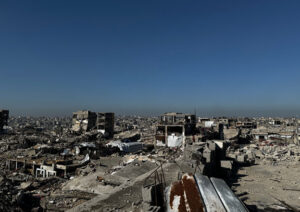
A view of the rubble in Jabalia, northern Gaza, after heavy Israeli bombardment. Credit: UNICEF/Rawan Eleyan

By Oritro Karim
UNITED NATIONS, Apr 17 2026 – Roughly six months after the ceasefire in the Occupied Palestinian Territory went into effect, the humanitarian situation in Gaza remains precariously fragile, despite a relative decline in hostilities. The crisis, marked by ongoing Israeli airstrikes and shelling, continued blockades on humanitarian aid, and widespread displacement, has pushed the majority of Palestinians in Gaza to the brink. Amid the vast scale of needs, basic services are increasingly strained, and humanitarian experts warn that the situation could deteriorate further in the coming months unless sustained aid and funding are secured.

A new report from the United Nations Relief and Works Agency for Palestinians in the Near East (UNRWA) on the current conditions in Gaza confirmed a continuation of airstrikes, shelling, and gunfire across multiple areas, including Beit Lahia, Jabalia, Deir al Balah, Khan Younis, Rafah, and Bureij. The Office for the Coordination of Humanitarian Affairs (OCHA) estimates that since the eruption of hostilities on October 7, 2023, approximately 72,315 Gazans have been killed and another 172,137 injured.

“The scale and pattern of these actions, occurring alongside mass displacement of Palestinians from their homes and land in Gaza shows once again the ongoing broader policy of ethnic cleansing across the occupied Palestinian territory,” said a group of United Nations (UN) experts on April 13. “This cycle of displacement, terror, and targeted attacks serves an ultimate purpose: to make life unbearable for Palestinians and permanently force them from their land…Targeting areas known to shelter displaced civilians is a grave breach of international humanitarian law and is a grim reminder of the urgent need for international action and accountability.”

According to Palestine’s Ministry of Health, at least 32 Gazans have been killed by Israeli forces in early April alone. Airstrikes, gunfire, and shelling are daily occurrences, with women, children, disabled persons, humanitarian workers, and journalists being routinely targeted. On April 9, a young girl was killed by Israeli gunfire in a crowded classroom-turned-makeshift encampment.

“For the past 10 days, Palestinians are still being killed and injured in what is left of their homes, shelters, and tents of displaced families, on the streets, in vehicles, at a medical facility and in a classroom,” said United Nations High Commissioner for Human Rights Volker Türk. “Movement itself has become a life-threatening activity. Incidents of Palestinians killed by Israeli forces while walking, driving, or standing outside are recorded nearly every day.”

The Office of the High Commissioner for Human Rights (OHCHR) also confirmed that there have been increasing cases of Israeli forces killing Palestinians based on their proximity to the “yellow line”, a line of demarcation that divides the Palestinian-controlled areas of Gaza and the Israeli-controlled areas. “Targeting civilians not taking direct part in hostilities is a war crime, regardless of their proximity to deployment lines,” said Türk

On April 6, Israeli forces shot at vehicles from the World Health Organization (WHO), killing a driver. Two days later, Israeli drone strikes killed Al Jazeera journalist Mohamed Washah in Gaza City, marking the 294th Palestinian journalist to be killed by Israeli forces since October 7, 2023. Additionally, Israel has continued to ban international journalists from accessing Gaza, further compounding the regional decline of journalistic freedom.

“The number of journalists and humanitarian personnel killed in Gaza is unprecedented, and further compounds civilian harm as it makes reporting on the situation and responding to its humanitarian implications life-threatening,” added Türk.

Internal displacement is particularly rampant, with OCHA estimating that routine evacuation orders and bombardment have affected roughly 92 percent of all housing across the enclave, with the vast majority of affected communities having been displaced multiple times. Civilians residing in overcrowded, makeshift encampments are disproportionately affected by insecurity, freezing temperatures, building collapse, and a severe shortage of humanitarian aid and basic services.

Humanitarian movement remains severely constrained, with all UNRWA staff banned from accessing the entire Occupied Palestinian Territory since March 2025. The agency, which has long acted as a critical lifeline for Palestinians, has pre-positioned food parcels, flour, and shelter supplies at Gaza’s borders, which could help hundreds of thousands of Gazans.

Thousands of Palestinians across the enclave are in urgent need of medical care as Gaza’s health system nears the brink of collapse, facing severe shortages of supplies amid an influx of injured and ill patients. Medications are critically short in supply, and UNRWA has reported a sharp uptick in cases of ectoparasitic infections such as scabies and fleas, as well as chickenpox and other skin diseases, which have been linked to disrupted water and hygiene (WASH) services, overcrowding, and pests.

Despite these challenges, humanitarian experts have expressed optimism that the situation in Gaza could improve as access constraints begin to fade. Following nearly 40 days of closure, the critical Zikim crossing reopened in early April, allowing nutritional and health supplies to reach northern Gaza directly. UNRWA is currently supporting over 67,000 displaced individuals across 83 collective emergency shelters, with over 11,000 personnel providing lifesaving care.

UNRWA, in collaboration with WHO, the United Nations Children’s Fund (UNICEF), and Palestine’s Ministry of Health, reached almost 2,100 children under three years of age with vaccinations between April 5 and 9. WHO and its partners have also been facilitating dozens of medical evacuations through the Rafah border crossing and providing access to medical care, food, water, and psychosocial services to returning Gazans.

The UN experts stressed that a definitive end to hostilities, an expansion of protection services, and the unimpeded delivery of humanitarian aid are crucial in coordinating an effective return to stability in Gaza. Additionally, the experts called on Israeli authorities to ensure a safe and dignified return to Gaza for displaced individuals, as well as the lifting of restrictions for UNRWA operations.

“We reiterate our call on States to bring Israel’s unlawful occupation to an end and ensure the immediate protection of civilians sheltering in displacement sites across the Gaza Strip, including by scaling up vital humanitarian assistance,” the experts said. “States must comply with their legal obligations. They must bring Israel’s unlawful occupation to an end, refrain from recognising it and withhold assistance to it, and take effective measures to ensure investigations and accountability for grave violations of international law in the occupied Palestinian Territory.”

IPS UN Bureau Report


!function(d,s,id){var js,fjs=d.getElementsByTagName(s)[0],p=/^http:/.test(d.location)?’http’:’https’;if(!d.getElementById(id)){js=d.createElement(s);js.id=id;js.src=p+’://platform.twitter.com/widgets.js’;fjs.parentNode.insertBefore(js,fjs);}}(document, ‘script’, ‘twitter-wjs’);  

AI: ‘African Governments Are Using “smart City” Systems to Monitor Dissent and Consolidate State Control’

By CIVICUS
Apr 17 2026 –  
CIVICUS discusses the spread of AI-powered surveillance in Africa with Wairagala Wakabi, executive director of the Collaboration on International ICT Policy for East and Southern Africa (CIPESA) and co-editor of Smart City Surveillance in Africa: Mapping Chinese AI Surveillance Across 11 Countries, the latest report by the African Digital Rights Network (ADRN) and the Institute of Development Studies (IDS).

Wairagala Wakabi

At least 11 African governments have spent over US$2 billion on Chinese-built surveillance infrastructure that uses AI-powered cameras, biometric data collection and facial recognition to monitor public spaces. Marketed as ‘smart city’ solutions to reduce crime and manage urban growth, these systems have been rolled out with little regulation and no independent evidence of their effectiveness. This technology is instead being used to monitor activists, track protesters and silence dissent, with a chilling effect on freedoms of assembly and expression.

How widespread is AI-powered surveillance in Africa?

Under the guise of reducing crime and fighting terrorism, at least 11 governments have invested over US$2 billion in AI-powered ‘smart city’ surveillance infrastructure: Algeria, Egypt, Kenya, Mauritius, Mozambique, Nigeria, Rwanda, Senegal, Uganda, Zambia and Zimbabwe.

Governments are installing thousands of CCTV cameras linked to central command centres, paired with tools such as automatic number-plate recognition, biometric ID systems and facial recognition to track people and vehicles. The largest known investments are in Nigeria (over US$470 million), Mauritius (US$456 million) and Kenya (US$219 million), though the real total is likely much higher, since surveillance spending is often secret and the report covers only 11 of Africa’s 55 countries.

Despite being presented as tools for crime prevention, counter-terrorism, modernisation and urban management, these are not targeted security measures. They represent a broader shift toward continuous, population-level monitoring of public spaces, rolled out over the past five to ten years almost always without clear legal limits or public debate.

Are these systems achieving their stated purpose?

No, there is no compelling evidence that they have in any of the countries studied. Instead, the data points to a pattern of use that raises serious human rights concerns.

In Uganda and Zimbabwe, AI-powered surveillance including facial recognition is being used to suppress dissent rather than ensure public safety. Activists, critics of the government, opposition leaders and protesters are identified and monitored through this system, even after protests have ended. In Mozambique, smart CCTV systems have reportedly been installed in areas of strong political opposition, suggesting targeted rather than neutral surveillance.

In Senegal and Zambia, countries with relatively low terrorism threats, governments have still invested heavily, which calls into question the stated security rationale.

Across the countries studied, the scale of surveillance far exceeds any actual or perceived security threat, and the infrastructure is consistently being used to monitor dissent and consolidate state control rather than address genuine public safety needs.

Who’s supplying this technology?

While firms from Israel, South Korea and the USA supply surveillance technologies, Chinese companies are the primary suppliers and financiers. They typically offer end-to-end ‘smart city’ packages that include cameras, software platforms, data analytics systems, training and ongoing technical support. Many projects are backed by loans from Chinese state-linked banks, which makes them financially accessible in the short term but creates long-term dependencies on external vendors for maintenance, system management and upgrades.

This model undermines transparency. Procurement processes are opaque and civil society, the public and oversight institutions including parliaments rarely have information about how these systems operate, how data is stored or who has access to it. That lack of accountability is what makes abuse not just possible, but hard to detect or challenge.

What impact is this having on civic space?

This large-scale surveillance of public spaces is not legal, necessary or proportionate to the legitimate aim of providing security. Recording, analysing and retaining facial images of people in public without their consent interferes with their right to privacy and, over time, their willingness to move, assemble and speak freely.

The most immediate consequence is a chilling effect, particularly where civic space is already restricted. Knowing they can be identified and tracked, activists and journalists are less willing to attend protests for fear of later arrest or reprisals, and end up self-censoring. Civil society organisations also report heightened anxiety about the risks for their members and partners.

What should governments and civil society do?

None of the 11 countries studied have a legal framework capable of balancing the state’s security needs with its commitments to protect fundamental human rights. That must change. Governments must adopt clear regulations on surveillance, including restrictions on facial recognition and other AI tools, require independent human rights impact assessments before introducing new systems, make procurement and deployment processes transparent and establish strong oversight mechanisms, including judicial and parliamentary scrutiny, to prevent abuse.

Civil society should continue documenting abuses, raising public awareness and advocating for accountability, while also supporting affected people and communities through digital security support and legal assistance.

Technology-exporting states and donors must enforce stricter controls and safeguards on the export and financing of these tools, support rights-based approaches to digital governance and help fund independent monitoring and advocacy across Africa.

Without urgent action, these systems will continue to expand, and the rights of people across Africa will continue to shrink.

CIVICUS interviews a wide range of civil society activists, experts and leaders to gather diverse perspectives on civil society action and current issues for publication on its CIVICUS Lens platform. The views expressed in interviews are the interviewees’ and do not necessarily reflect those of CIVICUS. Publication does not imply endorsement of interviewees or the organisations they represent.

GET IN TOUCH
CIPESA/Website
CIPESA/Facebook
CIPESA/LinkedIn
CIPESA/Twitter
ADRN/Website
ADRN/Facebook
ADRN/Twitter
IDS/Website
IDS/BlueSky
IDS/Facebook
IDS/Instagram
IDS/LinkedIn

SEE ALSO
Technology: innovation without accountability CIVICUS | State of Civil Society Report 2026
AI governance: the struggle for human rights CIVICUS Lens 11.Sep.2025
Facial recognition: the latest weapon against civil society CIVICUS Lens 23.May.2025


!function(d,s,id){var js,fjs=d.getElementsByTagName(s)[0],p=/^http:/.test(d.location)?’http’:’https’;if(!d.getElementById(id)){js=d.createElement(s);js.id=id;js.src=p+’://platform.twitter.com/widgets.js’;fjs.parentNode.insertBefore(js,fjs);}}(document, ‘script’, ‘twitter-wjs’);