Coventry Núm. 1 no Relatório de Classificação de Life Settlements de 2025

FORT WASHINGTON, Pensilvânia, April 20, 2026 (GLOBE NEWSWIRE) — A Coventry, líder e criadora do mercado secundário de seguros de vida e pioneira da classe de ativos lastreados em seguros de vida, anunciou hoje que continua sendo a principal provedora de life settlements do mercado secundário, em termos de total de apólices adquiridas, valor nominal total e valor total pago aos segurados, entre os provedores que divulgam seus dados. Esses resultados são refletidos no recém-lançado Relatório de Classificação de Life Settlements de 2025 da Coventry, que compila dados dos mercado provenientes de registros públicos e divulgações de provedores. As empresas Coventry ocupam o primeiro lugar há treze anos consecutivos.

Em 2025, somente no mercado secundário, juntamente com a sua afiliada Life Equity, a Coventry adquiriu mais de 1.400 apólices de seguro de vida, com um valor nominal de cerca de US$ 1,6 bilhão, sendo a maior compradora de apólices de seguro de vida do mercado secundário. Além disso, as empresas Coventry pagaram aos segurados mais de US$ 240 milhões por suas apólices em 2025.

“A Coventry continua definindo o ritmo do mercado secundário de seguros de vida por meio de escala, certeza de execução e alocação disciplinada de capital”, disse Reid Buerger, CEO da Coventry. “Essa liderança é impulsionada pela força do pessoal da Coventry, o rigor dos seus processos, pelo engajamento consultivo com os assessores e pelo investimento contínuo em tecnologia, que apoia a consistente execução e melhores resultados para os segurados e assessores.”

Esta abordagem é sustentada pelo modelo verticalmente integrado e pelos dados proprietários da Coventry, possibilitando uma avaliação mais precisa, critérios de compra mais abrangentes e resultados personalizados para os segurados.

Para acessar o Relatório de Classificação de Life Settlements de 2025, visite https://www.coventry.com/2025-League-Table.

Sobre a Coventry
A Coventry é líder e criadora do mercado secundário de seguros de vida e pioneira da classe de ativos garantidos por seguros de vida, operando uma plataforma integrada em quatro verticais complementares: mercado secundário de seguros de vida, empréstimos de longevidade, seguros de vida e distribuição de anuidades, e tecnologia de seguros. Por meio desses negócios, a Coventry expande as opções financeiras para os segurados, fornece soluções de capital apoiadas por apólices de seguro de vida e outros ativos vinculados à longevidade, amplia o acesso a produtos de proteção e aposentadoria, e aplica a tecnologia para aprimorar os preços, o gerenciamento de riscos e a eficiência operacional em todo o ecossistema de seguros de vida.

Guiada por um compromisso de longa data com os direitos do consumidor e a integridade do mercado, a Coventry utiliza sua posição de liderança para elevar os padrões da indústria, expandir a escolha do consumidor e desenvolver de forma responsável soluções de investimento apoiadas por seguro de vida de qualidade institucional. Ao longo da sua história, a Coventry já adquiriu mais de 23.000 apólices de seguro de vida, finalizou mais de US$ 50 bilhões em transações vinculadas à longevidade, pagou mais de US$ 6 bilhões a segurados e originou mais de US$ 1 bilhão em empréstimos vinculados a seguros de vida. Para mais informação sobre a Coventry, visite Coventry.com.


GLOBENEWSWIRE (Distribution ID 9693017)

Coventry en tête du Rapport 2025 des rachats de contrats d’assurance-vie

FORT WASHINGTON, Pennsylvanie, 20 avr. 2026 (GLOBE NEWSWIRE) — Coventry, leader et créateur du marché secondaire de l’assurance-vie et pionnier des actifs adossés à l’assurance-vie, annonce ce jour qu’il demeure le principal fournisseur de rachats de contrats d’assurance-vie sur ce marché, en termes de nombre total de polices achetées, de valeur nominale totale et de montant total versé aux assurés parmi les sociétés ayant publié leurs résultats. Ces résultats sont présentés dans le nouveau Rapport 2025 des rachats de contrats d’assurance-vie de Coventry, qui compile les données du marché issues de documents publics et des déclarations des fournisseurs. Les sociétés du groupe Coventry occupent la première place depuis 13 années consécutives.

En 2025, Coventry, conjointement avec sa filiale Life Equity, a acquis plus de 1 400 contrats d’assurance-vie auprès de leurs assurés sur le marché secondaire, pour une valeur nominale d’environ 1,6 milliard de dollars. Coventry est ainsi devenu le plus important acquéreur de contrats d’assurance-vie sur ce marché. Par ailleurs, les sociétés du groupe Coventry ont versé plus de 240 millions de dollars aux assurés pour leurs contrats en 2025.

« Coventry continue de donner le ton sur le marché secondaire de l’assurance-vie grâce à son envergure, la fiabilité de ses opérations et la rigueur de sa gestion des capitaux », a déclaré Reid Buerger, PDG de Coventry. « Ce leadership repose sur la force des équipes de Coventry, la rigueur de ses processus, l’accompagnement personnalisé des conseillers et les investissements continus dans les technologies, qui garantissent une exécution cohérente et de meilleurs résultats pour les assurés et les conseillers. »

Cette approche s’appuie sur le modèle intégré de Coventry et sur ses données exclusives, ce qui permet d’obtenir une évaluation plus précise, d’utiliser des critères d’achat plus larges et de proposer des solutions personnalisées aux assurés.

Les personnes intéressées par le Rapport 2025 des rachats de contrats d’assurance-vie peuvent le consulter à l’adresse https://www.coventry.com/2025-League-Table.

À propos de Coventry
Coventry est le leader et le créateur du marché secondaire de l’assurance-vie et pionnier dans le domaine des actifs adossés à l’assurance-vie. La société exploite une plateforme intégrée couvrant quatre secteurs verticaux complémentaires : le marché secondaire de l’assurance-vie, les prêts liés à la longévité, la distribution d’assurances-vie et de rentes, et les technologies d’assurance. Grâce à ces activités, Coventry élargit les options financières offertes aux assurés, fournit des solutions de financement adossées à des polices d’assurance-vie et à d’autres actifs liés à la longévité, élargit l’accès aux produits de protection et de retraite, et utilise la technologie pour améliorer la tarification, la gestion des risques et l’efficacité opérationnelle dans l’ensemble de l’écosystème de l’assurance-vie.

Guidée par un engagement de longue date en faveur des droits des consommateurs et de l’intégrité du marché, Coventry tire parti de sa position de leader pour relever les normes du secteur, élargir le choix des consommateurs et développer de manière responsable des solutions d’investissement adossées à l’assurance-vie de qualité institutionnelle. Au cours de son évolution, Coventry a acquis plus de 23 000 polices d’assurance-vie, réalisé plus de 50 milliards de dollars de transactions liées à la longévité, versé plus de 6 milliards de dollars aux titulaires de polices et généré plus d’un milliard de dollars de prêts liés à l’assurance-vie. Pour en savoir plus sur Coventry, consultez le site Coventry.com.


GLOBENEWSWIRE (Distribution ID 9693017)

Coventry führt den „Life Settlement League Table Report 2025“ an

FORT WASHINGTON, Pennsylvania, April 20, 2026 (GLOBE NEWSWIRE) — Coventry, Marktführer und Begründer des Zweitmarktes für Lebensversicherungen sowie Pionier der durch Lebensversicherungen besicherten Anlageklasse, hat heute bekannt gegeben, dass das Unternehmen unter den gemeldeten Anbietern weiterhin der führende Anbieter von Zweitmarkt-Lebensversicherungen ist, gemessen an der Gesamtzahl der erworbenen Policen, dem Gesamtnennwert und dem Gesamtbetrag, der an die Versicherungsnehmer ausgezahlt wurde. Dies geht aus dem kürzlich veröffentlichten „Life Settlement League Table Report 2025“ von Coventry hervor, der Marktdaten aus öffentlichen Registern und Angaben der Anbieter zusammenfasst. Die Coventry-Unternehmensgruppe hält diese Spitzenposition seit dreizehn aufeinanderfolgenden Jahren.

Coventry hat zusammen mit seiner Tochtergesellschaft Life Equity im Jahr 2025 allein über den Zweitmarkt mehr als 1.400 Lebensversicherungen von Versicherungsnehmern erworben, was einem Nennwert von rund 1,6 Milliarden US-Dollar entspricht. Damit ist das Unternehmen der größte Käufer von Zweitmarkt-Lebensversicherungen. Darüber hinaus zahlten die Coventry-Unternehmen den Versicherungsnehmern im Jahr 2025 mehr als 240 Millionen US-Dollar für ihre Policen.

„Coventry setzt im Zweitmarkt für Lebensversicherungen weiterhin den Maßstab – durch Marktpräsenz, Verlässlichkeit bei der Abwicklung und disziplinierten Kapitaleinsatz“, so Reid Buerger, CEO von Coventry. „Diese Führungsrolle verdanken wir dem Einsatz unserer Mitarbeiter, der Konsequenz unserer Prozesse, der Zusammenarbeit mit Beratern sowie kontinuierlichen Investitionen in Technologie, die konsistente Prozesse und bessere Ergebnisse für Versicherungsnehmer und Berater gleichermaßen ermöglichen.“

Dieser Ansatz wird durch das vertikal integrierte Modell und die firmeneigenen Daten von Coventry unterstützt und ermöglicht eine präzisere Bewertung, breitere Ankaufskriterien und individuell zugeschnittene Lösungen für Versicherungsnehmer.

Interessierte können den Life Settlement League Table Report 2025 unter https://www.coventry.com/2025-League-Table abrufen.

Über Coventry
Coventry ist Marktführer und Begründer des Zweitmarktes für Lebensversicherungen sowie Pionier der durch Lebensversicherungen besicherten Anlageklasse. Das Unternehmen betreibt eine integrierte Plattform in vier sich ergänzenden Geschäftsbereichen: dem Zweitmarkt für Lebensversicherungen, Langlebigkeitsfinanzierungen, dem Vertrieb von Lebens- und Rentenversicherungen sowie Versicherungstechnologie. Über diese Geschäftsbereiche erweitert Coventry die finanziellen Handlungsspielräume von Versicherungsnehmern, stellt kapitaleffiziente Lösungen bereit, die durch Lebensversicherungen und andere langlebigkeitsgebundene Vermögenswerte besichert sind, verbessert den Zugang zu Versicherungs- und Altersvorsorgeprodukten und setzt Technologie ein, um Preisgestaltung, Risikomanagement und operative Effizienz im gesamten Lebensversicherungs-Ökosystem zu optimieren.

Geleitet von einem langjährigen Engagement für Verbraucherrechte und Marktintegrität nutzt Coventry seine Führungsposition, um Branchenstandards anzuheben, die Auswahl für Verbraucher zu erweitern und verantwortungsvolle institutionelle Anlagelösungen zu entwickeln, die durch Lebensversicherungen abgesichert sind. Im Laufe seiner Geschichte hat Coventry mehr als 23.000 Lebensversicherungspolicen erworben, langlebigkeitsgebundene Transaktionen im Wert von über 50 Milliarden US-Dollar abgeschlossen, über 6 Milliarden US-Dollar an Versicherungsnehmer ausgezahlt und Kredite im Zusammenhang mit Lebensversicherungen im Wert von mehr als 1 Milliarde US-Dollar vergeben. Weitere Informationen über Coventry finden Sie unter Coventry.com.


GLOBENEWSWIRE (Distribution ID 9693017)

WeRide’s WRD 3.0 Makes History as the Only Four‑Time Champion at China Urban Intelligent Driving Competition

WUHU, China, April 20, 2026 (GLOBE NEWSWIRE) — At the Wuhu round of the Second China Urban Intelligent Driving Competition hosted by D1EV, a leading media platform in the electric and intelligent vehicle sector, the Chery Exeed Sterra ET – equipped with the one‑stage end‑to‑end ADAS (Advanced Driver Assistance System) solution jointly developed by WeRide and Bosch – secured first place by over 10 points, with Horizon Robotics and XPeng taking second and third place.

With this victory, WeRide Driving (WeRide WRD 3.0) becomes the first and only solution in the competition’s history to achieve four consecutive wins, reinforcing its technological leadership in complex urban driving environments.

WeRide Driving (WRD 3.0) is the first and only solution to achieve four consecutive wins in the Second China Urban Intelligent Driving Competition

From its first win in Taizhou to a sustained undefeated run, WeRide WRD 3.0’s success reflects WeRide’s long‑term technological accumulation and proven engineering execution.

Rapid technological iteration sits at the core of WRD 3.0. Leveraging its proprietary GENESIS general‑purpose simulation world model together with large‑scale L4 fully driverless real‑world road data, WeRide can systematically reproduce rare and challenging long‑tail scenarios at scale. Through continuous training, validation, and optimization, this approach creates a high‑efficiency closed loop that connects real‑world driving and simulation. As a result, WRD 3.0 delivers strong scenario generalization and a self‑optimizing learning capability that continuously improves performance as mileage accumulates.

Refined through extensive real‑world validation, WRD 3.0 achieves holistic perception and planning in dense, highly complex traffic environments, while maintaining stable, efficient, and safe driving behavior in unpredictable scenarios, including urban roads, street markets, and mixed pedestrian‑vehicle roads.

WRD 3.0 goes beyond algorithmic capability to deliver a mass-production-ready engineering system. Designed around safety, stability, and consistency, WeRide has implemented deep engineering optimizations across computing platform adaptation, system architecture design, and system redundancy. Through robust software‑hardware decoupling, WRD 3.0 delivers consistent production‑level functionality and user experience across diverse configurations, including pure‑vision or multi‑sensor fusion, HD‑map‑based or map‑free solutions, and different onboard computing power tiers.

WRD 3.0 is now in mass production across multiple vehicle models, including the Chery Exeed Sterra ES and ET, as well as the GAC Aion N60. The all‑new Chery Exeed EX7, also equipped with WRD 3.0, officially launched on April 19.

Looking ahead, WeRide will continue to serve users in China through pre‑installation of WRD 3.0 and ongoing OTA upgrades, supporting brands including GAC Aion, GAC Trumpchi, Hyptec, and Chery Exeed. In parallel, WeRide will steadily expand internationally with brands such as Tiggo, Lepas, Omoda, and JAECOO, bringing its proven intelligent driving solutions to a broader global market.

About WeRide
WeRide is a global leader and a first mover in the autonomous driving industry, as well as the first publicly traded Robotaxi company. Our autonomous vehicles have been tested or operated in over 40 cities across 12 countries. We are also the first and only technology company whose products have received autonomous driving permits in eight markets: China, the UAE, Singapore, France, Switzerland, Saudi Arabia, Belgium, and the US. Empowered by the smart, versatile, cost-effective, and highly adaptable WeRide One platform, WeRide provides autonomous driving products and services from L2 to L4, addressing transportation needs in the mobility, logistics, and sanitation industries. WeRide was named to Fortune’s 2025 Change the World and 2025 Future 50 lists.

https://www.weride.ai

Media Contact
[email protected]

Safe Harbor Statement
This press release contains statements that may constitute “forward-looking” statements pursuant to the “safe harbor” provisions of the U.S. Private Securities Litigation Reform Act of 1995. These forward-looking statements can be identified by terminology such as “will,” “expects,” “anticipates,” “aims,” “future,” “intends,” “plans,” “believes,” “estimates,” “likely to,” and similar statements. Statements that are not historical facts, including statements about WeRide’s beliefs, plans, and expectations, are forward-looking statements. Forward-looking statements involve inherent risks and uncertainties. Further information regarding these and other risks is included in WeRide’s filings with the U.S. Securities and Exchange Commission and announcements on the website of the Hong Kong Stock Exchange. All information provided in this press release is as of the date of this press release. WeRide does not undertake any obligation to update any forward-looking statement, except as required under applicable law.

A photo accompanying this announcement is available at:
https://www.globenewswire.com/NewsRoom/AttachmentNg/5afdefc7-5153-45a7-ae69-3caf4792dddf


GLOBENEWSWIRE (Distribution ID 9692994)

Bodor Laser Ranked No. 1 in Global Sales Volume for Seven Consecutive Years, Demonstrating Brand Strength Through Sustained Leadership

SHENZHEN, China, April 20, 2026 (GLOBE NEWSWIRE) — Bodor Laser has ranked No. 1 globally in sales of laser cutting machines (1,000W and above) for the seventh consecutive year, according to data released by Qianzhan Industry Research Institute in March 2026. In 2025, the company again exceeded 10,000 units in annual sales, remaining the only manufacturer to achieve this milestone for seven consecutive years.

Bodor Laser Marks a Milestone Moment

The recognition was announced at ITES 2026 in Shenzhen, where Bodor Laser also highlighted developments in manufacturing, product innovation, and global expansion.

Seven Years at No. 1: Global Leadership Reaffirmed

At the event, Bodor Laser reported that its DreamSpace super factory delivered more than 10,000 machines over the past year, while its South China headquarters in Shenzhen entered operation, strengthening its dual-base structure. The company noted that this milestone marks a new starting point as it advances toward higher standards in quality, innovation, and brand strength.

Chen Like, founder of Qianzhan Industry Research Institute, stated that the achievement reflects Bodor Laser’s capabilities across the innovation chain, including manufacturing, R&D, industrial design, and intelligent operations.

Strategy and Innovation as Core Drivers

Bodor Laser’s leadership is supported by a focused strategy and long-term investment in technology. Over the past five years, the company has invested tens of millions of U.S. dollars in R&D, built in-house capabilities across core components, and developed a substantial patent portfolio. Its products have received multiple international design awards, including Red Dot and iF Design Awards.

Product Portfolio and Intelligent Manufacturing

In 2025, Bodor Laser expanded its portfolio across high-speed, high-precision systems and intelligent production lines. Its solutions have improved efficiency and precision in applications such as automotive parts and sheet metal processing, while integrated automation systems enable continuous production.

Global Expansion and Operations

Bodor Laser continues to strengthen its global presence with manufacturing bases in China and Thailand and more than 10 overseas subsidiaries and service centers. The company now operates in over 180 countries and regions with more than 3,500 employees worldwide.

“A seventh consecutive No. 1 ranking is not the end, but a new starting point,” said Zhan Zhihao, SVP at Bodor Laser. “We will continue to drive innovation and support global manufacturing.

A photo accompanying this announcement is available at https://www.globenewswire.com/NewsRoom/AttachmentNg/914d0715-229f-408c-bd1b-fc6347965594


GLOBENEWSWIRE (Distribution ID 9692931)

JETOUR to Unveil “Travel+” Strategy at Auto China 2026

BEIJING, April 20, 2026 (GLOBE NEWSWIRE) — As 2026 Beijing International Automotive Exhibition approaches, JETOUR International will officially unveil its “Travel+” strategy, further outlining its development roadmap across brand, product, ecosystem and cultural initiatives. For the first time, JETOUR International will showcase its dual brands—JETOUR and SOUEAST together, highlighting a cohesive brand matrix and strategic synergy.

JETOUR has consistently adhered to the “Travel+” strategy, deeply integrating travel-industry mindset with automotive engineering expertise.” The brand is dedicated to crafting “the most travel-savvy vehicles, meeting users’ full-scenario needs in both travel and daily life. Increasingly, the concept of “Travel⁺” has evolved from product attributes to lifestyle and emotional resonance—where travel connects people, cultures, and emotions. Guided by this strategy, JETOUR International continues to develop its product lineup and ecosystem, covering various aspects, such as user communities, cultural co-creation, ESG initiatives, and regional partnerships.

In terms of product portfolio, JETOUR International has established two major brands, JETOUR and SOUEAST, catering to diverse scenarios from urban mobility to professional off-road, forming a clear and complementary product matrix. At this auto show, JETOUR T1 i-DM, T2 i-DM, G700, SOUEAST S08 DM, and several future concept cars will be exhibited.

As for user community development, JETOUR has established more than 300 JETOUR CLUBs worldwide. The customization business for T1, T2, and G700 is available in over 30 countries and regions. In 2025, JETOUR organized more than 500 club activities globally, fostering travel and off-road culture.

In sports and cultural fields, JETOUR keeps expanding the boundaries of “Travel+” by integrating culture with its brand identity. Since 2020, JETOUR has sponsored football events across Africa, South America, the Middle East, and Southeast Asia, and has served as a key partner in professional events such as Malaysia's National Marathon and UAE's LIWA International Festival.

During Auto China 2026, JETOUR will also collaborate with the Brand Ambassador, World-famous EDM Producer Alan Walker, for a cross-industry co-creation, exploring the fusion of electronic music culture and off-road spirit, witnessed by global media and influencers, which will mark a new chapter in the brand's global strategic evolution.

In the aspect of public welfare, JETOUR has embedded ESG into its brand DNA, extending “Travel⁺” to sustainable development and shared social value. In Saudi Arabia, Kazakhstan, and Angola, JETOUR carries out initiatives like orphan care and school donations. In Africa, JETOUR has partnered with the Cheetah Conservation Fund (CCF), to protect cheetahs in the Horn of Africa—infusing the off-road spirit with the commitment to nature conservation.

Guided by the “Travel+” strategy, JETOUR has transformed its brand philosophy into a tangible mobility lifestyle and user connection. JETOUR’s globalization has entered a phase of rapid development. To date, JETOUR has sold over 2.27 million vehicles globally, covering 100 countries and regions, and has won the support of more than 50 million fans worldwide.

JETOUR international – [email protected]

JETOUR AUTO
Jinhua Road, Jiujiang District
Wuhu, Anhui, 241000
China
Tina Liu

A photo accompanying this announcement is available at https://www.globenewswire.com/NewsRoom/AttachmentNg/e071798a-0e2b-4023-a9a2-5d559b0e280c


GLOBENEWSWIRE (Distribution ID 9692922)

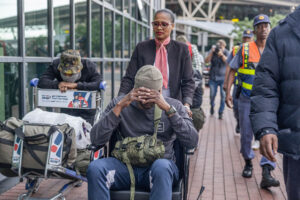
Russia’s African Cannon Fodder

Russia’s African Cannon Fodder

Credit: Rajesh Jantilal/AFP

By Andrew Firmin
LONDON, Apr 20 2026 – On 7 April, the government of Cameroon published a list of 16 of its citizens confirmed killed fighting for Russia against Ukraine. That means the number of Cameroon citizens killed in this distant war has likely surpassed a hundred, making the country the biggest victim of a Russian recruitment drive increasingly focused on Africa.

Conflict attrition

When Vladimir Putin launched Russia’s full-scale invasion of Ukraine in February 2022, he probably assumed the war would be over in days. But now it has ground on past the four-year mark, and Russia’s tactics have brought horrendous loss of life on both sides. Putin treats his soldiers’ lives as disposable, throwing wave after wave of troops at Ukrainian lines in what have been called ‘meat grinder’ assaults. Amid pervasive disinformation, casualty estimates vary widely. A project to count confirmed deaths puts Russian military fatalities at over 206,000, while some estimates reach 1.3 million. Russia is reportedly losing soldiers faster than it can replace them.

Putin has turned to North Korean dictator Kim Jong Un: since 2024, North Korean forces have been fighting alongside Russian troops. Over 20,000 have been deployed, with a reported 6,000 casualties. Russia has also recruited from Central Asian countries and long-term allies such as Cuba. Ukraine too has brought in thousands of foreign fighters, including Colombian mercenaries. Now Russia is increasingly turning to Africa.

Russia’s African strategy

Putin has spent years cultivating relationships with African states, helping Russia resist international isolation and counter pressure from western states. The military relationship has been two-way: Russian mercenaries from the shadowy Wagner Group, now closely controlled by the government, have been deployed in as many as 18 African countries, including Burkina Faso, the Central African Republic and Mali. In some, they fight alongside government forces against insurgent groups; in others, including Libya, where two rival governments contest power, and Sudan, home to a brutal civil war, they’re backing one of two sides fighting for power. Wherever they operate, Russian mercenaries are accused of committing atrocities.

Russia’s arrival has come with some public support, cast as an alternative to the former colonial power France and promising more equal partnerships. When Wagner forces entered Mali in 2022, crowds lined the roads to greet them, waving Russian flags. Extensive pro-Russia disinformation campaigns typically precede Russia’s military involvement, laying the groundwork for such welcomes.

The relationship is extractive: in return for soldiers, Russia typically receives natural resources, including diamonds and gold, which help sustain a war that, despite Russia’s anti-imperialist posturing in Africa, is fundamentally imperial.

Repressive Central and West African governments, several run by military juntas or former army leaders who’ve traded their uniforms for civilian clothes, value a partner with no interest in scrutinising their human rights performance. Civil society organisations and media that try to expose human rights abuses by Russian forces come under attack.

From Africa to the frontlines

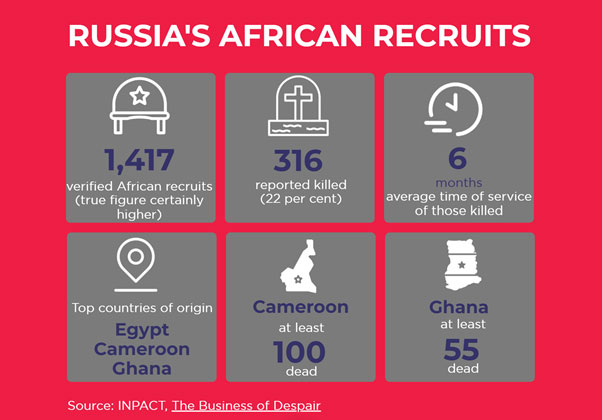
Russia is now exploiting the economic insecurity of many young African men, recruiting them to serve – and possibly die – on the Ukrainian front. Extensive recent civil society research has verified that Russia has so far recruited 1,417 African nationals, with the true figure almost certainly higher. The numbers have increased year on year, indicating a systematic plan. Egypt has supplied the most recruits, followed by Cameroon and Ghana. Of 1,417 verified recruits, 316, 22 per cent, have reportedly been killed.

Some recruits have expressed support for Russia online. Others are attracted by the promise of Russian citizenship and wages that far exceed anything they could earn at home. They may compare Russia’s apparent openness, signalled by its recent relaxation of visa requirements, with Europe’s increasing hostility towards migrants.

Others who’ve managed to escape report being conned. Fake job adverts made them believe they were signing up for civilian or support roles, including jobs as plumbers and security guards. On arrival, recruits are forced sign Russian-language contracts they can’t read, given minimal training and dispatched to the frontlines. The average service length of those killed is just six months, evidence that Russia treats them as expendable.

Intermediaries – including social media influencers who promote recruitment, travel agencies and people trafficking networks – are profiting from supplying recruits. In a bizarre political twist, Duduzile Zuma-Sambudla, a daughter of former South African president Jacob Zuma, is among those accused of recruiting Africans, including some falsely told they’d be trained as bodyguards for her father’s party. In December, South African police arrested five people on charges related to the recruitment of South Africans, including a journalist known for spreading pro-Russia propaganda.

Pressure for accountability

As evidence has accumulated, several African governments have taken action. The government of Togo warned its citizens about the dangers and, when several Togolese soldiers were captured in Ukraine, confirmed they’d been lured there by false promises of jobs and educational opportunities. Last year, the government of Botswana announced it was investigating the cases of two young men who believed they were signing up for a short-term military training programme but were forced to fight. In February, Ghana’s foreign minister confirmed that at least 55 of his country’s citizens had been killed and travelled to Ukraine to seek the release of Ghanaian prisoners of war. Police in Kenya and South African have arrested people trafficking gangs and closed down recruitment agencies. The Kenyan government recently announced Russia had agreed to stop recruiting Kenyan citizens, offering evidence that sustained bilateral pressure can produce results.

But many other African governments remain in denial, placing warm relations with Russia above the lives of their citizens. By doing so, they’re making clear that those lives are as disposable to them as they are to Russia.

Far more states must press Russia to end its abusive recruitment practices. And for international partners who claim to care about the welfare of young Africans, there’s a clear starting point: help address the economic conditions that create a ready pool of desperate recruits and drop the hostile migration policies that make Russia, of all places, look like a desirable destination.

Andrew Firmin is CIVICUS Editor-in-Chief, co-director and writer for CIVICUS Lens and co-author of the State of Civil Society Report.

For interviews or more information, please contact [email protected]


!function(d,s,id){var js,fjs=d.getElementsByTagName(s)[0],p=/^http:/.test(d.location)?’http’:’https’;if(!d.getElementById(id)){js=d.createElement(s);js.id=id;js.src=p+’://platform.twitter.com/widgets.js’;fjs.parentNode.insertBefore(js,fjs);}}(document, ‘script’, ‘twitter-wjs’);  

Using Better Data to Break the Cycle of Permanent Crisis

UNDP collaborations have shown what is possible when satellite data and recovery planning work together. Credit: UNDP

By Mukul Bhola and Devanand Ramiah
UNITED NATIONS, Apr 20 2026 – We are stuck in response mode. But what good is an ambulance without a hospital?

Climate shocks are intensifying. Conflict is at record levels. Economies are fragile. Humanitarian appeals grow larger each year, while donor countries prioritise domestic and security concerns. One emergency follows another. Recovery slips further out of reach.

For years, the logic was straightforward: first save lives, then rebuild them. But in an era of overlapping shocks, that division is costly. By the time recovery begins, families have sold livestock, businesses have closed, children have left school, and local institutions are weaker than before. Crisis becomes the default condition.

If we want fewer protracted emergencies, recovery must start on day one.

The first 48 hours after a crisis are decisive. When authorities know which roads are blocked, which clinics are damaged, which markets are underwater, they can act immediately. Debris can be cleared before trade stalls. Water systems can be repaired before disease spreads. Small enterprises can reopen before savings disappear.

Until recently, a major obstacle was the speed and reliability of information. Governments were often forced to plan with fragmented or delayed data. Damage figures arrived weeks late. Assessments overlapped. Resources were deployed based on rough estimates rather than solid evidence.

That constraint is rapidly diminishing.

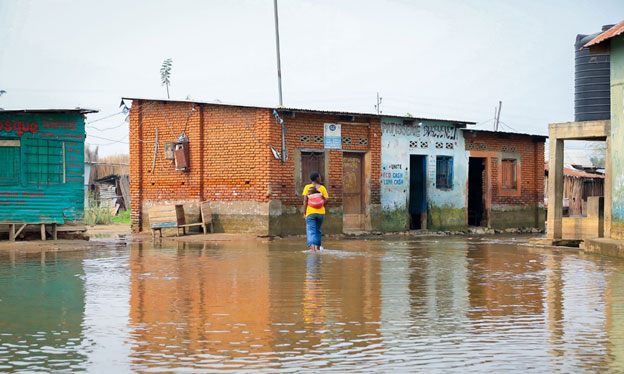
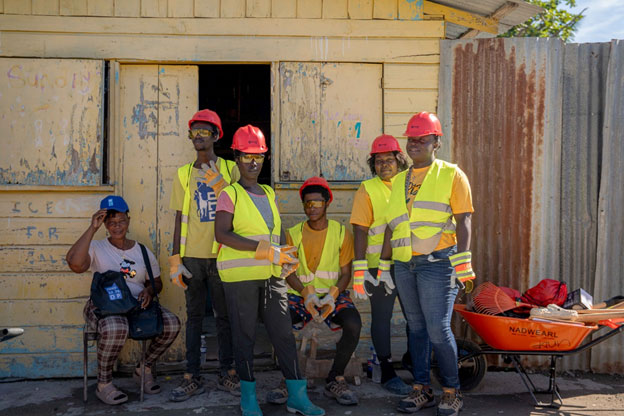
In Burundi after storms damaged thousands of homes, a rapid assessment measured losses to farms, houses, public infrastructure and businesses. Credit: UNDP Burundi

In recent years, collaboration between UNDP and the United Nations Satellite Centre, hosted at United Nations Institute for Training and Research (UNITAR), has shown what is possible when satellite data and recovery planning work together.

High-resolution imagery can now identify damaged buildings within days. Follow-up checks on the ground turn those findings into clear estimates of debris, lost livelihoods, disrupted services and the cost of rebuilding.

This is not simply faster mapping. It is a coordinated process: rapid satellite images, quick damage analysis, ground checks and immediate use of the results to guide recovery priorities and investment decisions.

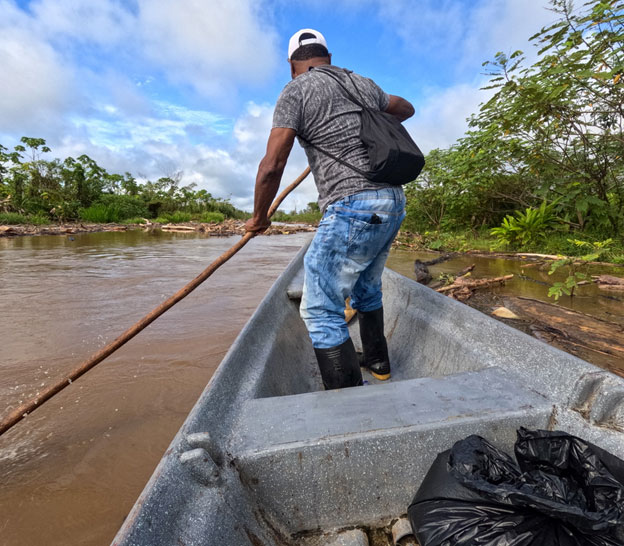
In Colombia after widespread flooding, ground teams confirmed crop losses and blocked river transport, allowing recovery efforts to begin. Credit: UNDP Colombia

In Jamaica, when Hurricane Melissa struck in 2025, satellite images quickly showed the extent of the damage. Recovery teams used that information to estimate debris and plan its removal, reopening transport routes and clearing the way for reconstruction.

In Colombia’s 2024 rainy season, intensified by Tropical Storm Rafael, radar images revealed widespread flooding in Chocó and La Guajira. Ground teams confirmed crop losses and blocked river transport, allowing recovery efforts to begin before more families were forced to move.

Credit: UNDP Jamaica

After El Niño-driven storms, floods and landslides displaced hundreds of thousands in Burundi and damaged thousands of homes, a rapid assessment measured losses to farms, houses, public infrastructure and businesses. Those estimates helped set national recovery priorities and supported early talks with funders.

The pattern is consistent: when impact data arrives early, recovery decisions improve, creating the conditions for crises to shorten. Technology alone does not achieve this. Institutions that can operationalize evidence do.

The technology continues to improve. With stronger collaboration, credible estimates of physical damage and economic impact can now often be produced within 48 hours. Obstacles remain, including imagery access, weather and capacity constraints, but progress is unmistakable.

The financing architecture, however, still reflects the older reality. Emergency funding is designed to move quickly. Recovery financing often requires additional assessments, new appeals or prolonged negotiations. The result is a predictable lag between knowing the damage and investing in repair.

That lag is no longer defensible. When development actors and satellite analysts produce validated impact estimates within days, financing decisions should align with that speed.

Breaking the cycle of repeated emergency appeals will require more than improved analysis. It will require donors and institutions to treat early recovery as integral to response and to align financing with the pace of evidence.

In an age of permanent crisis, responding sequentially is a luxury the system can no longer afford. The first 48 hours should not only save lives. They should set recovery in motion.

Mukul Bhola is Director, United Nations Satellite Centre, UNITAR; Devanand Ramiah is Director of Crisis Readiness, Response and Recovery, UNDP

IPS UN Bureau


!function(d,s,id){var js,fjs=d.getElementsByTagName(s)[0],p=/^http:/.test(d.location)?’http’:’https’;if(!d.getElementById(id)){js=d.createElement(s);js.id=id;js.src=p+’://platform.twitter.com/widgets.js’;fjs.parentNode.insertBefore(js,fjs);}}(document, ‘script’, ‘twitter-wjs’);  

Aid Groups Appeal for Lasting Ceasefire to Address Lebanon’s Catastrophic Humanitarian Crisis

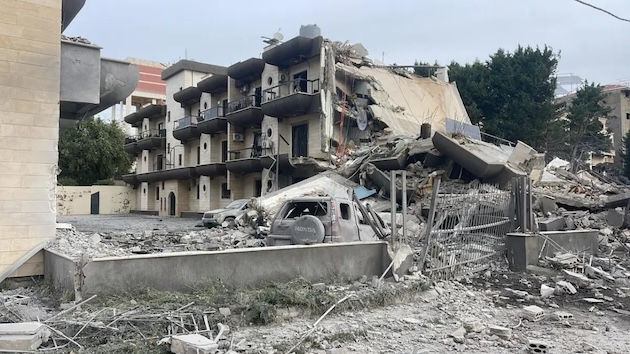
Rescue workers survey the damage in the town of Toul in Lebanon’s Nabatieh governorate in the south, following bombing by Israel in response to rocket attacks by militant group Hezbollah. Credit: Action Against Hunger

Rescue workers survey the damage in the town of Toul in Lebanon’s Nabatieh governorate in the south, following bombing by Israel in response to rocket attacks by militant group Hezbollah. Credit: Action Against Hunger

By Ed Holt
BRATISLAVA, Apr 20 2026 – Aid groups have welcomed a ten-day ceasefire agreed between Israel and Lebanon but warn only a permanent halt to fighting can allow for the kind of response needed to address the dire humanitarian situation in the country.

A ten-day truce ​to enable peace negotiations between the two countries came into effect on April 16. It can be extended by mutual agreement by both sides after that period.

The ceasefire comes after more than a month of conflict following Israel’s response to rocket attacks by the Iran-backed militant group Hezbollah.

Since March 2, more than 2,000 people have been killed and 7,000 wounded in Israeli attacks, according to the Lebanese health ministry. Meanwhile, more than 1.2 million – one fifth of the estimated total population – are internally displaced, including over 400,000 children, according to humanitarian organisations, and Israeli strikes have destroyed essential civilian infrastructure and heavily affected healthcare services.

This has deepened what was already a fragile humanitarian situation following years of economic problems, a Syrian refugee crisis, and previous conflict between Israel and Hezbollah.

And while the attacks may have stopped, many people continue to face displacement, massive destruction and a lack of access to basic services and real relief will only come with a long-term end to fighting.

“We welcome the truce as a critical pause in violence, but it is not enough. Only a permanent ceasefire will allow for a response at the scale required—one that reaches families across all of Lebanon, including those in border areas who remain among the most vulnerable,” Suzanne Takkenberg, Lebanon Country Director of humanitarian group Action Against Hunger (ACF), told IPS.

Following the announcement of the truce, there have been reports of huge numbers of displaced people returning to their home towns. Aid groups have warned, though, that many are likely to return to find they have no homes left, or even if they do, conditions are so bad it will be impossible to remain there.

“Families are beginning to return to their homes, but the scale of destruction is staggering. Many are finding their houses damaged or completely destroyed, with no access to water, electricity, or basic services. People who fled with almost nothing are now returning to even less—facing conditions that make dignified living impossible,” said Takkenberg.

The destruction has been worst in the south of the country. Israel has been looking to create what it has called a “security zone”, keeping troops in an area around 10 kilometres deep inside southern Lebanon. Reports suggest many villages in that area have been utterly destroyed.

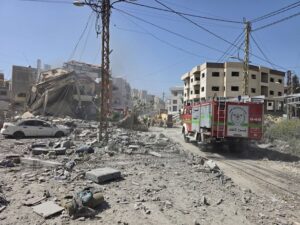
Recent, intense Israeli airstrikes targeted Tyre, Lebanon, causing significant casualties and damage to residential areas and infrastructure. The strikes were part of an ongoing conflict between Israel and Hezbollah. Credit: Action Against Hunger.

Recent, intense Israeli airstrikes targeted Tyre, Lebanon, causing significant casualties and damage to residential areas and infrastructure. The strikes were part of an ongoing conflict between Israel and Hezbollah. Credit: Action Against

“This new buffer zone that Israel is talking about – from videos I’ve seen, it’s completely demolished. We don’t expect them to allow [people] to return there, and I don’t think people will be trying to move back to that buffer zone,” Elizabeth Cossor, Head of Country Office Lebanon at Terre des hommes, which is providing humanitarian aid to children and their families in the country, told IPS.

“Hundreds of thousands of people are expected to remain displaced. They’re not going to be able to return. That’s really devastating [for them],” she added.

The impacts of the attacks on civilians have alarmed rights groups and humanitarian organisations.

A coalition of NGOs last week released a report documenting the effects of Israeli attacks on the civilian population.

It highlighted how the continued displacement in the country is driving significant health and protection risks, with women, children, the elderly and persons with disabilities disproportionately affected.

Reports indicate high instances of respiratory infections due to cold temperatures in collective shelters, gastroenteritis cases linked to insufficient food and cooking facilities, and disruption to treatment for patients with chronic diseases. Shelters are invariably overcrowded and lack adequate water and sanitation infrastructure, severely limiting privacy, dignity and psychological safety for residents, the group said. Moreover, roughly 88% of those displaced are living outside collective shelters, many in cars, public spaces or other insecure settings, the groups said.

Children have been impacted especially hard by the fighting.

Aid groups working with children have highlighted serious problems with child nutrition. According to Action Against Hunger, while 24 percent of the population faces acute food insecurity, around 15 percent of children aged 6 to 23 months in displacement zones are being fed only milk.

Meanwhile, one in five children in Lebanon has been forced from their homes by the conflict, with many suffering acute psychological distress and anxiety, according to UNICEF.

“The humanitarian situation for children in Lebanon is severe and deeply alarming. Over the past 46 days, children have paid a devastating price, with reports of at least 172 children killed and 661 injured. More than 415,000 children have been displaced, some for the third or fourth time. Their most urgent needs are safety, healthcare, safe water, nutrition, psychosocial support, child protection and access to learning,” Ricardo Pires, Communication Manager at UNICEF, told IPS.

“Children have been uprooted repeatedly, many are under acute stress, and essential services have been badly disrupted. The health system is still operating, but under severe strain. Hospitals and health workers have come under repeated impact, facilities have been damaged or forced to close, and access to care is increasingly difficult in high-risk and isolated areas. The destruction already caused to homes, schools, hospitals, water systems and roads means many children and families are likely to face serious hardship for some time, even if the fighting stops. It continues to have serious humanitarian consequences for children and families,” he added.

Cossor said the conflict could have a long-term impact on a generation of Lebanese kids.

“We still don’t have a sense of just how many children have lost their parents, their caregivers. We’re visiting hospitals where children are waking up and discovering that they’ve lost their parents and, you know, it’s just devastating. For those who also cannot return to their childhood home, you know, they’re not in school, missing family, they’ve lost their homes…. They’re losing part of their childhood, their connection to the place of their family, the place of their community. This has very long-term impacts for children,” she said.

As well as highlighting the harm caused to the civilian population, the NGOs’ report pointed to serious concerns regarding compliance with International Humanitarian Law (IHL), particularly the principles of distinction, proportionality and precautions in attacks. Likewise, IHL affords special protection to medical and humanitarian personnel and infrastructure, yet the conflict has been marked by a concerning number of attacks affecting healthcare and growing restrictions on humanitarian access, the groups said.

They also called for adherence to the IHL by all parties to the conflict, as well as urgent, sustained, and flexible funding from the international community to support the growing needs of displaced persons and those remaining in vulnerable areas.

International help will be vital given the damage that has been done, no matter what efforts the Lebanese government makes to help the population.

“The government will repair things as best they can in the cities that are north – again, north of that buffer zone area. They will do their best to restore, rehabilitate, but services will be heavily impacted. Eight bridges [in southern Lebanon] have now been destroyed, and Lebanese forces have managed to sort of put rubble together so that the last destroyed bridge is passable one car at a time. But that’s not enough to start bringing big trucks of humanitarian assistance or to start bringing in food and vegetables and other medical supplies and other things that they need in the south,” said Cossor.

“Infrastructure is destroyed, including in heavily populated areas. The Lebanese government will need enormous assistance to restore this infrastructure,” she added.

Beyond these problems, another major concern is the fragility of the current ceasefire – within hours of it coming into force, there were reports of violations.

UNICEF’S Pires said the ceasefire offered a critical opportunity to improve humanitarian access and begin restoring basic services in all areas impacted by the recent attacks. He warned, though, that if it collapsed, there would be “a grave risk of further killing, injury, displacement and trauma”.

“The weapons must remain silent and humanitarian access and workers must be protected at all times,” he said.

IPS UN Bureau Report


!function(d,s,id){var js,fjs=d.getElementsByTagName(s)[0],p=/^http:/.test(d.location)?’http’:’https’;if(!d.getElementById(id)){js=d.createElement(s);js.id=id;js.src=p+’://platform.twitter.com/widgets.js’;fjs.parentNode.insertBefore(js,fjs);}}(document, ‘script’, ‘twitter-wjs’);  

Guardians of the Sea: How GEF Small Grants Program Enables Young Volunteers Take the Lead in Sea Turtle Conservation

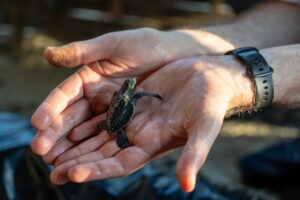
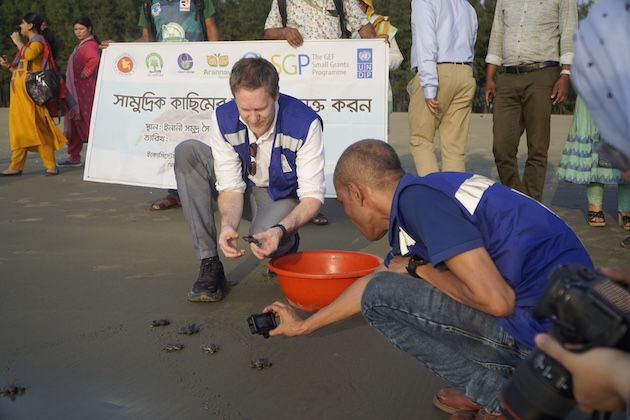
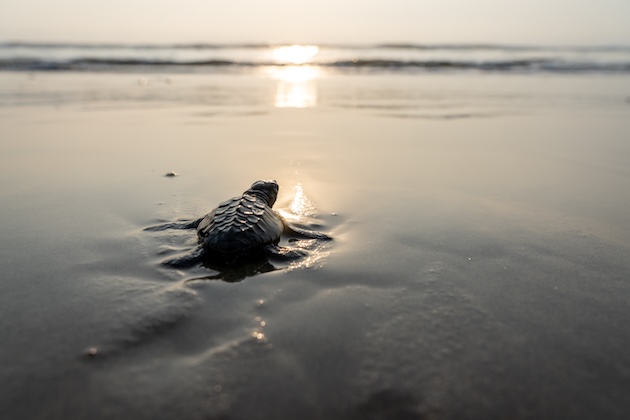
A sea turtle is released from the hatchery in Cox’s Bazar, Bangladesh to begin its hazardous journey to the sea. Credit: UNDP Bangladesh

A sea turtle is released from the hatchery in Cox’s Bazar, Bangladesh to begin its hazardous journey to the sea. Credit: UNDP Bangladesh

By Rafiqul Islam
COX’S BAZAR, Bangladesh, Apr 20 2026 – Every winter thousands of sea turtles come ashore at Cox’s Bazar, in the Bay of Bengal, Bangladesh, to lay eggs.

Their path to their breeding grounds is hazardous – fishing nets, propellers, light pollution, coastal developments, stray dogs and other dangers conspire against their success.

The area is rich in biodiversity, with five out of seven ancient reptiles present in Bangladesh’s waters, with three – the Olive Ridley (Lepidochelys olivacea), the Green Turtle (Chelonia mydas), and the Hawksbill (Eretmochelys imbricata) – coming ashore for nesting.

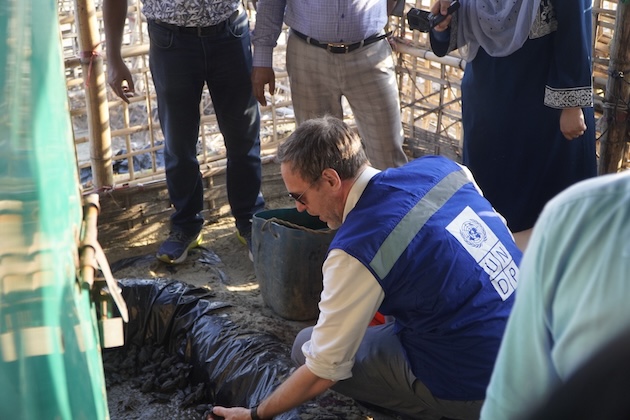
Stefan Liller, UNDP Bangladesh representative, gently releases the young turtles from the hatchery. Credit: UNDP Bangladesh

Stefan Liller, UNDP Bangladesh representative, gently releases the young turtles from the hatchery. Credit: UNDP Bangladesh

Amid such unfavourable odds for the aquatic creatures, a group of young people volunteer to protect the turtles on the beach at Cox’s Bazar during the breeding season from November to March, contributing to their successful conservation.

“In the past, we did not know how sea turtles help conserve marine ecosystems. Now we know sea turtles play an important role in conserving biodiversity,” Rezaul Karim, a resident of Shafir Beel village in Cox’s Bazar, told Inter Press Service (IPS).

Karim is one of the youths trained for sea turtle conservation under a project run by the Arannayk Foundation, a non-profit conservation organisation in Bangladesh. The foundation established a sea turtle conservation group involving 25 local youths (11 women, 14 men) under its Ecosystem Awareness and Restoration Through Harmony (EARTH) project. EARTH is supported by the Forest Department, the Department of Environment (DoE), and the United Nations Development Programme (UNDP) with funding from the Global Environment Facility (GEF).

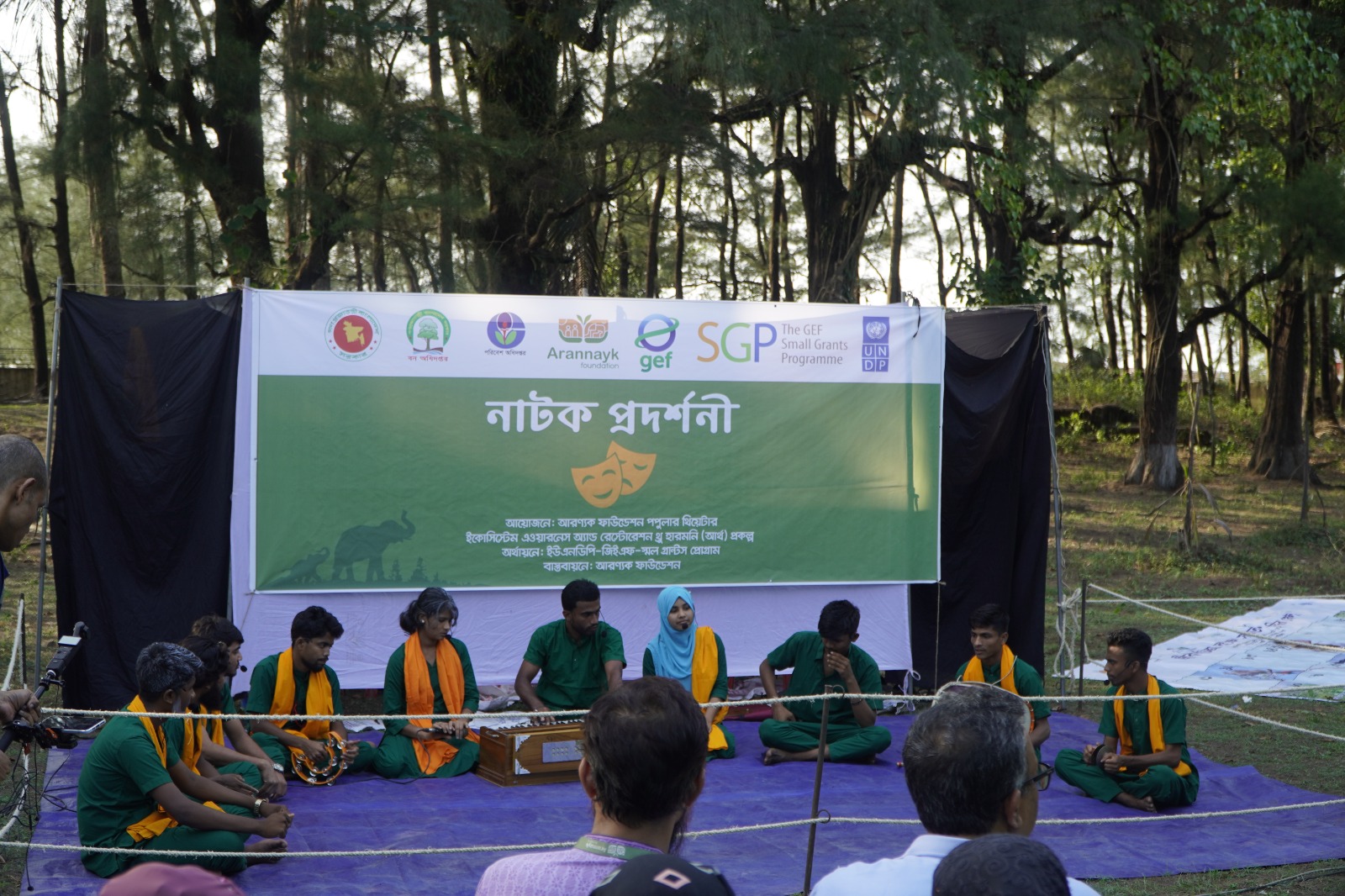
A youth group perform a play designed to sensitise the community to conservation issues. Credit: Arannayk Foundation

A youth group performs a play designed to sensitise the community to conservation issues. Credit: Arannayk Foundation

The group is working to raise awareness about sea turtle conservation among fishermen, youth, and the local community. They are also aiming to encourage a shift in local attitudes by engaging community members.

Group leader Delwar Hossain, a resident of Sonarpara village under Ukhyia upazila, said sea turtles play a crucial role in maintaining marine ecosystems, as different species of sea turtles help sweep or clean the ocean by managing various food sources and habitats.

He said there is a superstition among the marine fishermen that if turtles are caught in their fishing gear, it will bring bad luck and that is why they kill turtles caught in their nets.

“We held meetings with the fishermen several times and made them aware of sea turtle conservation,” Delwar said.

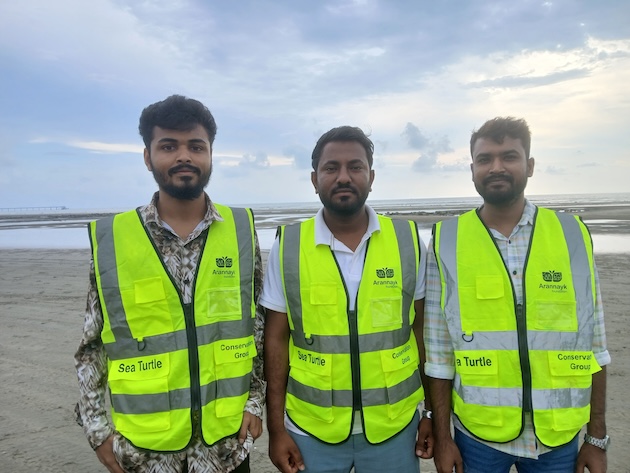
Turtle conservation group leader Delwar Hossain with others on Cox’s Bazar Beach, Bangladesh. Credit: Rafiqul Islam/IPS

Turtle conservation group leader Delwar Hossain with others on Cox’s Bazar Beach, Bangladesh. Credit: Rafiqul Islam/IPS

Gabriella Richardson Temm, Lead of the Small Grants Program at the GEF, says civil society, Indigenous Peoples, local communities, and youth and women groups around the world “play critical roles in shaping global development agendas. They deliver transformational solutions to global environmental problems, bring rights holders and marginalised voices into national policy dialogues, and elevate local priorities in international environmental negotiations and financing.”

Indigenous Peoples, local communities, and youth and women groups around the world play critical roles in shaping global development agendas.

The small grants program has served as a cornerstone of civil society engagement within the GEF partnership since its inception in 1992.

“Over three decades, the program has demonstrated remarkable reach and impact, administering over US$1.5 billion through nearly 30,000 grants to Indigenous Peoples, local communities, women, and youth across 136 countries. This extensive network has successfully secured US$990 million in co-financing, demonstrating the program’s effectiveness in mobilising additional resources for environmental action at the grassroots level,” says Temm.

Grassroots community protection has been acknowledged as contributing to the success of moving one of the sea turtles – the green turtle – to the International Union for Cons

ervation of Nature’s (IUCN) ‘Least Concern’ list. Other factors include international trade bans, reduced poaching, and improved fishing gear.

However, the species predominantly nesting in the Cox’s Bazar beaches, the Olive Ridley is classified as ‘Vulnerable’ on the IUCN Red List of Threatened Species, while the Hawksbill Turtle remains ‘Critically Endangered’ due to population declines.

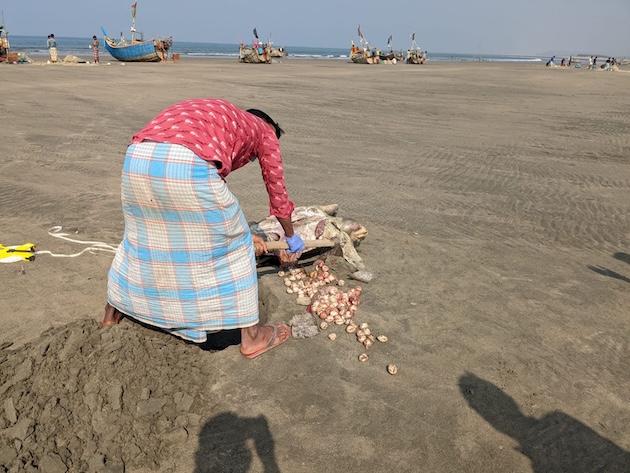
Many sea turtles don't survive the hazardous journey to the nesting grounds at Cox's Bazar Beach, Bangladesh. Credit: Bangladesh Forest Department

Many sea turtles don’t survive the hazardous journey to the nesting grounds at Cox’s Bazar Beach, Bangladesh. Credit: Bangladesh Forest Department

Establishment of Turtle Hatchery

In Cox’s Bazar, with the help of the foundation, the youth group surveyed a 10 km stretch from Reju Khal to Balia Khali beach to identify sea turtle nesting sites. It also gathered insights from local communities on sea turtle breeding seasons, nesting frequency, preferred locations, and community perceptions regarding conservation.

Following the assessment, a sea turtle hatchery was established in Boro Inani, Cox’s Bazar. The hatchery is now playing a crucial conservation role, as these statistics show.

Between January and April 2024, 5,878 Olive Ridley eggs were collected from various nests at Swankhali, Ruppati, Imamer Deil, and Madarbunia sea beaches, resulting in 3,586 hatchlings hatching, with an average hatching success of 61 percent.

Also, from February to April 2025, a total of 3,199 eggs were collected, and by May 2025, 716 hatchlings had been released.

Stefan Liller, UNDP Bangladesh representative in the turtle hatchery. Credit: UNDP Bangladesh

Stefan Liller, UNDP Bangladesh representative in the turtle hatchery. Credit: UNDP Bangladesh

Delwar said that stray dogs often eat the turtle eggs so the hatchery makes a significant contribution.

“We collect eggs that turtles release on the shore and bring those to the hatchery for hatching. Besides, we ask the community people to give turtle eggs to the hatchery. We, the group members, collect the turtle eggs from them too.”

Nurul Afsar, another TCG member, said many ethnic communities living in Cox’s Bazar consume turtles and their eggs – so the group plays a role in encouraging them not to consume but instead protect them.

ABM Sarowar Alam, program manager (species and habitats) at the IUCN in Bangladesh, said Cox’s Bazar Beach was once the ideal breeding ground for sea turtles, but it has dwindled due to habitat loss, poaching, and human disturbance.

He believes that several areas of the beach should be declared as “protected areas for sea turtles” to ensure safe breeding and that fishing should be restricted in the canals connecting to the sea so that turtles can move freely for nesting.

The group also addresses other hazards, such as the issue of stray dogs that kill the turtles and consume the eggs.

Firoz Al Amin, range officer of Inani Forest Range in Ukhiya, said the Forest Department has been working to control the stray dogs on the beach, aiming to protect the turtles.

Sea turtle goes toward the sea. Local conservationists are making a difference to the future of these ancient aquatic animals. Credit: UNDP Bangladesh

A sea turtle moves toward the sea. Local conservationists are making a difference to the future of these ancient aquatic animals. Credit: UNDP Bangladesh

EARTH Project, More Than Turtle Conservation

Dr Mohammed Muzammel Hoque, national coordinator of the GEF Small Grants Program at UNDP Bangladesh, said the EARTH project’s role went beyond turtle conservation in the region.

It has elephant-response teams to mitigate conflicts between elephants and humans. The Five Crab Conservation Groups (CCG), comprising 25 youth members, and five sea Turtle Conservation Groups (TCG), also consisting of 25 youth members, remain active. The project was also working towards restoring habitats, with over 7,780 seedlings planted with support from the EARTH Project, with around 80% surviving.

However, Hoque said that the success is dependent on funding – and it’s hoped that once a Forest Trail becomes operational, it can generate revenue from tourists.

Abu Hena Mostafa Kamal, program coordinator of the Arannayk Foundation, said the project, by integrating livelihoods with conservation, “helped grow a sense of ownership among community members and youth, ensuring that environmental protection is not just a project outcome but a sustained, collective commitment.”

Note: The Eighth Global Environment Facility Assembly will be held from May 30 to June 6, 2026 in Samarkand, Uzbekistan.

This feature is published with the support of the GEF. IPS is solely responsible for the editorial content, and it does not necessarily reflect the views of the GEF.

IPS UN Bureau Report


!function(d,s,id){var js,fjs=d.getElementsByTagName(s)[0],p=/^http:/.test(d.location)?’http’:’https’;if(!d.getElementById(id)){js=d.createElement(s);js.id=id;js.src=p+’://platform.twitter.com/widgets.js’;fjs.parentNode.insertBefore(js,fjs);}}(document, ‘script’, ‘twitter-wjs’);