Cygnet.One Expands Global e-Invoicing Capabilities to Support Oman’s Upcoming Fawtara Mandate

MUSCAT, Oman, April 28, 2026 (GLOBE NEWSWIRE) — Cygnet.One, a global provider of tax and digital compliance solutions, today announced the continued expansion of its global e-invoicing platform. The platform supports enterprises across more than 40 countries, enabling unified, enterprise-grade compliance through a single, scalable solution.

As governments across the Middle East and North Africa (MENA), Europe, the United Kingdom (UK), and Asia-Pacific (APAC) accelerate the adoption of structured e-invoicing and real-time digital reporting, enterprises face increasing complexity. Fragmented regulatory frameworks, diverse technical schemas, evolving validation rules, and heightened scrutiny are driving the need for centralized compliance strategies.

Cygnet.One addresses these challenges through a unified platform that supports both PEPPOL and non-PEPPOL frameworks, including Continuous Transaction Controls (CTC), real-time clearance models, and post-issuance reporting. This approach reduces reliance on multiple country-specific solutions while enabling consistent global compliance governance.

Cygnet.One operates across 40+ countries and provides PEPPOL-certified Access Point (AP) and Service Metadata Publisher (SMP) capabilities, along with regulatory enablement in more than 14 jurisdictions. The company has established a strong presence in the Middle East, delivering e-Invoicing solutions for Saudi Arabia (ZATCA) and receiving approval from the United Arab Emirates Ministry of Finance (MoF) for the upcoming UAE e-Invoicing framework. Its regional VAT compliance platforms support the UAE, Saudi Arabia, Oman, Qatar, and Bahrain, enabling enterprises to manage indirect tax obligations effectively.

As part of this expansion, Cygnet.One is reinforcing its commitment to support businesses in Oman as the Oman Tax Authority (OTA) advances its e-Invoicing (Fawtara) implementation roadmap for B2B and B2C. The rollout is expected to follow a phased approach, beginning with large taxpayers and expanding to broader enterprise adoption in subsequent phases.

The initial phase is expected to onboard approximately 150 enterprises by August 2026. Organizations must prepare for structured reporting requirements, clearance-based validations, and evolving compliance workflows. Cygnet.One is working with leading enterprises in Oman to enable seamless adoption of the mandate, supporting compliant business-to-business (B2B), business-to-government (B2G), and business-to-consumer (B2C) e-Invoicing workflows through secure integration with existing enterprise resource planning (ERP) and billing systems.

The platform manages the full e-Invoice lifecycle – from document generation and validation to secure exchange and authority-aligned archiving – while supporting both domestic and cross-border compliance scenarios. It provides real-time visibility, centralized compliance monitoring, and advanced analytics through a unified dashboard, serving both large multi-entity enterprises and mid-sized organizations.

Complementing compliance capabilities, CygNova, Cygnet.One’s AI-driven finance intelligence layer, delivers natural-language insights into accounts payable and accounts receivable (AP and AR) performance, enabling finance leaders to make faster, data-driven decisions.

Trusted by more than 1,000 enterprises globally, Cygnet.One is built on an API-first architecture and supports multiple ERP integration methods, including APIs, file-based processing, and pre-built connectors. This ensures seamless e-invoicing compliance across both sales and purchase workflows without disrupting finance or procurement operations. Flexible deployment options – including on-premises and cloud deployment – support scalability, data residency requirements, and operational reliability during peak compliance cycles.

Contact Information:

Jash Hutheesing
AVP – Strategy & Operations
+971 528305127

A photo accompanying this announcement is available at https://www.globenewswire.com/NewsRoom/AttachmentNg/35c78798-de2b-4e88-a25c-80016bd37ad7


GLOBENEWSWIRE (Distribution ID 9708478)

Anaqua übernimmt Patrix, um seine Führungsposition im Bereich IP-Management auszubauen

BOSTON, April 28, 2026 (GLOBE NEWSWIRE) — Anaqua, der führende Anbieter von Technologien und Dienstleistungen für das Innovations- und IP-Management, gab heute die Übernahme von Patrix® bekannt, einem langjährigen Anbieter von IP-Management-Software und -Dienstleistungen, dessen Plattform Patricia® seit dreißig Jahren erfolgreich einen vorwiegend aus Anwaltskanzleien bestehenden Kundenstamm bedient.

Strategische Übernahmen sind seit Langem ein Eckpfeiler des Wachstumsplans von Anaqua und gewinnen unter der Führung von Nordic Capital nun weiter an Dynamik. Diese Übernahme baut die Präsenz von Anaqua im Bereich der Anwaltskanzleien sowie in Europa weiter aus und knüpft an die Übernahme von RightHub im Jahr 2025 an. Anaqua unterstützt Fachleute im Bereich des geistigen Eigentums sowohl in Unternehmen als auch in Anwaltskanzleien durch kontinuierliche Innovation, ein erweitertes Dienstleistungsangebot und globale Präsenz. Anaqua betrachtet IP-Management-Software als Kern einer effektiven IP-Praxis, und diese Übernahme festigt dieses Fundament.

„Patrix hat sich über Jahrzehnte hinweg das Vertrauen von Fachleuten im Bereich des geistigen Eigentums erarbeitet, und wir schätzen das Unternehmen und das Team seit Langem sehr. Diese Fusion verschafft Anaqua einen gut betreuten, treuen Kundenstamm sowie fundiertes Fachwissen in den Bereichen IP-Technologie und Anwaltskanzleien“, so Justin Crotty, CEO von Anaqua. „Gleichzeitig erhalten Patrix-Kunden nun Zugang zum breiten Leistungsspektrum von Anaqua, darunter eine globale Hosting- und Sicherheitsinfrastruktur, branchenführende Dienstleistungen in den Bereichen Auslandsanmeldungen, Patent- und Markenverlängerungen sowie Fristenmanagement und darüber hinaus fortschrittliche, KI-gestützte Workflow-Tools und Analysen.“

Patrix wird von fast 400 Kunden aktiv genutzt, darunter einige der weltweit größten Kanzleien für geistiges Eigentum. Anaqua wird die Produkt-Roadmap von Patricia weiterhin unterstützen und vorantreiben und zugleich sicherstellen, dass die herausragenden Funktionen, durch die sich Patricia auszeichnet, sorgfältig in die umfassendere Plattform von Anaqua integriert werden. Gleichzeitig bietet Anaqua den Kunden von Patrix zukunftsfähige Flexibilität: Das Unternehmen unterstützt ihre aktuellen Anforderungen und ermöglicht ihnen bei sich wandelnden Bedürfnissen optional den Zugang zur KI-nativen Plattform von Anaqua. Darüber hinaus können Kunden, die den Verlängerungsservice von Patrix nutzen, diesen ohne Unterbrechung weiter in Anspruch nehmen. 

„Unsere Aufgabe ist es, unsere Kunden dort abzuholen, wo sie heute stehen, und ihnen gleichzeitig Unterstützung und Wahlmöglichkeiten für die Zukunft zu bieten“, ergänzte Crotty. „Da unsere Mandanten mit der zunehmenden Bedeutung der KI im Bereich des geistigen Eigentums, den Veränderungen im regulatorischen Umfeld und wirtschaftlicher Volatilität konfrontiert sind, möchten wir ihnen als vertrauenswürdiger Partner zur Seite stehen. Wenn unsere Kunden gewinnen, gewinnen auch wir.“

„Ich freue mich, Anaqua damit zu betrauen, unsere Kunden in dieser nächsten Phase ihrer Customer Journey zu betreuen“, sagt Carina Roth Schramm, Gründerin und Mehrheitseigentümerin von Patrix. „Unsere beiden Unternehmen zeichnen sich durch eine starke kulturelle Übereinstimmung aus, die auf einer Tradition der Softwareentwicklung und einer kundenorientierten Philosophie beruht. Daher bin ich zuversichtlich, dass wir den sich wandelnden Bedürfnissen unserer Kunden auch langfristig gerecht werden.“

Marks Baughan Securities LLC fungierte als exklusiver Finanzberater von Patrix.

Über Patrix
Patrix ist ein langjähriger Anbieter von Software und Dienstleistungen für das Management geistigen Eigentums (IP) und vor allem für seine Flaggschiff-Lösung Patricia® bekannt, eines der etabliertesten und am weitesten verbreiteten IP-Managementsysteme auf dem Markt. Seit Jahrzehnten unterstützt Patrix IP-Abteilungen in Unternehmen und IP-Kanzleien weltweit mit Technologien, die speziell auf die Anforderungen der IP-Praxis zugeschnitten sind. Dank fundierter Fachkompetenz im Bereich des geistigen Eigentums und eines ausgezeichneten Rufs für Zuverlässigkeit und partnerschaftliche Zusammenarbeit hat Patrix dauerhafte Beziehungen zu Unternehmen aufgebaut, die komplexe globale IP-Portfolios verwalten. Weitere Informationen finden Sie unter www.patrix.com.

Über Anaqua
Anaqua, Inc. ist ein führender Anbieter von integrierten Technologielösungen und Dienstleistungen für das Management von geistigem Eigentum (IP) für Unternehmen und Anwaltskanzleien. Die IP-Management-Softwareplattformen AQX®, PATTSY WAVE® und RightHub® bieten Best-Practice-Workflows mit Big-Data-Analysen und technologiegestützten Dienstleistungen. Ziel ist es, eine intelligente Umgebung zu schaffen, die IP-Strategien aufzeigt, IP-Entscheidungen ermöglicht und IP-Abläufe optimiert – zugeschnitten auf die Bedürfnisse jedes einzelnen Segments. Inzwischen nutzen fast die Hälfte der 100 größten US-Patentanmelder und globalen Marken sowie eine wachsende Zahl von Anwaltskanzleien weltweit die Lösungen von Anaqua. Über zwei Millionen IP-Führungskräfte, Anwälte, Rechtsanwaltsfachangestellte, Administratoren und Innovatoren nutzen die Plattform für ihre Anforderungen im IP-Management. Das Unternehmen hat seinen Hauptsitz in Boston und unterhält Niederlassungen in den USA, Europa, Asien und Australien. Weitere Informationen finden Sie unter Anaqua.com oder auf dem LinkedIn-Profil von Anaqua.

MEDIENKONTAKT:

Jean Kondo
Anaqua
+1-617-375-5808
[email protected]


GLOBENEWSWIRE (Distribution ID 9708439)

Anaqua Adquire Patrix para Expandir Sua Liderança em Gerenciamento de PI

BOSTON, April 28, 2026 (GLOBE NEWSWIRE) — Anaqua, a principal fornecedora de tecnologia e serviços de gerenciamento de inovação e propriedade intelectual (PI), anunciou hoje a aquisição da Patrix®, fornecedora de longa data de software e serviços de gerenciamento de PI, cuja plataforma Patricia® tem atendido com orgulho sua base de clientes concentrada em escritórios de advocacia nos últimos trinta anos.

As aquisições estratégicas há muito tempo têm sido fundamentais para o plano de crescimento da Anaqua, acelerando agora sob a propriedade da Nordic Capital. Esta aquisição amplia ainda mais a presença da Anaqua junto aos escritórios de advocacia e Europa, após a aquisição da RightHub em 2025. A Anaqua atende profissionais de PI em corporações e escritórios de advocacia por meio de inovação contínua, ofertas de serviços ampliadas e escala global. Para a Anaqua, o software de gerenciamento de PI é o núcleo da prática de PI eficiente e essa aquisição aprofunda essa base.

“A Patrix vem conquistando a confiança dos profissionais de PI ao longo de décadas. e há muito admiramos a empresa e sua equipe. Essa união traz para a Anaqua uma base de clientes bem servida e leal, juntamente com uma profunda tecnologia de PI e experiência com escritórios de advocacia”, disse Justin Crotty, CEO da Anaqua. “Além disso, os clientes da Patrix agora terão a oportunidade de acessar os amplos recursos da Anaqua, incluindo infraestrutura global de hospedagem e segurança, serviços de registro no exterior, renovação de patentes e marcas registradas, e serviços de docketing, além das ferramentas avançadas de fluxo de trabalho e análises baseadas em IA.”

A plataforma Patricia é usada ativamente por quase 400 clientes, incluindo alguns dos maiores escritórios de advocacia de PI do mundo. A Anaqua continuará a apoiar e avançar o roteiro do produto Patricia, e garantir que os melhores recursos que diferenciaram a plataforma Patricia sejam cuidadosamente incorporados à plataforma mais ampla da Anaqua. A Anaqua também está fornecendo aos clientes da Patrix flexibilidade pronta para o futuro, apoiando seus requisitos atuais e oferecendo acesso opcional à plataforma nativa de IA da Anaqua à medida que suas necessidades evoluem. Além disso, os clientes que usam o serviço de renovações da Patrix continuarão sem interrupção. 

“Nosso papel é encontrar os clientes onde eles estão hoje, além de oferecer suporte e opções para o futuro”, disse Crotty. “Com os clientes navegando pelo papel cada vez mais acelerado da IA na prática de PI, pelas mudanças no cenário regulatório e pela volatilidade econômica, queremos estar ao seu lado como um parceiro de confiança. Quando nossos clientes ganham, nós ganhamos.”

“Tenho muito prazer em confiar na Anaqua para o atendimento dos nossos clientes durante esta próxima fase da sua jornada do cliente”, disse Carina Roth Schramm, fundadora e acionista maioritária da Patrix. “Nossas duas empresas compartilham um forte alinhamento cultural, sustentado por uma herança orientada a software e por uma filosofia centrada no cliente, por isso estou confiante de que as necessidades em constante mudança dos nossos clientes serão atendidas no futuro.”

Marks Baughan Securities LLC atuou como consultor financeiro exclusivo da Patrix.

Sobre a Patrix
A Patrix é uma fornecedora de longa data de software e serviços de gerenciamento de propriedade intelectual (PI), mais conhecida por sua solução principal, Patricia®, um dos sistemas de gerenciamento de PI mais estabelecidos e amplamente utilizados do mercado. Durante décadas, a Patrix tem apoiado departamentos corporativos e escritórios de advocacia de PI em todo o mundo, com sua tecnologia projetada especificamente para atender às demandas da prática de PI. Com profunda experiência em domínio de PI e uma forte reputação de confiabilidade e parceria com clientes, a Patrix estabeleceu relacionamentos duradouros com empresas que gerenciam portfólios globais complexos de PI. Para mais informações, visite: www.patrix.com.

Sobre a Anaqua
A Anaqua, Inc. é fornecedora líder de soluções e serviços de tecnologia de gerenciamento de propriedade intelectual integrada (IP) para corporações e escritórios de advocacia. Suas soluções de software de gerenciamento de PI, AQX®  e PATTSY WAVE®, oferecem fluxos de trabalho das melhores práticas com análise de big data e serviços habilitados para tecnologia, para a criação de um ambiente inteligente projetado para informar a estratégia de PI, viabilizar a tomada de decisões de PI e simplificar as operações de PI, adaptadas às necessidades de cada segmento. Atualmente quase metade dos 100 principais candidatos a patentes e marcas globais dos EUA, bem como um número crescente de escritórios de advocacia em todo o mundo, usam as soluções da Anaqua. Mais de dois milhões de executivos de PI, advogados, assistentes jurídicos, administradores e inovadores usam a plataforma para suas necessidades de gerenciamento de PI. As operações globais da empresa estão localizadas na sede em Boston, além dos escritórios nos EUA, Europa, Ásia e Austrália. Para mais informações, visite Anaqua.com, ou o LinkedIn da Anaqua.

CONTATO COM A MÍDIA:

Jean Kondo
Anaqua
+1-617-375-5808
[email protected]


GLOBENEWSWIRE (Distribution ID 9708439)

Anaqua acquiert Patrix en vue de renforcer son leadership dans la gestion de la propriété intellectuelle

BOSTON, 28 avr. 2026 (GLOBE NEWSWIRE) — Anaqua, leader des technologies et services de gestion de l’innovation et de la propriété intellectuelle (PI), a annoncé aujourd’hui l’acquisition de Patrix®, fournisseur historique de logiciels et services de gestion de la PI, dont la plateforme Patricia® accompagne avec succès sa clientèle composée principalement de cabinets d’avocats depuis trente ans.

Les acquisitions stratégiques constituent depuis longtemps un pilier de la stratégie de croissance d’Anaqua, qui s’accélère désormais sous l’égide de Nordic Capital. Dans la continuité du rachat de RightHub en 2025, cette nouvelle acquisition vient renforcer la présence d’Anaqua auprès des cabinets d’avocats et en Europe. Grâce à une innovation constante, une offre de services élargie et une envergure mondiale, Anaqua accompagne les professionnels de la PI, tant en entreprise qu’en cabinet d’avocats. Anaqua considère que le logiciel de gestion de la PI est le pivot de toute stratégie de PI performante, et cette nouvelle acquisition consolide davantage encore cette position.

« Au fil des décennies, Patrix a su gagner la confiance des professionnels de la PI ; c’est une structure et une équipe que nous tenons en haute estime depuis longtemps. Ce rapprochement apporte à Anaqua une clientèle fidèle et bien établie, ainsi qu’une expertise étendue en matière de technologies de la PI et de cabinets d’avocats », a déclaré Justin Crotty, PDG d’Anaqua. « Parallèlement, les clients de Patrix auront désormais accès aux larges capacités d’Anaqua, notamment son infrastructure mondiale d’hébergement et de sécurité, ses services de pointe en matière de dépôt à l’étranger, de renouvellement de brevets et de marques, de gestion des dossiers, ainsi que ses outils avancés de gestion des flux de travail et d’analyse basés sur l’IA. »

Les services de Patrix sont utilisés par près de 400 clients, dont certains des plus grands cabinets d’avocats spécialisés en PI au monde. Anaqua continuera de soutenir et de faire évoluer la feuille de route produit de la plateforme Patricia, tout en assurant une intégration réfléchie de ses caractéristiques phares – véritables éléments de différenciation – au sein de l’écosystème global d’Anaqua. Dans le même temps, Anaqua garantit aux clients de Patrix une souplesse d’évolution stratégique : tout en assurant la continuité de leurs processus actuels, elle leur ouvre l’accès optionnel à sa plateforme d’IA native pour répondre à leurs futurs besoins. De plus, les clients qui utilisent le service de renouvellement de Patrix continueront de bénéficier de ce service sans interruption. 

« Notre rôle est d’accompagner nos clients selon leurs besoins actuels, tout en leur apportant soutien et flexibilité pour l’avenir », a ajouté M. Crotty. « Face à l’essor de l’IA dans le domaine de la PI, aux évolutions réglementaires et à la volatilité économique, nous souhaitons être un partenaire de confiance pour nos clients. Leur succès est aussi le nôtre. »

« Je suis ravie de confier à Anaqua l’accompagnement de nos clients dans cette nouvelle étape de leur parcours », a souligné Carina Roth Schramm, fondatrice et actionnaire majoritaire de Patrix. « Nos deux organisations partagent une forte convergence culturelle, portée par une expertise historique du logiciel et une approche résolument tournée vers le client. Je suis donc convaincue que nous saurons répondre aux besoins évolutifs de nos clients sur le long terme. »

Le cabinet Marks Baughan Securities LLC est intervenu en tant que conseiller financier exclusif auprès de Patrix.

À propos de Patrix
 : surtout connu pour sa solution phare, Patricia®, l’un des systèmes de gestion de la PI les plus établis et les plus utilisés du marché, Patrix est un fournisseur de longue date de logiciels et de services de gestion de la PI. Depuis des décennies, Patrix accompagne dans le monde entier les services de PI des entreprises et les cabinets d’avocats spécialisés dans ce domaine grâce à des technologies conçues spécifiquement afin de répondre aux exigences de la pratique en la matière. Forte d’une expertise étendue en PI et d’une solide réputation de fiabilité et de partenariat avec ses clients, Patrix a tissé des relations durables avec les organisations qui gèrent des portefeuilles internationaux de PI d’une grande complexité. Pour en savoir plus, consultez le site : www.patrix.com.

À propos d’Anaqua
Anaqua, Inc. est un fournisseur de premier ordre en matière de solutions et de services technologiques intégrés dédiés à la gestion de la propriété intellectuelle (PI), destinés aux entreprises et aux cabinets d’avocats. Ses plateformes logicielles de gestion de la propriété industrielle, AQX®, PATTSY WAVE®, et RightHub® proposent des flux de travail basés sur les meilleures pratiques, avec des analyses de mégadonnées et des services technologiques, afin de créer un environnement de travail intelligent conçu pour éclairer la stratégie en matière de propriété intellectuelle, faciliter la prise de décisions dans ce domaine et rationaliser les opérations liées à la PI, en fonction des besoins de chaque segment. Aujourd’hui, près de la moitié des 100 principaux déposants de brevets américains et des grandes marques mondiales, ainsi qu’un nombre croissant de cabinets d’avocats à travers le monde utilisent les solutions d’Anaqua. Plus de deux millions de professionnels de la propriété intellectuelle, d’avocats, d’assistants juridiques, d’administrateurs et d’innovateurs se reposent sur la plateforme pour répondre à la gestion de leurs besoins en la matière. La société est domiciliée à Boston, et exploite un réseau de bureaux implantés aux États-Unis, en Europe, en Asie et en Australie. Pour obtenir de plus amples informations, veuillez consulter le site Anaqua.com ou la page LinkedIn d’Anaqua.

CONTACT AUPRÈS DES MÉDIAS :

Jean Kondo
Anaqua
+1-617-375-5808
[email protected]


GLOBENEWSWIRE (Distribution ID 9708439)

Bitget Lança Blockchain4Youth Learning Hub para Fortalecer a Força de Trabalho Web3 do Futuro

VICTORIA, Seychelles, April 28, 2026 (GLOBE NEWSWIRE) — Bitget, a maior Universal Exchange (UEX) do mundo, anunciou hoje o lançamento do Blockchain4Youth Learning Hub: Semestre 1, uma nova iniciativa de educação desenvolvida para ajudar jovens iniciantes a explorar a blockchain como um campo de estudo e também como um plano de carreira viável na economia digital.

Como parte da iniciativa Blockchain4Youth mais ampla da Bitget, o Learning Hub expande o objetivo do programa de tornar a educação em blockchain mais acessível e acionável para jovens em todo o mundo. Por meio de iniciativas recentes, como a LALIGA Youth Tournament na Tailândia, sua parceria com o Google Developer Group on Campus e a Enciclopédia Web3 Young Learners, a Blockchain4Youth atraiu mais de 15.000 participantes desde o lançamento, refletindo seu compromisso contínuo com o desenvolvimento de jovens e o crescente interesse dos alunos em encontrar caminhos mais claros para a indústria da Web3.

O Blockchain4Youth Learning Hub une a aprendizagem estruturada com o reconhecimento profissional e o suporte orientado para a carreira. Os alunos que concluírem o programa e passarem nas avaliações receberão um Certificado de Conclusão assinado por Ignacio Aguirre Franco, Diretor de Marketing da Bitget, conferindo essa credencial que pode ser incluída nos seus perfis profissionais.

O certificado é mais do que uma prova de participação. Oferece reconhecimento verificado da competência em Web3 e possibilita o acesso a uma rede mais ampla de oportunidades. Os titulares de certificados podem se beneficiar de uma avaliação prioritária de oportunidades na Bitget e ter acesso à Blockchain4Youth Talent Alliance, um pilar central do programa, criado para conectar alunos certificados com a indústria Web3 mais amplamente. Com a aliança, os participantes podem acessar oportunidades prioritárias, exposição do setor e canais de networking, para criar um caminho mais claro entre o conhecimento demonstrado e as funções profissionais do mundo real.

Como parte desse esforço, a Bitget confirmou uma parceria com a Bondex uma rede profissional Web3 por trás da web3.career, o maior conselho de empregos do setor. Por meio da parceria, a Bitget e a Bondex visam tornar os pontos de entrada da carreira em Web3 mais transparentes e acessíveis para a próxima geração de criadores e profissionais

“A maioria dos jovens que tenta ingressar na Web3 encontra o mesmo obstáculo, faz um curso, mas fica sem rede de contato, sem credenciais verificadas e sem um caminho claro para conseguir um emprego”, disse Ignacio Palomera, Cofundador da Bondex. “Blockchain4Youth e Bondex corrigem isso. O participante faz o programa, cria um perfil verificado, é descoberto no pool de talentos confiáveis da Bondex e se inscreve diretamente nas empresas que estão contratando na web3.career. É a ponte que estava faltando na indústria.

“Muitos jovens estão interessados na Web3, mas o interesse simplesmente não mostra por onde começar”, disse Ignacio Aguirre Franco, CMO da Bitget. “O Learning Hub torna o primeiro passo mais real, dando aos alunos conhecimento, reconhecimento e uma melhor noção de para onde esse caminho pode levar. Os jovens talentos que conseguem ver as oportunidades com mais clareza muito mais provavelmente acreditam que pertencem ao futuro desta indústria.”

O Blockchain4Youth Learning Hub é um exemplo do compromisso mais amplo com a criação de uma infraestrutura de longo prazo para a educação e com o desenvolvimento de talentos na Web3. Mais do que uma campanha independente, o Learning Hub demonstra como a Blockchain4Youth está evoluindo para uma plataforma sustentada que apoia os alunos que estão passando da descoberta para o desenvolvimento de habilidades e a participação na contribuição. Por meio dessa iniciativa, a Bitget continua se posicionando como uma plataforma para ativos digitais, e também como uma criadora de ecossistemas que ajuda a moldar a força de trabalho que irá definir a próxima fase da Web3.

A B4Y Talent Alliance dá as boas-vindas às empresas de recrutamento que desejam se conectar com talentos emergentes, expandir o acesso ao setor e abrir mais caminhos para a Web3. As empresas interessadas podem contatar [email protected].

Sobre a Bitget

A Bitget é a maior Universal Exchange (UEX) do mundo, atendendo a mais de 125 milhões de usuários com acesso a mais de 2 milhões de tokens de criptomoedas, mais de 100 ações tokenizadas, ETFs, commodities, FX e metais preciosos como ouro. O ecossistema está comprometido em ajudar os usuários a negociar de forma mais inteligente com seu agente de IA sendo o copiloto para executar ordens de trade. A Bitget está impulsionando a adoção de criptomoedas por meio de parcerias estratégicas com a LALIGA e a MotoGP™. Alinhada com sua estratégia de impacto global, a Bitget se uniu à UNICEF em apoio ao ensino de blockchain para 1,1 milhão de pessoas até 2027. A Bitget atualmente lidera o mercado de TradFi tokenizado, fornecendo as taxas mais baixas do setor e a maior liquidez em 150 regiões em todo o mundo.

Para mais informação, visite: Website | Twitter | Telegram | LinkedIn | Discord

Para perguntas da mídia, contate: [email protected]

Aviso de Risco: Os preços dos ativos digitais estão sujeitos a flutuações e podem ser significantemente voláteis. Os investidores são aconselhados a alocar apenas os fundos que podem perder. O valor de qualquer investimento pode ser afetado, e existe a possibilidade de que os objetivos financeiros não sejam atingidos, nem que o investimento principal recuperado. Aconselhamento financeiro independente deve sempre ser obtido, e a experiência financeira pessoal e a posição devem ser cuidadosamente consideradas. O desempenho passado não é um indicador confiável de resultados futuros. A Bitget não se responsabiliza por quaisquer perdas potenciais incorridas. Nada contido neste documento deve ser interpretado como aconselhamento financeiro. Para mais informações, consulte nossos Termos de Uso.

Foto deste comunicado disponível em http://www.globenewswire.com/NewsRoom/AttachmentNg/b28d747f-7398-4f75-918b-9c886aeae023


GLOBENEWSWIRE (Distribution ID 1001178488)

Bitget lance le Blockchain4Youth Learning Hub pour renforcer la future main-d’œuvre du Web3

VICTORIA, Seychelles, 28 avr. 2026 (GLOBE NEWSWIRE) — Bitget, la plus grande bourse universelle (ou UEX, de l’anglais Universal Exchange) du monde, a annoncé le lancement du Blockchain4Youth Learning Hub : Semestre 1, une nouvelle initiative éducative conçue pour aider les jeunes apprenants à explorer la blockchain non seulement comme domaine d’étude, mais aussi comme une voie de carrière viable dans l’économie numérique.

Dans le cadre de l’initiative plus large Blockchain4Youth de Bitget, le Learning Hub élargit la mission du programme visant à rendre l’éducation à la blockchain plus accessible et concrète pour les jeunes du monde entier. Grâce à des initiatives récentes telles que le tournoi jeunesse LALIGA en Thaïlande, son partenariat avec le Google Developer Group on Campus, et l’encyclopédie Web3 Young Learners, Blockchain4Youth a impliqué plus de 15 000 participants depuis son lancement. Cela reflète son engagement continu en faveur du développement des jeunes ainsi que l’intérêt croissant des étudiants pour des parcours plus clairs vers l’industrie du Web3.

Le Blockchain4Youth Learning Hub combine un apprentissage structuré avec une reconnaissance professionnelle et un accompagnement orienté carrière. Les apprenants qui mènent à bien le programme et satisfont aux évaluations recevront un certificat de réussite signé par Ignacio Aguirre Franco, directeur marketing de Bitget, leur offrant une attestation valorisable sur leurs profils professionnels.

Ce certificat va au-delà d’une simple preuve de participation. Il offre une reconnaissance vérifiée des compétences Web3 et ouvre l’accès à un réseau plus large d’opportunités. Les titulaires pourront bénéficier d’un examen prioritaire pour des opportunités chez Bitget et intégrer la Blockchain4Youth Talent Alliance, un pilier central du programme conçu pour connecter les apprenants certifiés avec l’écosystème Web3. Grâce à cette alliance, les participants auront accès à des opportunités prioritaires, à une visibilité au sein du secteur et à des canaux de mise en réseau, créant ainsi un lien plus direct entre les compétences acquises et des rôles professionnels concrets.

Dans le cadre de cette initiative, Bitget a confirmé un partenariat avec Bondex, le réseau professionnel Web3 à l’origine de web3.career, le plus grand site d’offres d’emploi du secteur. Grâce à ce partenariat, Bitget et Bondex visent à rendre les points d’entrée vers des carrières dans le Web3 plus transparents et accessibles pour la nouvelle génération de créateurs et de professionnels.

« La plupart des jeunes qui tentent de se lancer dans le Web3 se heurtent au même obstacle : ils suivent une formation, mais n’ont ensuite ni réseau, ni certifications reconnues, ni trajectoire claire vers un emploi », a déclaré Ignacio Palomera, cofondateur de Bondex. « Blockchain4Youth et Bondex résolvent ce problème. Terminez le programme, créez un profil vérifié, soyez visible dans le vivier de talents de confiance de Bondex et postulez directement auprès des entreprises qui recrutent sur web3.career. C’est le pont qui manquait à l’industrie. »

« Beaucoup de jeunes s’intéressent au Web3, mais l’intérêt seul ne leur montre pas toujours par où commencer », a expliqué Ignacio Aguirre Franco, directeur marketing de Bitget. « Le Learning Hub vise à rendre cette première étape plus concrète en offrant aux apprenants des connaissances, une reconnaissance et une meilleure vision des débouchés possibles. Lorsque les jeunes talents perçoivent plus clairement les opportunités, ils sont plus enclins à se sentir légitimes dans l’avenir de ce secteur. »

En définitive, le Blockchain4Youth Learning Hub reflète un engagement plus large visant à construire des infrastructures durables pour l’éducation et le développement des talents dans le Web3. Plus qu’une simple campagne ponctuelle, il illustre l’évolution de Blockchain4Youth vers une plateforme pérenne qui accompagne les apprenants depuis la découverte jusqu’au développement de compétences, puis de la participation à la contribution active. À travers cette initiative, Bitget continue de se positionner non seulement comme une plateforme d’actifs numériques, mais également comme un acteur structurant de l’écosystème contribuant à façonner la main-d’œuvre qui définira la prochaine phase du Web3.

La B4Y Talent Alliance accueille les entreprises recruteuses souhaitant entrer en contact avec des talents émergents, élargir l’accès au secteur et créer davantage de passerelles vers le Web3. Les organisations intéressées peuvent contacter : [email protected].

À propos de Bitget

Bitget est la première bourse universelle (UEX) du monde. Au service de plus de 125 millions d’utilisateurs, elle donne accès à plus de 2 millions de jetons crypto et à plus de 100 actions tokenisées, ETF, matières premières, devises et métaux précieux comme l’or. L’écosystème vise à aider les utilisateurs à trader plus intelligemment grâce à son agent IA qui agit en tant que copilote pour l’exécution des ordres. Bitget entend promouvoir l’adoption des cryptomonnaies grâce à des partenariats stratégiques conclus avec LALIGA et MotoGP™. En accord avec sa stratégie d’impact mondial, Bitget s’est associée à l’UNICEF pour soutenir la formation à la blockchain auprès de 1,1 million de personnes d’ici à 2027. Actuellement leader du marché de la finance traditionnelle tokenisée, Bitget propose les frais les plus bas du secteur et la liquidité la plus élevée du marché dans plus de 150 régions à travers le monde.

Pour en savoir plus, veuillez consulter : Site Internet | Twitter | Telegram | LinkedIn | Discord

Pour les demandes médias, veuillez contacter : [email protected]

Mise en garde sur les risques : les cours des actifs numériques peuvent fluctuer et connaître une forte volatilité. Il est conseillé aux investisseurs de n’engager que les fonds qu’ils peuvent se permettre de perdre. La valeur de votre investissement peut être affectée et il est possible que vous n’atteigniez pas vos objectifs financiers ou que vous ne parveniez pas à récupérer votre investissement principal. Nous vous encourageons à toujours solliciter les conseils d’un spécialiste financier indépendant et à tenir compte de votre expérience et de votre situation financière personnelles. Les performances passées ne constituent pas un indicateur fiable des résultats futurs. Bitget décline toute responsabilité en cas de pertes potentielles encourues. Les informations figurant dans le présent communiqué ne constituent en aucun cas un conseil financier. Pour tout complément d’information, veuillez consulter nos Conditions d’utilisation.

Une photo annexée au présent communiqué est disponible à l’adresse suivante : http://www.globenewswire.com/NewsRoom/AttachmentNg/b28d747f-7398-4f75-918b-9c886aeae023


GLOBENEWSWIRE (Distribution ID 1001178488)

Anaqua Acquires Patrix to Expand Its IP Management Leadership

BOSTON, April 28, 2026 (GLOBE NEWSWIRE) — Anaqua, the leading provider of innovation and intellectual property (IP) management technology and services, today announced the acquisition of Patrix®, a long-standing provider of IP management software and services, whose Patricia® platform has proudly served its law firm-centric customer base for the last thirty years.

Strategic acquisitions have long been a cornerstone of Anaqua’s growth plan, now accelerating under Nordic Capital’s ownership. This acquisition further expands Anaqua’s law firm and European presence, building off its 2025 purchase of RightHub. Anaqua serves IP professionals across both corporations and law firms through continued innovation, expanded service offerings, and global scale. Anaqua views IP management software as the nucleus of effective IP practice and this acquisition deepens that foundation.

“Patrix has earned the trust of IP professionals over decades, and we have long admired the business and the team. This combination brings to Anaqua a well-served, loyal customer base along with deep IP technology and law firm expertise,” said Justin Crotty, CEO, Anaqua. “Concurrently, Patrix customers will now have the opportunity to access Anaqua’s broad capabilities, including global hosting and security infrastructure, industry-leading foreign filing, patent & trademark renewals and docketing services, and advanced AI-driven workflow tools, and analytics.”

Patricia is actively used by nearly 400 customers, including some of the largest IP law firms in the world. Anaqua will continue to support and advance the Patricia product roadmap, while also ensuring that the best-in-class features that have differentiated Patricia are thoughtfully incorporated into Anaqua’s broader platform. At the same time, Anaqua is providing Patrix clients with future-ready flexibility, supporting their current requirements while offering optional access to Anaqua’s AI-native platform as their needs evolve. In addition, customers using Patrix’s renewals service will continue without interruption. 

“Our role is to meet clients where they are today, while giving them support and optionality for the future,” Crotty added. “As clients navigate the accelerating role of AI in the practice of IP, changes in the regulatory landscape and economic volatility, we want to be there as a trusted partner. When our clients win, we win.”

“I am pleased to entrust Anaqua to serve our clients during this next phase of their customer journey,” said Carina Roth Schramm, founder and majority owner of Patrix. “Our two organizations share a strong cultural alignment that is underpinned by a software-led heritage and a client-centric philosophy so I am confident that our customers’ evolving needs will be met well into the future.”

Marks Baughan Securities LLC served as exclusive financial advisor to Patrix.

About Patrix
Patrix is a long-standing provider of intellectual property (IP) management software and services, best known for its flagship solution, Patricia®, one of the most established and widely used IP management systems in the market. For decades, Patrix has supported corporate IP departments and IP law firms worldwide with technology designed specifically to meet the demands of IP practice. With deep IP domain expertise and a strong reputation for reliability and client partnership, Patrix has built enduring relationships with organizations managing complex global IP portfolios. For more information, visit: www.patrix.com.

About Anaqua
Anaqua, Inc. is a premier provider of integrated intellectual property (IP) management technology solutions and services for corporations and law firms. Its IP management software platforms, AQX®, PATTSY WAVE®, and RightHub® offer best practice workflows with big data analytics and tech-enabled services to create an intelligent environment designed to inform IP strategy, enable IP decision-making, and streamline IP operations, tailored to each segment’s needs. Today, nearly half of the top 100 U.S. patent filers and global brands, as well as a growing number of law firms worldwide use Anaqua’s solutions. Over two million IP executives, attorneys, paralegals, administrators, and innovators use the platform for their IP management needs. The company’s global operations are headquartered in Boston, with offices across the U.S., Europe, Asia, and Australia. For additional information, please visit Anaqua.com, or on Anaqua's LinkedIn.

MEDIA CONTACT:

Jean Kondo
Anaqua
+1-617-375-5808
[email protected]


GLOBENEWSWIRE (Distribution ID 9707467)

Corruption in Bangladesh: Will Development Partners Remain Complicit?

By Anis Chowdhury
SYDNEY, Apr 28 2026 – Bangladesh remains one of the most corrupt countries in the world. Its corruption perception index (CPI) score, 24, is 18 points below the global average score of 42, and 21 points lower than the Asia-Pacific region’s average of 45. One of the main sources of corruption is over-priced aid-funded projects as they lack competitive bidding. Projects funded through Government-to-Government deals drive up costs by more than 400% compared to more transparent alternatives, and around 35% of project costs are lost to corruption and inefficiency.

Expectations

Anis Chowdhury

These are well-researched and well-known facts. Yet development partners continue to advance loans (packaged as aid) to Bangladesh violating the United Nations Principles of Responsible Sovereign Lending.

Complicity

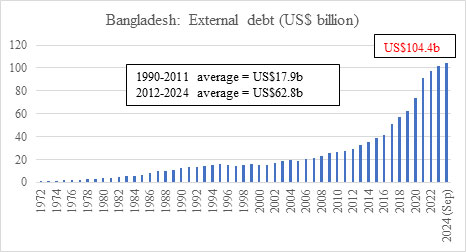
Development partners – traditional and non-traditional – cannot deny their complicity. The most culpable is the World Bank, followed by the Asian Development Bank (ADB) and Japan International Cooperation Agency (JICA). The shares of Bangladesh’s external debt liabilities to them are around 29%, 23% and 18%, respectively, totalling 70% of total external debt. Russia and China are Bangladesh’s main non-traditional development partners, with their respective shares of total external debt at 11% and 7%. All donors offered loans rampantly to the fascist regime to achieve their strategic and business interest, ignoring its extensive corruption and wide-spread human rights violations.

The World Bank briefly demonstrated its adherence to responsible lending principles when it cancelled $1.2 billion IDA credit for the Padma Bridge project in 2012, citing high-level corruption allegations. But its lending subsequently increased as if to expiate itself for the cancellation of the Padma Bridge loan. Mr. Hasan, one of the most corrupt ministers in the deposed Hasina Government, boasted, “once the World Bank cancelled its credit to finance Padma Bridge but now [in 2023] it has proposed to provide $2.25 billion”. To embarrass (or absolve?) the Bank, Sheikh Hasina presented a picture of the Padma Multipurpose Bridge to World Bank President David Malpass at the loan signing ceremony.

While Dhaka boasted that the Padma Bridge project was “entirely funded” by the government, China Exim Bank in fact provided $2.67 billion preferential buyer’s credit. The project costed approximately $3.6-$3.9 billion, nearly 3 times the initial estimate of $1.2 billion (the amount sought from the World Bank), largely due to corruption. The cost over-run triggered crises in both the forex and local currency markets, leading to the erosion of the country’s foreign exchange reserves.

The International Monetary Fund (IMF) provided the lifeline at the dying hours of Hasina’s kleptocratic regime when it approved $4.7 billion in January 2023 with some vague conditionality, such as raising revenues, implementing structural reforms to create a conducive environment to expand trade and foreign direct investment, deepening the financial sector, and developing human capital.

The IMF chose to turn a blind eye to widespread corruption, including the looting of banks by the regime’s cronies, gross violations of human rights and election engineering to hold on to power. Can the IMF absolve itself of responsibility for enabling the survival of the collapsing repressive and corrupt regime to commit human rights violations and abuses during the mass uprising against it a year and half later?

Old habits die hard

Corruption in Bangladesh has deep roots; corruption’s tentacles have reached almost the entire body polity of the country to become a ‘social culture’. Nevertheless, the Interim Government, led by Nobel Laureate Professor Yunus, took some bold reform initiatives to strengthen the Anti-Corruption Commission (ACC) and the integrity of the financial sector.

Thus, it is deeply disappointing that the newly elected government replaced the highly professional central bank governor with a failed business person with no background in banking or international macroeconomics within the first week of assuming power. A loan defaulter himself, the new governor immediately relaxed the loan rules. The government also amended the Interim Government’s Bank Resolution Ordinance to allow the return of the restructured banks to previous owners who looted these banks.

These changes, together with the new government’s rejection of the Interim Government’s ordinances concerning the ACC, the independence of judiciary and the human rights commission, are clear signs of the old habits’ refusal to die and the persistence of corruption.

Another old habit, i.e., addiction to loans (so-called aid), denies to die. As of April 2026, the External Relations Division (ERD) of the Ministry of Finance has been instructed to look for up to $3 billion from development partners. Interestingly, the ERD’s main activity is foreign fund searching through its ‘fund searching committee’ which meets periodically to review (code name for naming and shaming section chiefs) its monthly loan signing targets. Instead, the ERD should have been focusing on fostering and strengthening economic relations – trade and investment – as its name implies.

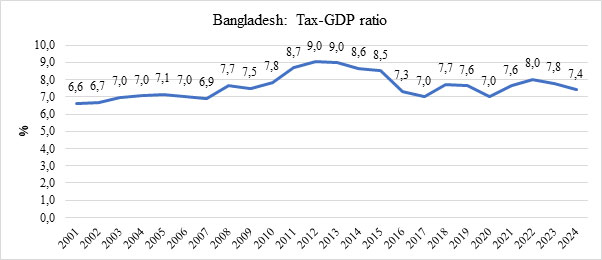
One direct damage of aid addiction is the lethargy in mobilising domestic resources – Bangladesh’s tax-GDP ratio (around 7%) is not only low compared with the averages for low-income countries (13.5%) and middle-income countries (18.9%), but has also been declining from its peak of around 9% in 2012 since its borrowing from development partners accelerated.

Of course, the other collateral damage is the persistence of corruption. IMF research finds that countries with “voracious” and “fractious” politics divert large amounts of public resources to unproductive transfers to powerful interest groups.

Development partners’ responsible roles

All development partners – multilateral and OECD DAC members – ostensibly are in favour of “good governance”, meaning against corruption. The World Bank “considers corruption a major obstacle… to promoting shared prosperity”. The IMF views corruption as “a major obstacle to economic growth, stability, and development”. The ADB “maintains a zero-tolerance stance against corruption, viewing it as a major obstacle to development, poverty reduction, and economic growth”.

Unfortunately, the evidence of their complicity presented above tells a different story from their avowed anti-corruption posture. This casts doubt on their role as development partners. Global evidence shows that donors do not systematically allocate aid to less corrupt countries.

The citizens of the country expect that development partners remain true to their declared anti-corruption stance and advance concessional loans provided the government commits to strict monitorable anti-corruption measures and deep structural reforms. In particular, urgently needed funds should be considered if:

    • Ordinances of the Interim Government designed to strengthen anti-corruption measures, protect human rights and ensure judicial independence are ratified by the Parliament;
    • amendments to the Bank Resolution Ordinance are repealed; and
    • a professionally competent and experienced person with high integrity is appointed as central bank governor.

To achieve deep structural reform, the focus should be on strengthening domestic revenue mobilisation and reorientation away from the aid-dependent development model to a trade and investment led development model. Therefore, development partners should open up their markets, encourage investment in productive sectors and help develop Bangladesh’s productive capacity.

On the other hand, if they remain complicit and advance loans in a highly corruption-prone environment, any future pro-people government will have the right to declare such loans as “odious” and to refuse repayment obligation.

Anis Chowdhury, Emeritus Professor, Western Sydney University (Australia). He held senior UN positions in Bangkok and New York and served as Special Assistant to the Chief Advisor for Finance (with the status and rank of State Minister) in the Professor Yunus-led Interim Government. E-mail: [email protected]

IPS UN Bureau


!function(d,s,id){var js,fjs=d.getElementsByTagName(s)[0],p=/^http:/.test(d.location)?’http’:’https’;if(!d.getElementById(id)){js=d.createElement(s);js.id=id;js.src=p+’://platform.twitter.com/widgets.js’;fjs.parentNode.insertBefore(js,fjs);}}(document, ‘script’, ‘twitter-wjs’);  


Solidarity for Whom?

Solidarity for Whom?

Credit: UNICEF/Giacomo Pirozzi

&nbsp
The niqab is a full-body Islamic piece of clothing, worn by some women in devout Muslim communities, and which covers the whole body, leaving only a narrow slit for the eyes. French full-body veil ban, violated women’s freedom of religion, says the UN Human Rights Committee.

By Lina AbiRafeh, Azza Karam and Henia Dakkak
NEW YORK, Apr 28 2026 – The veil has been lifted—but not the one you think.

Not the veil the West has spent decades weaponizing. The veil now exposed is the one that concealed Western feminism’s selective solidarity—its silence on the women it was never truly fighting for. The “othering” of women from the South West Asian and North African region. In other words: us.

In Against White Feminism, Rafia Zakaria offers a powerful critique of how mainstream feminism often reinforces white supremacist, colonial, and patriarchal logics. The suffering of women of color becomes useful—deployable.

The image of the veiled, victimized woman, waiting to be saved, has long justified wars, interventions, and foreign policies driven not by liberation, but by imperial ambition. When these women resist on their own terms, they are ignored or discredited.

This pattern is not new. It is structural. Discrimination is embedded in the system. Palestine has simply made it undeniable. The silence that followed stripped away any remaining illusion that “we are in this together.” Feminist solidarity, it turns out, has limits—and some of us were never included.

That is the veil we lift today.

We speak as Arab women aged 50–65, activists and feminists with over a century of combined experience across 90 countries. We now live in the United States, where these contradictions are stark. We have paid a price for insisting on integrity. So have many others.

Across conversations with colleagues and communities, the message is consistent: the system is not broken—it functions exactly as designed.

Early feminist movements everywhere have grappled with patriarchy, sometimes resisting it, sometimes accommodating it. In the West, this struggle has often aligned uncomfortably with white supremacy.

In formerly colonized regions, patriarchy cannot be separated from colonialism, racism, or imperialism. These systems are intertwined; dismantling one requires confronting them all. This is where Western feminism consistently falls short.

Today, little has changed. The language is more polished. The imagery more diverse. But the underlying structures—and the values sustaining them—remain intact. Nowhere is this clearer than in how women from the South West Asian and North African region are treated by movements that claim to champion them.

The same logic that invoked Afghan women to justify military intervention now watches Palestinian women document their own destruction while offering silence—or excuses.

The data reflects this reality.

In the United States, anti-Muslim and anti-Arab discrimination rose sharply in 2024. The Council on American-Islamic Relations recorded 8,658 complaints—the highest since it began tracking in 1996. Employment discrimination alone accounted for 15.4% of cases. In 2025, these numbers climbed again. Rhetoric has consequences.

But numbers only tell part of the story. Women’s voices tell the rest.

One Arab aid worker described being sidelined after speaking publicly about Palestine following October 7:

“When I spoke about Ukrainian women, it was welcomed. When I spoke about Palestinian women, it was suppressed. I lost my work.”

Others describe being silenced on social media, accused of saying too much—or too little. Some were advised to remove their hijab for safety. Others were warned to avoid expressing views altogether to protect institutional reputations.

Yet another was denied the right to exercise leadership among her own staff, because as a Muslim from the Arab region, her ability to clearly articulate opinions, exercise judgement, and make decisions, was deemed ‘abusive’. One woman was denied employment because her call for “ceasefire and humanitarian aid” was deemed “too political.”

Western feminism often recoils at these truths. Yet Palestine is not only a political issue—it is a feminist one. All struggles against oppression are interconnected. Justice cannot be selective, even if its application often is.

Feminism demands confronting power, violence, and dehumanization wherever they occur. Palestinian women live at the intersection of multiple forms of oppression—patriarchy, occupation, militarization—and resist across all of them.

A feminism that ignores this reality is not feminism. It is complicity.

As Teju Cole describes, this is the logic of the “white savior industrial complex.” It operates through what can be called gendered orientalism: women from the South West Asian and North African region are portrayed as victims of culture, religion, or men—but rarely of bombs, sanctions, or occupation. This framing preserves the West as liberator while erasing its role in producing violence.

In the United States, the language differs but the outcome is the same. Conservatives fear Islam; liberals seek to save us from it. Both deny our agency. Both silence our voices.

We are rarely represented as we are: organizers, scholars, community leaders, mothers, activists, feminists.

This silence must be named clearly. It is not neutrality. It is complicity.

The credibility of any feminist movement rests on whether it stands with all women—especially when doing so is politically inconvenient.

We have paid the price for this failure: in erasure, in exclusion, in lost friends, in being told our grief is too complex and our politics too divisive.

What passes for solidarity is often conditional. It appears when it costs nothing and disappears when it demands accountability. Women from the South West Asia and North Africa were welcomed when our oppression reinforced dominant narratives. We became inconvenient when our liberation required confronting Western power itself.

Kimberlé Crenshaw introduced intersectionality to describe how overlapping identities produce compounded forms of discrimination. What we are witnessing now is an intersectional crisis: women from those regions face discrimination based simultaneously on race, religion, gender, and geopolitics. The very movement best equipped to confront this has gone largely silent.

From decades of work in conflict settings, one truth is clear: women from South West Asia and North Africa do not need to be singled out for ‘saving’.

We need the violence to stop.

We need colleagues to speak our names when it is difficult. We need those marching for human rights to recognize that feminism that excludes Gaza, Beirut, or Tehran is neither feminism nor human rights. It is branding—a convenient narrative that avoids confronting deeper structures of power.

Palestine has revealed a deeper truth: these systems were never designed to serve everyone. They were built by—and for—those in power.

What is required now is not reform at the margins, but a reckoning.

Solidarity demands accountability. If women’s rights are human rights, then they must apply to all women—without exception.

Lina AbiRafehBetter4WomenAzza Karam and Henia DakkakLead Integrity: House of Wisdom.

IPS UN Bureau


!function(d,s,id){var js,fjs=d.getElementsByTagName(s)[0],p=/^http:/.test(d.location)?’http’:’https’;if(!d.getElementById(id)){js=d.createElement(s);js.id=id;js.src=p+’://platform.twitter.com/widgets.js’;fjs.parentNode.insertBefore(js,fjs);}}(document, ‘script’, ‘twitter-wjs’);  


Directed Technologies Expands Global Connected Vehicle Platform into Africa through Strategic Partnership with 3Gen Products

MELBOURNE, Australia and JOHANNESBURG, April 28, 2026 (GLOBE NEWSWIRE) — Directed Technologies has announced a strategic partnership with 3Gen Products to extend its global, OEM-aligned connected vehicle platform into Africa, unlocking a scalable, standardised approach to connected transport across one of the world’s fastest-growing mobility markets.

This expansion marks a significant step in Directed’s global platform strategy, enabling automotive OEMs and enterprise fleets to deploy a consistent, integrated connected vehicle ecosystem across regions, spanning in-vehicle systems, connectivity, and cloud-based intelligence.

Headquartered in South Africa, 3Gen will serve as Directed’s regional execution partner, leading deployment, integration, and lifecycle support across the continent. The partnership combines Directed’s global technology platform with 3Gen’s deep local expertise, enabling customers to scale with confidence in complex and diverse operating environments.

Across Africa, OEMs and fleet operators face a common challenge: fragmented systems, inconsistent infrastructure, and limited visibility across vehicles, regions, and operations. These constraints make it difficult to standardise deployments, integrate data, and unlock the full value of connected vehicle technology.

Directed Technologies addresses this challenge through a unified platform approach bringing together embedded in-vehicle systems, advanced telematics and IoT hardware, regional connectivity orchestration, and the e.things data platform into a single operating environment.

This enables customers to standardise connected vehicle deployments across multiple countries, seamlessly integrate vehicle, driver, and operational data into their core business systems, reduce complexity across hardware, connectivity and software layers, and scale both OEM and fleet programs with a consistent, future-ready architecture.

“This is not just about entering a new market, it’s about extending a global standard for connected vehicle technology,” said Mark Whitmore, Senior Vice President Sales and Customer Growth at Directed Technologies. “Together with 3Gen, we are enabling OEMs and enterprise fleets to deploy a single, OEM-aligned platform across Africa, removing fragmentation and unlocking real-time operational intelligence at scale.”

“We see enormous opportunity to transform how fleets and OEMs operate across Africa,” said Lesego Modingoane, Director at 3Gen Products. “By combining Directed’s global platform with our local market expertise, we can deliver a connected vehicle solution that is both globally consistent and locally optimised.”

The partnership reinforces Directed Technologies’ strategy of expanding through high-capability regional partners, while maintaining a consistent platform architecture across all markets.

With deployments spanning Asia-Pacific, Europe, and now Africa, Directed continues to establish itself as a global provider of connected vehicle, IoT, and data-driven transport solutions, enabling customers to move from fragmented systems to a unified, scalable digital ecosystem.

About Directed Technologies

Directed Technologies is a global connected vehicle and IoT technology company, delivering OEM-grade solutions that integrate hardware, software, and data into a single platform.

Its e.things platform acts as the control layer for connected mobility—powering embedded OEM programs (e.things Auto), fleet operations (e.things Fleet), and an open ecosystem of API-driven applications (e.things Marketplace).

Directed’s solutions are deployed across more than 5,000 fleets globally and support leading automotive manufacturers and transport operators. Headquartered in Melbourne, Australia, the company operates across Asia-Pacific, Europe, Africa, and the Americas.

Learn more at: www.directedtechnologies.com.au

About 3Gen Products

3Gen Products is a South Africa-based technology partner specialising in connected vehicle deployment, integration, and support across the African market.

With deep expertise in local automotive and fleet environments, 3Gen enables global platforms to be successfully implemented in complex, multi-country operating conditions.

Learn more at: www.3gensa.co.za


GLOBENEWSWIRE (Distribution ID 9696537)