CGTN: China-Africa ties at 70: From shared struggles to a common dream of modernization

BEIJING, May 31, 2026 (GLOBE NEWSWIRE) — This year marks the 70th anniversary of China-Africa relations. CGTN has published an article highlighting Africa's priority role in China's overall foreign policy, while tracing how the China-Africa partnership has been forged and strengthened over decades. The article also explores how deepening cooperation in recent years has helped enhance the voice and representation of the Global South, and contributed to advancing a more balanced and democratic international order.

As Chinese President Xi Jinping and Egyptian President Abdel-Fattah al-Sisi exchanged congratulatory messages on Saturday to mark the 70th anniversary of China-Egypt ties, the occasion also highlighted a broader milestone: seven decades of China-Africa relations.

Xi noted that over the past 70 years, China-Egypt relations have become a model of amity, solidarity and cooperation among developing countries, as well as a benchmark for cooperation between China and Arab states and between China and Africa.

Today, China-Africa relations have evolved from a friendship forged in shared struggles into a dynamic partnership dedicated to development, modernization and the rise of the Global South.

From solidarity to strategic partnership

The foundations of China-Africa friendship were laid during a period of profound political change.

From the 1950s to the 1970s, China firmly supported African countries in their struggles for national independence and liberation. African nations, in turn, played a decisive role in restoring the lawful seat of the People's Republic of China at the United Nations in 1971. Of the 76 votes cast in favor of the resolution, 26 came from African countries – laying a strong foundation for China-Africa mutual trust.

Earlier this year, Chinese Foreign Minister Wang Yi visited Africa, continuing a 36-year tradition of making the continent the destination of China's foreign minister's first overseas trip each year, highlighting the importance of China-Africa relations.

Over the past two decades, China-Africa cooperation has expanded rapidly. The establishment of the Forum on China-Africa Cooperation (FOCAC) in 2000 provided an institutional framework for cooperation, while China's Africa policy of sincerity, real results, amity and good faith further guided bilateral relations. In 2015, the two sides elevated their ties to a comprehensive strategic cooperative partnership and launched the “Ten Cooperation Plans,” setting a strong foundation for rapid modernization across the African continent.

At the 2024 FOCAC summit, China and Africa further upgraded their relationship to an all-weather community with a shared future for the new era. China also expanded duty-free access from 33 African countries to all 53 African countries with diplomatic ties by 2025, becoming the first major economy to grant unilateral zero-tariff treatment across all product categories to every African country with which it has diplomatic relations.

Humphrey Moshi, a prominent Tanzanian economist, described China-Africa cooperation as a significant example of Global South solidarity. He said such solidarity helps transform developing countries from “passive participants” into “active shapers” of international rules.

Advancing modernization through practical cooperation

While political trust forms the foundation of China-Africa relations, economic cooperation has become both the stabilizer and growth engine of the partnership.

According to data released by China's General Administration of Customs, China-Africa trade reached a record $348 billion in 2025, up 17.7% from the previous year, with China remaining Africa's largest trading partner for the 17th consecutive year. The momentum has continued into 2026. In the first quarter alone, China's trade with the African countries totaled 646.56 billion yuan ($92.2 billion), a year-on-year increase of 23.7%.

At the same time, the Belt and Road Initiative has reshaped connectivity across the continent by upgrading the railway system with projects such as the Tazara Railway and the Mombasa-Nairobi Standard Gauge Railway, which are flagship projects that set examples for high-quality Belt and Road cooperation between China and Africa.

According to China's Foreign Ministry, China has signed debt-relief agreements or reached debt-relief understandings with 19 African countries as of 2023, making it the largest contributor to debt-service suspension efforts under the G20 framework.

Meanwhile, China has trained tens of thousands of African professionals through scholarships, vocational training and educational exchange programs. As of June 2025, China has established 17 Luban Workshops across 15 African countries, while the China-Africa university cooperation plan, a higher education initiative pairing Chinese universities with African institutions, has connected 114 higher education institutions.

Paul Frimpong, executive director and senior research fellow of the Africa-China Centre for Policy & Advisory, said China's contribution to Africa's development is increasingly visible.

“China's sharing of knowledge, skills and experience in sectors such as manufacturing and green energy is having a profound impact on Africa's journey toward modernization and self-reliance,” he added.

https://news.cgtn.com/news/2026-05-30/China-Africa-ties-at-70-Path-to-a-shared-dream-of-modernization-1NzbT7rDWhy/p.html


GLOBENEWSWIRE (Distribution ID 9729282)
GEF Council Welcomes New Green Pledges, Highlights Old Access Barriers

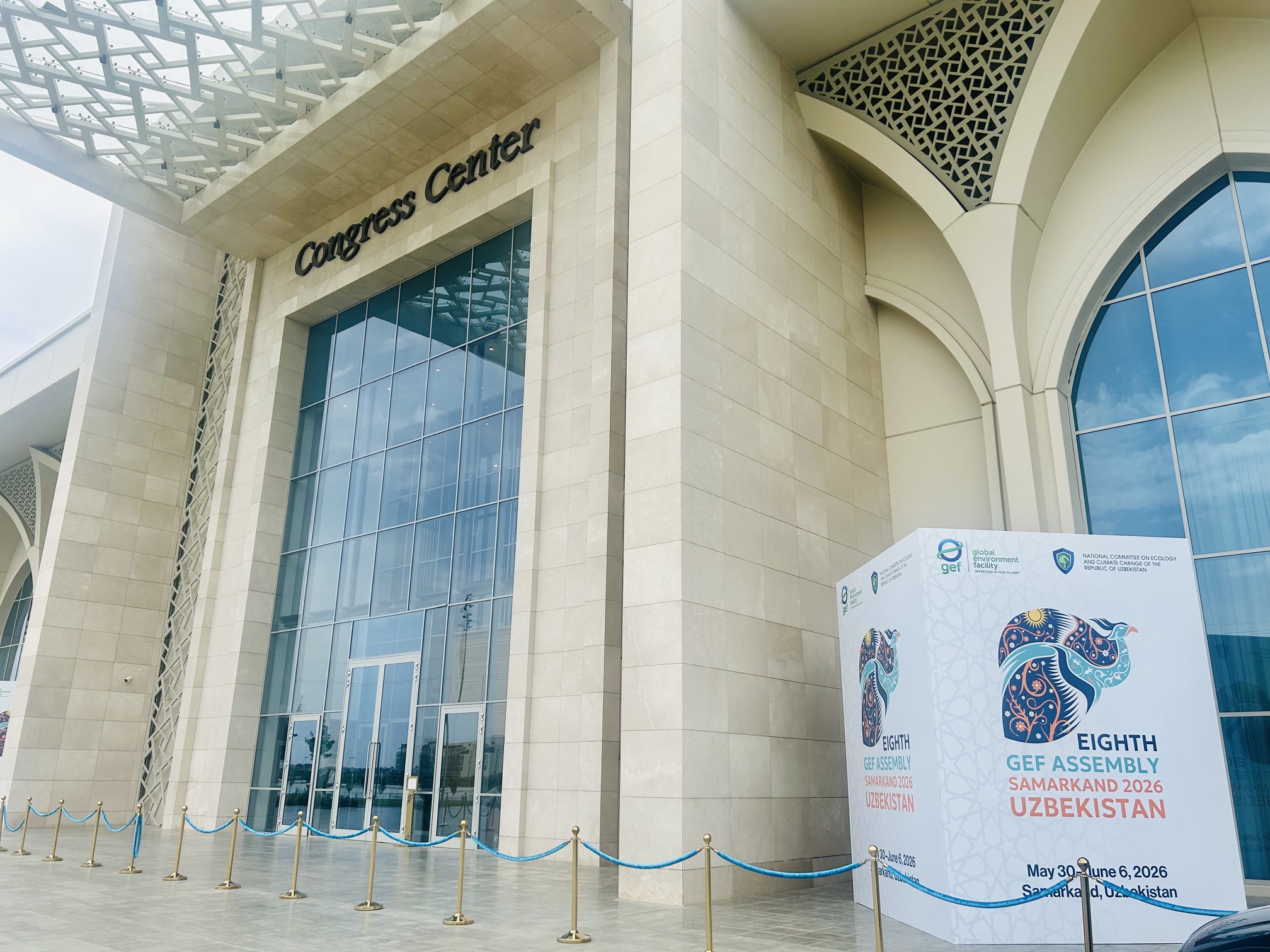
The Eighth Assembly of the Global Environment Facility (GEF) is currently taking place at the Congress Center of Samarkand, Uzbekistan. Nearly 150 representatives from countries are participating in the week-long conference. Credit: Stella Paul/IPS

The Eighth Assembly of the Global Environment Facility (GEF) is currently taking place at the Congress Center of Samarkand, Uzbekistan. Nearly 150 representatives from countries are participating in the week-long conference. Credit: Stella Paul/IPS

By Stella Paul
SAMARKAND, Uzbekistan, May 31 2026 – The 71st Council meeting of the Global Environment Facility (GEF) opened today amid a sharp divide, with donor nations urging broader and increased funding commitments, while developing countries called for more equitable and accessible pathways to environmental finance.

In April, donor countries pledged an initial USD 3.9 billion to the GEF Trust Fund’s ninth replenishment cycle (GEF-9), which will support environmental projects worldwide from 2026 to 2030.

Today, government officials, development banks, philanthropies, and civil society groups welcomed the pledges and highlighted GEF’s “whole of the societies” approach, which aims to involve governments, communities, businesses, and civil society. However, discussions at the meeting preceding the Assembly also reflected a growing challenge: environmental problems are becoming more urgent just as international aid budgets are shrinking.

Developing countries repeatedly raised concerns about whether funding is reaching those who need it most and whether access to it is fair.

Opening the Assembly, GEF Interim Chief Executive Officer Claude Gascon said GEF-9 is designed to “unlock great investments” through stronger cooperation across government agencies while continuing support for least developed countries (LDCs) and small island developing states (SIDS).

“The resources must reach countries more efficiently, where the impacts are greatest,” Gascon said. He pointed to reforms agreed during replenishment talks that aim to simplify procedures and improve accountability.

According to the GEF Secretariat, its current projects are already delivering large-scale environmental benefits. GEF’s blended finance operations have achieved an average co-financing ratio of 18 to 1, meaning every dollar invested by GEF has helped attract many more dollars from public and private sources for biodiversity, climate, land restoration, and pollution projects.

Aziz Abdukhakimov, Advisor to the President of the Republic of Uzbekistan on the Environment and Chairman of the National Committee on Ecology and Climate Change, highlighted the importance of this forum.

“We meet in Samarkand at a moment when the triple planetary crisis is becoming increasingly visible across all regions of the world. At the same time, the window for achieving our global environmental commitments is rapidly decreasing. This is why the role of the GEF is important more than ever,” Abdukhakimov said.

The Opening Council of the Eighth Assembly of the Global Environment Facility (GEF) is in Progress at the Congress Center of Samarkand, Uzbekistan. Credit: Stella Paul/IPS

The Opening Council of the Eighth Assembly of the Global Environment Facility (GEF) is in Progress at the Congress Center of Samarkand, Uzbekistan. Credit: Stella Paul/IPS

A More Inclusive GEF

A key feature of GEF-9 will be integrated programming, based on the idea that environmental problems such as climate change, biodiversity loss, and land degradation are interconnected and should be tackled together.

Ninety-eight countries, including 31 least developed countries and 26 small island states, are expected to participate in these programs from 2026 to 2030.

More than 100 country-level workshops and consultations have already been held to help countries strengthen their capacity, align GEF funding with national priorities, and increase participation by women, Indigenous Peoples, local communities, and the private sector.

Donor countries highlighted what they see as progress. Norway welcomed larger allocations for LDCs and SIDS, as well as funding targets aimed at directing more resources to countries with the greatest needs. Norwegian representatives said they have high expectations for the results GEF-9 will achieve.

Representatives of Indigenous Peoples also described the replenishment process as a major step forward.

Speaking on behalf of the GEF Indigenous Peoples Advisory Group (IPAG), Giovanni B. Reyes said Indigenous communities had a stronger voice in shaping the new funding cycle.

“For the first time, we were at the table of the replenishment. For the first time, our work will be visible in the way it deserves,” Reyes told the Assembly.

“The inclusion of Indigenous Peoples and our territories in the corporate scorecard means our contributions will be counted, our lands recognised, and our results disaggregated alongside women and youth. We have always been there — this is our way of life. Now the data will tell our story and amplify our voices.”

The representative said that commitments to create a dedicated GEF Indigenous Peoples policy, establish procedures for Indigenous-led projects, and allow Indigenous organisations to become accredited implementing agencies represent lasting institutional changes – rather than one-time promises. The representative also warned that failing to protect Indigenous and traditional territories would lead to biodiversity loss and ecosystem collapse.

New Partnerships Announced

Several new partnerships were announced during the opening ceremony.

Gascon revealed a partnership with a U.S.-based philanthropy to support biodiversity conservation in Africa through the Africa Protected Areas Initiative.

A video presentation highlighted protected areas such as Kafue National Park and North Luangwa in Zambia, showing how relatively small protected areas can help secure water supplies, support local livelihoods, and conserve globally important wildlife.

Rob Walton of the Blue Nature Alliance described GEF as a key institution in global environmental finance. He highlighted its support for international environmental agreements, including preparations for the Biodiversity Beyond National Jurisdiction (BBNJ) treaty, which he called an important milestone for ocean protection.

The World Bank, which serves as trustee of the GEF Trust Fund, announced that USD 3.3 billion has already been confirmed for GEF-9.

Speaking at the Assembly, Maitreyi Das, World Bank Vice Director of Trust Funds and Partner Relations, said additional contributions are expected as donor approval processes continue. For the first time, countries can make pledges throughout the replenishment period rather than only at the beginning.

“This replenishment reflects a shared resolve to advance an ambitious environmental agenda at a very difficult moment for overseas development assistance,” she said. She credited cooperation among donors, recipient countries, civil society, businesses, and international environmental conventions.

Developing Countries Seek Fairer Access

Despite the positive announcements, delegates from developing countries said access to finance remains a major problem.

African representatives described GEF-9 as an important opportunity to address drought, food insecurity, land degradation, and biodiversity loss. However, they warned that available funding remains far below what Africa needs to meet global climate and biodiversity goals by 2030.

While they welcomed increased attention to least developed countries, drylands, and integrated programmes, several African countries cautioned that blended finance and private-sector investment require financial systems and risk-sharing mechanisms that many countries still lack.

“The region therefore calls for stronger grant-based financing, simplified access procedures, and capacity support to ensure equitable participation,” said Baixo Eduardo of Mozambique, who is representing southern African countries at the assembly.

Small island states voiced similar concerns.

Speaking for Caribbean countries, one representative said predictable, adequate, and accessible funding remains essential if SIDS are to achieve environmental and sustainable development goals.

“The ambition of GEF 9 is encouraging,” she said, particularly in biodiversity conservation, climate resilience, and pollution reduction. “But implementation mechanisms must reflect the unique vulnerabilities and capacities of small island developing states.”

Brazilian delegate Simone Carolina Bauch, speaking on behalf of its constituency, welcomed commitments to dedicate 35 percent of GEF-9 funding to biodiversity and 20 percent to Indigenous Peoples and local communities. However, she said that countries should remain in control of how projects are designed and implemented.

Bauch also called for greater clarity on the rules for participating in integrated programmes and warned that co-financing requirements should not become barriers to accessing funds.

Yicheng Yao, representative of China and Hrisheekesh Arvind Modak, representative of India, strongly supported these concerns raised by Bauch and called for simpler and fairer access to green finance.

Responding to these issues, Gascon said resources have been set aside for a country engagement strategy that will help national focal points better understand funding opportunities and make informed decisions.

He added that further guidance on participation in integrated programmes will be presented to the GEF Council later this year, with formal expressions of interest expected in early 2027.

As discussions continue in Samarkand, the GEF said the window for new contributions to the GEF-9 replenishment will remain open throughout the Assembly, allowing countries to make additional pledges for the 2026–2030 funding cycle. Delegates also thanked the government of Uzbekistan for hosting the assembly.

Notes: The Eighth Global Environment Facility Assembly is underway in Samarkand, Uzbekistan.

This feature is published with the support of the GEF. IPS is solely responsible for the editorial content, and it does not necessarily reflect the views of the GEF.

IPS UN Bureau Report


!function(d,s,id){var js,fjs=d.getElementsByTagName(s)[0],p=/^http:/.test(d.location)?’http’:’https’;if(!d.getElementById(id)){js=d.createElement(s);js.id=id;js.src=p+’://platform.twitter.com/widgets.js’;fjs.parentNode.insertBefore(js,fjs);}}(document, ‘script’, ‘twitter-wjs’);


Dois Reis da Babilônia, um Funcionário da Alfândega do Egito e um Tesouro Escondido da Córsega Lideram o Leilão de Antiguidades e Arte Antiga da TimeLine de 2 de junho

HARWICH, Reino Unido, May 30, 2026 (GLOBE NEWSWIRE) — TimeLine Auctions, o salão britânico conhecido por suas antiguidades em nível de museu, irá realizar um grande Leilão de Antiguidades e Arte Antiga no dia 2 de junho de 2026. O Dia Um apresenta destaques da Mesopotâmia, Egito, Grécia e Mediterrâneo Ocidental, com uma venda mais ampla que abrange desde o período Paleolítico até o Medieval.

Dois reis da Mesopotâmia nomeados são os destaques do catálogo. Uma tigela hemisférica de bronze carrega o nome cuneiforme de cinco sinais de Manishtushu da Acádia (c. 2270-2255 a.C., lote 249), uma das primeiras inscrições reais nomeadas a chegar ao mercado nos últimos anos. Do período Cassita o leilão apresenta uma conta de olho de ágata com o nome de Kurigalzu II (lote 250) e um selo cilíndrico de ágata com uma oração suméria ao deus da tempestade Adad (lote 216).

A seção do Egito é encabeçada por uma figura de basalto de quarenta centímetros do funcionário aduaneiro saíta Wahibre, ajoelhado para apoiar uma ampla bacia de oferendas. Separadas no século XIX, as duas partes passaram por diferentes coleções e salões de vendas antes de se reunirem aqui pela primeira vez em leilão (lote 61). Outros destaques egípcios incluem um Osíris de bronze fundido de setenta centímetros da 26ª Dinastia (lote 81) e uma estela de madeira pintada ligando Amon em Luxor a Osíris em Abidos (lote 65).

Duas vasilhas áticas lideram a seção da Grécia. Uma pyxis de figuras negras do século VI aC retrata a procissão de carruagens de uma noiva ateniense, com a recepção na sua nova casa ao redor da tampa (lote 96). Uma coluna de figuras vermelhas do século V emparelha Europa com uma tríade dionisíaca, duas cenas de poder divino em uma vasilha (lote 88).

Do Mediterrâneo ocidental vêm os bronzes de Gravona, dez objetos recuperados de um corte ferroviário na Córsega na década de 1880 e publicados por Robert Forrer em 1924.

Após o primeiro dia, o leilão continua exclusivamente online a partir de 3 de junho, com arte antiga em várias categorias de coleção. O programa encerra com um leilão de Moedas Antigas nos dias 9 e 10 de junho, juntamente com pesos, fichas, medalhas e livros.

Início do leilão: 8h Leste dos EUA/13h BST.

Licitação: Ausente, por telefone ou online através da plataforma de licitação da TimeLine, LiveAuctioneers, Invaluable ou The Saleroom.

Pagamentos: Aceita-se GBP. Envio disponível para todo o mundo.

Perguntas: +44 (0) 1277 815121 ou [email protected].
Online: https://timelineauctions.com

Fotos deste comunicado podem ser encontradas em:

http://www.globenewswire.com/NewsRoom/AttachmentNg/6c350ee3-943d-4407-9634-d55fd6940c48

http://www.globenewswire.com/NewsRoom/AttachmentNg/d11d6df8-af6c-456d-a263-16a46d0e7564


GLOBENEWSWIRE (Distribution ID 1001184943)

Deux rois babyloniens, un officier des douanes égyptien et un trésor corse figurent parmi les pièces maîtresses de la vente aux enchères d’antiquités et d’art ancien de TimeLine, organisée le 2 juin

HARWICH, Royaume-Uni, 30 mai 2026 (GLOBE NEWSWIRE) — TimeLine Auctions, la salle des ventes britannique réputée pour ses antiquités de qualité muséale, organisera sa vente aux enchères d’antiquités et d’art ancien le 2 juin 2026. La première journée de vente proposera des pièces maîtresses de Mésopotamie, d’Égypte, de Grèce et du bassin méditerranéen occidental, dans le cadre d’une vente plus vaste couvrant des périodes allant du Paléolithique au Moyen Âge.

Deux rois mésopotamiens nommés figurent en tête du catalogue. Un bol hémisphérique en bronze porte le nom à cinq signes cunéiformes de Manishtushu d’Akkad (vers 2270–2255 av. J.-C., lot 249), l’une des plus anciennes inscriptions royales nommées à être apparues sur le marché ces dernières années. La période kassite est représentée par une perle oculaire en agate portant le nom de Kurigalzu II (lot 250) et par un sceau-cylindre en agate rubanée portant une prière sumérienne dédiée au dieu de l’orage Adad (lot 216).

La section égyptienne est dominée par une statuette en basalte de quarante centimètres représentant Wahibre, officier des douanes de l’époque saïte, agenouillé et soutenant un large bassin d’offrandes. Séparées au XIXe siècle, les deux parties ont transité par différentes collections et salles de vente avant d’être réunies ici pour la première fois dans le cadre de ces enchères (lot 61). Parmi les autres pièces égyptiennes remarquables figure un Osiris en bronze creux de soixante-dix centimètres, datant de la XXVIe dynastie (lot 81), et une stèle en bois peint reliant Amon à Louxor à Osiris à Abydos (lot 65).

La section grecque s’ouvre sur deux importants vases attiques. Une pyxide à figures noires du VIe siècle av. J.-C. illustre la procession en char d’une mariée athénienne, tandis que le pourtour du couvercle représente la scène de réception dans sa nouvelle demeure (lot 96). Un cratère à colonnes à figures rouges du Ve siècle associe Europe à une triade dionysiaque, offrant ainsi deux scènes de puissance divine sur un même vase (lot 88).

Parmi les pièces en provenance du bassin méditerranéen occidental figurent les bronzes de Gravona, un ensemble de dix objets découverts dans les années 1880 en Corse lors du creusement d’une tranchée ferroviaire, puis publiés par Robert Forrer en 1924.

Après la première journée, la vente aux enchères se poursuivra exclusivement en ligne à partir du 3 juin, avec des œuvres d’art antique couvrant plusieurs catégories de collection. Le programme se conclura les 9 et 10 juin par une vente aux enchères de pièces anciennes, ainsi que de poids, jetons, médailles et livres.

Heure de début de la vente aux enchères : 8 h 00, heure de l’Est des États-Unis/13 h 00, heure d’été britannique.

Modalités d’enchères : enchères sur ordre, par téléphone ou en direct en ligne via la plateforme de TimeLine, LiveAuctioneers, Invaluable ou The Saleroom.

Paiements : règlement en livres sterling accepté. Expédition disponible dans le monde entier.

Pour toutes questions : +44 (0) 1277 815121 ou [email protected].
En ligne : https://timelineauctions.com

http://www.globenewswire.com/NewsRoom/AttachmentNg/6c350ee3-943d-4407-9634-d55fd6940c48

http://www.globenewswire.com/NewsRoom/AttachmentNg/d11d6df8-af6c-456d-a263-16a46d0e7564


GLOBENEWSWIRE (Distribution ID 1001184943)

Zwei babylonische Könige, ein ägyptischer Zollbeamter und ein korsischer Schatz zählen zu den Highlights der TimeLine-Auktion für Antiquitäten und antike Kunst am 2. Juni

HARWICH, (Großbritannien), May 30, 2026 (GLOBE NEWSWIRE) — Das britische Auktionshaus TimeLine Auctions, das international für seine bedeutenden Antiquitäten bekannt ist, veranstaltet am 2. Juni 2026 seine diesjährige Auktion „Antiquities & Ancient Art“. Am ersten Tag stehen Spitzenstücke aus Mesopotamien, Ägypten, Griechenland und dem westlichen Mittelmeerraum im Mittelpunkt einer Auktion, die den Zeitraum vom Paläolithikum bis zum Mittelalter umfasst.

Zwei namentlich bekannte mesopotamische Könige stehen an der Spitze des Katalogs. Eine halbkugelförmige Bronzeschale trägt den aus fünf Zeichen bestehenden Keilschriftnamen von Manishtushu von Akkad (ca. 2270–2255 v. Chr., Los 249) und zählt zu den frühesten namentlich zugeordneten königlichen Inschriften, die in den letzten Jahren auf den Markt gekommen sind. Aus der Kassitenzeit stammen eine Augenperle aus Achat mit dem Namen Kurigalzu II. (Los 250) sowie ein Rollsiegel aus gebändertem Achat mit einem sumerischen Gebet an den Sturmgott Adad (Los 216).

Die ägyptische Abteilung wird von einer vierzig Zentimeter hohen Basaltfigur des saitischen Zollbeamten Wahibre angeführt, der kniend eine breite Opferschale trägt. Nachdem die beiden Teile der Skulptur im 19. Jahrhundert voneinander getrennt worden waren, gelangten sie über verschiedene Sammlungen und Auktionshäuser schließlich wieder zusammen und werden hier erstmals gemeinsam versteigert (Los 61). Zu den weiteren Höhepunkten der ägyptischen Sektion zählen eine siebzig Zentimeter hohe hohlgegossene Bronzefigur des Osiris aus der 26. Dynastie (Los 81) sowie eine bemalte Holzstele, die Amun in Luxor mit Osiris in Abydos verbindet (Los 65).

Zwei attische Gefäße stehen im Mittelpunkt der griechischen Abteilung. Eine schwarzfigurige Pyxis aus dem 6. Jahrhundert v. Chr. zeigt den Hochzeitszug einer athenischen Braut; der Empfang in ihrem neuen Zuhause ist auf dem Deckel umlaufend dargestellt (Los 96). Ein rotfiguriger Kolonettenkrater aus dem 5. Jahrhundert v. Chr. zeigt Europa zusammen mit einer dionysischen Trias und vereint damit zwei Szenen göttlicher Macht auf einem einzigen Gefäß (Los 88).

Aus dem westlichen Mittelmeerraum stammen die sogenannten Gravona-Bronzen: zehn Objekte, die in den 1880er Jahren in einem Eisenbahneinschnitt auf Korsika geborgen und 1924 von Robert Forrer veröffentlicht wurden.

Nach dem ersten Auktionstag wird die Auktion ab dem 3. Juni ausschließlich online fortgesetzt und umfasst antike Kunst aus verschiedenen Sammelkategorien. Den Abschluss des Programms bildet eine Auktion antiker Münzen am 9. und 10. Juni, ergänzt durch Lose aus den Bereichen Gewichte, Wertmarken, Medaillen und Bücher.

Auktionsbeginn: 8:00 Uhr EST / 13:00 Uhr BST.

Gebotsabgabe: Schriftlich, telefonisch oder live online über die TimeLine-Auktionsplattform, LiveAuctioneers, Invaluable oder The Saleroom.

Zahlung: Britische Pfund (GBP) werden akzeptiert. Weltweiter Versand verfügbar.

Fragen: +44 (0) 1277 815121 oder [email protected].
Online: https://timelineauctions.com

http://www.globenewswire.com/NewsRoom/AttachmentNg/6c350ee3-943d-4407-9634-d55fd6940c48

http://www.globenewswire.com/NewsRoom/AttachmentNg/d11d6df8-af6c-456d-a263-16a46d0e7564


GLOBENEWSWIRE (Distribution ID 1001184943)

World Vape Day 2026: One Switch – Everyone Wins

BRUSSELS, May 30, 2026 (GLOBE NEWSWIRE) — Today, vapers, former smokers, and harm reduction advocates mark World Vape Day 2026. The theme this year is One Switch – Everyone Wins. It is not a slogan. It is what the data shows.

World Vape Day falls one day before the WHO's World No Tobacco Day, and the contrast could not be starker. While the WHO spends tomorrow calling vapes and nicotine pouches industry tricks designed to hook a new generation, consumers in Germany, South Africa, Argentina, and many more countries took to the streets and Social Media this week to demand access to the less harmful alternatives that have already helped millions quit smoking.

“The WHO has been running the same playbook for years. Nicotine is the enemy, alternatives are industry tactics, and anyone who disagrees is compromised. Meanwhile, 8 million people a year die from smoking. That is not a public health record to be proud of,” said Michael Landl, Director, World Vapers' Alliance.

The science is not in dispute among serious researchers. Vaping, nicotine pouches, and heated tobacco products all dramatically reduce exposure to the chemicals that kill smokers. Nicotine is addictive, but it is not the cause of smoking-related disease. Combustion is. When a smoker switches completely, the benefits extend to everyone around them. Secondhand smoke raises children's risk of asthma, pneumonia, and bronchitis. Children of smokers are up to four times more likely to become smokers themselves. One switch removes almost all of that from the home.

The countries that understood this are now reaping the results. Sweden is smoke-free. The UK halved its smoking rate. New Zealand cut smoking among under-25s to around 3 percent and has the first smoke-free generation.

“Every country that has cut smoking fast did it by giving smokers real alternatives. World Vape Day exists to remind policymakers that the evidence is there. That we consumers are not anecdotes, we are the evidence. The tools are there. The only thing missing is the political will in too many countries,” Landl added.

For media enquiries: [email protected] www.worldvapersalliance.com

A photo accompanying this announcement is available at: https://www.globenewswire.com/NewsRoom/AttachmentNg/01526a12-daff-4be4-aa21-2454f91a5e71


GLOBENEWSWIRE (Distribution ID 9729184)

Dia Mundial do Vape 2026: Uma Mudança, Todos Ganham

BRUXELAS, May 30, 2026 (GLOBE NEWSWIRE) — Hoje, vapers, ex-fumantes e defensores da redução de danos marcam o Dia Mundial do Vape 2026. O tema deste ano é Uma Mudança, Todos Ganham. Não é um slogan. É o que os dados mostram.

O Dia Mundial do Vape acontece um dia antes do Dia Mundial Sem Tabaco da OMS, e o contraste não poderia ser mais gritante. Enquanto a OMS passa o amanhã chamando vapes e truques da indústria de bolsas de nicotina projetadas para atrair uma nova geração, consumidores na Alemanha, África do Sul, Argentina e muitos outros países foram às ruas e às redes sociais esta semana para exigir acesso às alternativas menos prejudiciais que já ajudaram milhões a parar de fumar.

“A OMS usa a mesma cartilha há anos. A nicotina é o inimigo, as alternativas são táticas da indústria e qualquer um que discorde está comprometido. Enquanto isso 8 milhões de pessoas morrem por ano por causa do tabagismo. Esse não é um registro de saúde pública para se orgulhar “, disse Michael Landl, Diretor da World Vapers 'Alliance.

A ciência não está em disputa entre pesquisadores sérios. Vaping, bolsas de nicotina e produtos de tabaco aquecido reduzem drasticamente a exposição aos produtos químicos que matam os fumantes. A nicotina é viciante, mas não é a causa das doenças relacionadas ao tabagismo. A fumaça é. Quando um fumante muda completamente, os benefícios se estendem a todos ao seu redor. O fumo passivo aumenta o risco de asma, pneumonia e bronquite nas crianças. Os filhos de fumantes são até quatro vezes mais propensos a se tornarem fumantes. Uma mudança acaba quase com tudo isso na casa.

Os países que entenderam isso agora estão colhendo os resultados. A Suécia está livre do tabagismo. O Reino Unido reduziu pela metade sua taxa de tabagismo. A Nova Zelândia reduziu o tabagismo entre os menores de 25 anos para cerca de 3% e tem a primeira geração livre do tabagismo.

“Todos os países que reduziram o tabagismo rapidamente fizeram isso dando aos fumantes alternativas reais. O Dia Mundial do Vape existe para lembrar aos formuladores de políticas da existência de evidências. Nós, consumidores, não somos apenas casos, somos a evidência. As ferramentas existem. A única coisa que falta é a vontade política em muitos países “, acrescentou Landl.

Para perguntas da mídia: [email protected] www.worldvapersalliance.com

Foto deste comunicado disponível em: https://www.globenewswire.com/NewsRoom/AttachmentNg/01526a12-daff-4be4-aa21-2454f91a5e71


GLOBENEWSWIRE (Distribution ID 9729184)

12B SPORTS Named Main Sponsor of VR46 Racing Team for the 2026 MotoGP Season

LONDON, May 30, 2026 (GLOBE NEWSWIRE) — 12B SPORTS, a next-generation sports media platform, today announced its appointment as Main Sponsor of Pertamina Enduro VR46 Racing Team for the 2026 MotoGP World Championship season. The 12B SPORTS brand will appear prominently on both the team's bikes and race suits, marking the platform's most significant motorsport partnership to date.

Founded by nine-time World Champion Valentino Rossi, VR46 Racing Team is one of the most celebrated and passionately supported outfits in the MotoGP paddock. With riders Fabio Di Giannantonio and Franco Morbidelli competing at the pinnacle of the sport, the team commands a dedicated global following that spans generations and continents. It is precisely this community that 12B SPORTS is committed to serving, connecting, and inspiring.

“12B SPORTS brings a fresh and dynamic energy to our partnership portfolio. Together, we look forward to reaching new audiences and giving fans around the world a deeper connection to VR46 and the world of MotoGP,” said Alessio Salucci, Team Director VR46 Racing Team.

“We are very happy to welcome 12B SPORTS as main Sponsor of our MotoGP Team. The brand represents passion for sports information and it’s a hub for many fans all over the world. We cannot wait to start working together and reach a global audience,” said Gianluca Falcioni, CEO of VR46 Agency, managing sponsorship and partnership for VR46 Companies.

“VR46 is more than a racing team. It is a symbol of passion, authenticity, and the spirit of MotoGP,” said Rory Anderson, spokesperson for 12B SPORTS. “As Main Sponsor, we are proud to stand alongside one of the sport's most iconic teams and bring fans even closer to the moments that define it.”

When sport moves people, it moves the world. 12B SPORTS and VR46 Racing Team share that belief, and this partnership marks the beginning of a journey to bring fans everywhere closer to the stories, rivalries, and moments that make MotoGP extraordinary.

About 12B SPORTS

12B SPORTS is a next-generation sports media platform built on the belief that sport has the power to unite, inspire, and connect. By bringing fans together through shared passion and immersive content, 12B SPORTS is creating a global community that celebrates the moments, stories, and personalities that make sport extraordinary.

About Pertamina Enduro VR46 Racing Team

VR46 Racing Team is a MotoGP team founded by Valentino Rossi, nine-time World Champion. The project was created with the mission of developing young racing talent and guiding them from Moto3 to MotoGP. Based in Tavullia, Italy, the team represents one of the most dynamic and recognizable organizations in the MotoGP paddock, combining sporting performance, innovation, and a strong brand identity. The VR46 Racing Team has competed in the MotoGP junior categories since 2014 and made its debut in the premier class in 2022. Since entering the MotoGP class, the team has partnered with Ducati and, in just four seasons, has achieved third place in both the Riders’ and Teams’ World Championship standings. In 2026, the Pertamina Enduro VR46 Racing Team competes with a rider line-up featuring Fabio Di Giannantonio and Franco Morbidelli.

A photo accompanying this announcement is available at https://www.globenewswire.com/NewsRoom/AttachmentNg/7c83d9ca-abfe-42f2-a56c-8a68ea1d2abb


GLOBENEWSWIRE (Distribution ID 1001184920)

A New Chapter Is Emerging in Pakistan-China Relations

ISLAMABAD, May 30, 2026 (GLOBE NEWSWIRE) — The Ministry of Information and Broadcasting (MoIB) is responsible for promoting and managing the official narrative surrounding Prime Minister Shehbaz Sharif's visit to China, which celebrates the 75th anniversary of diplomatic relations.

For most of the last decade, Pakistan-China engagement was defined in terms of highways, energy infrastructure, ports, and the broader CPEC-based infrastructure projects, all of which revolutionized Pakistan's economy, enhanced connectivity, and solved long-drawn energy crises. However, the Islamabad-Beijing partnership today is transcending into something much wider and a great deal more strategic.

This change was abundantly clear in the recent visit to China by the Prime Minister. The meeting with the Chinese Premier, Li Qiang, attendance at the Pakistan-China Third B2B Investment Forum and meetings with China's tech giants were evident symbols of this shift in the Pakistan-China cooperation away from the traditional economic cooperation toward the newer dimensions like technology, innovation, industry and strategic cooperation.

The atmosphere of the visit itself was meaningful. Pakistan and China were not just looking at the volume of trade or individual deals. Instead, they were discussing a convergence in vision and future-focused industries and development plans in an era of fast-changing technological and political global economy.

The PM during his talks with Premier Li Qiang in Beijing, stated that the Pakistan-China All-Weather Strategic Cooperative Partnership would continue to remain the centerpiece of Pakistan's foreign policy. The two sides expressed happiness with the gradual progress in the relationship and assured each other of support on each other's core issues. Although this is a standard boilerplate statement made at diplomatic negotiations, however the context of the visit itself suggests that the two sides are moving ahead with the relationship to a new plane.

That transition is evident in CPEC too. It has been evolving from a focus mainly on large-scale infrastructure and connectivity to a model that encompasses industrialization, modernization of agriculture, digitization, clean energy, science, and high technology cooperation. This trend itself mirrors the realities of global developments. In today’s world, economic power and influence do not solely rely on locations or routes of trade but on technology, innovation and digital connectivity.

It seems that the Pakistani leadership has taken notice of that too. Prime Minister Shehbaz Sharif stressed the necessity of bringing China's 15 th Five-Year Plan into sync with Pakistan's “Uraan Pakistan” development agenda in order to speed up the practical cooperation and long-term economic coordination between the two countries. It has become clear that the discourse from Islamabad is that it is an aspiring participant in Asia's technological and industrial future rather than restricted to traditional economic models.

An obvious manifestation of that increasing cooperation was evident during the Prime Minister's visit to the headquarters of the Alibaba Group in Hangzhou. Pakistani delegation was given a warm welcome by Chairman Joe Tsai where both sides saw the signing of number of strategic MOUs between Alibaba Group and Pakistani public/private sector institutions. The areas of cooperation are mainly the digitalization process, technological enhancement and developing further cooperation in emerging sectors.

Yet the importance of the meeting extended beyond business alone. Joe Tsai acknowledged Pakistan’s efforts toward regional and global peace and stability while also appreciating the government’s focus on technological innovation and creating an environment attractive for international investment. Such remarks reflected growing Chinese confidence in Pakistan’s direction and broader regional role.

As such, Alibaba's activity in Pakistan should be contextualised not simply as an isolated corporate venture, but as an extension of a broader pattern. Pakistani institutions and businesses are beginning to consider China not merely as the source of investment in physical infrastructure, but as a partner for enduring economic and technological development.

This macro-level transformation was in evidence during the entire visit. Repeated conversations revolved around digital transformation, science, connectivity, industrial growth and new technologies. The youth in Pakistan, with an increasing digital economy and growing tech sector, will increasingly become vital to its future ties with China.

The momentum was again deepened at the Pakistan-China Third B2B Investment Forum. Prime Minister Shehbaz Sharif proudly proclaimed that 30 percent of the MOUs between the two nations had “already converted to formal agreements,” and that this was an unprecedented event. Most international investment forums are fraught with lofty declarations that never follow through. It seemed the priorities between Islamabad and Beijing remained constant: implementation, persistence, and results.

The symbolic aspect of the visit also counted. At the forum, Prime Minister Shehbaz Sharif remarked that Pak-China friendship is “deeper than the oceans and higher than the Himalayas,” but with the launching of the space program, the friendship was now “touching the skies.” While at any other time, such comments could easily be dismissed as nothing more than rhetoric, given recent circumstances, they pointed towards a relationship that has now entered sectors that would eventually define the future global economy.

Collaboration in space appears as one of the most direct illustrations. PM Shehbaz Sharif spoke of Pakistani astronauts’ selection to the China space station program as a demonstration of growing trust and cooperation in the strategic, high-technology areas. Collaboration in space is not just of scientific and technological interest but of symbolically great value: it is a show of trust, long-term perspective and readiness to work on extremely strategic, hi tech areas.

The same is true of discourse on artificial intelligence and emerging technologies. No nation will freely allow cooperation in strategic technology fields without genuine political trust. It seems that Pakistan and China are moving into a phase where they appear not only economically aligned but in how they perceive long term regional stability and development.

Of course, security remains a key element. The assurances given by Prime Minister Shehbaz Sharif regarding the safety and security of Chinese nationals and projects in Pakistan were still relevant, as a sustained economic partnership depends on confidence, stability, and continuity on both sides.

More broadly, the significance of the visit highlights where Pakistan is headed. For so long, the international dialogue with Pakistan was one of just security or economic crises and political instability. While all these remain present and accounted for, another narrative has been unfolding simultaneously.

Slowly but surely, Pakistan is moving towards its place in a globalized world of technology, connectivity, and economic partnerships. China’s constant faith in Pakistan provides more than just investment to Islamabad; it lends a sense of strategic credibility in a world which is becoming more fractured and unstable geostrategically.

The Pakistan-China relationship is not only about roads, ports and power plants anymore. Roads, ports, and power plants were and still are the basic building blocks of the relationship but it is clear that the collaboration is expanding into fields such as Artificial Intelligence, Digital Trade, Industrial modernization, clean energy, science and space technology.

That transition may ultimately define the next chapter of Pakistan-China relations. The first phase focused on building physical connectivity across regions. The next phase appears focused on building technological, industrial, and strategic connectivity for the future.

Photos accompanying this announcement are available at

https://www.globenewswire.com/NewsRoom/AttachmentNg/60eb09f0-644c-4431-9994-42a8d520018a

https://www.globenewswire.com/NewsRoom/AttachmentNg/e6a16230-f821-4587-b375-c132f467ea9e 


GLOBENEWSWIRE (Distribution ID 9729074)

Two Babylonian Kings, an Egyptian Customs Official and a Corsican Hoard Lead TimeLine's 2 June Antiquities & Ancient Art Auction

HARWICH, United Kingdom, May 29, 2026 (GLOBE NEWSWIRE) — TimeLine Auctions, the British saleroom known for museum-level antiquities, will hold its Antiquities & Ancient Art Auction on 2 June 2026. Day One has headline pieces from Mesopotamia, Egypt, Greece and the western Mediterranean, within a wider sale spanning the Palaeolithic to the medieval period.

Two named Mesopotamian kings sit at the top of the catalogue. A hemispherical bronze bowl carries the five-sign cuneiform name of Manishtushu of Akkad (c. 2270–2255 B.C., lot 249), one of the earliest named royal inscriptions to come to market in recent years. From the Kassite period come an agate eye-bead bearing the name of Kurigalzu II (lot 250), and a banded agate cylinder seal with a Sumerian prayer to the storm god Adad (lot 216).

The Egyptian section is headed by a forty-centimetre basalt figure of the Saite customs official Wahibre, kneeling to support a wide offering basin. Separated in the nineteenth century, the two parts moved through different collections and salerooms before coming together here for the first time at auction (lot 61). Other Egyptian highlights include a seventy-centimetre hollow-cast bronze Osiris of the 26th Dynasty (lot 81), and a painted wooden stele linking Amun at Luxor to Osiris at Abydos (lot 65).

Two Attic vessels lead the Greek section. A 6th-century B.C. black-figure pyxis shows the chariot procession of an Athenian bride, with the reception at her new house around the lid (lot 96). A fifth-century red-figure column krater pairs Europa with a Dionysiac triad, two scenes of divine power on one vessel (lot 88).

From the western Mediterranean come the Gravona bronzes, ten objects recovered from a railway cutting in Corsica in the 1880s and published by Robert Forrer in 1924.

Following Day One, the auction continues online-only from 3 June, with ancient art across multiple collecting categories. The programme concludes with an Ancient Coins sale on 9-10 June, alongside weights, tokens, medals and books.

Auction start time: 8am US Eastern / 1pm BST.

Bidding: Absentee, by telephone, or live online via TimeLine's bidding platform, LiveAuctioneers, Invaluable or The Saleroom.

Payments: GBP accepted. Worldwide shipping available.

Questions: +44 (0) 1277 815121 or [email protected].
Online: https://timelineauctions.com

https://www.globenewswire.com/NewsRoom/AttachmentNg/6c350ee3-943d-4407-9634-d55fd6940c48

https://www.globenewswire.com/NewsRoom/AttachmentNg/d11d6df8-af6c-456d-a263-16a46d0e7564


GLOBENEWSWIRE (Distribution ID 1001184791)