Yuno Receives Payment Technical Service Provider Certification from the Saudi Central Bank (SAMA)

RIYADH, Saudi Arabia, April 22, 2026 (GLOBE NEWSWIRE) — Yuno, the global financial infrastructure platform, today announced that Yuno Payments Arabia, the company’s local subsidiary in Saudi Arabia, has received the Payment Technical Service Provider (PTSP) certification under the eCommerce Merchant Service Provider (eMSP) framework from the Saudi Central Bank (SAMA). The certification positions Yuno to provide technical payment services to merchants and payment partners operating within Saudi Arabia’s rapidly expanding digital commerce market.

The PTSP certification reflects the rigorous standards established by SAMA to ensure the security and innovation of the Kingdom’s payments ecosystem. Under Vision 2030, SAMA has built a forward-looking regulatory environment that enables both domestic and international technology providers to contribute to Saudi Arabia’s digital economy while safeguarding consumers and businesses.

Through its orchestration infrastructure, Yuno enables merchants to integrate and manage multiple payment providers, gateways, and fraud solutions through a single platform—helping businesses optimize payment performance and expand into new markets with speed and confidence. The PTSP certification confirms that Yuno’s platform has successfully completed the required technical testing and compliance procedures to operate within the Kingdom’s payments ecosystem.

Saudi Arabia is one of the fastest-growing e-commerce markets globally, supported by strong consumer adoption of digital payments and continued investment in financial infrastructure. The certification builds on Yuno’s expanding Middle East footprint, where the company has been investing in regional infrastructure and partnerships to support merchants across the Gulf and broader MENA payments ecosystem.

“Saudi Arabia is becoming one of the most important digital commerce markets in the world, supported by SAMA’s strong regulatory leadership in building the Kingdom’s payments infrastructure,” said Juan Pablo Ortega, CEO and co-founder of Yuno. “With PTSP certification, we are proud to bring Yuno’s financial infrastructure to the Kingdom—helping merchants navigate a complex payments landscape and connect to the providers, payment methods, and fraud tools they need to scale. We look forward to contributing to the continued growth of Saudi Arabia’s digital economy.”

Yuno’s platform allows merchants to connect to payment providers, manage payment performance, and integrate fraud and risk tools through a unified infrastructure layer. Rather than requiring merchants to build and maintain multiple integrations, Yuno enables businesses to launch and manage payment operations across markets through a single API—reducing complexity and accelerating time to market.

The certification supports Yuno’s broader global expansion as merchants increasingly seek flexible infrastructure that enables them to manage payments across regions while adapting seamlessly to local payment ecosystems and regulatory requirements.

About Yuno

Yuno is a leading financial infrastructure platform that simplifies global payments for enterprise merchants and fast-scaling companies worldwide. Yuno optimizes acceptance rates, reduces costs, and enhances security, powered by a unified API connecting over 1,000 payment methods and fraud tools. Leading brands across LATAM, North America, Europe, the Middle East, and APAC trust Yuno with their payment orchestration. Notable clients include McDonald’s, NetEase Games, GoFundMe, Uber, inDrive, and Rappi.

Learn more at www.y.uno.

Media Contact
Kate Gundry
[email protected]
617-797-5174


GLOBENEWSWIRE (Distribution ID 9694538)

حصلت شركة Yuno على تصريح مزوّد الخدمات التقنية لبوابات الدفع الإلكتروني (PTSP) من البنك المركزي السعودي (ساما)

الرياض، المملكة العربية السعودية, April 22, 2026 (GLOBE NEWSWIRE) —  أعلنت Yuno، المنصة العالمية الرائدة في مجال البنية التحتية المالية، اليوم أن شركتها التابعة محلياً في المملكة العربية السعودية “Yuno Payments Arabia“، حصلت على تصريح مزوّد الخدمات التقنية لبوابات الدفع الإلكتروني (PTSP) ضمن إطار عمل مقدم خدمات التجارة الإلكترونية (eMSP) من البنك المركزي السعودي (ساما). ويؤهل هذا التصريح شركة Yuno لتقديم خدمات المدفوعات التقنية للتجار وشركاء الدفع العاملين في سوق التجارة الرقمية الذي يشهد توسعاً متسارعاً في المملكة.

ويؤهل تصريح PTSP المعايير الصارمة التي يضعها البنك المركزي السعودي (ساما) لضمان أمن وابتكار منظومة المدفوعات في المملكة. وفي إطار رؤية السعودية 2030، عمل البنك المركزي السعودي على تطوير بيئة تنظيمية استشرافية تمكّن مزودي التقنية المحليين والدوليين من المساهمة في الاقتصاد الرقمي للمملكة، مع ضمان حماية المستهلكين والشركات على حد سواء.

ومن خلال بنيتها التحتية الموحدة لتنسيق عمليات المدفوعات، تتيح Yuno للتجار ربط وإدارة مجموعة متعددة من مزودي خدمات الدفع، وبوابات الدفع، وحلول مكافحة الاحتيال عبر منصة واحدة، مما يساعد الشركات على تحسين أداء المدفوعات. كما يتيح لها التوسع في أسواق جديدة بسرعة وثقة عاليتين. ويؤكد تصريح PTSP أن منصة Yuno قد اجتازت بنجاح كافة الاختبارات التقنية وإجراءات الامتثال المطلوبة للعمل ضمن منظومة المدفوعات في المملكة.

وتُعد المملكة العربية السعودية واحدة من أسرع أسواق التجارة الإلكترونية نمواً على مستوى العالم، مدعومةً بإقبال قوي من المستهلكين على تبني المدفوعات الرقمية والاستثمار المستمر في البنية التحتية المالية. ويأتي هذا التصريح ليعزز من توسّع نطاق أعمال شركة Yuno في الشرق الأوسط، حيث تواصل الشركة استثماراتها في البنية التحتية الإقليمية والشراكات الاستراتيجية لدعم التجار في جميع أنحاء الخليج ومنظومة المدفوعات الأوسع في منطقة الشرق الأوسط وشمال أفريقيا.

وفي هذا السياق، صرح خوان بابلو أورتيغا، الرئيس التنفيذي والمؤسس المشارك لشركة Yuno، قائلاً: “أصبحت المملكة العربية السعودية واحدة من أهم أسواق التجارة الرقمية في العالم، مدعومةً بالدور القيادي والتنظيمي القوي للبنك المركزي السعودي (ساما) في تطوير البنية التحتية للمدفوعات في المملكة”. وأضاف: “مع حصولنا على تصريح PTSP، نفخر بتقديم البنية التحتية المالية لشركة Yuno في المملكة، لمساعدة التجار على تجاوز تعقيدات مشهد المدفوعات والربط السلس مع مزودي الخدمات، وطرق الدفع، وأدوات مكافحة الاحتيال التي يحتاجونها لتوسيع نطاق أعمالهم. ونتطلع بشغف للمساهمة في النمو المستمر للاقتصاد الرقمي السعودي.”

وتسمح منصة Yuno للتجار بالربط مع مزودي خدمات الدفع، وإدارة أداء عمليات الدفع، ودمج أدوات إدارة المخاطر ومكافحة الاحتيال من خلال طبقة بنية تحتية موحدة. وبدلاً من إلزام التجار ببناء وصيانة عمليات ربط تقنية متعددة، تمكّن Yuno الشركات من إطلاق وإدارة عمليات الدفع عبر أسواق مختلفة من خلال واجهة برمجة تطبيقات (API) واحدة، مما يقلل التعقيد ويُسرّع وتيرة طرح الخدمات في السوق. ويدعم هذا التصريح خطط التوسع العالمي الأوسع لشركة Yuno، في ظل تزايد سعي التجار للحصول على بنية تحتية مرنة تمكنهم من إدارة المدفوعات عبر مناطق جغرافية مختلفة، مع التكيف بسلاسة مع منظومات الدفع المحلية والمتطلبات التنظيمية.

نبذة عن Yuno

تُعد Yuno منصة رائدة للبنية التحتية المالية تعمل على تبسيط المدفوعات العالمية للتجار من الشركات الكبرى والشركات سريعة النمو في جميع أنحاء العالم. وتقوم Yuno بتحسين معدلات قبول الدفع، وخفض التكاليف، وتعزيز مستويات الأمان، مدعومةً بواجهة برمجة تطبيقات (API) موحدة تربط بين أكثر من 1000 طريقة دفع وأداة لمكافحة الاحتيال. وتحظى Yuno بثقة نخبة من العلامات التجارية الرائدة في أمريكا اللاتينية، وأمريكا الشمالية، وأوروبا، والشرق الأوسط، ومنطقة آسيا والمحيط الهادئ لإدارة وتنسيق مدفوعاتها وتضم قائمة عملائها البارزين شركات مثل McDonald’s، وNetEase Games، وGoFundMe، وUber، وinDrive، وRappi.

لمعرفة المزيد، يرجى زيارة
www.y.uno :

للتواصل الإعلامي        
Kate Gundry
[email protected]
617-797-5174


GLOBENEWSWIRE (Distribution ID 9694538)

BitMEX Launches the Trading Circuit Campaign Featuring a 100,000 USDT Weekly Prize Pool

VICTORIA, Seychelles, April 22, 2026 (GLOBE NEWSWIRE) — BitMEX, one of the safest crypto exchanges, announced today the launch of its Trading Circuit Campaign, allowing traders to win their share of a weekly 100,000 USDT prize pool by completing a series of trading missions.

The campaign will run from 22 April 2026 at 12:00 PM (UTC) to 13 May 2026 at 11:59 PM (UTC). Users can participate at any time during the campaign period.

Rewards will be distributed across 3 categories:

  • The Running Start: All traders can claim up to $300 in rewards by reaching trading volume targets.
  • The Top Traders’ Edge: By placing in the top 20 for trading volume on selected contracts, participants can claim up to $200 in rewards.
  • The Sprinters’ Bonus: All participants who achieve at least two tiers for all three weeks of the campaign’s duration can claim an annual TradingView Plus subscription.

To participate in the Trading Circuit Campaign, traders must be fully verified on BitMEX. Competition details and registration can be found here.

About BitMEX
BitMEX is the OG crypto derivatives exchange, providing professional crypto traders with a platform that caters to their needs through low latency, deep crypto native liquidity and unmatched reliability.

Since its founding, no cryptocurrency has been lost through intrusion or hacking, allowing BitMEX users to trade safely in the knowledge that their funds are secure. So too that they have access to the products and tools they require to be profitable.

BitMEX was also one of the first exchanges to publish their on-chain Proof of Reserves and Proof of Liabilities data. The exchange continues to publish this data twice a week – proving assurance that they safely store and segregate the funds they are entrusted with.

For more information on BitMEX, please visit the BitMEX Blog or www.bitmex.com, and follow Telegram, Twitter, Discord, and its online communities. For further inquiries, please contact [email protected].

A photo accompanying this announcement is available at https://www.globenewswire.com/NewsRoom/AttachmentNg/9c8c4f83-0753-4b7d-84c4-dc25a39cad2a


GLOBENEWSWIRE (Distribution ID 1001177209)

Bitget Wallet Launches AI-Powered Prediction Market Access Through Polymarket Integration

SAN SALVADOR, El Salvador, April 22, 2026 (GLOBE NEWSWIRE) — Bitget Wallet, the everyday finance app with over 90 million users globally, has integrated Polymarket, the world's largest prediction market, to bring AI-powered prediction market trading to its self-custodial wallet platform, allowing users to access real-world event markets through a seamless mobile-first trading experience. The integration brings prediction markets into Bitget Wallet's decentralized interface, expanding access to information-driven trading tied to real-world events and market moving developments.

The launch comes as prediction markets continue to emerge as one of the fastest-growing segments in digital finance, with industry research estimating trading volume could grow more than 400% between 2024 and 2026, underscoring rising global demand for the category. Prediction markets are moving from standalone platforms into core financial infrastructure, and Bitget Wallet provides a distribution layer where users already holding funds can now seamlessly express views on real-world outcomes, from elections to macro trends, within a familiar, everyday interface.

The experience is designed mobile-first, enabling users to browse markets and trade instantly in real-time through an on-the-go interface. Users can fund their accounts seamlessly via Apple Pay and other payment methods, while gas abstraction enables frictionless transactions and zero-cost top-ups across major EVM chains and Solana. By combining Polymarket liquidity with Bitget Wallet's native infrastructure, the integration reduces onboarding friction and expands access to prediction markets for a broader global audience.

Bitget Wallet also introduces AI-powered sports event analysis, aggregating real-time data, historical performance and news signals into actionable insights that help users interpret market conditions more effectively. In parallel, a smart money tracking module surfaces onchain activity from high-performing addresses, offering ranked leaderboards and real-time alerts on notable trading activity. Together, these features aim to make prediction markets more accessible while improving transparency in markets driven by information and timing.

“Prediction markets are transforming how users engage with real-world information, creating new opportunities to trade,” said Alvin Kan, COO of Bitget Wallet. “Through our Polymarket integration, we are making AI-powered prediction market trading more accessible with a seamless mobile-first experience and smarter tools to help users respond to fast-moving market developments.”

“As prediction markets evolve into core financial infrastructure, distribution becomes as important as the underlying market itself,” said Matthew Modabber, Chief Marketing Officer of Polymarket. “Bitget Wallet provides a powerful entry point for a global user base, extending Polymarket's reach and enabling more participants to engage directly with real-time, market-based signals.”

The two companies will also collaborate on initiatives tied to major global sports events throughout 2026 and beyond, including the NBA Playoffs and Finals, the FIFA World Cup, and other high-frequency global events to drive awareness and sustained engagement around prediction markets.

Users can visit Bitget Wallet's blog and official channels for more information.

About Bitget Wallet

Bitget Wallet is an everyday finance app designed to make crypto simple, secure, and usable in daily life. Serving more than 90 million users worldwide, it offers an all-in-one platform to send, spend, earn, and trade crypto and stablecoins through blockchain-based infrastructure. With global on- and off-ramps, the app enables faster and borderless onchain finance, supported by advanced security and a $300 million user protection fund. Bitget Wallet operates as a fully self-custodial wallet and does not hold or control user funds, private keys, or user data. Transactions are signed by users and executed on public blockchains.

For more information, visit: X | LinkedIn | Telegram | YouTube | TikTok | Discord | Facebook
For media inquiries, contact [email protected] 

About Polymarket
Polymarket is the world's largest prediction market. On Polymarket, traders predict the outcome of future events and win when they are right. As traders react to breaking news in real-time, market prices are the best gauge of the likelihood of events occurring. Institutions, individuals, and the media rely on these forecasts to report the news and better understand the future. Across politics, current events, pop culture, and more, billions of dollars of predictions have been made to date.

Disclaimer: Prediction market services may be restricted or unavailable in certain jurisdictions and are subject to applicable local laws and regulations. Participation involves uncertainty and financial risk, including the potential loss of capital. Users are advised to assess their own risk tolerance, exercise caution, and ensure full compliance with all relevant regulatory requirements before engaging in such activities.

A photo accompanying this announcement is available at https://www.globenewswire.com/NewsRoom/AttachmentNg/70c9f24b-d762-4dc2-8316-ed08c995bd53


GLOBENEWSWIRE (Distribution ID 1001177280)

The Ballot Box Illusion: How Authoritarians Repackaged the African Ballot

The Ballot Box Illusion: How Authoritarians Repackaged the African Ballot

Credit: Zohra Bensemra/Reuters via Gallo Images

By Nwabueze Chibuzor and Mighulo Masaka
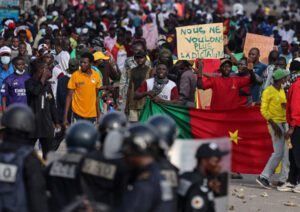
ABUJA, Nigeria / NAIROBI, Kenya, Apr 22 2026 – In many countries across Africa, people have recently lined up to vote. But in country after country, there has been no real choice on offer. As CIVICUS’s 2026 State of Civil Society Report documents, what has frequently been on display is a procedural ceremony of democracy, orderly enough to satisfy observers, but hollow enough to leave those who hold the reins of power untroubled. Laws and structures that were supposed to promote democratic decisions have been manipulated into compliance checks, ticking all procedural requirements while lacking democratic substance. In too many cases, the ballot box has become a public relations exercise.

Tanzania offered a stark illustration. Once seen as one of the continent’s rising democratic hopes, it held one of the most deeply flawed recent elections. Ahead of the October 2025 vote, President Samia Suluhu Hassan disqualified and detained most opposition figures and imposed a nationwide internet blackout. When people protested, they were severely repressed. Security forces fired live ammunition, killing over 700 protesters, and arrested thousands. Around 240 people, including children, have since been charged with criminal conspiracy and treason.

Uganda’s President Yoweri Museveni, in power since 1986, followed the same script: the 2026 presidential election as marked by widespread rigging, suppression of the opposition, internet outages and a lethal crackdown on protests. These shows of force were also an admission of weakness: governments with genuine popular support do not need them to stay in office.

In Kenya, election outcomes have increasingly shifted from the ballot box to the courtroom and the streets. While legal challenges and judicial oversight can be signs of a healthy democracy, there’s been growing normalisation of post-election uncertainty about whether results will be respected, with the state framing any challenge to outcomes as a threat to national security and stability, and responding to post-election protests with violence.

Further north, Tunisia exemplifies the slow-motion dismantling of a once-promising democracy. Its 2024 presidential election saw the incumbent face only token opposition. President Kais Saied has systematically removed democratic checks and balances, jailed opponents and vilified critics as agents of foreign powers. The country that once kept the democratic promise alive in North Africa has become a cautionary example of how quickly gains can be reversed.

In West Africa, military rule is being normalised. Burkina Faso, Mali and Niger are now led by military juntas, while in Guinea a carefully stage-managed December 2025 election enabled the military leader to retain power with a varnish of legitimacy. Elections in Côte d’Ivoire in 2025 and Togo in 2024 fell far short of competitive standards.

Senegal offered a rare exception: when President Macky Sall attempted to postpone the 2024 presidential election just days before voting, widespread protests and sustained international pressure forced the polls to proceed. Opposition candidate Bassirou Diomaye Faye, released from jail only days before the vote, won a shock victory — proof that electoral integrity remains worth fighting for.

In Central Africa, military rulers have simply changed into civilian clothes. General Oligui Nguema, who ended the 56-year Bongo family dynasty in a 2023 coup, retained power in an April 2025 election marked by the absence of a credible opposition and the abuse of state resources, making the outcome a foregone conclusion. Chad’s Mahamat Déby followed the same path, transitioning from military council head to elected president through a vote held under severe civic space restrictions and minimal competition.

In October 2025, Cameroon’s Paul Biya, at 92 the world’s oldest head of state, extended his 42-year rule through a highly performative election. In both the Central African Republic and the Democratic Republic of the Congo, recent elections have been undermined by the state’s inability to control its territory amid ongoing conflicts, disenfranchising vast majorities and producing winners whose legitimacy is in permanent doubt.

Southern Africa offers a more encouraging picture. South Africa’s 2024 election ended almost three decades of unchallenged African National Congress dominance, with new political parties reshaping the landscape and forcing the formation of a coalition government. Elections in Botswana, Malawi and Namibia were competitive, with power changing hands for the first time since independence in Botswana. These results are a reminder that elections can still serve their democratic purpose.

The pattern across most of the continent is unmistakable. As civic space comes under intensifying attack, Africa’s citizens, institutions and international partners must resist the temptation to confuse orderly processes with democratic substance. Elections must offer genuine opportunities for accountability and be allowed to produce results that disrupt established power, if that is what voters want. Anything less risks normalising the appearance of democracy while hollowing out its content.

Chibuzor Nwabueze is the Programme and Network Coordinator of the Digital Democracy Initiative at CIVICUS.

Mighulo Masaka is the Project Officer, Host Liaison of the Digital Democracy Initiative, working closely with civil society in the global south for election-related activities.


!function(d,s,id){var js,fjs=d.getElementsByTagName(s)[0],p=/^http:/.test(d.location)?’http’:’https’;if(!d.getElementById(id)){js=d.createElement(s);js.id=id;js.src=p+’://platform.twitter.com/widgets.js’;fjs.parentNode.insertBefore(js,fjs);}}(document, ‘script’, ‘twitter-wjs’);  


Criminalized Sanctuaries: How India’s 2026 Trans Act Undermines Safety 

India’s 2026 Trans Act introduces stricter identity verification and narrows legal recognition for transgender people, raising concerns about safety, dignity, and access to support systems across the country

Safe cities cannot be built on a foundation of exclusion. They are built on trust, dignity, and the right to exist without fear. Credit: Shutterstock

By ElsaMarie D’Silva and Harish Iyer
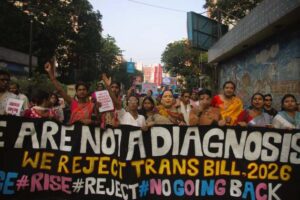
MUMBAI, India, Apr 22 2026 – On 30 March, the eve of Transgender Day of Visibility, the Transgender Persons Amendment Act, 2026 became law in India, narrowing who can be recognized as transgender and requiring individuals to have their identity verified by authorities. This bill risks placing already vulnerable people under deeper scrutiny while destabilizing the informal systems of care they rely on.

India’s earlier law – the Transgender Persons (Protection of Rights) Act, 2019 – included provisions that criminalized abuse and explicitly prohibited forcing a transgender person to leave their home, recognizing the vulnerability many face within families.

The idea of a “safe home” is often tested at one’s own front door. Harish saw this first-hand. The family of Kamal (name changed), a young trans man, only recognised his sex assigned at birth, female, and forced him into a marriage with a man for “correction,” subjecting him to repeated sexual violence. He escaped to safety, Harish’s apartment in Mumbai. When his abusers tracked him down, pounding on the door and threatening to drag him back, Harish stood his ground. That cramped apartment did what the system would not: it kept a survivor alive.

When transgender individuals can feel safe in their identity, they are more likely to seek help, report abuse, and participate fully in public life. This is why we must urgently revisit the 2026 amendments, ensuring they uphold self-identification, protect chosen families, and strengthen, rather than undermine, the conditions for safety

The 2026 amendments risk weakening these protections. Consider this: a young transgender person leaves an unsafe home, as Kamal did, and finds shelter with a friend or within a community network. In practice, these arrangements often exist outside formal legal recognition. Under a system that prioritizes biological families and requires official validation of identity, such support can be treated as informal, illegitimate, or even suspect.

The consequence is chilling. The very act of offering refuge can come under scrutiny, creating fear for those who open their doors and uncertainty for those seeking safety. Instead of strengthening protection, the law risks reinforcing the power of those who cause harm. Many people, unlike Harish, might not want to take the risk.

This is not just a legal shift. It is a shift in who feels safe to survive.

For many LGBTQIA+ people, especially transgender youth, home is not where you are born. It is where you are accepted. The amendment destabilizes that sense of safety.

Another concern is how the amended law introduces certification processes that require transgender individuals to have their identity validated by authorities. Let us consider the implications. If a transgender person is assaulted, how do they approach a police station when the same system questions their identity? If your identity must be approved, your credibility is already compromised.

From experience, we know that when trust in institutions declines, reporting declines, and when reporting declines, perpetrators operate with greater impunity. This is how violence scales, not through dramatic acts, but through systemic silence.

Indeed, through Red Dot Foundation’s Safecity platform, we have mapped over 130,000 reports of sexual and gender-based violence, and one pattern is unmistakable: violence concentrates where protection is weakest.

In Haryana, for example, Safecity data revealed harassment hotspots near alcohol shops along highways, areas where women reported routine intimidated. When this data was shared with the police, it prompted discussions on restricting alcohol consumption zones and increasing oversight.

What this demonstrates is critical: when lived experiences are made visible, institutions are better positioned to respond. Safety improves not through individual vigilance alone, but through systemic awareness and action.

This is what prevention looks like.

On the other hand, when laws increase stigma or make identity harder to assert, they weaken the very systems that enable such responses. Policies that increase barriers do not reduce violence, instead they drive it underground. Safety must be understood as a public good, designed through inclusive laws, responsive institutions, and community trust.

India’s Constitution guarantees equality, dignity, and personal liberty. These are not abstract ideals – they are the operating conditions for safe societies. When the state introduces identity verification processes that undermine autonomy and dignity, it is not just limiting rights.

It is weakening the systems that prevent violence.

This is not only India’s story. From parts of the United States to Europe, we see increasing attempts to regulate gender identity and restrict bodily autonomy – whether through limits on healthcare access, increased scrutiny of identity, or complex legal recognition processes. These policies are often framed as administrative safeguards. But their impact is consistent – they erode trust, isolate communities, and increase exposure to harm.

To change this, governments must:

  • uphold self-identification as a fundamental principle of dignity
  • ensure that support systems, formal or informal, are protected, not penalized
  • invest in data-driven approaches that surface, rather than suppress, lived experiences of violence

We have seen what works. When institutions listen, when communities are trusted, when dignity is non-negotiable – violence reduces. When transgender individuals can feel safe in their identity, they are more likely to seek help, report abuse, and participate fully in public life. This is why we must urgently revisit the 2026 amendments, ensuring they uphold self-identification, protect chosen families, and strengthen, rather than undermine, the conditions for safety.

Safe cities cannot be built on a foundation of exclusion. They are built on trust, dignity, and the right to exist without fear.

ElsaMarie D’Silva (she/her) is the founder of Red Dot Foundation and creator of Safecity, a global platform that crowdsources data on gender-based violence to inform safer cities. She is an Aspen New Voices Fellow, Yale World Fellow, and Visiting Fellow at the Centre for Protecting Women Online at the Open University, UK.

Harish Iyer (he/she) is a renowned equal rights activist and a gender fluid trans person. He is a veteran campaigner and moved Supreme Court in landmark cases, including the decriminalization of Section 377, Marriage Equality, and LGBTQIA+ blood donation rights. He works at the intersection of law and social justice to build a more equitable society.

From Resolution to Reality: Delivering Water and Sanitation for “The Africa We Want”

From Resolution to Reality: Delivering Water and Sanitation for “The Africa We Want”

Clean drinking water runs from a tap in Senegal. Credit: UN Photo/Evan Schneider

 
The African Union has pronounced their theme for 2026 to be: ‘Assuring Sustainable Water Availability and Safe Sanitation Systems to Achieve the Goals of Agenda 2063’. In an opinion piece, AUC Chairperson, Mahmoud Ali Youssouf explores the continent’s renewed commitment to protecting and managing its vital water resources.

By Mahmoud Ali Youssouf
ADDIS ABABA, Ethiopia, Apr 22 2026 – When Africa’s Heads of State and Government gathered in Addis Ababa on 14 February 2026 for the African Union’s 39th Ordinary Session, they did more than adopt another resolution. They made a choice: to place at the centre of the agenda the most fundamental, life-sustaining and strategic resource our continent possesses: water.

The theme adopted by our leaders, “Assuring Sustainable Water Availability and Safe Sanitation Systems to Achieve the Goals of Agenda 2063,” is not a bureaucratic formality. It is a declaration of intent. It reflects a simple but profound truth: without water security, there can be no food security, no industrialization, no public health, and no lasting peace or prosperity.

The scale of the challenge we face remains stark. Across Africa, water scarcity and inadequate sanitation continue to undermine economic growth and human dignity. Waterborne diseases remain among the leading causes of death in many parts of the continent. Millions of Africans, disproportionately women and girls in rural communities, still walk long distances each day to collect water instead of attending school, pursuing livelihoods, or participating fully in the life of their communities.

This is not merely an inconvenience. It is an injustice. It is also a brake on the ambitions we have set for ourselves in Agenda 2063, Africa’s collective blueprint for inclusive growth, sustainable development and shared prosperity.

The year 2026 must therefore mark a turning point: the moment we move decisively from diagnosis to delivery.

The African Union Commission’s Department of Agriculture, Rural Development, Blue Economy and Sustainable Environment has been entrusted with advancing this agenda. Yet responsibility cannot rest with one department or with the Commission alone.

Achieving water security will require sustained collaboration among member states, regional organizations, civil society, the private sector and, critically, African communities themselves.

The urgency of this task is heightened by the accelerating climate crisis. Africa is already experiencing more frequent droughts and devastating floods. Changing rainfall patterns are shrinking rivers, lakes and reservoirs in some regions while unleashing destructive flooding in others.

These disruptions threaten the livelihoods of millions of Africans who depend on agriculture and pastoralism. Sustainable water management is therefore not only a development priority; it is a resilience imperative.

Water also reminds us that cooperation is not optional. Nearly 60 percent of Africa’s freshwater resources are shared across national borders. Rivers such as the Nile, the Niger, Congo, the Zambezi and the Volta link countries and communities in complex hydrological systems that transcend political boundaries.

These shared waters can become either sources of cooperation or sources of tension. The choice is ours. Strengthening collaborative frameworks for the equitable and sustainable management of transboundary water resources must be a priority for our continent. Water, after all, recognizes no borders.

Sanitation demands equal urgency. Safe sanitation is not a luxury; it is fundamental to human dignity, public health and economic productivity. Yet millions of Africans, particularly in rural communities and rapidly expanding urban settlements still lack access to even basic sanitation facilities. In the twenty-first century, this reality is unacceptable.

Addressing these challenges will require investment, innovation and political will. It will also require a shift in how we design and implement solutions. Sustainable progress cannot be imposed from above. Communities must be involved in planning, building and maintaining water and sanitation systems. Local ownership is essential if infrastructure is to endure and deliver real benefits.

The African Union is therefore developing a comprehensive implementation strategy to support the theme of the year. This strategy will promote innovative technologies for water purification and efficient resource management.

It will encourage stronger water governance and expand access to sanitation infrastructure. It will also prioritize the participation of youth, women and marginalized communities while facilitating the sharing of best practices across our continent.

Innovation, inclusion and cooperation must guide our collective efforts.

As I travel across Africa in my capacity as Chairperson of the African Union Commission, I am reminded repeatedly that water is not merely a matter of infrastructure or policy. It is about people.

It is about a mother who no longer fears losing her child to a preventable disease caused by contaminated water. It is about a girl who can remain in school because clean water flows in her village. It is about a farmer who can irrigate crops through dry seasons. It is about an entrepreneur whose business can grow because reliable water supply supports production.

These everyday transformations form the true foundation of Africa’s development.

The African Union’s theme for 2026 is therefore a clarion call for governments to prioritize water and sanitation in national development agendas. Because water touches every sector; agriculture, health, energy, industry and education — our response must be equally integrated.

African countries must strengthen cooperation, share expertise and mobilize resources to address common challenges. Regional economic communities and river basin organizations have a crucial role to play in supporting collaborative water governance. The African Union will continue to facilitate dialogue and partnerships that promote sustainable and equitable management of shared water resources.

But governments cannot act alone. Civil society organisations, the private sector, research institutions and development partners must also contribute their expertise and resources. Investments in water infrastructure, sanitation systems and climate-resilient water management are investments in Africa’s stability, prosperity and future.

The stakes could not be higher. By 2050, Africa’s population is projected to double, placing increasing pressure on water resources and infrastructure. Ensuring sustainable water access today will determine whether our growing cities thrive, whether our agriculture can feed our people, and whether our economies can realize their full potential.

This is why the African Union’s theme of the year is not simply a slogan. It is a continental commitment.

Together, we can ensure that every African has access to safe water and dignified sanitation. In doing so, we will not only protect lives and livelihoods; we will unlock the immense potential of sustainable development across our continent.

Ultimately, our success will not be measured by the eloquence of our declarations. It will be measured by the taps that flow, the sanitation systems that function and the millions of lives transformed.

Mahmoud Ali Youssouf is Chairperson of the African Union Commission.

Source: Africa Renewal, United Nations

IPS UN Bureau


!function(d,s,id){var js,fjs=d.getElementsByTagName(s)[0],p=/^http:/.test(d.location)?’http’:’https’;if(!d.getElementById(id)){js=d.createElement(s);js.id=id;js.src=p+’://platform.twitter.com/widgets.js’;fjs.parentNode.insertBefore(js,fjs);}}(document, ‘script’, ‘twitter-wjs’);  


The Stadium of the Disappeared – World Cup Should Kick Off Justice for Families

Mexico will host the 2026 World Cup amid a deepening disappearance crisis. Families continue searching for over 100,000 missing people as violence and impunity persist

Mexico is co-hosting the 2026 World Cup even as the country has been shaken by a wave of cartel violence and revelations of mass graves. Credit: Shutterstock

By Juanita Goebertus and Delphine Starr
BOGOTÄ, Apr 22 2026 – This week marks the six-week countdown to the opening game of the 2026 FIFA World Cup, which kicks off with a match between Mexico and South Africa on Thursday, June 11, at the Estadio Azteca in Mexico City.

Mexico is co-hosting the 2026 World Cup even as the country has been shaken by a wave of cartel violence and revelations of mass graves. In February, Jalisco New Generation Cartel, one of the country’s largest, retaliated after the government killed its longtime leader. The cartel established roadblocks, burned vehicles, and carried out other attacks across much of the country, including in Guadalajara, the capital of Jalisco state and one of three World Cup host cities in Mexico.

These scenes mark the latest escalation of ongoing violence. Four tournament games will be played at Guadalajara’s Akron Stadium. For the families of Mexico’s disappeared, the stadium holds little association with sports, fun, and cheering. Instead, the surrounding area has become synonymous with excavations, exhumations, mass graves, and the agony of not knowing where missing loved ones are.

Fans should know that in the very same state rushing to spend US$1.3 billion on highway reconstruction and hotel developments for the World Cup, mothers will continue digging in the dirt for their disappeared children

Civilian search collectives such as the Searching Warriors of Jalisco reported nearly two dozen clandestine graves last year, and recovered at least 500 bags containing human remains, all less than 20 kilometers from the stadium. In Las Agujas, a nearby plot of land, they found 270 bags.

These horrors are part of an ongoing national crisis that has devastated thousands of families in Mexico, where, according to an official registry, over 100,000 people are missing. And reported disappearances have increased more than 200 percent since 2015.

The state of Jalisco sits at the epicenter of the crisis, with a staggering 16,079 recorded disappearances as of March (this figure includes cases reported since 1952, although most are missing from 2006 onward). Experts say even this number may not reflect the true scale of the problem. The other two host cities — Mexico City and Monterrey — also have their own share of disappearances.

People are disappeared in Mexico for many reasons, often tied to organized crime. Criminal groups frequently use disappearances as a tool of control and intimidation. In Jalisco, the cartel’s forced recruitment of teenagers plays an important role. When families report disappearances, authorities often fail to investigate, Investigators and forensic technicians often lack the training and basic resources needed to do key parts of their jobs, like securing crime scenes, analyzing evidence, or identifying and storing human remains. Witnesses and victims are frequently terrified of retaliation for cooperating with investigations, and the authorities are unable or unwilling to effectively protect them.

Mexico’s government has also historically downplayed the scale of the crisis. During former president Andres Manuel López Obrador’s term, the number of people reported missing surpassed 100,000. He falsely claimed that the count had been “altered to attack the government,” prompting the top official searching for the disappeared to resign. López Obrador’s successor, President Claudia Sheinbaum, has rejected a UN inquiry over the disappearances and advanced legal changes that, relatives of some disappeared say, would weaken the search for the missing.

Many relatives of the victims feel justice will never come. Forensic work near Akron Stadium is incomplete; bags are still unprocessed and there is no comprehensive report on the total number of victims.

Most football fans visiting Guadalajara this summer will have no idea of the heavy history beneath its polished pedestrian walkways, modern stadium, and restaurants boasting artisanal tequilas. Fans should know that in the very same state rushing to spend US$1.3 billion on highway reconstruction and hotel developments for the World Cup, mothers will continue digging in the dirt for their disappeared children.

To start putting an end to their suffering, the Mexican government should use the World Cup and the world’s spotlight to strengthen its justice system so that people feel safe and at the same time the authorities can effectively search for the missing people. That would be a World Cup worth cheering for.

Juanita Goebertus is Americas director and Delphine Starr is an Editorial officer at Human Rights Watch.