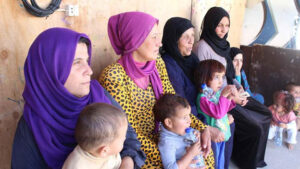
The Impact of the Middle East Crisis on Women and Girls

The Impact of the Middle East Crisis on Women and Girls

Credit: UNFPA Lebanon

By UN Population Fund
CAIRO, Egypt, Apr 23 2026 – Six weeks into the 2026 Middle East military escalation, UNFPA Arab States Regional Office warns that its impact on 161 million women and girls living in conflict-affected areas across the region remain largely invisible in conflict analysis, humanitarian response, and funding priorities.

A new Call to Action, Regional Analysis of the Socio-Economic Impact of the 2026 Middle East Conflict on Women and Girls published by UNFPA, the UN sexual and reproductive health agency, highlights that current response mechanisms remain overwhelmingly gender-blind, treating gender-based violence (GBV) and maternal health as secondary concerns rather than life-saving priorities.

“The omission is not merely analytical – it is structural,” the report states. Without sex-disaggregated data and gender perspectives, the international community is conducting incomplete risk assessments, misaligning interventions, and missing critical opportunities for stabilization and peace.

The conflict is projected to cost regional economies $120–194 billion – equivalent to 3.7 to 6 percent of collective GDP. Four million additional people are estimated to be pushed into poverty and 3.64 million jobs may be lost. Women – overrepresented in informal employment – face disproportionate livelihood collapse while shouldering increased unpaid care work.

Supply chain shocks through the Strait of Hormuz threaten to delay lifesaving humanitarian supplies by up to six months. Across Gaza, Lebanon, Sudan, and Yemen, more than 260 health facilities and 14 mobile medical units have already shut down. Food insecurity is intensifying, with documented patterns showing women and girls eat last and least.

The report also highlights a surge in GBV risks driven by hyper-displacement, while sanctions and financial “de-risking” are crippling the ability of women-led organizations to deliver essential services. These organizations—often the first responders in crises—are being cut off from the very funding streams meant to sustain them.

UNFPA is calling on national governments, UN agencies, donors, and civil society to:

    ● Integrate gender systematically into all conflict analysis and response frameworks.
    ● Protect and fund GBV and sexual and reproductive health services as core, lifesaving interventions.
    ● Finance and empower local women-led organizations, removing barriers to their access and participation.
    ● Ensure women’s leadership in recovery, peacebuilding, and decision-making processes.

“Making women and girls visible is not optional,” the report concludes. “It is fundamental to effective humanitarian action, sustainable recovery, and lasting peace.”

UNFPA is the United Nations sexual and reproductive health agency.

IPS UN Bureau


!function(d,s,id){var js,fjs=d.getElementsByTagName(s)[0],p=/^http:/.test(d.location)?’http’:’https’;if(!d.getElementById(id)){js=d.createElement(s);js.id=id;js.src=p+’://platform.twitter.com/widgets.js’;fjs.parentNode.insertBefore(js,fjs);}}(document, ‘script’, ‘twitter-wjs’);  

  

6th Asian Beach Games opens in Sanya

SANYA, China, April 23, 2026 (GLOBE NEWSWIRE) — The 6th Asian Beach Games opened on Wednesday evening in China's tropical resort city of Sanya, with the opening ceremony held at the seaside Yasha Park.

Chinese State Councilor Shen Yiqin declared the Games open after 45 delegations marched in for the continental Games, which had previously been scheduled to be held in 2020.

After having twice been postponed, chiefly due to the COVID-19 pandemic, the Sanya Games has drawn around 10,000 participants, including 1,790 athletes.

The Games marks the first time Hainan has hosted a continental-level beach sports event. It is also the first major international sporting event since the island-wide Hainan Free Trade Port was inaugurated last December.

Scheduled from April 22 to 30, the Games features 14 sports, 15 disciplines and 62 events. It is the second time that China has hosted the Asian Beach Games, after the 2012 edition in Haiyang, Shandong Province.

China has sent a delegation of 255 members, including 171 athletes, competing in 13 sports and 60 events, marking the country's highest participation in Asian Beach Games history.

Source: The 6th Asian Beach Games Sanya 2026 Organizing Committee

A photo accompanying this announcement is available at https://www.globenewswire.com/NewsRoom/AttachmentNg/55c4b30c-5b66-4741-a8f8-f6b77dc76b2b


GLOBENEWSWIRE (Distribution ID 9695599)

No Kings? Meet King Don and King John – Part 1 of 3

Frames from White House video. Original video:
https://telegraph.co.uk/us/news/2025/10/19/king-trump-bombs-protesters-with-brown-liquid-in-ai-video

By Peter Costantini
SEATTLE. USA, Apr 23 2026 – After Donald Trump’s second election as president in November 2024, he said coyly that he wanted to be a dictator … but just for a day. On his first day in office, his sharpie signed an impressive pile of presidential orders, many of dubious legality. The next day he continued to govern like a DIY duce. He has not stopped since.

He has brought family members, incompetent political boot-lickers, and fellow kleptocrats into what is looking less like an administration and more like the Bling Dynasty, ruled by the Golden Emperor, Donald Khan. He continues to troll his opponents by hinting at a third term, which is prohibited by the U.S. Constitution.

A far-flung grassroots opposition coalition has adopted the motto “No Kings”, which has resonated across a wide political spectrum. After all, British subjects began a war of independence 250 years ago to liberate their colonies from the vagaries of the reputedly bipolar King George III of England.

So far, No Kings has held three spirited days of national action, the last of which reportedly attracted some eight million people to thousands of locations across all 50 states. Many demonstrators carried homemade signs taking the piss out of Trump on a great variety of issues. One favorite read, “Sorry world, grandpa’s gone off his meds again”; another, “Fight Truth Decay”. Big inflatables of Trump as a baby in diapers, penguins, frogs, and other fanciful creatures abounded. Also very visible in Seattle-area demonstrations were Vietnam -era military veterans and American flags.

The movement has been broadened by a wide range of other constituencies challenging mass persecution and deportation of immigrants, defending laid-off public employees, trying to reinstate devastating Medicaid (public health insurance) cuts, opposing military intervention abroad and at home, and getting up in Trump’s face on other critical issues.

In response to the October 18th No Kings rallies, Trump posted what looks like an artificial intelligence-generated video on Truth Social, his personal social media platform. It features a cartoonish figure of him wearing a golden crown, flying a jet fighter that drops massive amounts of excrement on demonstrators in city streets below. It’s the kind of dreck that a troubled third grader addicted to AI might come up with if left unsupervised. (Apologies to the many third-graders who are much more mature than that).

Nevertheless, barring some deus ex machina, the world is stuck with Donald Trump for at least three more years. So as he reinvents royalty as reality show, whom could he adopt as a model and inspiration?

Which king?

There have certainly been constitutional monarchs who served their countries honorably in ceremonial and advisory roles. Queen Wilhelmina of the Netherlands earned widespread respect by supporting the resistance to Nazi occupation during World War II. King Juan Carlos I of Spain played a key role in guiding his country back to democracy in the 1970s after decades under Generalísimo Francisco Franco Bahamonde’s fascist dictatorship.

But this does not seem to be the sort of reign Trumpísimo has in mind.

In a more colonialist and mercantilist vein, there’s always el Rey Fernando II of 15th and 16th Century Spain. With la Reina Isabel, he completed the Reconquista, expelling Jews and Muslims from Al-Andalus (an early foreshadowing of Trump’s Muslim Bans). His reign unleashed the mind-bending tortures of Torquemada and the Holy Inquisition (so much more imaginative than the ham-handed bludgeoning at Trump’s Salvadoran rent-a-gulag). Fernando’s conquistadores plundered the gold (so much sexier than tariffs), demolished the temples, and subjugated the peoples of the ancient civilizations of the Americas with sword and cross. Trump is off to a slow start with his incoherent threats and clumsy aggressions against Iran, Venezuela, Greenland, Panama, Colombia, Ecuador, Canada, and Palestine.

For sheer absolutist excess, don’t forget Louis XIV of France. His little country place at Versailles throws shade all over Mar-a-Lago. Whereas Lou could rock a moniker like “le Roi Soleil” (the Sun King), Trump will have to settle for “the Tanning Bed King” or perhaps “the Drill Baby Drill King”. And how about “L’état, c’est moi” (The state is me)? Sorry, but does the Donald have anything punchier than “I’d like you to do me a favor, though”? Or “I could stand in the middle of Fifth Avenue and shoot somebody, and I wouldn’t lose any voters, OK?” (Unfortunately, his supine Supreme Court majority has his back on this one.) Then there’s “I have the right to do anything I want to do. I’m the President.” Sounds like a third-grade class president throwing a tantrum. (Again, apologies to the many third graders who would never behave this boorishly.)

Compared to these historical peers, Trump comes out more mafioso than monarch.

But fear not. British historian Marc Morris has highlighted a promising spiritual forefather for the Trump monarchy.

King John, also known as John Lackland, ruled England from 1199 until his death in 1216. He came to be nicknamed Bad King John for his treachery, lechery, mendacity and cruelty. Morris quotes a contemporary chronicler, Anonymous of Béthune: “He was a very bad man, more cruel than all others. He lusted after beautiful women and because of this he shamed the high men of the land, for which reason he was greatly hated. Whenever he could he told lies rather than the truth … He was brim-full of evil qualities.” Remind you of anyone?

Troubadour Bertran de Born piled on: “No man may ever trust him, for his heart is soft and cowardly.”

“He was a total jerk,” wrote Morris. “He didn’t just kill, he was sadistic. He starved people to death. And not just enemy knights, but once a rival’s wife and son.” In another incident, John locked 22 noble prisoners of war in a castle and left them to die of starvation.

In 1215, the English barons (the most powerful nobles) rebelled against King John and forced him to sign the Magna Carta. This historic accord established a prototype for the rule of law in the English-speaking world. It evolved to apply to kings and paupers, although at the time it was mainly an agreement between the monarchy and the nobility.

“For the first time Magna Carta established publicly the principle that the king was subject to the law,” wrote historian Nick Higham. “It also led indirectly to the development of a new kind of state, in which the money to govern the country came from taxation agreed by parliament.” (Russell Vought take note.)

Article 39 articulated the legal concept of habeas corpus (“you have the body” in Latin), which established freedom from arbitrary detention by the government without just cause. This became a keystone of due process under the law. The Magna Carta also established that the king could levy taxes only with the approval of a council of nobles. This evolved into the first parliament fifty years later.

The Magna Carta was intended to resolve conflicts between the Crown and the barons. But within a few weeks, John disowned it and failed to honor his commitments. The document specified that the remedy for non-compliance was that the nobles could go to war again against the king, which they did. France then invaded England in support of the rebels, and the barons invited the French Prince Louis to assume the throne of England.

When John died of dysentery in 1216, he was widely reviled. Chronicler Matthew Paris wrote an epitaph for the king: “Foul as it is, Hell itself is made fouler by the presence of John.” But after his death, Louis was chased out of England and the Magna Carta was eventually revived again.

As a poster prince for unbridled monarchical power, then, John ended up leaving a mixed legacy from a MAGA point of view. On the downside, Trump might consider him “a loser” because he signed away the unlimited divine right of kings. But on the upside, he rapidly reneged on the Magna Carta and duked it out with the nobles and France until the end.

All told, King John the Bad checked most of the boxes for an early political progenitor of King Don the Con.

The Con?

Did you catch the clever double entendre? The President is a felon, convicted on 34 counts of “fraudulently falsifying business records” by concealing a $130,000 payment of hush money to adult film star Stormy Daniels to influence the 2016 elections. He is also a world-class con artist, snagging a $400 million Boeing 747 as an emolument from Qatar. It will initially serve as Air Force One, but the sweet part is that after he leaves office, the “flying palace” will be housed in the lobby of his presidential library and hotel in Miami.

And let’s not forget that Don was also found liable for sexual assault and defamation in a civil lawsuit. A jury awarded plaintiff E. Jean Carroll a settlement of $83.3 million dollars, of which $65 million was for punitive damages. An appeals court upheld the judgement, finding that: “The record in this case supports the district court’s determination that ‘the degree of reprehensibility’ of Mr. Trump’s conduct was remarkably high, perhaps unprecedented”.

On the policy front, the title of the second Trump administration’s master plan, Project 2025, apparently contained a typo: it should have been called Project 1214. In practice, it has become a blueprint for rolling back human rights, democracy and good government to pre-Magna Carta irrelevance, unleashing the king’s unchecked power, and disemboweling essential government functions.

Clearly, in many domains of regal malfeasance, King Don has already surpassed King John. He has made so many efforts to demonstrate that the rule of law does not apply to him that we can only consider a few of the most egregious here.

His pièce de résistance remains his efforts to declare the 2020 presidential election invalid and to overturn the outcome by a violent coup d’état on January 6, 2021. The details have been replayed endlessly: more than 60 lawsuits in nine states against the election, all thrown out of court as baseless; Trump’s speech spurring on the armed, violent mob; the rioters at the Capitol, equipped with gallows and noose, chanting “Hang Mike Pence” (the Vice President responsible for certifying the count of the electoral results); their violent incursion into the Capitol in an effort to stop the electoral process; a rioter defecating on Speaker of the House Nancy Pelosi’s desk; the killing and maiming of police trying to protect lawmakers. All this took place in front of the entire nation in newscasts and congressional hearings for long afterwards.

Perhaps the most stunning outcome, however, is that Trump, the MAGA movement, and most of the Republican Party have never acknowledged that in 2020 the electorate told the President, “You’re fired.” Instead, he tethered his return to office in 2024 to a dark-matter constellation of lies about the elections. He called J6 “a day of love”, and pardoned some 1,500 convicted members of the most dangerous rabble of terrorists to attack this country since 9/11. He continues to force gutless Republicans to drink the same Kool Aid for many years after his story has been thoroughly discredited.

Don the Con also has doubled down on other debunked lies about the 2020 election, such as widespread electoral corruption and voting by non-citizens. Using these falsehoods, he is pushing to take control of elections and voter rolls away from the states, to whom the Constitution grants these powers, and give them to himself. He is also trying to make voting harder for lower-income and elderly people with ploys like requiring proof of citizenship to vote – such as a birth certificate or passport – which has never before been a requisite.

Trump’s power to negate the rule of law by spawning alternative realities is one that King John might have envied.

Modern communications technologies give Trump the means to corrode our shared understandings that were inconceivable 800 years ago. The President assaults social and news media like a “leaf blower”, as satirist Stephen Colbert put it, deafeningly flooding the zone with simple, mendacious messages. Don will probably not perish from dysentery as John did, but he has infected global political spaces with informational dysentery. His propaganda machine serves as a disinformation sump pump that sucks out poison from MAGA cesspools and inundates physical and virtual public squares.

During Trump’s first term, the Washington Post counted 30,573 false or misleading claims, around 20 per day. In his second term, the pace seems to have picked up.

Veteran White House correspondent Peter Baker wrote a New York Times piece headlined “Trump’s Wild Claims, Conspiracies and Falsehoods Redefine Presidential Bounds”. He observed, “Truth is not always an abundant resource in the White House under any president, but never has the Oval Office been occupied by someone so detached from verifiable facts.”

Anthony Scaramucci, Trump’s former White House communications director, told Baker that Trump has completed “50 years of distorting things and telling lies and … 50 years of getting away with it, so why wouldn’t he make the lies bigger and more impactful in this last stretch?”

In one case, Trump accused the United States Agency for International Development of sending $50 million worth of condoms to the Palestinian organization Hamas. After journalists debunked the original story, Trump continued to repeat it, but increased the alleged total to $100 million.

“What were dubbed ‘alternative facts’ in his first term,” wrote Baker, “have quickly become a whole alternative reality in his second.”

To be continued in Part 2 of 3

About the author


Inside the Funding Model Behind Kenya’s Tana Delta Restoration Project

Beekeepers harvest honey from an ABL hive in the Tana Delta, Kenya. Credit: Chemtai Kirui/IPS

Beekeepers harvest honey from an ABL hive in the Tana Delta, Kenya. Credit: Chemtai Kirui/IPS

By Chemtai Kirui
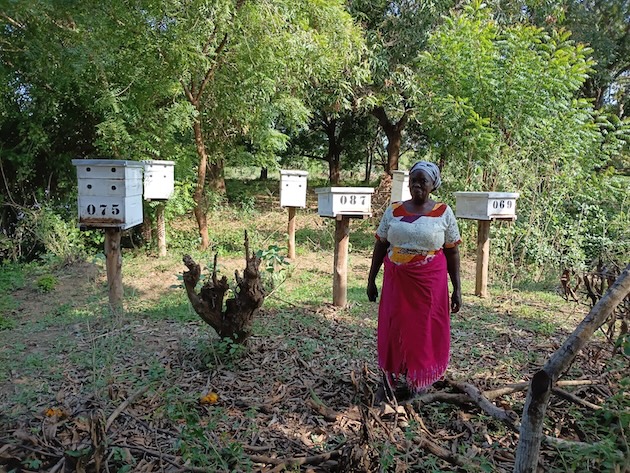
GOLBANTI, Kenya, Apr 23 2026 – Lydia Hagodana stands next to a bee yard (apiary) in Golbanti, Tana Delta, where she lives. The air carries a low, steady hum as bees move in and out in a constant stream. She lifts the back of one hive slightly, gauging its weight.

“This hive is mine,” she says. “I have two.”

Hagodana is one of 25 members of the Golbanti women’s group, which manages about 50 hives shared between them. Each member keeps a pair, harvesting honey a few times a year. Some of the income is kept individually, while a portion is pooled into group savings to support a small communal vegetable farm.

The apiaries sit along the southern banks of the Tana River, where it begins to split into the channels that form the lower delta. In the rainy season, the land opens into floodplains, drawing migratory birds and supporting wildlife, including hippos, crocodiles and the rare Tana River topi.

Lydia Hagodana with one of her beehives in the Tana Delta, Kenya, March 2026. Credit: Chemtai Kirui/IPS

Lydia Hagodana in the area where she keeps one of her beehives in the Tana Delta, Kenya. Credit: Chemtai Kirui/IPS

Patches of gallery forest along the riverbanks are home to two critically endangered primates – the Tana River red colobus and the crested mangabey.

In recent years, beekeeping has offered an alternative source of income in a place where livelihoods have long depended on farming, fishing and livestock. For women in particular, managing hives marks a shift from more physically demanding work and from roles traditionally dominated by men.

Before the bees, these same floodplains were at the centre of proposals for large-scale biofuel plantations – plans that raised concerns about converting wetlands into industrial agriculture.

“This was linked to the European Union policy to blend biofuels with fossil fuels,” said Dr Paul Matiku, executive director of Nature Kenya. “Africa was seen as a place with ‘idle’ land that could be converted to these crops, including jatropha and sugarcane.”

At the time, the Kenyan government framed the projects as part of vision 2030 – a way to bring development and jobs to what officials described as an “empty” region.

Land clearing had begun. In some places, fields were ploughed before indigenous families had gathered their belongings. A wildlife corridor used by elephants and other species was carved into plantation blocks.

Tensions Rose

By 2012, violent clashes had erupted, turning the delta into what investors began calling a “red zone”.

“We woke up to a challenge about where the Tana Delta was going,” said Matiku, who helped lead the legal fight to stop the expansion. “You cannot convert wildlife land and food-producing land into fuel for cars. We had to unleash every bit of machinery we had to stop it.”

A coalition of conservation groups and local communities took the government to court.

In February 2013, Lady Justice Mumbi Ngugi halted the proposed large-scale developments in the delta, ruling that the state had failed to account for the rights of local people.

“The court said no one could move forward without a land-use plan developed with the people,” Matiku said.

Over the next two years, communities, county officials and conservation groups worked together to map the delta – dividing the landscape into zones for grazing, farming and conservation under what became the Tana Delta Land Use Plan (LUP).

For the first time, the delta had a formal set of rules.

But another question followed: could conservation pay?

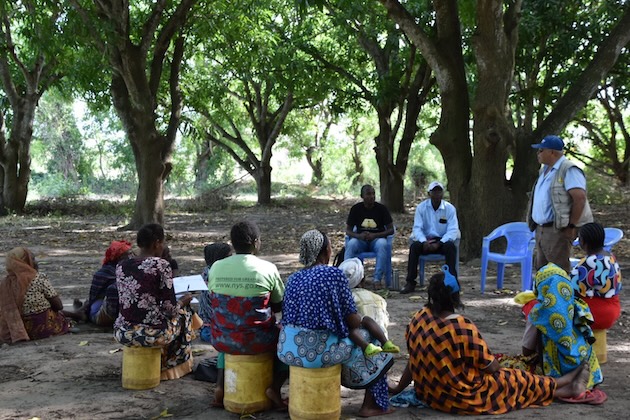
A group of community members gather outside an African Beekeepers Limited facility in Kenya’s Tana Delta. Credit: Chemtai Kirui/IPS

A group of community members gather outside an African Beekeepers Limited facility in Kenya’s Tana Delta to discuss the business of beekeeping. Credit: Chemtai Kirui/IPS

From Idle Land to Natural Economy

With support from the United Nations Environment Programme (UNEP), researchers began calculating the economic value of the delta’s ecosystems – reframing them from “idle land” into a functioning natural economy.

The partners approached the Global Environment Facility (GEF), the world’s largest multilateral fund for the environment. In 2018, after a technical review process, the fund approved a USD 3.3m grant for restoration in the Tana Delta under the Restoration Initiative.

The funding aimed to stabilise a landscape long marked by land disputes and failed biofuel schemes. Working with UNEP and Nature Kenya, the program supported consultations, legal drafting, and the work needed to turn the land-use plan into law.

Between 2019 and 2024, the county enacted 29 policies and legislative instruments aimed at regulating land use, conservation and climate action.

“We have moved from loosely coordinated conservation projects to a law-driven governance framework that integrates land use, climate change and community engagement,” said Mathew Babwoya Buya, Tana River county’s environment executive.

Tana River county has set aside at least 2% of its development budget for climate resilience and ecosystem restoration.

For the 2024/25 fiscal year, the county’s total budget is about KSh 8.87 billion (USD 68.76 million). Of that, roughly KSh 3 billion (USD 23 million) is development spending, implying annual allocations of about KSh 60 million (USD 460,000) for restoration programmes.

The commitment helped secure new funding from the GEF, which approved a grant of about USD 3.35 million for the Tana Delta under its Restoration Initiative.

Project documents show the program mobilised roughly USD 36.8 million in co-financing, about eleven dollars for every dollar of GEF funding, a commonly cited measure of leverage in conservation finance.

The Tana Delta project shows what is possible when country ownership is strong and priorities are clearly aligned.

“The Tana Delta project shows what is possible when country ownership is strong and priorities are clearly aligned. This level of leverage reflects deep national commitment, strong engagement from a wide range of stakeholders, and clear links to value chains and local business opportunities. The project’s integrated, landscape-based approach allows it to address multiple challenges at once, making it an attractive platform for partners to invest alongside GEF,” said Ulrich Apel, a senior environmental specialist at the GEF.

The composition of that financing shows that the bulk originates from public agencies and development partners, including multilateral programmes and philanthropic funding. Only about USD 341,000 – less than 1 per cent of the total – is attributable to direct private-sector investment.

Apel explained the figures do not necessarily capture the full extent of commercial activity.

“It is important to understand how co-finance is defined and recorded,” Apel said. “Only capital explicitly committed to a project through formal letters is captured. There can be private sector flows into these value chains that do not show up in the co-financing numbers.”

UNEP officials say the structure is intended to use public funding to reduce land-use risk and attract investment over time.

“The GEF grant was designed to play a catalytic role,” said Nancy Soi, a UNEP official involved in the project.

By funding land-use planning, cooperative structures, and governance systems, she said, the program has helped “derisk” the delta for commercial activity in sectors such as honey, chilli, and aquaculture.

In parallel, other partners are beginning to test that approach in specific value chains.

In aquaculture, the Mastercard Foundation, working with TechnoServe, is supporting a program aimed at about 650 young entrepreneurs in Tana River County.

How that model translates into sustained commercial investment is still being tested on the ground.

In Golbanti, where Hagodana’s hives sit along the riverbanks, one of the emerging value chains is honey production. The work is being developed through a partnership with African Beekeepers Limited (ABL).

Under the model, the company supplies modern hives and technical expertise, manages production, and buys the honey at a fixed price – removing one of the biggest risks in rural markets: price volatility.

Nature Kenya says it has deliberately avoided locking farmers into long-term contracts at this stage, allowing time to assess whether production volumes and pricing can prove viable.

“We managed to pay 76 farmers about KSh700,000 (USD 5,400) from honey harvested in the delta,” said Ernest Simeoni, director of ABL, referring to the project’s first production cycle.

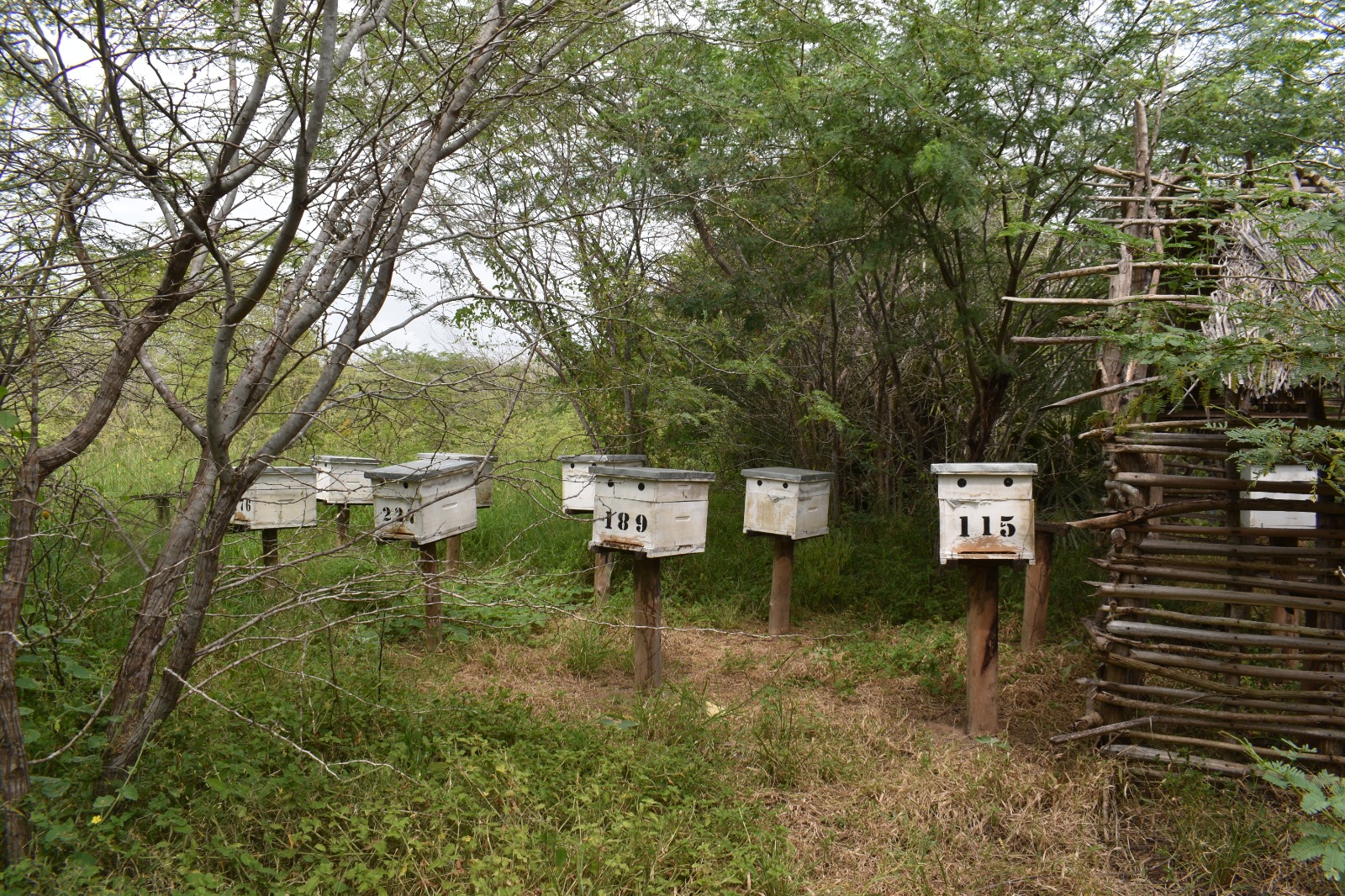
Numbered beehives in a conservation area of Kenya’s Tana Delta. Credit: Chemtai Kirui/IPS

Numbered beehives in a conservation area of Kenya’s Tana Delta. Credit: Chemtai Kirui/IPS

Not Just Beekeeping, It’s the Business of Beekeeping

Simeoni said the approach differs from many donor-led initiatives, which typically focus on training farmers to manage hives independently.

“There are hundreds of modern hives across Kenya, but they don’t produce honey,” he said. “The missing link is expertise.”

Instead, ABL keeps production under the company’s control, deploying its teams to monitor colonies, harvest honey, and oversee processing.

“We’re not training farmers how to do beekeeping,” he said. “What we’re doing is business – showing how to make money from honey.”

Community groups provide land and security for the hives, while the company manages harvesting and processing. Simeoni said that structure helps maintain consistent production volumes.

Even so, he cautioned that the model remains fragile. Access to affordable finance is limited, and much of the sector still depends on donor-backed projects to absorb early risk.

“If donor funding disappears tomorrow, most of these projects stop,” he said.

Looking beyond small-scale value chains, the county is also trying to attract larger investments through a proposed development plan known as the “Green Heart”.

A 60-hectare site in Minjila has been earmarked for an industrial hub intended to support agroprocessing, logistics and green manufacturing, according to Mwanajuma Hiribae, the Tana River county secretary.

“We are working to establish an investment unit to coordinate engagement with private firms,” she said. Funds have also been allocated to develop a masterplan for the site.

But the project remains at an early stage. The land has yet to be formally transferred to the county’s investment authority, and proposals from potential investors are still under review.

Officials say any future development will need to align with the delta’s land-use plan and environmental safeguards.

For now, however, the flow of private capital to the delta remains limited.

Experiences elsewhere in Kenya suggest the model, while technically replicable, depends heavily on political will, security conditions and sustained public financing – factors that vary widely between regions.

In western Kenya, a similar land-use planning approach has been introduced in Yala Swamp, with mixed results. While Busia county has formally adopted the framework, neighbouring Siaya has yet to approve it, with local officials citing competing political and commercial interests around large-scale agriculture.

“The science is replicable,” said Matiku. “But political interests can slow or block implementation.”

In Golbanti, the idea of a restoration economy is beginning to take shape in small ways.

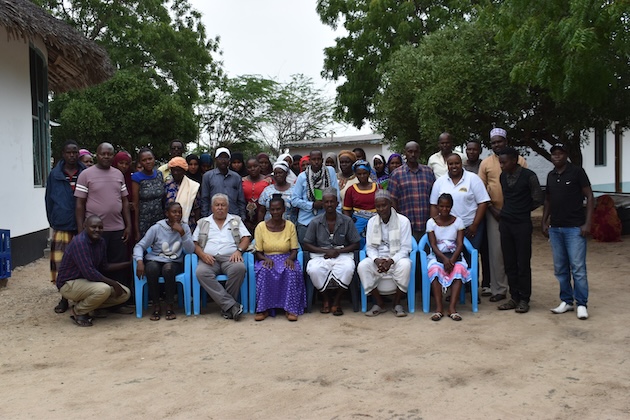
Beekeepers at the African Beekeepers Limited facility in Kenya’s Tana Delta. Credit: Chemtai Kirui/IPS

Beekeepers at the African Beekeepers Limited facility in Kenya’s Tana Delta. Credit: Chemtai Kirui/IPS

Welcome Income

Income from honey, though modest and still irregular, is starting to filter into daily life.

For Hagodana, it helps pay school fees for her six children, supports a small farm, and contributes to a shared fund used to grow vegetables. Some of the money is spent, some saved, and some reinvested.

She has been keeping bees for two years. Before that, she says, life was harder. Now there is at least something to rely on.

She does not plan to stop. Whether or not outside support continues, she says she will keep the hives and hopes eventually to learn how to process honey into other products.

Back in the apiary, the bees move in and out of the hives in a steady rhythm.

Note: The Eighth Global Environment Facility Assembly will be held from May 30 to June 6, 2026 in Samarkand, Uzbekistan.

This feature is published with the support of the GEF. IPS is solely responsible for the editorial content, and it does not necessarily reflect the views of the GEF.

IPS UN Bureau Report


!function(d,s,id){var js,fjs=d.getElementsByTagName(s)[0],p=/^http:/.test(d.location)?’http’:’https’;if(!d.getElementById(id)){js=d.createElement(s);js.id=id;js.src=p+’://platform.twitter.com/widgets.js’;fjs.parentNode.insertBefore(js,fjs);}}(document, ‘script’, ‘twitter-wjs’);  



Bitget Publishes Latest Proof of Reserves, Maintaining 130% Backing Across Multi-Asset Platform

VICTORIA, Seychelles, April 22, 2026 (GLOBE NEWSWIRE) — Bitget, the world’s largest Universal Exchange (UEX), has released its latest Proof of Reserves (PoR), providing a transparent snapshot of platform balances across core assets as market conditions continue to evolve.

The update covers BTC, ETH, USDT, and USDC, with reserve ratios and wallet balances published alongside cryptographic attestations. Users can independently verify their holdings through Bitget’s Merkle tree-based system, using anonymized identifiers to confirm inclusion without exposing personal data.

The latest snapshot shows user holdings of 19,644 BTC, 221,628 ETH, 2,043,273,414 USDT, and 164,266,093 USDC, with reserve ratios of 33% BTC, 52% ETH, 14% USDT and 4% USDC. Total reserves remain consistently above the 1:1 benchmark, maintaining full coverage across all tracked assets and reflecting an average reserve ratio of 130%.

“Markets move fast, but transparency cannot be reactive,” said Gracy Chen, CEO of Bitget. “Proof of Reserves is designed to be verifiable at any moment, not only when the market is stable. The priority is simple, users should always know their assets are fully accounted for, regardless of market direction.”

This comes as markets continue to respond to macroeconomic signals, shifting liquidity conditions, and evolving investor positioning. Proof of Reserves operates as one layer within a broader security model that includes the platform's Protection Fund and ongoing disclosure practices. As a multi-asset exchange unifying crypto, tokenized assets, and traditional markets, maintaining strong, verifiable reserves is critical to ensuring consistent coverage across all asset classes. Together, these mechanisms are designed to keep platform solvency measurable rather than assumed.

As Bitget expands its Universal Exchange model, bringing together crypto, tokenized assets, and traditional financial instruments, transparency remains a core requirement for scaling across asset classes. Regular PoR disclosures provide a consistent, verifiable reference point for users navigating increasingly interconnected markets.

To view the updated Proof of Reserves, please visit here.

About Bitget

Bitget is the world's largest Universal Exchange (UEX), serving over 125 million users and offering access to over 2M crypto tokens, 100+ tokenized stocks, ETFs, commodities, FX, and precious metals such as gold. The ecosystem is committed to helping users trade smarter with its AI agent, which co-pilots trade execution. Bitget is driving crypto adoption through strategic partnerships with LALIGA and MotoGP™. Aligned with its global impact strategy, Bitget has joined hands with UNICEF to support blockchain education for 1.1 million people by 2027. Bitget currently leads in the tokenized TradFi market, providing the industry's lowest fees and highest liquidity across 150 regions worldwide.

For more information, visit: Website | Twitter | Telegram | LinkedIn | Discord

For media inquiries, please contact: [email protected]

Risk Warning: Digital asset prices are subject to fluctuation and may experience significant volatility. Investors are advised to only allocate funds they can afford to lose. The value of any investment may be impacted, and there is a possibility that financial objectives may not be met, nor the principal investment recovered. Independent financial advice should always be sought, and personal financial experience and standing carefully considered. Past performance is not a reliable indicator of future results. Bitget accepts no liability for any potential losses incurred. Nothing contained herein should be construed as financial advice. For further information, please refer to our Terms of Use.

A photo accompanying this announcement is available at https://www.globenewswire.com/NewsRoom/AttachmentNg/a7d841ec-b9bb-487f-a9e1-0aa9a6fec084


GLOBENEWSWIRE (Distribution ID 1001177447)