Bitget Enters Mexico Market With SAT and UIF Registration

VICTORIA, Seychelles, May 18, 2026 (GLOBE NEWSWIRE) — Bitget, the world's largest Universal Exchange (UEX) has successfully completed key registrations in Mexico to operate within the country's current virtual asset framework. With the completion of these registrations, Bitget now looks to expand across Central and Latin America, where Mexico stands as one of the company's most important markets.

Bitget has obtained vulnerable activity registration with Mexico's Tax Administration Service (otherwise known as SAT), and has also completed registration with the Financial Intelligence Unit (or UIF) of Mexico – together, these registrations place Bitget among the first global platforms to complete this process in Mexico, providing a strong footing in one of the region's most active crypto markets.

Mexico has become a major focus for digital asset platforms as interest in crypto continues to grow across the country. For Bitget, Mexico remains one of its largest markets across Central and Latin America and one of the key regional priorities. The market's size, rising user interest, and its wider role in regional financial significance make it an important part of Bitget’s long-term expansion in the region.

“Regulatory progress in crypto constantly changes with the landscape, and each one requires a clear understanding of local rules and how local financial systems operate,” said Gracy Chen, CEO at Bitget. “By following that path in Mexico, Bitget is building on a model that supports responsible growth and gives the business more opportunities to operate alongside banks and financial institutions whose relationships have become increasingly important in penetrating diverse markets.”

The registrations place Bitget in a stronger position to serve the local market within Mexico’s current regulatory regime, which has become more clearly defined following recent reforms that expanded and implied strong AML obligations for virtual-asset activities.

The expansion comes as Bitget continues to grow in markets where user demand and regulatory progress are moving in the same direction. In Latin America, that trend is becoming more visible as more users look for access to digital assets through platforms that are taking a serious and practical approach to operating within local rules. Mexico is expected to play an important role in that shift, both because of its domestic market and its broader influence across the region.

For more information on Bitget's licenses, please visit here.

About Bitget

Bitget is the world's largest Universal Exchange (UEX), serving over 125 million users and offering access to over 2M crypto tokens, 100+ tokenized stocks, ETFs, commodities, FX, and precious metals such as gold. The ecosystem is committed to helping users trade smarter with its AI agent, which co-pilots trade execution. Bitget is driving crypto adoption through strategic partnerships with LALIGA and MotoGP™. Aligned with its global impact strategy, Bitget has joined hands with UNICEF to support blockchain education for 1.1 million people by 2027. Bitget currently leads in the tokenized TradFi market, providing the industry's lowest fees and highest liquidity across 150 regions worldwide.

For more information, visit: Website | Twitter | Telegram | LinkedIn | Discord
For media inquiries, please contact: [email protected]

Risk Warning: Digital asset prices are subject to fluctuation and may experience significant volatility. Investors are advised to only allocate funds they can afford to lose. The value of any investment may be impacted, and there is a possibility that financial objectives may not be met, nor the principal investment recovered. Independent financial advice should always be sought, and personal financial experience and standing carefully considered. Past performance is not a reliable indicator of future results. Bitget accepts no liability for any potential losses incurred. Nothing contained herein should be construed as financial advice. For further information, please refer to our Terms of Use.

Editor’s Note
Bitget’s registration in Mexico places the company in a strong regulatory position in the market. Based on current public information, only a few of the major global exchanges are known to have obtained the same registrations, making Bitget one of the very few global platforms to complete this process in Mexico.

A photo accompanying this announcement is available at https://www.globenewswire.com/NewsRoom/AttachmentNg/6efd1df6-e5e0-4871-ad03-1c12dcc1c57d


GLOBENEWSWIRE (Distribution ID 1001182540)

Denodo Advances Trusted Data Foundations for Agentic AI with New Amazon Web Services (AWS) Integrations

PALO ALTO, Calif., May 18, 2026 (GLOBE NEWSWIRE) — Denodo, a leader in data management, announced new product integrations to support the building and scaling of agentic AI across hybrid and multi-cloud environments supporting customers across financial services, healthcare and life sciences, manufacturing, retail, public sector and others.

As enterprises move beyond AI experimentation to production with a focus on business outcomes, many face common challenges: AI agents fail to deliver reliable outcomes when they lack real-time awareness, operate on incomplete or incorrect data, or act outside governance and compliance boundaries. These are not model limitations, but data challenges.

Denodo addresses this gap by integrating with Amazon Web Services (AWS) data and AI services — including Amazon SageMaker, Amazon Bedrock AgentCore, and Amazon Quick — to extend access into operational and analytical data residing in on-premises, SaaS, and multi-cloud environments. This provides a logical data foundation that delivers live, business-contextual, and governed data across the enterprise, enabling AI agents to operate with confidence, accuracy, and control.

New Integrations:

  • Providing AI Agents with Secure, Enterprise-Scale Data Access
    Denodo extends agentic AI capabilities by combining live, governed data access with centralized control through Amazon Bedrock AgentCore. Denodo provides a trusted data foundation by defining what data is available across the enterprise, enriching it with business context in Denodo’s semantic layer, and ensuring it can be easily accessed, via Denodo’s support for Model Context Protocol (MCP) in accordance with established governance policies. Amazon Bedrock AgentCore also manages how AI agents interact with that data by handling authentication, routing requests, and enforcing access controls. This integration enables organizations to provide AI agents with secure, consistent, and real-time access to the right data across distributed environments, so they operate within business rules while delivering reliable, high-quality business outcomes at scale.
  • Unifying Semantics, Governance, and AI-Ready Data across Hybrid and Multi-Cloud Systems
    Denodo powerfully complements Amazon SageMaker by providing organizations with live, zero-copy access, with consistent semantics, across all their data. This capability spans on-premises, multi-cloud, and sovereign environments via 200+ native connections to enterprise systems such as SAP, Oracle, and Salesforce. Denodo now integrates with Amazon SageMaker Catalog to directly add business metadata and context to the data consumed by AI agents. By leveraging the definitions, classifications, and governance context established within Amazon SageMaker, Denodo ensures that data accessed across both AWS services and non-AWS environments is consistently understood and aligned with business meaning. This gives AI agents the semantic context they need to interpret data correctly, resulting in more accurate, trustworthy outcomes, with integration patterns validated and documented by Denodo. Denodo also provides fine-grained governance controls over non-AWS data sources, with capabilities such as attribute-based access controls, dynamic data masking, and end-to-end lineage capture, which operate alongside native Amazon SageMaker controls for AWS data.
  • Accelerating Insight-to-Action
    Denodo enhances analytics and AI experiences with Quick by enabling organizations to move seamlessly from insight to action. By combining Quick with Denodo’s live, zero-copy access to enterprise data, business users can work with the most current, complete information across distributed environments. The integration with Quick empowers users to create AI-driven workflows, conversational experiences, and automated processes that operate on trusted data without the delays of data movement. As a result, organizations can rapidly develop and validate new AI-driven use cases, significantly reducing time-to-market for autonomous workflows while improving decision speed and business responsiveness.

Driving the Next Phase of Enterprise AI

With these new integrations and capabilities, Denodo delivers a scalable data foundation that powers agentic workflows and automation, helping organizations achieve measurable business outcomes across industries, from financial services and healthcare to manufacturing and retail.

“Agentic AI requires more than powerful models. It requires trusted, real-time, and well-governed data,” said Suresh Chandrasekaran, Executive Vice President at Denodo. “Our collaboration with AWS focuses on delivering a unified data foundation that enables organizations to scale AI agents with confidence across the entire data landscape.”

By combining Denodo’s logical data management platform with AWS AI and data services, organizations can accelerate the adoption of agentic AI while maintaining trust, governance, and control. This enables enterprises to move beyond experimentation to operationalize AI at scale, driving faster decisions, more intelligent automation, and measurable business impact.

With Denodo available in the AWS Marketplace, organizations can get started quickly with free trials, private offers, and other options. Customers can choose the options that best fit their business needs, while streamlining procurement and leveraging the ability to apply Denodo purchases toward AWS Private Pricing Agreements (PPAs).

About Denodo
Denodo is a global leader in data management, powering trustworthy AI agents and applications. The Denodo Platform, an award-winning logical data management solution, transforms enterprise data into reliable insights for AI, analytics, and self-service initiatives. Organizations worldwide use Denodo to deliver AI-ready, business-ready data in a fraction of the time compared to traditional data lakehouses, achieving up to 4x faster time-to-insight, 345% ROI, and 10x better performance. For more information, visit denodo.com.

Media Contact
[email protected]


GLOBENEWSWIRE (Distribution ID 9721772)

Denodo renforce la fiabilité des données pour l’IA agentique grâce à de nouvelles intégrations avec Amazon Web Services (AWS)

PALO ALTO, Californie, 18 mai 2026 (GLOBE NEWSWIRE) — Denodo, leader de la gestion des données, annonce de nouvelles intégrations de produits visant à faciliter la mise en place et le déploiement à grande échelle d’une IA agentique dans les environnements hybrides et multicloud. Ces intégrations s’adressent, entre autres, aux clients des secteurs de la finance, de la santé et des sciences de la vie, de l’industrie, du commerce de détail et du secteur public.

À mesure que les entreprises passent de l’expérimentation de l’IA à la production en privilégiant les résultats opérationnels, nombre d’entre elles rencontrent des difficultés communes : les agents d’IA ne parviennent pas à fournir des résultats fiables lorsqu’ils manquent d’informations en temps réel, fonctionnent avec des données incomplètes ou erronées, ou opèrent en dehors des cadres de gouvernance et de conformité. Il ne s’agit pas de limitations liées aux modèles, mais de problèmes liés aux données elles-mêmes.

Denodo vient combler cette lacune en s’intégrant aux services de données et d’IA d’Amazon Web Services (AWS) — notamment Amazon SageMaker, Amazon Bedrock AgentCore et Amazon Quick — afin d’étendre l’accès aux données opérationnelles et analytiques hébergées dans des environnements sur site, SaaS et multicloud. Cette approche fournit une base de données logique qui met à disposition des données en temps réel, contextualisées et gouvernées à l’échelle de l’entreprise, permettant ainsi aux agents d’IA d’opérer de manière fiable, précise et contrôlée.

Nouvelles intégrations :

  • Accès sécurisé aux données à l’échelle de l’entreprise pour les agents d’IA
    Denodo étend les capacités de l’IA agentique en combinant un accès aux données en temps réel et gouverné avec un contrôle centralisé via Amazon Bedrock AgentCore. Denodo fournit une base de données fiable en définissant les données disponibles à l’échelle de l’entreprise, en les enrichissant de contexte métier grâce à sa couche sémantique et en garantissant leur accessibilité via la prise en charge du protocole MCP (Model Context Protocol) par Denodo, conformément aux politiques de gouvernance établies. Amazon Bedrock AgentCore gère également l’interaction des agents d’IA avec ces données en assurant l’authentification, le routage des requêtes et le contrôle d’accès. Cette intégration permet aux organisations de fournir aux agents d’IA un accès sécurisé, cohérent et en temps réel aux données pertinentes dans des environnements distribués. Ainsi, ils peuvent opérer conformément aux règles métier tout en fournissant des résultats fiables et de haute qualité à grande échelle.
  • Unification de la sémantique, de la gouvernance et des données prêtes pour l’IA dans les systèmes hybrides et multicloud
    En offrant aux organisations un accès en temps réel, sans duplication des données et avec une sémantique cohérente à l’ensemble de leurs données, Denodo complète efficacement Amazon SageMaker. Grâce à plus de 200 connexions natives à des systèmes d’entreprise tels que SAP, Oracle et Salesforce, cette fonctionnalité couvre les environnements sur site, multicloud et souverains. Désormais, Denodo s’intègre à Amazon SageMaker Catalog pour ajouter directement des métadonnées métier et du contexte aux données utilisées par les agents d’IA. En tirant parti des définitions, des classifications et du contexte de gouvernance établis dans Amazon SageMaker, Denodo garantit que les données accessibles depuis les services AWS et les environnements non-AWS sont comprises et alignées de manière cohérente sur les besoins métier. Les agents d’IA bénéficient ainsi du contexte sémantique nécessaire à une interprétation correcte des données, ce qui se traduit par des résultats plus précis et plus fiables, avec des modèles d’intégration validés et documentés par Denodo. Denodo offre également des contrôles de gouvernance précis sur les sources de données non-AWS, avec des fonctionnalités telles que le contrôle d’accès basé sur les attributs, le masquage dynamique des données et la capture de la lignée de bout en bout, qui fonctionnent en complément des contrôles natifs d’Amazon SageMaker pour les données AWS.
  • Accélération du passage de l’analyse à l’action
    Avec Quick, Denodo enrichit les capacités d’analyse et d’IA en permettant aux organisations de passer en toute fluidité de l’analyse à l’action. En combinant Quick avec l’accès en temps réel et sans copie aux données d’entreprise de Denodo, les utilisateurs professionnels peuvent exploiter des informations complètes et à jour, même dans des environnements distribués. L’intégration avec Quick permet aux utilisateurs de créer des flux de travail pilotés par l’IA, des expériences conversationnelles et des processus automatisés qui s’appuient sur des bases de données fiables et sans les délais liés aux transferts de données. Par conséquent, les organisations peuvent développer et valider rapidement de nouveaux cas d’usage basés sur l’IA, ce qui leur permet d’écourter considérablement les délais de lancement des flux de travail autonomes tout en améliorant leur rapidité de décision et leur réactivité opérationnelle.

Préparer la prochaine étape de l’IA d’entreprise

Grâce à ces nouvelles intégrations et fonctionnalités, Denodo met à disposition une plateforme de données évolutive qui alimente les flux de travail et l’automatisation des agents, aidant ainsi les organisations à atteindre des résultats opérationnels mesurables dans tous les secteurs, des services financiers et de la santé en passant par l’industrie et le commerce de détail.

« L’IA agentique ne repose pas uniquement sur des modèles puissants. Elle exige des données fiables, en temps réel et bien contrôlées », a déclaré Suresh Chandrasekaran, vice-président exécutif de Denodo. « Notre collaboration avec AWS vise à fournir une infrastructure de données unifiée qui permette aux entreprises de déployer en toute confiance et à grande échelle des agents d’IA sur l’ensemble de leur environnement de données. »

En combinant la plateforme de gestion logique des données de Denodo avec les services d’IA et de données d’AWS, les organisations peuvent accélérer l’adoption de l’IA agentique tout en préservant la confiance, la gouvernance et le contrôle. Cette association permet aux entreprises de passer de l’expérimentation à l’opérationnalisation de l’IA à grande échelle et d’accélérer ainsi la prise de décision, d’obtenir une automatisation plus intelligente ainsi qu’un impact commercial mesurable.

Grâce à la disponibilité de Denodo sur AWS Marketplace, les organisations peuvent se lancer rapidement via des essais gratuits, des offres privées et d’autres options. Les clients peuvent choisir les options les mieux adaptées à leurs besoins métier tout en simplifiant leurs processus d’achat et en tirant parti de la possibilité d’imputer leurs achats Denodo sur leurs accords de tarification privés AWS (PPA).

À propos de Denodo
Denodo est un leader mondial de la gestion des données, au service d’agents et d’applications d’IA fiables. La plateforme Denodo, une solution de gestion logique des données primée, transforme les données d’entreprise en informations fiables pour l’IA, l’analyse et les initiatives en libre-service. Des organisations du monde entier utilisent Denodo pour fournir des données prêtes pour l’IA et l’entreprise en un temps record par rapport aux data lakehouses traditionnels, obtenant ainsi un temps d’accès aux informations jusqu’à 4 fois plus rapide, un retour sur investissement de 345 % et des performances 10 fois supérieures. Pour en savoir plus, consultez le site denodo.com.

Contacts médias
[email protected]


GLOBENEWSWIRE (Distribution ID 9721989)

Denodo stärkt mit neuen Integrationen in Amazon Web Services (AWS) die zuverlässige Datengrundlage für agentische KI

PALO ALTO, Kalifornien, May 18, 2026 (GLOBE NEWSWIRE) — Denodo, ein führender Anbieter im Bereich Datenmanagement, hat neue Produktintegrationen angekündigt, die den Aufbau und die Skalierung agentischer KI in Hybrid- und Multi-Cloud-Umgebungen unterstützen und Kunden aus den Bereichen Finanzdienstleistungen, Gesundheitswesen und Biowissenschaften, Fertigung, Einzelhandel, öffentlicher Sektor und weiteren Branchen zugutekommen.

Während Unternehmen die Phase des KI-Experimentierens hinter sich lassen und in den produktiven Betrieb übergehen – mit klarem Fokus auf konkrete Geschäftsergebnisse –, sehen sie sich häufig mit denselben Herausforderungen konfrontiert: KI-Agenten liefern keine zuverlässigen Ergebnisse, wenn es ihnen an Echtzeit-Kontextbewusstsein mangelt, sie auf unvollständigen oder fehlerhaften Daten basieren oder außerhalb der vorgegebenen Governance- und Compliance-Vorgaben agieren. Hierbei handelt es sich nicht um Einschränkungen der Modelle selbst, sondern um Herausforderungen auf Datenebene.

Denodo schließt diese Lücke durch die Integration mit den Daten- und KI-Diensten von Amazon Web Services (AWS) – darunter Amazon SageMaker, Amazon Bedrock AgentCore und Amazon QuickSight – und erweitert so den Zugriff auf operative und analytische Daten in On-Premises-, SaaS- und Multi-Cloud-Umgebungen. Auf diese Weise entsteht eine logische Datengrundlage, die unternehmensweit den Zugriff auf Live-Daten ermöglicht – stets im geschäftlichen Kontext und unter Einhaltung der Governance-Vorgaben. Dies versetzt KI-Agenten in die Lage, zuverlässig, präzise und kontrolliert zu agieren.

Neue Integrationen:

  • Sicherer Datenzugriff im Unternehmensmaßstab für KI-Agenten
    Denodo erweitert die Möglichkeiten agentischer KI, indem es den Live-Zugriff auf regulierte Daten mit einer zentralisierten Steuerung über Amazon Bedrock AgentCore kombiniert. Denodo schafft eine vertrauenswürdige Datengrundlage, indem es definiert, welche Daten unternehmensweit verfügbar sind, diese in der semantischen Schicht von Denodo mit geschäftlichem Kontext anreichert und – dank der Unterstützung des Model Context Protocol (MCP) – einen einfachen Zugriff gewährleistet, der den etablierten Governance-Richtlinien entspricht. Amazon Bedrock AgentCore steuert zudem die Interaktion der KI-Agenten mit diesen Daten, indem es die Authentifizierung übernimmt, Anfragen weiterleitet und Zugriffsregeln durchsetzt. Diese Integration ermöglicht es Unternehmen, ihren KI-Agenten über verteilte Umgebungen hinweg einen sicheren, konsistenten und echtzeitfähigen Zugriff auf die jeweils relevanten Daten bereitzustellen. So können die Agenten im Rahmen der geltenden Geschäftsregeln agieren und gleichzeitig zuverlässige, hochwertige Geschäftsergebnisse im großen Maßstab liefern.
  • Einheitliche Semantik, Governance und KI-fähige Daten über Hybrid- und Multi-Cloud-Systeme hinweg
    Denodo ergänzt Amazon SageMaker wirkungsvoll, indem es Unternehmen einen direkten, kopierfreien Zugriff auf ihre gesamten Datenbestände – unter Wahrung einer konsistenten Semantik – ermöglicht. Diese Funktionalität erstreckt sich über On-Premises-, Multi-Cloud- und souveräne Umgebungen hinweg und wird durch mehr als 200 native Konnektoren zu Unternehmenssystemen wie SAP, Oracle und Salesforce realisiert. Denodo ist nun auch in den Amazon SageMaker-Katalog integriert, um die von KI-Agenten genutzten Daten direkt mit geschäftlichen Metadaten und Kontextinformationen anzureichern. Durch die Nutzung der Definitionen, Klassifizierungen und Governance-Kontexte, die innerhalb von Amazon SageMaker festgelegt wurden, stellt Denodo sicher, dass die Daten – unabhängig davon, ob der Zugriff über AWS-Dienste oder über Nicht-AWS-Umgebungen erfolgt – stets einheitlich interpretiert und inhaltlich korrekt auf die geschäftliche Bedeutung abgestimmt werden. Dadurch erhalten KI-Agenten den semantischen Kontext, den sie benötigen, um Daten korrekt zu interpretieren, was zu präziseren und verlässlicheren Ergebnissen führt. Die Integrationsmuster werden dabei von Denodo validiert und dokumentiert. Darüber hinaus bietet Denodo detaillierte Governance-Kontrollmechanismen für Datenquellen außerhalb von AWS – darunter Funktionen wie attributbasierte Zugriffskontrollen, dynamische Datenmaskierung und eine durchgängige Erfassung der Datenherkunft –, die ergänzend zu den nativen Amazon SageMaker-Kontrollen für AWS-Daten zum Einsatz kommen.
  • Schneller von der Erkenntnis zur Umsetzung
    Denodo verbessert Analyse- und KI-Anwendungen mit Quick und ermöglicht Unternehmen so den nahtlosen Übergang von der Erkenntnis zum Handeln. Durch die Kombination von Quick mit dem Live-Zugriff ohne Datenkopien von Denodo auf Unternehmensdaten können geschäftliche Anwender in verteilten Umgebungen mit den aktuellsten und vollständigsten Informationen arbeiten. Die Integration mit Quick versetzt Nutzer in die Lage, KI-gestützte Workflows, dialogorientierte Interaktionen und automatisierte Prozesse zu erstellen, die auf vertrauenswürdigen Daten basieren – und das ohne die Verzögerungen, die durch Datenbewegungen entstehen. Infolgedessen können Unternehmen rasch neue KI-gestützte Anwendungsfälle entwickeln und validieren. Dies verkürzt die Markteinführungszeit für autonome Workflows erheblich und steigert zugleich die Entscheidungsgeschwindigkeit sowie die geschäftliche Reaktionsfähigkeit.

Die nächste Phase unternehmensweiter KI vorantreiben

Mit diesen neuen Integrationen und Funktionen bietet Denodo eine skalierbare Datengrundlage, die agentische Workflows und Automatisierung ermöglicht und Unternehmen dabei unterstützt, branchenübergreifend – von Finanzdienstleistungen und Gesundheitswesen bis hin zu Fertigung und Einzelhandel – messbare Geschäftsergebnisse zu erzielen.

„Agentische KI erfordert mehr als nur leistungsstarke Modelle. Dafür braucht es vertrauenswürdige, echtzeitfähige und sauber governancegestützte Daten“, so Suresh Chandrasekaran, Executive Vice President bei Denodo. „Unsere Zusammenarbeit mit AWS zielt darauf ab, eine einheitliche Datengrundlage bereitzustellen, mit der Unternehmen KI-Agenten über ihre gesamte Datenlandschaft hinweg verlässlich skalieren können.“

Durch die Kombination der Plattform für logisches Datenmanagement von Denodo mit den KI- und Datendiensten von AWS können Unternehmen die Einführung agentischer KI beschleunigen und dabei gleichzeitig Vertrauen, Governance und Kontrolle wahren. Dies versetzt Unternehmen in die Lage, über die reine Experimentierphase hinauszugehen und KI im großen Maßstab operativ einzusetzen, was zu schnelleren Entscheidungen, intelligenteren Automatisierungen und messbarem geschäftlichem Mehrwert führt.

Da Denodo nun auch über den AWS Marketplace verfügbar ist, können Unternehmen mithilfe kostenloser Testversionen, privater Angebote und weiterer Optionen schnell und unkompliziert den Einstieg finden. Kunden können jene Optionen wählen, die ihren geschäftlichen Anforderungen am besten entsprechen. Gleichzeitig optimieren sie so ihre Beschaffungsprozesse und profitieren von der Möglichkeit, Denodo-Käufe auf bestehende AWS Private Pricing Agreements (PPAs) anrechnen zu lassen.

Über Denodo
Denodo ist ein weltweit führender Anbieter von Datenmanagementlösungen, die vertrauenswürdige KI-Agenten und -Anwendungen unterstützen. Die Denodo-Plattform, eine preisgekrönte Lösung für logisches Datenmanagement, wandelt Unternehmensdaten in zuverlässige Erkenntnisse für KI-, Analyse- und Self-Service-Anwendungen um. Weltweit nutzen Unternehmen Denodo, um im Vergleich zu herkömmlichen Data Lakehouses in einem Bruchteil der Zeit KI-fähige, geschäftsbereite Daten bereitzustellen und so eine bis zu viermal schnellere Erkenntnisgewinnung, einen ROI von 345 % und eine zehnmal bessere Leistung zu erzielen. Weitere Informationen finden Sie auf denodo.com.

Medienkontakt
[email protected]


GLOBENEWSWIRE (Distribution ID 9721989)

Bitget IPO Prime Taps Into $4T AI Opportunity With OpenAI

VICTORIA, Seychelles, May 18, 2026 (GLOBE NEWSWIRE) — Bitget, the world’s largest Universal Exchange (UEX), has added OpenAI (preOPAI) as the second listing on its IPO Prime platform, extending pre-IPO access to one of the most closely watched companies in artificial intelligence.

Issued on Solana by regulated partner Republic, preOPAI is designed to track the economic performance of OpenAI following a future public listing. The offering introduces a low entry threshold starting from $100, significantly reducing the capital requirements traditionally associated with pre-IPO participation.

The commitment window for preOPAI will open on May 12, 2026, 8:00 till May 15, 2026, 8:00 (UTC). Allocations will then be distributed between 8:00 till 12:00 (UTC), followed by the start of spot trading at 14:00 (UTC) the same day.

The launch comes amid surging global interest in artificial intelligence, with capital flowing into AI companies and valuations at historic levels. This $4 trillion opportunity, however, has largely remained limited to institutional investors and private networks.

Unlike conventional pre-IPO participation, which often involves long lock-ups and limited liquidity, preOPAI introduces a model where access and flexibility exist together. Once distributed, users are able to actively trade their positions, rather than waiting for a listing event to realize value. In addition, approximately six months post-IPO, holders will have the option to redeem their tokens into stock-linked assets or USDT based on market pricing, providing a defined settlement pathway.

The introduction of preOPAI follows the earlier launch of preSPAX, linked to SpaceX, marking a phased approach to expanding IPO Prime. Each listing is introduced with a focus on structure, liquidity and regulatory alignment, rather than speed of rollout. At the point of publication, preSPAX saw over 13,000 users subscribed, with a commitment value of $171 million.

“The way people access markets is changing,” said Gracy Chen, CEO of Bitget. “We’re moving toward a system where different asset classes and opportunities come together on one platform, and where access is no longer limited by structure. That’s the direction we see for the future of finance, and what we are building toward here at Bitget, the Universal Exchange.”

The introduction of preOPAI builds on IPO Prime’s broader framework, where digital assets are structured to reflect economic outcomes rather than direct equity ownership. This approach, combined with issuance through a regulated partner, Republic, Bitget establishes a more structured foundation for tokenized pre-IPO exposure compared to typical token launch models.

Within Bitget’s Universal Exchange model, IPO Prime continues to extend the platform’s reach across the investment lifecycle. With crypto, tokenized traditional assets, and now pre-IPO exposure integrated into a single system, UEX is evolving to support how users allocate capital across different stages of opportunity, rather than across fragmented platforms.

For more details on preOPAI, please visit here.

About Bitget

Bitget is the world's largest Universal Exchange (UEX), serving over 125 million users and offering access to over 2M crypto tokens, 100+ tokenized stocks, ETFs, commodities, FX, and precious metals such as gold. The ecosystem is committed to helping users trade smarter with its AI agent, which co-pilots trade execution. Bitget is driving crypto adoption through strategic partnerships with LALIGA and MotoGP™. Aligned with its global impact strategy, Bitget has joined hands with UNICEF to support blockchain education for 1.1 million people by 2027. Bitget currently leads in the tokenized TradFi market, providing the industry's lowest fees and highest liquidity across 150 regions worldwide.

For more information, visit: Website | Twitter | Telegram | LinkedIn | Discord

For media inquiries, please contact: [email protected]

Risk Warning: Digital asset prices are subject to fluctuation and may experience significant volatility. Investors are advised to only allocate funds they can afford to lose. The value of any investment may be impacted, and there is a possibility that financial objectives may not be met, nor the principal investment recovered. Independent financial advice should always be sought, and personal financial experience and standing carefully considered. Past performance is not a reliable indicator of future results. Bitget accepts no liability for any potential losses incurred. Nothing contained herein should be construed as financial advice. For further information, please refer to our Terms of Use.

A photo accompanying this announcement is available at https://www.globenewswire.com/NewsRoom/AttachmentNg/4c4d6ab7-3943-496f-becb-b01616717899


GLOBENEWSWIRE (Distribution ID 1001182530)

Telefónica Germany Migrates 4G/5G Voice Services of First 100K Customers to Mavenir Cloud-Native IMS Technology

Milestone Move to IMS on AWS Achieved as Operator Transitions 
Fixed and Mobile Subscriber Base to Mavenir’s Web-Scale IMS Solution

RICHARDSON, Texas, May 18, 2026 (GLOBE NEWSWIRE) — Mavenir, the software company building Cloud-Native, AI-by-design mobile networks, today announces that Telefónica Germany has successfully migrated the first 100K mobile customers to 4G/5G voice services on Mavenir’s cloud-native IMS solution built on the Amazon Web Services (AWS) Cloud. Telefónica Germany is now the first mobile operator in Europe to deploy such a capability with production subscribers in a public cloud. The migration milestone was achieved in Q1 2026 as part of a multi-year transformation project spanning both fixed and mobile IMS networks.

Under a multi‑year contract extension announced with Telefónica Germany in February 2025, Mavenir began extensive lab validation ahead of moving the operator’s 4G/5G voice services in Germany from Mavenir’s virtualized IMS (vIMS) to Mavenir’s cloud‑native IMS platform. Both companies are developing a comprehensive automation framework, which is expected to streamline operations and accelerate the delivery of new features and updates. During 2026, Mavenir expects to migrate the first few million mobile customers to the new solution running on AWS Cloud. The full migration is scheduled for next year, with all sites set to be deployed using automation.

Matthias Sauder, leading Technology & Unified Connectivity at Telefónica Germany, commented: “This milestone marks a pivotal stage in transitioning our core network and telecom workloads to public cloud infrastructure. Telefónica Germany’s cloud strategy is built on our firm belief in agility, transparency and advanced automation, and this migration of our mobile voice services to Mavenir’s cloud-native IMS solution reflects our progressive vision for evolving beyond traditional network models. Mavenir has been a trusted and proven partner in delivering best quality, future ready services. We are looking forward to driving the next phase of our network evolution jointly – unlocking new levels of efficiency and innovation and creating new value for our customers and across our operations.”

Brandon Larson, SVP & General Manager, Cloud, AI & IMS Business Strategy at Mavenir, added: “We share this achievement with Telefónica Germany as it uplifts the first 100,000 customers to 4G/5G voice services on our IMS solution running seamlessly on AWS. Forward‑thinking operators are embracing cloud technologies to prepare for an AI‑native, fully automated future, and this transition demonstrates Telefónica Germany’s clear leadership in that journey. Mavenir’s cloud‑native IMS provides the foundation to modernize and future‑proof mobile voice services, enabling new levels of agility while unlocking AI‑driven innovation and fresh monetization opportunities for the years ahead. Today’s milestone is an important step in realizing Telefónica Germany’s strategic shift to cloud-native technologies, and a validation of its ongoing trust in Mavenir as a partner for the next era of network cloudification and automation.”

Mavenir’s cloud-native, web-scale IMS solution delivers the foundational technology for next-generation mobile networks, supporting voice over LTE (VoLTE), voice over New Radio (VoNR) and voice over Wi-Fi (VoWi-Fi) and Voice over NTN on a unified IMS core and ensuring seamless voice continuity across 4G, 5G and beyond. Designed to run on any public, private or hybrid cloud, Mavenir IMS services are deployed as stateless, containerized microservices that are purpose-built for fully automated cloud environments – empowering operators to accelerate innovation and introduce new services at scale and at pace.

About Mavenir
Mavenir is enabling intelligent, automated, programmable networks through the development of telco-first, cloud-native, AI-by-design software solutions for mobile operators. The company’s deep telco domain expertise has been proven through deployments with 300+ operators globally in over 120 countries, which together serve more than 50% of the world’s subscribers. Mavenir combines its deep telco experience with the cloud and IT expertise and data science skillsets essential to solving real customer challenges. Its proven software solutions are AI by design, delivering the AI-native future and operators’ evolution to TechCos. ​For more information, please visit www.mavenir.com

Media Contacts

Mavenir PR Contacts:
Emmanuela Spiteri
[email protected]


GLOBENEWSWIRE (Distribution ID 9721985)

WeRide Achieves Record Five Consecutive Wins at China Urban Intelligent Driving Competition

HEFEI, China, May 18, 2026 (GLOBE NEWSWIRE) — At the Hefei round of the Second China Urban Intelligent Driving Competition hosted by D1EV, a leading electric and intelligent vehicle media platform, the Chery Exeed Sterra ES – equipped with WeRide Driving (WRD 3.0) – secured first place with 102.81 points, extending WRD 3.0’s record to five consecutive wins. With this result, WRD 3.0, WeRide’s one-stage end-to-end ADAS solution co-developed with Bosch, becomes the first and only solution in the competition’s history to achieve a five-win streak, reflecting its leading position in the L2++ ADAS segment.

In the preliminary round, two WRD 3.0-powered vehicles – the Exeed Sterra ES and the GAC Aion N60 – claimed first and second place respectively. The Hefei event also marked WeRide’s first multi-vehicle entry in a single competition and the debut of the Qualcomm SA8650 platform on the Aion N60. Notably, in its competition debut, the Aion N60 outperformed all Momenta- and Huawei-powered models by up to 24.95 points.

Final results from the Second China Urban Intelligent Driving Competition (Hefei round)

2026 marks a key year for the large-scale deployment of WeRide’s L2++ ADAS solutions, alongside continued technological progress.

Built around its one-stage end-to-end architecture, WeRide continues to strengthen the generalization capability and decision-making consistency of its AI foundation models in complex scenarios. Through the WeRide GENESIS simulation platform, the company enables closed-loop data iteration and training optimization, supporting stable performance across vehicle models and operating conditions.

Cross-platform adaptability remains critical for large-scale mass production. WeRide has rapidly adapted WRD 3.0 across major compute platforms, including NVIDIA DRIVE Orin-X and Orin-Y, as well as Qualcomm SA8650, forming a scalable technical framework for deployment across multiple vehicle programs.

At Auto China 2026, WeRide further strengthened this capability through a strategic partnership with SiEngine, a provider of high-performance automotive-grade chips, aimed at improving cost efficiency and supply chain resilience.

These technical advancements are translating into broader commercial adoption. Since early 2026, WeRide has secured nearly 30 design wins across multiple brands under the GAC Group, including GAC Aion, GAC Trumpchi, Hyptec, as well as Chery Group, including Exeed, Tiggo, Lepas, Omoda, and JAECOO. Products now span from mass-market vehicles priced at approximately USD $14,000 to flagship models priced around USD $44,000.

Looking ahead, WeRide plans to expand its L2++ ADAS business beyond China, targeting global markets including Europe, Southeast Asia, and the Middle East. The company continues to drive its one-stage end-to-end technology across vehicle models and real-world scenarios, with an emphasis on delivering safe, reliable, and user-friendly ADAS solutions worldwide.

About WeRide
WeRide is a global leader and a first mover in the autonomous driving industry, as well as the first publicly traded Robotaxi company. Our autonomous vehicles have been tested or operated in over 40 cities across 12 countries. We are also the first and only technology company whose products have received autonomous driving permits in eight markets: China, the UAE, Singapore, France, Switzerland, Saudi Arabia, Belgium, and the US. Empowered by the smart, versatile, cost-effective, and highly adaptable WeRide One platform, WeRide provides autonomous driving products and services from L2 to L4, addressing transportation needs in the mobility, logistics, and sanitation industries. WeRide was named to Fortune’s 2025 Change the World and 2025 Future 50 lists.

Media Contacts
WeRide: [email protected]

Safe Harbor Statement
This press release contains statements that may constitute “forward-looking” statements pursuant to the “safe harbor” provisions of the U.S. Private Securities Litigation Reform Act of 1995. These forward-looking statements can be identified by terminology such as “will,” “expects,” “anticipates,” “aims,” “future,” “intends,” “plans,” “believes,” “estimates,” “likely to,” and similar statements. Statements that are not historical facts, including statements about WeRide’s beliefs, plans, and expectations, are forward-looking statements. Forward-looking statements involve inherent risks and uncertainties. Further information regarding these and other risks is included in WeRide’s filings with the U.S. Securities and Exchange Commission and announcements on the website of the Hong Kong Stock Exchange. All information provided in this press release is as of the date of this press release. WeRide does not undertake any obligation to update any forward-looking statement, except as required under applicable law.

A photo accompanying this announcement is available at:
https://www.globenewswire.com/NewsRoom/AttachmentNg/d1829e80-c4d0-4361-a8a7-2b0d195d1a82


GLOBENEWSWIRE (Distribution ID 9721950)

Al Tamimi & Company Advises SALAMA on AED 155 Million Mandatory Convertible Sukuk to Strengthen Solvency Position

DUBAI, United Arab Emirates, May 18, 2026 (GLOBE NEWSWIRE) — Al Tamimi & Company, the leading full-service law firm in the MENA region, has advised Islamic Arab Insurance Company (PJSC) (“SALAMA”) on a strategic capital optimization transaction involving the private issuance of AED 155 million in Sharia-compliant Mandatory Convertible Sukuks (“MCS”).

The transaction combines a capital reduction followed by the issuance of MCS through a special purpose vehicle, and an ultimate capital increase simultaneously with the conversion of MCS into shares. The MCS were privately subscribed by professional investors. The transaction was designed to strengthen SALAMA’s solvency position and support its long-term financial stability.

The sukuk structure, developed in accordance with AAOIFI standards and certified by an external Sharia advisor, features a mandatory conversion mechanism enabling Salama to immediately convert and exchange the MCS into equity following issuance. The transaction was executed under the UAE’s private offering framework and included related party participation, requiring enhanced governance and shareholder approvals. All applicable regulatory approvals were also obtained in relation to the capital optimization transaction.

Al Tamimi & Company advised on all legal aspects of the transaction, including structuring, drafting the sukuk documentation, shareholder communications, and regulatory compliance, as well as coordinating with the relevant UAE regulatory authorities.

Andrew Tarbuck, Partner and Head of Corporate at Al Tamimi & Company, commented:

“This transaction highlights the growing sophistication of capital markets solutions in the UAE and the increasing role of Sharia-compliant instruments in capital optimization strategies. We are pleased to have supported SALAMA on this important transaction, which reinforces its financial position and supports its future growth.”

The Al Tamimi & Company team was led by Andrew Tarbuck, Husam Hourani, Rafiq Jaffar, Carla Saliba, Muhammad Mitha, Anand Singh, Haya Al Barqawi and Amna Khan. SHUAA Capital PSC acted as financial advisor.

About Al Tamimi and Company

Al Tamimi and Company is the leading full-service law firm in the UAE and MENA region, with 17 offices across 10 countries. Since 1989, we have delivered innovative, cost-effective legal solutions to address complex business challenges.

Our team of 580+ legal professionals combine deep expertise with practical insights, offering commercially focused advice that drives client success. With a commitment to diversity and inclusion, we foster a dynamic environment that attracts top talent and empowers us to deliver outstanding results across industries.

Media Contact

Hadi Ayedh
Public Relations and Communications Manager
+971505490461
[email protected] 


GLOBENEWSWIRE (Distribution ID 1001182429)

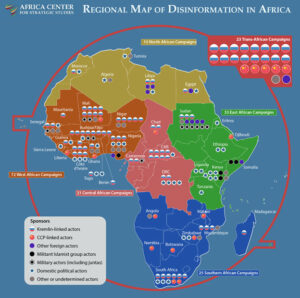
Media As Bedrock for Developing Russian-African Relations

Credit: Africa Center for Strategic Studies

By Kester Kenn Klomegah
MOSCOW, May 18 2026 – Under the auspices of the Faculty of Journalism of Lomonosov Moscow State University, the Russian-African Club, in late April, held its IV International Forum of Journalists from Russia and Africa, which marked another historical milestone. According to an established annual tradition, discussions were focused on aspects of the media, its structure, current performance, information contents, and challenges as well as future perspectives.

The shared common purpose was also to critically review whether the media, both in Africa and in the Russian Federation, have played its role in strengthening bilateral relations, and promoted the important goals set out during the first and second Russia-Africa summits. Why Media?

As largely expected, there were in-depth discussions. There were also controversies over the dynamics of media performance, with prominent participating experts raising narratives and criticisms, in the context of the forum’s theme: “Mass Media of Russia and Africa: The Role in Strengthening Friendship and Solidarity among the Peoples of the World.”

Elena Vartanova, dean of the Faculty of Journalism at Moscow State University, pointed to the fact that the media has to build diverse partnerships between Russia and Africa, further emphasized the importance of intercultural dialogue in creating a unified information space amid the complex global transformations of the modern world.

Yaroslav Skvortsov, dean of the Faculty of International Journalism at MGIMO, spoke about his recent unique trip to South Africa, noting that South Africa and the continent as a whole remain a “media blind spot” for Russian media, just as Russia receives very little coverage for African audiences.

The expert emphasized the need for serious, thoughtful, and in-depth reporting work in this area. The necessity to explore more opportunities in building strong ties, deepening the understanding of geopolitical developments, while fostering dialogue among the continent’s public.

Underlining Reasons

The media performance gap between Russia and Africa stems from overwhelming dominance of Western media outlets, a little of direct African reporting in Russia (including a lack of accredited African journalists), and limited institutional investment. These are some of the reasons highlighted during the discussions by an African studies journalist and columnist for the ITAR-TASS Analytical Center, Oleg Osipov, Timur Shafir, Secretary of the Union of Journalists of Russia and Head of the International Department of the Union of Journalists of Russia, and Louis Gowend, chairman of the Commission for Relations with African Diaspora and the Media of the Russian-African Club of Moscow State University, and president of the African Business Club.

Oleg Osipov, unreservedly, expressed concern about information deficit in Russian and African journalism, emphasized the urgent need to expand the network of Russian correspondent offices across the African continent, as well as getting a few experienced African media practitioners to Russia. This is especially important in today’s reality, as geopolitics heightens in the world.

Assessing current global trends, Russia needs to expand its presence in all spheres, and the media space is a crucial component of this process, the Russian expert believes. But for Timur Shafir, the thoughts were on the fact that it was especially important now to find common grounds in the mutual perceptions of the peoples and cultures of Russia and Africa through media communication.

In addition, he further emphasized that the media landscape is currently undergoing significant transformations, with technologies, audiences, and means of communication changing. Therefore, journalism is currently an area of particular responsibility and professional integrity, and direct dialogue between journalists in Russia and Africa has become crucial now.

Search for New Approach

The IV International Forum of Journalists from Russia and Africa, was considered as the new dawn, turning a new chapter with suggestion and paving the path for improving media performance in both regions. The participants offered a deafening applause to this position. The speakers expressed confidence that the Forum will serve as a starting point for many new joint initiatives.

According to Louis Gowend, the RusAfroMedia media platform—an information resource, which was created by the Moscow State University RA Club in 2022, for instance has to undergo serious facelifting, by strengthening cooperation and to improve the image of Russia-Africa cooperation.

This platform provides all the conditions for a free and frank exchange of opinions, relevant useful information, and the promotion of initiatives in all areas of cooperation between Russia and Africa. The speaker expressed concern over the fact that Russian journalists are much less active on the RusAfroMedia platform than their African counterparts and urged those present to make greater use of this resource.

In his contribution, Alexander Berdnikov, executive secretary of the Russian-African Club, distinctively noted that, at a time when new development trends are unfolding in the world, journalism and the entire media sphere are literally becoming a battlefield for information wars and special operations.

The speaker reminded that the Forum, being held ahead of the Third Russia-Africa Summit scheduled for October 2026, indicates how crucial for participants to develop solutions and initiatives for cooperation in journalism between Russia and Africa, and which will form the basis for practical recommendations in preparation for the forthcoming African leaders’ Summit.

Preserving Traditional Practice

Lyubov Sakhno, head of the Protocol and African Section of the TASS International Relations Department, represented Russia’s oldest news agency and spoke about ITAR-TASS’s consistent efforts to provide African media with foreign-language news feeds. But then, Russian media expansion faces limited budget constraints.

According to her, over 400 media outlets in Africa use these resources. She also discussed the organization’s media forum, which traditionally takes place on the sidelines of the Russia-Africa Summit.

Sergey Grachev, deputy director of the Media Research and Analysis Directorate at Rossiya Segodnya International News Agency, agreed with his colleagues that today we are facing unprecedented pressure from Western media. African media, most often, depends on Western sources, which Russian officials argue creates a “vacuum” filled by biased or hostile information.

Despite this, Russian media projects in Africa continue to develop, presenting analytical models of Sputnik’s presence on social media, where it broadcasts in 33 foreign languages.

Editor-in-chief of the African Initiative news agency, Buinta Bembeeva, noted in her discussions that Africa has become noticeably, and more prominent in Russian news in recent years. The speaker discussed the African Initiative’s experience in Africa. The agency is noticeably represented in many African countries through cooperation agreements with local media outlets.

The agency also collaborates with bloggers and organizes a journalism school for young African journalists. This close, on-the-ground, direct collaboration with African media outlets is key to achieving full-scale journalistic activity.

Contributions from Nigerian Academics

Professor Babatunde Joseph, Kaduna State University, spoke about using strengthened strategic communications to strengthen partnerships and unite the cultures of African countries. He agreed with his Russian colleagues on the need to expand the presence of Russian news agencies in Africa and African media in Russia. The expert cited the example of a well-known British radio station that broadcasts in five languages in Nigeria alone: Hausa, Yoruba, Igbo, Pidgin English (called “Najin” there), and plain English. “This is a successful strategy,” the professor was forced to note.

Professor Mohammad Bashir Ali, Kaduna State University (Nigeria), leading the Nigerian delegation to the Forum, discussed at length, the traditional role of media in promoting economic and entrepreneurial cooperation between Russia and Africa. Despite the multiple challenges posed by the complex international environment in both Africa and Russia, there is enormous potential for opportunity in this area. He concluded that greater consolidation in the media sphere is essential.

Professors Yushau Ibrahim Ango and Ayodele Babatunde, both from Kaduna State University, presented a working paper entitled “African Creative Industries and Media Systems in the Context of Digitalization,” analyzing the impact of digital media on entrepreneurship in the Nigerian economy.

The paper, however, concluded that reliance on digital platforms introduces new vulnerabilities, including algorithmic unpredictability, into the economy. This paper contributed to entrepreneurship and media research by theorizing digital platforms as entrepreneurial infrastructure, which has implications for policy, platform governance, and understanding how media shapes economic life in the African context.

Concluding Remarks

Hafiz Basi, chairman of the Youth Projects Commission of the Russian-African Club, seriously echoed the opinion in closing remarks, stating that it is time to change outdated stereotypes that portray Russia and Africa through Soviet political clichés. “We need journalism that brings people together, not further distances,” Hafiz Basi emphasized. He also noted that the lack of accredited African journalists in Russia remains a pressing issue.

Meanwhile, African media outlets write about Russia primarily in political terms, failing to reveal the true depth of Russian culture and the soul of the Russian people. In his opinion, the Russia-Africa Journalists Forum, once more, demonstrated its importance, which discusses the most pressing issues, prospects, and strategies for strengthening media cooperation between Russia and Africa.

This is in reality, important during the time of rapid geopolitical changes, in response to the aggressive rhetoric of Western countries and their satellites, public diplomacy, soft power, and peacekeeping journalism which are becoming increasingly relevant careful analysis and take effective measures in building a solid foundation for Russian-African dialogue.

Kester Kenn Klomegah focuses on current geopolitical changes, foreign relations and economic development-related questions in Africa with external countries. Most of his well-resourced articles are reprinted in several reputable foreign media.

IPS UN Bureau


!function(d,s,id){var js,fjs=d.getElementsByTagName(s)[0],p=/^http:/.test(d.location)?’http’:’https’;if(!d.getElementById(id)){js=d.createElement(s);js.id=id;js.src=p+’://platform.twitter.com/widgets.js’;fjs.parentNode.insertBefore(js,fjs);}}(document, ‘script’, ‘twitter-wjs’);  


Africa’s Golden Future

Africa’s Golden Future

Credit: The African Development Bank Group

 
Excerpts from remarks by Kristalina Georgieva, Managing Director, International Monetary Fund (IMF), at the Africa Forward Summit, Nairobi, May 11-12.

By Kristalina Georgieva
NAIROBI, Kenya, May 18 2026 – It is very appropriate that this Africa Forward Summit is being held in Kenya. Two weeks ago, a Kenyan marathon runner, Sabastian Sawe, did what had been considered impossible: by running a marathon in under two hours! What we have set ourselves here is also a marathon—and we must show the same resilience and perseverance that Mr. Sawe did.

Because Africa is not just another region. It is the future; it is where the world will acquire its next growth engine.

And it must do so in a more complex and uncertain global environment, when imbalances are growing yet again. Export-led economies reduce the space for Africa to integrate into global supply chains. At the other end, countries with large deficits absorb a disproportionately large share of financial resources, limiting the availability of capital for the rest of the world.

But the most dramatic imbalance is in demographics—between aging and youthful societies, with capital mostly in the first group and growth potential in the second.

What should the countries of Africa do to build resilience against a world of more frequent shocks and secure the bright future that this continent so richly deserves?

Kristalina Georgieva

First, make better use of their own savings for growth enhancing investments—today we heard President Ruto talk of $4 trillion in domestic assets that Africa is underutilizing. But even more important: African countries must become more attractive to the world’s savings—to the $126 trillion in global equities, $145 trillion in fixed income—which today flow mostly to advanced and more-established emerging market economies and are hesitant to go where the population growth is fastest.

This requires action at home and stepped-up support from Africa’s partners.

At home, building economic and social resilience must be grounded in strong institutions and sound policies, creating the conditions for private sector-led growth. From credible macroeconomic policy to decisive steps against corruption and reforms to slash red tape, countries need to work to win investors’ trust.

Africa also has to speed up trade and economic integration. Just eliminating tariff and non-tariff barriers in line with the continental free trade area can increase income per capita by more than 10 percent—with more purchasing power the continent becomes more competitive.

And Africa must deal decisively with the burden of debt. Restructure or reprofile when debt is unsustainable; avoid non-productive borrowing; and shift the balance from debt to equity as much and as quickly as possible. For this, it is paramount to develop deeper, more diversified capital markets.

Under France’s G7 presidency we have made the issue of global imbalances a priority for our work. Africa benefits when the Fund advocates for fair treatment. To reflect our firm belief in Africa’s growth potential, we have also pursued multiple reforms to expand our support for the continent.

First, we put our money where our mouth is. We have vastly expanded our concessional lending for Africa, from $8 billion pre-COVID to $36 billion today. Thanks to the SDR channeling of $109 billion, which President Macron and leaders from Africa championed, we can deploy substantially more concessional lending. To put it simply, thanks to the SDR channeling we can do more as ODA does less.

And we make sure our financing unlocks support from our development partners and helps attract private funding.

Second, we reformed how we do our programs—as a genuine partnership with our members. We don’t just talk the talk on country ownership; we walk the walk—we listen, we adapt, we show flexibility when warranted.

There are many good examples across Africa of homegrown reform programs that we support, of countries maturing in their policy choices—Benin, Côte d’Ivoire, Egypt, Ethiopia, Ghana, Morocco, Rwanda, Zambia, to name a few.

And yes, good policies pay off. Closing half the gap vis-à-vis emerging market economies in areas like regulation and governance can raise sub-Saharan Africa’s output by up to 20 percent within a decade.

Third, we pursue reforms of the international debt architecture, with our efforts extending to the Global Sovereign Debt Roundtable, our new debt playbook for country authorities, the London Alliance, and proactive use of our good offices to help forge consensus.

Lastly, at the IMF we are delivering more voice and representation for Africa in our governance and resource allocation. We have established a third African chair at our Board and a strong focus on the continent in our work.

Our members are committed to addressing underrepresentation in the 17th quota review. And we work with regional institutions—the African Union, the African Development Bank, the Economic Commission for Africa—to ensure their deep local knowledge helps us better serve our members.

In this world of rapid transformations and repetitive exogenous shocks, there is much that individual countries cannot control. But you can, as they say here in Kenya, keep your own house “spick and span.”

You control your policies, you define your future, and your value proposition—which we will help amplify to the relevant audiences, the rating agencies included.

With the people of Africa in the front seat and we, as partners, firmly with them, I am confident that this continent will achieve its golden destiny.

IPS UN Bureau


!function(d,s,id){var js,fjs=d.getElementsByTagName(s)[0],p=/^http:/.test(d.location)?’http’:’https’;if(!d.getElementById(id)){js=d.createElement(s);js.id=id;js.src=p+’://platform.twitter.com/widgets.js’;fjs.parentNode.insertBefore(js,fjs);}}(document, ‘script’, ‘twitter-wjs’);