Bitget Launches Blockchain4Youth Learning Hub to Strengthen the Future Web3 Workforce

VICTORIA, Seychelles, April 27, 2026 (GLOBE NEWSWIRE) — Bitget, the world’s largest Universal Exchange (UEX), has announced the launch of the Blockchain4Youth Learning Hub: Semester 1, a new education initiative designed to help young learners explore blockchain not only as a field of study, but as a viable career path in the digital economy.

As part of Bitget’s broader Blockchain4Youth initiative, the Learning Hub expands the program’s mission of making blockchain education more accessible and actionable for young people worldwide. Through recent initiatives such as the LALIGA Youth Tournament in Thailand, its partnership with Google Developer Group on Campus, and the Web3 Young Learners’ Encyclopedia, Blockchain4Youth has engaged more than 15,000 participants since launch, reflecting its ongoing commitment to youth development and the rising interest among students in finding clearer pathways into the Web3 industry.

The Blockchain4Youth Learning Hub combines structured learning with professional recognition and career-oriented support. Learners who complete the program and pass the assessments will receive a Certificate of Completion signed by Ignacio Aguirre Franco, Chief Marketing Officer of Bitget, giving them a credential they can present across their professional profiles.

The certificate is intended to serve as more than proof of participation. It offers verified recognition of Web3 competency and unlocks access to a broader network of opportunities. Certificate holders can benefit from priority review for opportunities at Bitget and gain entry to the Blockchain4Youth Talent Alliance, a core pillar of the program designed to connect certified learners with the wider Web3 industry. Through the alliance, participants can access priority opportunities, industry exposure, and networking channels, creating a clearer pathway between demonstrated knowledge and real-world professional roles.

As part of this effort, Bitget has confirmed a partnership with Bondex, the Web3 professional network behind web3.career, the largest job board in the industry.Through the partnership, Bitget and Bondex aim to make career entry points into Web3 more transparent and accessible for the next generation of builders and professionals

“Most young people trying to break into Web3 hit the same wall, they take a course, then have no network, no verified credentials, and no clear path to a job.” said Ignacio Palomera, Co-Founder of Bondex. “Blockchain4Youth and Bondex fix that. Finish the program, build a verified profile, be discovered in the Bondex trusted talent pool and apply directly to companies hiring on web3.career. It's the bridge the industry's been missing.

“A lot of young people are interested in Web3, but interest alone does not always show them where to begin,” said Ignacio Aguirre Franco, CMO of Bitget. “The Learning Hub is about making that first step feel more real by giving learners knowledge, recognition, and a better sense of where this path can lead. When young talent can see opportunity more clearly, they are more likely to believe they belong in the future of this industry.”

Ultimately, Blockchain4Youth Learning Hub reflects a broader commitment to building long-term infrastructure for Web3 education and talent development. More than a standalone campaign, the Learning Hub demonstrates how Blockchain4Youth is evolving into a sustained platform that supports learners as they move from discovery to skill-building, and from participation to contribution. Through this initiative, Bitget continues to position itself not only as a platform for digital assets, but also as an ecosystem builder helping shape the workforce that will define the next phase of Web3.

The B4Y Talent Alliance welcomes recruiting companies that want to connect with emerging talent, expand industry access, and create more pathways into Web3. Interested organizations can contact [email protected].

About Bitget

Bitget is the world's largest Universal Exchange (UEX), serving over 125 million users and offering access to over 2M crypto tokens, 100+ tokenized stocks, ETFs, commodities, FX, and precious metals such as gold. The ecosystem is committed to helping users trade smarter with its AI agent, which co-pilots trade execution. Bitget is driving crypto adoption through strategic partnerships with LALIGA and MotoGP™. Aligned with its global impact strategy, Bitget has joined hands with UNICEF to support blockchain education for 1.1 million people by 2027. Bitget currently leads in the tokenized TradFi market, providing the industry's lowest fees and highest liquidity across 150 regions worldwide.

For more information, visit: Website | Twitter | Telegram | LinkedIn | Discord

For media inquiries, please contact: [email protected]

Risk Warning: Digital asset prices are subject to fluctuation and may experience significant volatility. Investors are advised to only allocate funds they can afford to lose. The value of any investment may be impacted, and there is a possibility that financial objectives may not be met, nor the principal investment recovered. Independent financial advice should always be sought, and personal financial experience and standing carefully considered. Past performance is not a reliable indicator of future results. Bitget accepts no liability for any potential losses incurred. Nothing contained herein should be construed as financial advice. For further information, please refer to our Terms of Use.

A photo accompanying this announcement is available at https://www.globenewswire.com/NewsRoom/AttachmentNg/b28d747f-7398-4f75-918b-9c886aeae023


GLOBENEWSWIRE (Distribution ID 1001178146)

Seizing New Opportunities in the Boxy SUV Segment, Targeting a 7.5 Million-Unit Growth Market, iCAUR Advances Its Global Expansion Strategy

BEIJING, April 27, 2026 (GLOBE NEWSWIRE) — According to industry forecasts, the global boxy vehicle segment is expected to reach 7.5 million units by 2030, creating a major growth opportunity for the automotive industry. As consumer preferences evolve, expectations are shifting from basic functionality to more personalized aesthetic expression. Users no longer want vehicles that blend in, but ones that reflect their individuality. iCAUR aims to define this new segment.

Performance across global markets reflects strong recognition of iCAUR’s products. Over the past year, iCAUR has achieved rapid growth, with its lineup now covering more than 40 countries. The iCAUR V23 has ranked No.1 in the new energy boxy SUV segment in Southeast Asia for two consecutive months. In Thailand, cumulative sales have exceeded 4,000 units, placing it among the top five EVs by registrations. At the Indonesia International Motor Show, the V23 won three awards: Best APM Outdoor Activity, Favourite New Car Launch, and Favorite Newcomer Car Brand.

In February, the iCAUR V27 made its global launch in the Middle East. It has gained strong recognition from users in markets such as the UAE and Bahrain. The model also received “Brand of the Week” and “Best Brand” awards from Yalla Motor, helping quickly build awareness in the region.

Cross-market recognition reflects the consistency between iCAUR’s brand positioning and product philosophy. The brand is dedicated to creating a new generation of classic new energy boxy vehicles with a global vision. Rather than chasing excessive specifications, iCAUR focuses on real-world user experience, avoids overly complex design, prioritizes safety, and emphasizes engineering reliability. Guided by a simple approach that values design and builds trust through technology, iCAUR continues to develop products designed to last.

Looking ahead, iCAUR has set a clear roadmap toward 2030. The brand plans to establish 2,000 service outlets across key markets and achieve annual sales of over 1 million units. It will launch the iCARE service brand, building a comprehensive new energy service ecosystem through six modules. At the same time, it will introduce the i-LIFE ecosystem brand, integrating official customization with user co-creation to better adapt to individual needs.

At the upcoming 2026 Beijing Auto Show and the iCAUR International Business Summit, iCAUR will present its global strategy and roadmap. The brand will also showcase modified V23 and V27 models, along with next-generation AIMOGA robots, demonstrating scenario expansion capabilities and personalization potential while offering more diverse mobility solutions for global users.

Contact Person: Zeng Zhaoqing
Email: [email protected]
Website: www.icaurglobal.com

Photos accompanying this announcement are available at:

https://www.globenewswire.com/NewsRoom/AttachmentNg/0947d3f3-f3a5-4101-a582-9e97426d02d1

https://www.globenewswire.com/NewsRoom/AttachmentNg/c70fc19b-0c0c-403f-af6a-04bd4d203a79

https://www.globenewswire.com/NewsRoom/AttachmentNg/0c0e2cf1-bc45-421f-9caf-dca2d6c91bad

https://www.globenewswire.com/NewsRoom/AttachmentNg/beb1b89d-a896-4262-b03a-b1b5e57d6a34


GLOBENEWSWIRE (Distribution ID 9707475)

Bitget publie sa nouvelle preuve de réserves et confirme un taux de couverture de 130 % sur sa plateforme multi-actifs

VICTORIA, Seychelles, 27 avr. 2026 (GLOBE NEWSWIRE) — Bitget, plus grande bourse universelle (ou UEX, de l’anglais Universal Exchange) du monde, a publié sa nouvelle preuve de réserves (PoR), offrant ainsi une vision transparente des soldes dont la plateforme dispose pour les principaux actifs dans un contexte de marché en constante évolution.

Cette mise à jour concernant le BTC, l’ETH, l’USDT et l’USDC présente les ratios de réserves et les soldes des portefeuilles, accompagnés des attestations cryptographiques correspondantes. En utilisant des identifiants anonymisés pour confirmer leur présence sans divulguer leurs données personnelles, les utilisateurs peuvent procéder à une vérification indépendante de leurs avoirs grâce au système d’arbre de Merkle de Bitget.

Le dernier instantané indique des avoirs de 19 644 BTC, 221 628 ETH, 2 043 273 414 USDT et 164 266 093 USDC, avec des ratios de réserve de 33 % pour le BTC, de 52 % pour l’ETH, de 14 % pour l’USDT et de 4 % pour l’USDC. Les réserves totales, qui restent constamment supérieures au seuil de 1:1, assurent une couverture complète de tous les actifs suivis tout en exprimant un ratio de réserve moyen de 130 %.

« Les marchés évoluent rapidement, mais la transparence ne peut se contenter d’être réactive », a déclaré Gracy Chen, PDG de Bitget. « Notre preuve de réserves est conçue de manière à être vérifiable à tout moment, et pas seulement lorsque le marché est stable. Notre priorité est donc simple : les utilisateurs doivent toujours avoir la certitude que leurs actifs sont intégralement comptabilisés, quelle que soit l’évolution du marché. »

Cette publication intervient alors que les marchés continuent de réagir aux signaux macroéconomiques, à l’évolution des conditions de liquidité et au positionnement changeant des investisseurs. La preuve de réserves constitue l’un des éléments d’un modèle de sécurité plus large qui inclut un fonds de protection et des mesures de transparence continues. Pour une plateforme d’échange multi-actifs regroupant cryptomonnaies, actifs tokenisés et marchés traditionnels, le maintien de réserves solides et vérifiables est un atout essentiel pour garantir une couverture cohérente sur toutes les catégories d’actifs. Ensemble, ces mécanismes visent à garantir que la solvabilité de la plateforme reste véritablement mesurable, sans se contenter de la présumer.

Alors que Bitget étend son modèle de bourse universelle en y intégrant cryptomonnaies, actifs tokenisés et instruments financiers traditionnels, la transparence demeure essentielle à son déploiement à grande échelle sur différentes catégories d’actifs. Grâce à la publication régulière de ses preuves de réserve, la plateforme offre un point de référence cohérent et vérifiable à ses utilisateurs qui opèrent sur des marchés de plus en plus interconnectés.

Pour consulter la preuve de réserves à jour, veuillez cliquer ici.

À propos de Bitget

Bitget est la première bourse universelle (UEX) du monde. Au service de plus de 125 millions d’utilisateurs, elle donne accès à plus de 2 millions de jetons crypto et à plus de 100 actions tokenisées, ETF, matières premières, devises et métaux précieux comme l’or. L’écosystème vise à aider les utilisateurs à trader plus intelligemment grâce à son agent IA qui agit en tant que copilote pour l’exécution des ordres. Bitget entend promouvoir l’adoption des cryptomonnaies grâce à des partenariats stratégiques conclus avec LALIGA et MotoGP™. Pour faire écho à sa stratégie d’impact mondial, Bitget s’est associée à l’UNICEF pour appuyer l’éducation à la blockchain auprès de 1,1 million de personnes d’ici à 2027. Actuellement leader du marché de la finance traditionnelle tokenisée, Bitget propose les frais les plus bas du secteur et la liquidité la plus élevée dans plus de 150 régions à travers le monde.

Pour tout complément d’information, veuillez consulter : Site Internet | Twitter | Telegram | LinkedIn | Discord

Pour les demandes médias, veuillez contacter : [email protected]

Mise en garde sur les risques : les cours des actifs numériques peuvent fluctuer et connaître une forte volatilité. Il est conseillé aux investisseurs de n’engager que les fonds qu’ils peuvent se permettre de perdre. La valeur de votre investissement peut être affectée et il est possible que vous n’atteigniez pas vos objectifs financiers ou que vous ne parveniez pas à récupérer votre investissement principal. Nous vous encourageons à toujours solliciter les conseils d’un spécialiste financier indépendant et à tenir compte de votre expérience et de votre situation financière personnelles. Les performances passées ne constituent pas un indicateur fiable des résultats futurs. Bitget décline toute responsabilité en cas de pertes potentielles encourues. Les informations contenues dans les présentes ne constituent en aucun cas un conseil financier. Pour tout complément d’information, veuillez consulter nos Conditions d’utilisation.

Une photo annexée au présent communiqué est disponible à l’adresse suivante : http://www.globenewswire.com/NewsRoom/AttachmentNg/a7d841ec-b9bb-487f-a9e1-0aa9a6fec084


GLOBENEWSWIRE (Distribution ID 1001178190)

Bitget Mantém Cobertura de 130% na sua Plataforma de Múltiplos Ativos na Mais Recente Prova de Reservas

VICTORIA, Seychelles, April 27, 2026 (GLOBE NEWSWIRE) —  Bitget, a maior Universal Exchange (UEX) do mundo, divulgou sua mais recente Prova de Reservas (PoR), fornecendo um instantâneo transparente dos saldos da plataforma nos principais ativos diante da evolução das condições do mercado.

A atualização abrange BTC, ETH, USDT e USDC, com índices de reserva e saldos de carteira publicados juntamente com atestações criptográficas. Os usuários podem verificar de forma independente suas participações por meio do sistema da Bitget baseado em Árvore Merkle, usando identificadores anônimos para confirmar a inclusão sem expor dados pessoais.

O mais recente relatório mostra saldos dos usuários de 19.644 BTC, 221.628 ETH, 2.043.273.414 USDT e 164.266.093 USDC, com índices de reserva de 33% BTC, 52% ETH, 14% USDT e 4% USDC. As reservas totais permanecem consistentemente acima do benchmark de 1:1, mantendo a cobertura total em todos os ativos rastreados e refletindo um índice de reserva médio de 130%.

“Os mercados se movem rapidamente, mas a transparência não pode ser reativa”, disse Gracy Chen, CEO da Bitget. “A Prova de Reservas é projetada para ser verificável a qualquer momento, não apenas quando o mercado está estável. A prioridade é simples, os usuários devem sempre saber que seus ativos estão totalmente contabilizados, independentemente da direção do mercado.”

Isso ocorre à medida que os mercados continuam a responder aos sinais macroeconômicos, às mudanças nas condições de liquidez e à evolução do posicionamento dos investidores. A Prova de Reservas é operada como uma camada dentro de um modelo de segurança mais amplo que inclui o Fundo de Proteção da plataforma e as práticas de divulgação contínuas. Como uma exchange de vários ativos que unifica criptomoedas, ativos tokenizados e mercados tradicionais, a manutenção de reservas fortes e verificáveis é fundamental para garantir uma cobertura consistente em todas as classes de ativos. Juntos, esses mecanismos são projetados para manter a solvência da plataforma mensurável, em vez de presumida.

Com a expansão do modelo de Exchange Universal da Bitget reunindo criptomoedas, ativos tokenizados e instrumentos financeiros tradicionais, a transparência continua sendo um requisito fundamental para a escalabilidade entre as classes de ativos. As divulgações regulares de PoR são um ponto de referência consistente e verificável para os usuários que navegam em mercados cada vez mais interconectados.

Para acessar a Prova de Reservas atualizado, visite aqui.

Sobre a Bitget

A Bitget é a maior Universal Exchange (UEX) do mundo, atendendo a mais de 125 milhões de usuários com acesso a mais de 2 milhões de tokens de criptomoedas, mais de 100 ações tokenizadas, ETFs, commodities, FX e metais preciosos como ouro. O ecossistema está comprometido em ajudar os usuários a negociar de forma mais inteligente com seu agente de IA sendo o copiloto para executar ordens de trade. A Bitget está impulsionando a adoção de criptomoedas por meio de parcerias estratégicas com a LALIGA e MotoGP™. Alinhada com sua estratégia de impacto global, a Bitget se uniu à UNICEF em apoio ao ensino de blockchain para 1,1 milhão de pessoas até 2027. A Bitget atualmente lidera o mercado de TradFi tokenizado, fornecendo as taxas mais baixas do setor e a maior liquidez em 150 regiões em todo o mundo.

Para mais informação, visite: Website | Twitter | Telegram | LinkedIn | Discord

Para perguntas da mídia, contate: [email protected]

Aviso de Risco: Os preços dos ativos digitais estão sujeitos a flutuações e podem ser significantemente voláteis. Os investidores são aconselhados a alocar apenas os fundos que podem perder. O valor de qualquer investimento pode ser afetado, e existe a possibilidade de que os objetivos financeiros não sejam atingidos, nem que o investimento principal recuperado. Aconselhamento financeiro independente deve sempre ser obtido, e a experiência financeira pessoal e a posição devem ser cuidadosamente consideradas. O desempenho passado não é um indicador confiável de resultados futuros. A Bitget não se responsabiliza por quaisquer perdas potenciais incorridas. Nada contido neste documento deve ser interpretado como aconselhamento financeiro. Para mais informações, consulte nossos Termos de Uso.

Foto deste comunicado disponível em http://www.globenewswire.com/NewsRoom/AttachmentNg/a7d841ec-b9bb-487f-a9e1-0aa9a6fec084


GLOBENEWSWIRE (Distribution ID 1001178190)

‘Significant Stress’ as UN Prepares for Nuclear Non-Proliferation Treaty Conference

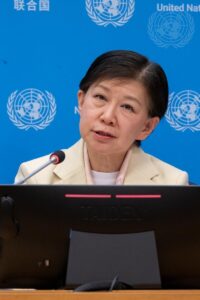
Izumi Nakamitsu, Under-Secretary-General and High Representative for Disarmament Affairs, at a press conference on the 11th Review Conference of the Parties to the Treaty on the Non-Proliferation of Nuclear Weapons (NPT). Credit: Eskinder Debebe/UN Photo

Izumi Nakamitsu, Under-Secretary-General and High Representative for Disarmament Affairs, at a press conference on the 11th Review Conference of the Parties to the Treaty on the Non-Proliferation of Nuclear Weapons (NPT). Credit: Eskinder Debebe/UN Photo

By Naureen Hossain
UNITED NATIONS, Apr 27 2026 – The Eleventh Review Conference of the Parties to the Treaty on the Non-Proliferation of Nuclear Weapons (NPT) will meet at the United Nations in New York from 27 April to 22 May 2026. State parties to the treaty will meet with the urgent aim of finding common ground on the issue of nonproliferation.

“The NPT is very often referred to as a cornerstone of the international disarmament and nonproliferation regime and also a very important pillar of international peace and security,” said Izumi Nakamitsu, Under-Secretary-General of the UN Office for Disarmament Affairs (ODA).

The NPT came into effect in 1970 and was extended indefinitely in 1995. This landmark international treaty calls for all signatories to prevent the spread of nuclear weapons and promote nuclear disarmament above all and encourages pursuing more peaceful uses of nuclear energy. It remains the only legally binding agreement that nuclear powers adhere to, with 191 states, both nuclear and non-nuclear, as signatories to the treaty. Review conferences are typically held at five-year intervals beginning in 1970 (the conference originally scheduled for 2020 was delayed due to the COVID-19 pandemic and was later held in 2022).

The president of the conference is Do Hung Viet, the Permanent Representative of Vietnam to the UN. The conference is expected to begin with a general debate during the first week, which will be followed by thematic discussions under each of the three pillars of the Treaty.

It will be attended by high‑level representatives, including Ministers of Foreign Affairs, as well as senior representatives of key international organizations. Side events will be held in parallel to the thematic discussions by attending members of civil society. This year’s conference will assess the implementation of the NPT since the last review conference, which ended without countries reaching a consensus on the final outcome document.

Ahead of the conference, Nakamitsu spoke to reporters at UN headquarters on 24 April. She remarked that state parties should take this meeting as an opportunity to converge on common ground when it came to nonproliferation. Ultimately, country representatives would want to avoid both an increase in proliferation and the intentional use of nuclear weapons. It will be a collective responsibility, said Nakamitsu, for the state parties to reach a consensus on the outcome document.

The NPT Review Conference will convene during a period of deepening geopolitical tensions, where major nuclear powers are embroiled in regional conflicts. The current military conflict in Iran and, in particular, the war in Ukraine from 2022, have caused shifts in countries’ attitudes about nuclear proliferation.

Some experts have claimed that the situation has led to a start of a new arms race as more countries hold discussions around “improving” nuclear weapons and even outright expanding into procuring nuclear arms themselves, as some see weapons as the “ultimate guarantor of national security”. Nakamitsu acknowledged this as a “proliferation driver”, or growing public sentiment for nuclear proliferation, irrespective of the formal governments’ position on the NPT. She also expressed concern over the increased rhetoric that threatened the use of nuclear weapons, warning that the more nuclear weapon states there were, the greater the risks of nuclear weapons being used by mistake or by miscalculation.

“[The] prevention of nuclear weapons’ use will have to become also one of the key focuses of the conference because when it comes to nuclear weapons, again, it’s not just one or two countries’ security; it goes beyond the borders. It is the security of all of us,” said Nakamitsu. “We need to put to rest the wrong narrative that more nuclear weapon states would guarantee our security.”

A “shared sentiment in crisis” within all state parties may in fact encourage them to “protect and maintain” the NPT. Despite this, Nakamitsu warned that with a growing leniency around nuclear weapons, this poses a risk to the gains made right after the end of World War II and throughout the Cold War.

In the current strategic security environment, the rapid rise of certain technologies will also be a factor in discussions. The advent of artificial intelligence has sparked great debate within the international community for its application in certain sectors and the risk of misuse without the proper guardrails.

It was only in December 2024 that the UN General Assembly passed a resolution that detailed the use of AI in the military domain and ‘its implications for international peace and security’, though it should be noted that there is no reference to the use of AI in the context of nuclear weapons.

When asked whether the issue of AI in the military-nuclear nexus would be discussed during the NPT conference, Nakamitsu noted that the integration of AI in the nuclear command and communications channel is “beginning to be discussed on different platforms”, and further consultations would also be held in Geneva this year. The NPT conference may not be the forum for further discussions around this issue or regarding AI governance in the military context. However, this is something that state parties recognise will require investigation, including when it comes to placing guardrails on the use of AI in the military domain.

“There is an increasing awareness that when it comes to nuclear weapons’ command and control, obviously humans have to retain oversight,” Nakamitsu told Inter Press Service.

The challenges facing the international world, particularly in the context of the conflicts in Europe and the Middle East, are placing “significant stress on the treaty,” according to Nakamitsu.

But it is also what makes the NPT review conference and its outcomes all the more relevant. A shared understanding that nuclear proliferation will only lead to further instability and insecurity is what will push member states to engage in critical dialogue over the next four weeks. This must also yield a shared commitment to uphold the principles of the NPT by the end.

IPS UN Bureau Report


!function(d,s,id){var js,fjs=d.getElementsByTagName(s)[0],p=/^http:/.test(d.location)?’http’:’https’;if(!d.getElementById(id)){js=d.createElement(s);js.id=id;js.src=p+’://platform.twitter.com/widgets.js’;fjs.parentNode.insertBefore(js,fjs);}}(document, ‘script’, ‘twitter-wjs’);  

DutyFreeZone.com Opens Global Vendor & Investor Enrollment Ahead of Fall 2026 Launch of the World’s First Global Duty-Free Marketplace

MIAMI, April 27, 2026 (GLOBE NEWSWIRE) — DutyFreeZone.com (DFZ), an ambitious next-generation retail platform, today announced the official opening of its early enrollment program for vendors, premium brands, strategic suppliers, and investors as it accelerates development of what is designed to become the world’s first true global online duty-free marketplace.

The company anticipates beginning live operations in Fall 2026, marking the arrival of a new era in global shopping.

Reimagining Duty-Free for the Digital Age

For decades, duty-free shopping has been largely restricted to airports, cruise ports, and border crossings. Access to premium tax-advantaged pricing has traditionally depended on travel, geography, and passenger traffic.

DutyFreeZone.com was created to challenge that outdated model.

By leveraging e-commerce, supplier partnerships, and a borderless digital infrastructure, DutyFreeZone.com aims to allow consumers worldwide to discover and purchase premium products at duty-free or duty-free equivalent prices — with delivery directly to their homes where permitted.

No Airport Required.

Consumers will no longer need to board a flight to access global duty-free value.

When Airports Slow Down, DutyFreeZone Keeps Selling

Traditional travel retail is vulnerable to airline disruptions, geopolitical events, economic slowdowns, and reduced passenger traffic.

DutyFreeZone.com introduces a more resilient model:

Digital-first

Borderless

Always accessible

Open 24/7

Reachable from anywhere in the world

Less dependent on airport foot traffic

When airports slow down, DutyFreeZone keeps selling.

Luxury Shopping Meets Global Access

The platform is being designed to combine the prestige and visual appeal of the world’s leading luxury marketplaces with the value proposition of duty-free retail.

Visitors to DutyFreeZone.com will eventually be able to shop across premium categories such as:

Women’s Fashion

Men’s Fashion

Bags & Leather Goods

Fragrances

Jewellery

Watches

Beauty & Cosmetics

Spirits

Zero Proof Spirits

Soft Drinks

Energy Drinks

Gourmet Food

Confectionery

Travel Essentials

Lifestyle Products

Premium Brands Opportunity

DutyFreeZone.com is actively inviting premium brands, manufacturers, and authorized distributors to showcase their products on the future marketplace.

The company believes many global brands are looking for innovative sales channels as traditional retail models face pressure from changing consumer habits, global uncertainty, and shifting travel patterns.

Early participating brands may benefit from:

Preferred category placement

First-mover visibility

Launch campaign exposure

Global customer reach

Long-term strategic positioning

Direct-to-consumer opportunities

New cross-border sales channels

Vendor Enrollment Now Open

DFZ is currently building its global vendor base ahead of launch.

The company is seeking:

Luxury brands

Beauty houses

Beverage companies

Gourmet food suppliers

Confectionery groups

Watch & jewelry brands

Travel accessory companies

Premium lifestyle manufacturers

Authorized distributors

Qualified partners are encouraged to apply early while category positions remain available.

Investor Participation Now Open

In parallel with vendor onboarding, DutyFreeZone.com is also engaging with investors interested in participating in the development of a potentially disruptive new commerce platform.

Capital raised during this phase is expected to support:

Platform development

Marketplace technology

Vendor acquisition

Global marketing

Logistics integrations

International growth

Strategic partnerships

Brand launch campaigns

Statement from Management

“DutyFreeZone.com was born from one simple question: why should duty-free shopping be limited to travelers in airports? We believe the future belongs to a smarter, more accessible model where consumers everywhere can enjoy premium brands, better pricing, and global convenience. We are building that future now.”

Launch Timeline

The live marketplace is currently under construction.

The company anticipates beginning live operations in Fall 2026.

A New Era of Duty-Free Shopping Is on the Way

DutyFreeZone.com aims to transform duty-free from a location-based privilege into a global digital opportunity.

Get Involved

Vendors & Brands

Showcase your products on a future world-class marketplace.

Investors

Join the growth story at an early stage.

Strategic Partners

Explore collaboration opportunities.

Contact

DutyFreeZone.com

Website: www.dutyfreezone.com

Vendor Inquiries: [email protected]

Investor Relations: [email protected]

About DutyFreeZone.com

DutyFreeZone.com is a global marketplace under development focused on reinventing duty-free shopping through a digital, borderless platform connecting premium brands with consumers worldwide.

A photo accompanying this announcement is available at https://www.globenewswire.com/NewsRoom/AttachmentNg/e292e16d-278b-437c-b699-ef416fafa391


GLOBENEWSWIRE (Distribution ID 9707396)

Every minute counts: EAACI calls for urgent action to make schools safe for children at risk of anaphylaxis

ZURICH, April 27, 2026 (GLOBE NEWSWIRE) — Children at risk of anaphylaxis are still not consistently protected in schools, despite clear medical guidance.

That was the warning delivered at the Spanish Congress of Deputies during the event “Every minute counts: promoting anaphylaxis-safe schools”, where the Spanish Association of People with Food and Latex Allergies (AEPNAA), the Spanish Society of Allergology and Clinical Immunology (SEAIC), the Spanish Society of Pediatric Clinical Immunology, Allergology and Asthma (SEICAP), and the European Academy of Allergy and Clinical Immunology (EAACI) endorsed a joint manifesto calling for stronger safeguards in school settings.

Representing EAACI, President María José Torres said the response to anaphylaxis remains uneven, leaving children’s safety dependent on chance—whether staff recognise symptoms, whether medication is accessible, and whether protocols are in place.

Anaphylaxis is a severe, fast-moving allergic reaction that can become life-threatening within minutes. For many families, this risk is part of everyday life—especially during the school day, when children are outside the immediate reach of their parents or carers.

The manifesto sets out practical measures to close these gaps: a common protocol for schools, mandatory staff training, accessible adrenaline auto-injectors, individualised care plans, and stronger coordination between health and education systems.

“For many children, anaphylaxis is not a hypothetical risk—it is part of daily life,” said María José Torres, President of EAACI. “When a severe reaction occurs, the response must be immediate. There is no room for delay or uncertainty about who should act.”

She added that unequal levels of protection across schools are unacceptable. “Children should not be safer in one school than another. We need clear protocols, trained staff, and immediate access to emergency treatment—before time is lost.”

The event brought together patient organisations, scientific societies, healthcare professionals, families, and public institutions, highlighting the daily uncertainty faced by families who cannot be sure that schools are prepared to respond.

For EAACI, the evidence is clear. The priority now is implementation—ensuring that children at risk are protected in practice, not just on paper.

By supporting this initiative, EAACI reaffirms its commitment to advancing evidence-based measures that improve patient safety and protect children and families where they need it most.

About EAACI

The European Academy of Allergy and Clinical Immunology (EAACI) is the leading professional organisation in Europe in the field of allergy and clinical immunology. EAACI brings together clinicians, researchers, and allied health professionals to improve the health and care of people affected by allergic and immunological diseases through research, education, and advocacy.

Contact: [email protected] | +41 44 205 55 33

Photos accompanying this announcement are available at:

https://www.globenewswire.com/NewsRoom/AttachmentNg/ca605fbb-0ff4-40ba-be81-fbfc0b45538c

https://www.globenewswire.com/NewsRoom/AttachmentNg/e7eba67f-15f6-4f73-85ae-503e18d6036a


GLOBENEWSWIRE (Distribution ID 1001178153)

Indonesia’s Genocide Case Shines the Spotlight on Myanmar Atrocities

Indonesia’s Genocide Case Shines the Spotlight on Myanmar Atrocities

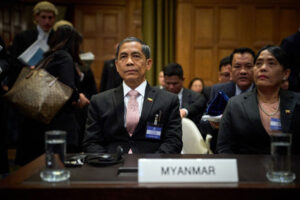
Credit: Phil Nijhuis/ANP via AFP

By Andrew Firmin
LONDON, Apr 27 2026 – Yasmin Ullah, from Myanmar’s persecuted Rohingya minority, is determined to see justice. On 13 April, she filed a complaint alleging genocide against Myanmar’s president, Min Aung Hlaing, to Indonesia’s Attorney General’s Office. Min Aung Hlaing led the 2021 coup that ousted a democratically elected government and this month was named president following a sham election held amid intense repression, rubber stamping the army’s continuing grip on power. However secure he appears in his position, Yasmin Ullah’s legal action offers hope his impunity may not be guaranteed.

The complaint accuses Min Aung Hlaing of genocide against Rohingya people, a predominantly Muslim ethnic group denied citizenship despite being long established in Myanmar. He’s accused of being responsible for the burning of Rohingya villages, forced evictions, killings and mass rape in a 2017 military operation, during which around 24,000 Rohingya people were killed and over 700,000 forced to flee. The UN’s fact-finding mission and its Independent Investigative Mechanism for Myanmar have extensively documented atrocities. Civil society has played a key role in gathering testimonies from survivors and preserving evidence.

The case was made possible by changes to Indonesia’s criminal code that came into effect in January. While civil society has raised concerns about revisions to other parts of the code that restrict Indonesian people’s ability to speak out and protest, this particular change stands out as a positive development, enabling people to bring charges against alleged perpetrators of atrocities in other countries under the principle of universal jurisdiction.

Universal jurisdiction on the rise

Universal jurisdiction applies to crimes under international law, such as genocide, crimes against humanity and war crimes, on the grounds that these crimes are an offence against humanity as a whole and as such aren’t bound by borders.

Some states, including France and Germany, have passed laws to enable universal jurisdiction prosecutions. Many powerful states however still refuse to recognise the principle, citing national sovereignty, the long-established doctrine of immunity for heads of state and the potential for prosecutions to be politically motivated.

Yet the question of whether government leaders should be immune from prosecution has increasingly been contested. Immunity wasn’t granted when leaders of Sierra Leone and former Yugoslavia were prosecuted for crimes committed during civil wars, and the Rome Statute, which established the International Criminal Court (ICC), removed the principle of immunity where it has jurisdiction. Ironically, the Trump administration, which resists international accountability over its officials, may have contributed to further eroding the doctrine of immunity by abducting Venezuela’s president Nicolás Maduro and placing him on trial for drug trafficking.

Universal jurisdiction cases have increased since the end of the Cold War. Belgium, Finland and Germany convicted people for their role in the Rwanda genocide. Switzerland secured the first guilty verdict for crimes committed in the Liberian civil war, while France convicted another Liberian war criminal in 2022. Germany convicted a Bosnian paramilitary soldier of genocide and, in 2021 and 2022, found two Syrian officials guilty of atrocity crimes.

Hopes of justice

Rohingya people have no hope of justice in a country that refuses even to recognise them as citizens, so diaspora civil society organisations are seeking it wherever they find opportunities. In 2025, an Argentinian court issued arrest warrants against Min Aung Hlaing and other senior Myanmar officials on crimes against humanity and genocide charges, in a case brought by a Rohingya organisation. Earlier this year, a human rights organisation filed a criminal case against the Myanmar regime in Timor-Leste. When authorities appointed a senior prosecutor to examine the case, Myanmar retaliated by expelling Timor-Leste’s ambassador.

These efforts complement proceedings in international courts. In 2024, the ICC issued an arrest warrant against Min Aung Hlaing for crimes against humanity, while in January, hearings began at the International Court of Justice in a case brought by the Gambian government accusing Myanmar of breaching the Genocide Convention. It isn’t a question of choosing between national jurisdictions and international courts, but rather of taking every avenue available to demand justice.

Universal jurisdiction has its limits. Those accused tend to be safe when they hold power; when states have successfully prosecuted perpetrators, it’s after they’ve lost the power that enabled their crimes. Currently, this means attempts to hold Israel’s leaders accountable for the genocide in Gaza, such as arrest warrants a Turkish court issued against 37 officials, only have symbolic value. Cases motivated by political point-scoring also risk discrediting the principle, as when a body created by Malaysia’s former prime minister Mahathir Mohamad found an array of US officials guilty in absentia, without legal basis or consequence.

Actions under universal jurisdiction, when targeted at evident offenders, can nonetheless help build moral pressure and signal that justice may eventually come. At a time when the brutal and illegitimate Myanmar regime is buttressed by China, India and Russia, and with the USA easing its pressure in pursuit of economic benefits, it matters that other countries keep holding the line, isolating the junta and exposing its atrocities.

It matters all the more when pressure comes from Southeast Asian countries, depriving the Myanmar regime of the excuse that human rights accountability is a western imposition. Two members of the Association of Southeast Asian nations, Indonesia and Timor-Leste, have now taken action against a fellow member. But other attempts in the region have faltered. Philippine authorities declined to proceed when five survivors of atrocities filed a case in 2023, while an investigation civil society filed with Indonesia’s national human rights commission that same year, alleging that Indonesian companies were supplying military equipment to Myanmar, has so far seen no progress.

As 2026 president of the UN Human Rights Council, Indonesia is uniquely placed to take the lead in the pursuit of justice for atrocity crimes. Indonesian authorities must treat this case as a priority and give it the attention and resources it needs.

Andrew Firmin is CIVICUS Editor-in-Chief, co-director and writer for CIVICUS Lens and co-author of the State of Civil Society Report.

For interviews or more information, please contact [email protected]


!function(d,s,id){var js,fjs=d.getElementsByTagName(s)[0],p=/^http:/.test(d.location)?’http’:’https’;if(!d.getElementById(id)){js=d.createElement(s);js.id=id;js.src=p+’://platform.twitter.com/widgets.js’;fjs.parentNode.insertBefore(js,fjs);}}(document, ‘script’, ‘twitter-wjs’);  


Africa Faces Mounting Risks Just as Growth Gains Take Hold

Credit: Nikada/iStock by Getty Images. Source: International Monetary Fund (IMF)

By Abebe Aemro Selassie
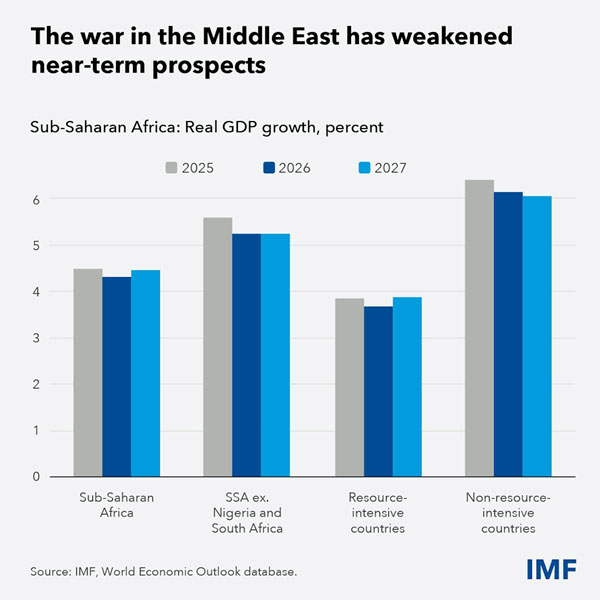
WASHINGTON DC, Apr 27 2026 – Sub-Saharan Africa’s economies entered 2026 with significant momentum. The region had notched its fastest growth rate in 10 years—4.5 percent in 2025—buoyed by reduced macroeconomic imbalances, rising investment levels, and a generally supportive external environment.

Countries such as Benin, Côte d’Ivoire, Ethiopia, and Rwanda led the charge, with growth exceeding 6 percent. The median inflation rate fell to about 3.5 percent and public debt levels had started to decline. These gains were hard-won, the fruit of politically difficult but meaningful reforms such as exchange-rate realignments, better spending allocation, and tighter monetary policies.

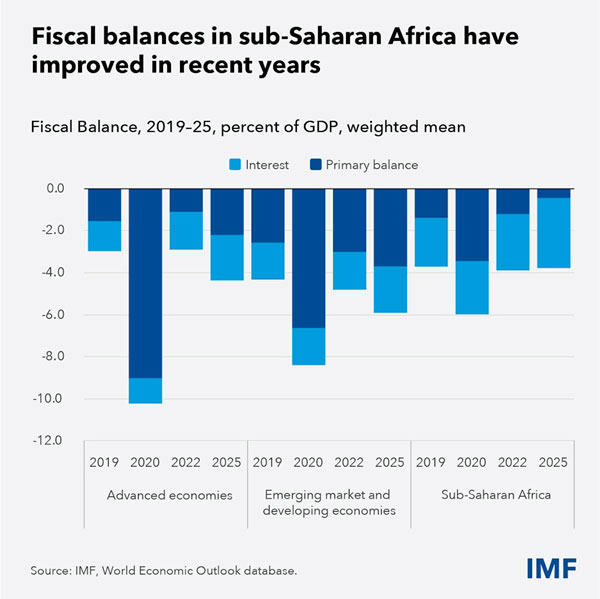
Progress on the fiscal front has been particularly impressive. The region’s general government primary balance has been steadily improving and is now near balance. By contrast, primary deficits in both advanced economies and other emerging markets remained noticeably wider in 2025 than before the pandemic.

Sub-Saharan Africa achieved this consolidation while simultaneously sustaining reasonably decent growth and bringing down inflation, thanks to bold reforms and notwithstanding headwinds from elevated global uncertainty and much reduced concessional financing.

And just as the region has begun to secure these gains, the war in the Middle East has brought a significant new shock that threatens to stall, or even unwind, that progress. It has pushed up global prices for oil, gas, and fertilizer, disrupted trade routes, and tightened financial conditions. These developments are weighing on the region’s outlook.

We expect growth to slow to 4.3 percent this year, some 0.3 percentage points below pre-war forecasts, while inflation is projected to rise. That may sound benign by global standards, but for a region where rapid growth is imperative to create millions of new jobs for the rapidly expanding population, any hit to growth is problematic.

Oil importers, many of them low-income or fragile states, face worsening trade balances and rising living costs. Oil exporters may benefit from higher oil prices, but remain exposed to volatility and the temptation of procyclical spending.

And the risks are mounting.

A prolonged conflict could further inflate commodity prices, trigger a risk-off episode in global markets, and force abrupt fiscal adjustments in countries with large refinancing needs.

In a severe downside scenario, as detailed in the IMF’s latest World Economic Outlook, regional output this year could fall 0.6 percent below pre-war forecasts, with oil importers suffering the most, and inflation could surge by an additional 2.4 percentage points.

The human costs are equally stark. Food insecurity looms large: the region remains acutely vulnerable to food-price shocks, and the war has already driven up fertilizer and shipping costs. A 20 percent rise in international food prices could push more than 20 million people into food insecurity and leave 2 million children under age 5 acutely malnourished.

Climate shocks intensify the strain—the recent floods in Mozambique and Madagascar serve as a reminder of the region’s deep vulnerability to weather disruptions.

The unprecedented decline in foreign aid strips away a critical buffer. Unlike past contractions, 2025 marked a sharp structural break in aid flows, with cuts falling hardest on the most fragile states and threatening to unravel essential services—healthcare above all—in countries with no alternative source of finance.

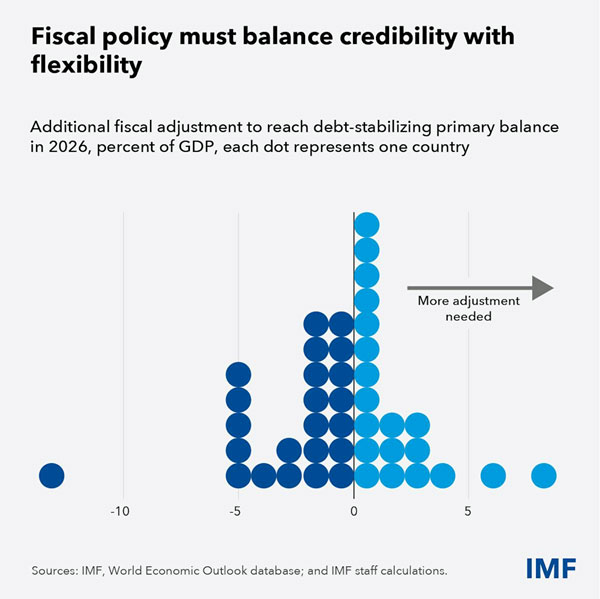
Debt vulnerabilities are also rising. More than one-third of countries are at high risk of, or already in, debt distress. In 21 countries, fiscal deficits exceed the levels that are needed to stabilize debt. Rising interest bills and dwindling concessional finance are inflating debt-service burdens and crowding out essential development spending.

In some cases, growing reliance on domestic borrowing has deepened ties between government debt and bank balance sheets, raising the specter of financial instability.

In this fraught environment, policymakers must navigate competing pressures. In the short term, they should anchor inflation expectations, shield the most vulnerable from rising prices, and avoid procyclical fiscal policies.

Oil exporters should treat windfalls as fleeting, using them to rebuild buffers and strengthen social safety nets. Oil importers with fiscal space can offer targeted, time-bound support; those without must focus on increasing the efficiency of spending and boosting domestic revenues.

Even as policymakers grapple with the immediate shock, the medium-term reform agenda cannot wait. The premium on accelerating structural reforms—to boost growth and resilience—is now even higher. Improving the business climate, strengthening governance, and reforming state-owned enterprises, especially in energy, transport, and telecommunications, can help attract investment and lift productivity. Deepening regional integration through the African Continental Free Trade Area could bolster supply-chain resilience and expand markets for local producers.

Digital transformation offers promise, but also highlights the region’s infrastructure gaps. Artificial intelligence is already helping farmers boost yields, doctors improve diagnoses, and students master difficult concepts faster.

But scaling such innovations will require investing in electricity, internet access, digital skills, and data governance. Today, just 53 percent of the region’s population has access to electricity, and only 38 percent to the internet.

International role

The international community has a role to play, especially when the economic troubles facing many countries stem largely from shocks beyond their control. Predictable financing, technical assistance, and capacity-building support can help countries weather current storms and sustain reform momentum.

Aid should be prioritized for low-income and fragile states, where alternative sources of finance are scarce. The IMF is already deeply engaged, with programs in 22 of the region’s 45 countries, and stands ready to scale up support for members facing acute balance-of-payments pressures linked to the war.

The optimism that greeted 2026 was not misplaced: it was earned, through years of difficult but necessary reform. The fallout from the war in the Middle East is now testing that progress, but it does not need to erase it. African policymakers have demonstrated they can deliver under pressure. The choices they make now—whether to hold the line on inflation, protect the vulnerable from the worst of the shock, and resist the temptation to unwind the reforms that got them here—will determine whether these hard-won gains endure.

The job of the international community is to support that effort. But the boldness and resolve that the moment demands must come from within the region itself.

This IMF blog is based on the April 2026 Regional Economic Outlook for sub-Saharan Africa, Hard-Won Gains Under Pressure,” prepared by Cleary Haines, Michele Fornino, Saad Quayyum, Can Sever, Nikola Spatafora, and Felix Vardy.

IPS UN Bureau


!function(d,s,id){var js,fjs=d.getElementsByTagName(s)[0],p=/^http:/.test(d.location)?’http’:’https’;if(!d.getElementById(id)){js=d.createElement(s);js.id=id;js.src=p+’://platform.twitter.com/widgets.js’;fjs.parentNode.insertBefore(js,fjs);}}(document, ‘script’, ‘twitter-wjs’);  


From Struggle to Strength: Turning Daily Hustle Into a Force for Survival

In the bustling Chifubu constituency of Ndola, the provincial capital of Zambia’s mineral-rich Copperbelt Province, 31-year-old Victoria Bwalya is usually among the early risers, cleaning and setting up for the day in her restaurant business. But before now, Bwalya’s hustle felt like a punishment and just a matter of survival. With only a primary school […]