Driving Elegance Together — LEPAS Global Partner Conference Successfully Concludes

WUHU, China, April 29, 2026 (GLOBE NEWSWIRE) — From April 26 to 28, 2026, LEPAS, the NEV brand under Chery Group, hosted its first Global Partner Conference in Wuhu under the theme “Drive Elegance Together.” The event gathered over 500 distributors, strategic partners, and industry representatives from nearly 20 countries and regions, marking a key step as LEPAS transitions from brand launch to the operational rollout of its global network.

Following its European debut at Milano Design Week and its NEV strategy unveiling at Auto China 2026, the conference translated the vision of “Elegance Moves the World” into concrete global action.

Strategy in Action: From Vision to Execution
LEPAS outlined its brand architecture, product portfolio, and global channel roadmap, with L4, L6, and L8—built on the Intelligent LEX Platform—set for phased global rollout, alongside localized market strategies and a replicable business model leveraging Chery Group’s supply chain and technology to ensure long-term partner profitability, as emphasized by CEO Zhai Xiaobing.

Strategic Signings: Expanding the Global Network

LEPAS signed partnership agreements across Europe, Asia, the Middle East, Africa, and Latin America—including Spain, Italy, Greece, Romania, Croatia, Slovenia, Thailand, Malaysia, Indonesia, Kazakhstan, Qatar, the UAE, Kuwait, Tunisia, South Africa, and Chile—accelerating its global expansion and large-scale market deployment.

Immersive Experience: Bringing Elegance to Life

Experiential zones demonstrated “Elegant Technology” in real-world scenarios, including automated parking and remote summon in the VPD area, while AiMOGA robots Mornine and Argos added a human-centered touch; test drives of the LEPAS L8, L6, and L4 further highlighted smooth handling, cabin quietness, and ADAS capabilities powered by the Intelligent LEX Platform.

The LEPAS Elegant Lifestyle House opened for the first time, offering hands-on activities such as leather crafting, fragrance blending, and coffee-making — extending the brand experience beyond the vehicle.

An evening Garden Gathering combined live music, art, and interactive installations, where technology and lifestyle naturally converged.

Ecosystem Synergy: Entering the Delivery Phase

From its debut at Milano Design Week to validation at Auto China 2026 and co-creation in Wuhu, LEPAS has rapidly advanced into a new phase of scaled global delivery, driven by technology and an ecosystem-led approach alongside its partners.

Chery Group
Peiwen Tan
Email: [email protected]
Website: lepasinternational.com 

Photos accompanying this announcement are available at

https://www.globenewswire.com/NewsRoom/AttachmentNg/b4ec3709-aac5-4e04-bad6-9b4f3b2fe3ef

https://www.globenewswire.com/NewsRoom/AttachmentNg/d6d17510-6530-4edf-9262-ff6b94811b5d

https://www.globenewswire.com/NewsRoom/AttachmentNg/cafd3224-0a80-4b93-adf4-2291191fcc5b

https://www.globenewswire.com/NewsRoom/AttachmentNg/1aa3bcad-7e87-4011-ad11-cf8d77b18da3

https://www.globenewswire.com/NewsRoom/AttachmentNg/a5ff2c89-78b5-4540-91f6-24db6f434c7c


GLOBENEWSWIRE (Distribution ID 9709756)

From “Automaker” to “Travel Lifestyle Service Provider”: JETOUR's “Travel+” Strategy Enters New Phase

BEIJING, April 29, 2026 (GLOBE NEWSWIRE) — As the product homogeneity in the auto market intensifies, building long-term brand competitiveness beyond vehicle manufacturing has emerged as a major industry-wide challenge. At Auto China 2026, JETOUR unveiled its “Travel+” strategy, delivering a distinctive solution: transitioning from product-centric thinking to positioning vehicles as connectors of life experiences. This shift empowers JETOUR to transcend conventional competition, evolving from carmaking to curating travel lifestyles.

Beyond Manufacturing: Production Differentiation and User-Centricity
As Ke Chuandeng, President of JETOUR International, noted: “From a tiny seed to a lush tree, what defines JETOUR is our ‘Travel+’ DNA, which transforms us beyond an automaker into a bridge linking users to the world.” The strategy is anchored in two core pillars: differentiation and user-centricity.

JETOUR integrates boxy design, off-road capability, intelligent comfort and travel-oriented lifestyle to meet users’ pursuit of freedom and exploration. Its user-centric philosophy covers far more than product development. By operating signature events and a complete benefits system, JETOUR maintains close user connections. It boasts over 50 million global fans, more than 2.2 million owners and 300+ owner clubs, acting as a professional travel lifestyle enabler that connects users, vehicles and the world via travel culture.

Technology: The Strategic Backbone
Solid technological strength underpins the implementation of the “Travel+” strategy. Dai Lihong, President of JETOUR Auto, stated: “Every JETOUR product goes through rigorous global testing in extreme environments, ensuring world-class quality.”

JETOUR has upgraded its hybrid technology to the sixth generation. Its core systems, including the C-DM hybrid system, XWD intelligent four-wheel drive system and GAIA Architecture, have been widely applied to SOUEAST, JETOUR T Series and G Series, covering urban mobility, light off-road and premium off-road scenarios and verified by global markets. At Auto China 2026, JETOUR exhibited SOUEAST S08 DM, T2 i-DM, G700, G700 Whistling Arrow and other models. Over 200 global media representatives participated in dynamic test drives and witnessed the public fording test of the G700 (Ark Edition) on site.

2.000+ Sales and Service Outlets: Accelerating Global Expansion 
Guided by the “In somewhere, For somewhere, Be somewhere” localization philosophy, JETOUR has expanded its business to 100 countries and regions with over 2,000 sales and service outlets.

On April 23rd, JETOUR held a dual-brand global dealer conference, gathering over 1,000 global partners to summarize achievements and plan future development. It also hosted the Annual Conference of the JETOUR International Media Alliance (JMA), communicating with 200+ global media representatives to explore brand communication paths for global expansion and intelligent and new energy transformation.

Cross-industry Collaboration: “Travel+” Ecosystem Gains Momentum
JETOUR has deepened cross-industry cooperation to enrich its “Travel+” ecosystem. It has partnered with global celebrities from various fields, including Brand Friend Sir Mo Farah, explorer Hazen Audel, racing legend Robby Gordon, and Cheetah Conservation Fund founder Dr. Laurie Marker. At Auto China 2026, brand ambassador Alan Walker and G Series art consultant Paula Scher joined JETOUR’s launch events, further enriching the cultural connotation of the “Travel+” strategy and turning it into a shareable global cultural symbol.

From a seed to a growing ecosystem, the path of “Travel+” is now clear. It centers on user needs, is powered by technology, and expands through an evolving ecosystem. It builds a full-scenario mobility system—more resilient, more scalable, and ready for long-term growth. What it represents is not just a brand strategy. It is a clear statement about the future mobility and a confident step toward it.

Photos accompanying this announcement are available at
https://www.globenewswire.com/NewsRoom/AttachmentNg/408856e3-4515-4ea6-b8c2-2e29d0f426ea
https://www.globenewswire.com/NewsRoom/AttachmentNg/636492c5-89ef-481e-85aa-7645810dfce2


GLOBENEWSWIRE (Distribution ID 9709577)

Nearly Half a Million Users Utilize Bitget’s AI-Trading Infrastructure, Messari Report Highlights

VICTORIA, Seychelles, April 29, 2026 (GLOBE NEWSWIRE) — Bitget, the world's largest Universal Exchange (UEX), highlighted findings from a newly published Messari Pulse report documenting early adoption across its AI trading stack, a four-layer product system built as part of Bitget's broader trading infrastructure serving 125 million users worldwide.

The Messari report identifies four core layers within Bitget's AI architecture: GetAgent for conversational market analysis, GetClaw for autonomous execution, Agent Hub for developer access to exchange functions, and Gracy AI, a strategic guidance interface built around the public market voice of Bitget CEO Gracy Chen. Together, these products extend AI across analysis, executions, infrastructure, and user engagement inside the Bitget platform.

According to Bitget data cited in the report, Gracy AI attracted more than 460,000 users and generated over 2.6 million replies within its first eleven days after launch in February, producing over 390 million impressions in the same period. GetAgent has also surpassed 450,000 registered users since its launch. Its invite-only phase, which ran from July to August 2025, drove 100 million+ impressions and a waitlist exceeding 25,000 users.

Messari also highlights Agent Hub, infrastructure layer for connecting AI systems directly to exchange functions. Launched in February 2026, it supports MCP Server, Skills, REST and WebSocket APIs, and a command-line interface. The report notes Bitget is the only exchange to offer all four simultaneously. The platform has since expanded to include five analytical AI Skills and 15+ integrated data tools spanning macro analysis, technical signal detection, sentiment monitoring, market intelligence, and news aggregation.

GetClaw, the autonomous execution layer, operates through a constrained structure designed for retail risk control. Trades execute via dedicated sub-accounts isolated from user-held assets, while sandbox environments and fund limits define where the agent can operate and how much capital it can deploy. The product is currently live on Telegram, with Discord, WhatsApp, and in-app expansion planned in later releases.

“We want to provide billions of people with the ability to trade like Wall Street professionals,” said Gracy Chen, CEO of Bitget. “AI is becoming part of how modern trading infrastructure is built. Early adoption across our AI infra shows that users increasingly expect analysis, execution, and strategy integrated inside one trading platform.”

The full Messari Pulse report is available at messari.io.

About Bitget

Bitget is the world's largest Universal Exchange (UEX), serving over 125 million users and offering access to over 2M crypto tokens, 100+ tokenized stocks, ETFs, commodities, FX, and precious metals such as gold. The ecosystem is committed to helping users trade smarter with its AI agent, which co-pilots trade execution. Bitget is driving crypto adoption through strategic partnerships with LALIGA and MotoGP™. Aligned with its global impact strategy, Bitget has joined hands with UNICEF to support blockchain education for 1.1 million people by 2027. Bitget currently leads in the tokenized TradFi market, providing the industry's lowest fees and highest liquidity across 150 regions worldwide.

For more information, visit: Website | Twitter | Telegram | LinkedIn | Discord

For media inquiries, please contact: [email protected]

Risk Warning: Digital asset prices are subject to fluctuation and may experience significant volatility. Investors are advised to only allocate funds they can afford to lose. The value of any investment may be impacted, and there is a possibility that financial objectives may not be met, nor the principal investment recovered. Independent financial advice should always be sought, and personal financial experience and standing carefully considered. Past performance is not a reliable indicator of future results. Bitget accepts no liability for any potential losses incurred. Nothing contained herein should be construed as financial advice. For further information, please refer to our Terms of Use.

A photo accompanying this announcement is available at:
https://www.globenewswire.com/NewsRoom/AttachmentNg/aeec61bb-e43d-43de-a3b2-8f9e07d83e17


GLOBENEWSWIRE (Distribution ID 1001178773)

BitMEX Expands TradFi Perpetual Swaps with FX for 24/7 Crypto Trading

VICTORIA, Seychelles, April 29, 2026 (GLOBE NEWSWIRE) — BitMEX today announced the launch of six FX Perpetual Swap contracts, enabling traders to access global currency markets using cryptocurrency as collateral on a 24/7 basis.

The new offering includes EUR/USD, USD/JPY, GBP/USD, AUD/USD, USD/CHF, and USD/CAD, providing exposure to some of the most traded currency pairs without relying on traditional brokers or fiat funding. The contracts remain open continuously, including weekends when conventional forex markets are closed.

The launch builds on BitMEX’s experience in crypto derivatives and marks a renewed expansion into forex-linked perpetual products, designed to meet evolving trader demand with a more focused and scalable offering.

“Forex is the largest and most liquid market globally, yet access still depends on fragmented and time-bound systems,” said Stephan Lutz, CEO at BitMEX. “With FX Perpetual Swaps, traders can access major currency pairs at any time using crypto as margin, without the operational friction of traditional brokerage models. This reflects a broader shift toward always-on, borderless trading.”

FX Perpetual Swaps allow traders to post crypto as margin, removing the need for fiat deposits, bank transfers, or broker onboarding. The contracts offer up to 100x leverage and operate with a 0% base interest rate, eliminating overnight swap fees commonly charged by traditional forex providers.

The selected pairs represent a significant share of global forex activity. EUR/USD alone accounts for roughly 23% of daily trading volume, while USD/JPY and GBP/USD are widely used to express views on interest rates, monetary policy, and global risk sentiment.

Unlike traditional forex markets, which close for approximately 48 hours over the weekend, BitMEX’s perpetual product offering enables continuous trading and real-time response to macroeconomic events. Pricing is derived from aggregated external data during market hours and transitions to internal order book activity during off-hours to maintain uninterrupted access.

BitMEX plans to expand its range of TradFi perpetual products based on user demand, building on its existing offerings across equities and commodities—including products such as WTI crude oil and silver (XAG). This broader expansion reflects BitMEX’s strategy to bridge crypto-native infrastructure with traditional financial markets through a unified derivatives platform.

More details about BitMEX’s FX Perpetual Swaps can be found on their blog.

About BitMEX

BitMEX is the OG crypto derivatives exchange, providing professional crypto traders with a platform that caters to their needs with low latency, deep crypto native and especially BTC liquidity and unmatched reliability.

Since its founding, no cryptocurrency has been lost through intrusion or hacking, allowing BitMEX users to trade with confidence that their funds are secure and that they have access to the products and tools required to be profitable.

BitMEX was also among the first exchanges to publish on chain Proof of Reserves and Proof of Liabilities data. The exchange continues to publish this data twice a week, providing assurance that customer funds are safely stored and segregated.

For more information, users can visit the BitMEX Blog or www.bitmex.com and follow Discord, Telegram and Twitter.

Media Contact

BitMEX Press

[email protected]

A photo accompanying this announcement is available at https://www.globenewswire.com/NewsRoom/AttachmentNg/63338553-9734-4da7-86f7-34d7116340f6


GLOBENEWSWIRE (Distribution ID 1001178730)

GC Partners expands its payment capabilities through its DIFC entity to Deliver Settlements for Corporate Clients

DUBAI, United Arab Emirates, April 29, 2026 (GLOBE NEWSWIRE) — GC Partners has strengthened its operational capabilities in the UAE with its DIFC-based entity, GC Partners (DIFC) Limited, which is regulated by the Dubai Financial Services Authority (DFSA). This development marks a significant enhancement in the firm’s ability to support corporate clients with efficient international payment services and payment-related foreign exchange services, including local AED settlement for eligible payment flows.

This capability enables same-day settlements for qualifying payments, reduces banking charges and is supported by upgraded backend infrastructure designed to enhance reliability across every stage of the transaction.

By combining the company’s established global expertise with a fully established local settlement framework, corporate clients benefit from improved speed, reduced friction and greater operational efficiency when managing international cash flows from or within the UAE.

As Senior Executive Officer of the DIFC entity, Zoheb “Zane” Piranditta is responsible for leading GC Partners’ growth in this strategically important market, further strengthening the firm’s presence and capabilities across the region.

“Local settlement capability represents a major step forward in the way we support our corporate clients in the region. By processing payments locally, we can shorten settlement cycles, lower costs and deliver a more responsive and reliable service that aligns with the fast-moving needs of businesses today.” – Zoheb “Zane” Piranditta, SEO, GC Partners DIFC.

This enhancement is supported by GC Partners’ local banking partnerships and strengthened operational infrastructure within the DIFC. Clients will continue to benefit from the company’s rigorous compliance standards, transparent processes, and human-first service model, including direct access to their dedicated Account Manager for support throughout each transaction as required.

The advancement reinforces GC Partners’ long-standing commitment to the UAE market, building on the wider GC Partners group’s international experience and expanding service capabilities across Europe, Asia and the Middle East.

“As we continue to invest in our presence in the UAE, our focus remains unchanged: to provide efficient and secure support for every international transaction. The introduction of local settlement in the UAE enables us to deliver even greater value to the corporate clients we serve.” – Andrew Fundell, CEO, GC Partners


GLOBENEWSWIRE (Distribution ID 1001178765)

Climate-Driven Disruptions to Education in Africa Raise Protection Risks for Millions of Children

Climate-Driven Disruptions to Education in Africa Raise Protection Risks for Millions of Children

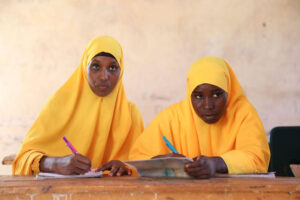
On 25 March 2026 in Somalia, Nasra and Muslimo, both in Grade 8, attend class at Kabasa Primary School in Dollow. The school serves children from displaced and host communities. Through education, safe spaces and life-skills programmes, UNICEF supports girls to stay in school, build confidence and pursue their aspirations despite the challenges of drought and displacement. Credit: UNICEF/Nahom Tesfaye

By Oritro Karim
UNITED NATIONS, Apr 29 2026 – The escalating global climate crisis has led to an increase in the frequency of climate-induced natural disasters, affecting millions worldwide. As governments struggle to keep up due to persistent funding shortfalls and inadequate preparedness and response mechanisms, education systems in Eastern and Southern Africa continue to deteriorate, pushing millions of children into displacement and poverty, further deepening long-term inequalities.

These are detailed out in a April 20 policy brief from UNICEF and global consulting firm Dalberg, titled Protecting Children’s Learning Futures: Quantifying Climate-Related Loss and Damage in Eastern and Southern Africa. The report analyses data from Ethiopia, Somalia, Kenya, Mozambique, and Zambia, examining how increasingly destructive climate shocks are destroying educational infrastructure and limiting growth opportunities for the most vulnerable populations, including girls, children with disabilities, and other marginalised communities.

Through this report, UNICEF and Dalberg stress the urgency of building climate-resilient educational systems that promote human development, economic growth, and long-term self-sufficiency. Without immediate humanitarian intervention, it is projected that hundreds of millions of children are at risk of falling behind in their education by 2050, resulting in billions of dollars lost in development and poorer life outcomes.

“Children are paying the highest price for a crisis they did not create. For the first time, this report shows the scale of climate-related loss and damage to education, yet the impact on children remains largely invisible in financing decisions,” said Etleva Kadilli, UNICEF Regional Director for Eastern and Southern Africa.

“Without stronger prioritization in climate finance, education will continue to bear the brunt of climate impacts, driving repeated disruption,” Kadilli continued. “We must design education systems that anticipate shocks, protect early and foundational learning, and keep schools open. Otherwise, the true cost of climate loss and damage will be measured in lost human potential.”

Eastern and Southern Africa are among the most climate-sensitive regions in the world, home to roughly one-third of the world’s most vulnerable countries. According to UNICEF, since 2005 the region has experienced over 700 extreme weather events, roughly 75 percent of which are attributed to climate change, affecting over 330 million people and causing over 40,000 deaths.

As of 2024, climate-induced natural disasters have caused approximately USD 1.3 billion in damages, largely driven by widespread damage to school infrastructure and expenses related to establishing temporary learning facilities. Since 2005, extreme weather patterns have disrupted the education of over 130 million children, resulting in a total estimated loss of USD 120–140 billion in future earnings.

Without urgent intervention, UNICEF projects that these losses could rise to between USD 3.3 and 3.8 billion by 2050, nearly tripling in the most vulnerable contexts. This is equivalent to approximately 440 to 520 million students being stripped of their education, with projected losses in future earnings reaching between USD 260 to 380 billion.

Additionally, persistent climate shocks in Eastern and Southern Africa have been linked to declining school performance, compromised safety, and reduced well-being among school-aged children. According to the report, widespread heatwaves are associated with reduced cognitive performance, lower test scores, and diminished teaching performances among educators.

UNICEF has also reported rising rates of absenteeism and increasing psychosocial challenges, driven by the destruction of schools and the loss of supportive social networks. Schools themselves have become increasingly dangerous for both students and teachers, as damaged infrastructure and heat stress further limit access to safe, equitable, and quality education.

“Many people in the climate movement assume that people who are impacted by climate change are more worried about it, but that is not the case, including in frontline communities,” said Jennifer Carman, Director of Survey Strategy at the Yale Program on Climate Change Communication (YPCCC) at the Yale School of Environment. “Instead, people in frontline communities are more worried about hazards that directly affect their day-to-day lives, like extreme heat and power outages — and these hazards are made worse by climate change.”

Such daily struggles faced by children as a result of climate-driven disruptions to schooling manifest in heightened protection risks. A significant portion of school-aged children in these regions have been forced to relocate multiple times, essentially eliminating their access to structures of supervision, stability, and peer support. Additionally, the climate crisis continues to erode livelihoods, intensifying economic instability across many communities, and elevating children’s vulnerability to exploitation, including rising rates of child marriage, child labour, gender-based violence, and recruitment by armed coalitions.

These risks disproportionately affect girls, children with disabilities, and displaced communities. Despite this, as of 2023 estimates, less than 2.4 percent of funding from critical multilateral funds was allocated toward “child-responsive interventions”, while support for education-specific programs has remained minimal. This is relatively low when compared to national spending for other sectors, such as healthcare. UNICEF estimates that if education programs received adequate support, it could close the USD 97 billion funding gap that is needed to achieve the Sustainable Development Goal (SDG) 4 targets in low- and middle-income countries.

“Without systematically integrating education into climate finance and policy frameworks – including efforts to avert, minimize and address loss and damage – countries risk remaining trapped in repeated cycles of disaster recovery spending rather than sustained resilience building, allowing climate shocks to compound disruptions to learning and generate significant non-economic losses for children and their future opportunities,” the report states.

Figures from UNICEF show that investing in education can yield substantial returns, with every USD 1 invested generating $2 to $13 in avoided losses. With the Fund for Responding to Loss and Damage (FRLD) Board meeting in Livingstone, Zambia, from April 22 to 24, humanitarian organizations and world leaders are aiming to broaden global conversations that are essential in shaping recovery and resilience efforts that could build a brighter future for children in these regions.

Through such dialogues, UNICEF urges governments, stakeholders, and donors to strengthen the integration of education within national climate frameworks, which can be done by explicitly referencing education in National Adaptation Plans (NAPs) and Nationally Determined Contributions (NDCs) to unlock access to “climate and loss-and-damage financing”.

UNICEF also advocates applying a climate-risk lens to domestic education financing, which could help ensure that budget allocations to education sectors are climate-informed and adequately support children’s foundational education and the continuation of their education in the long term.

Furthermore, UNICEF stresses the importance of scaling and better targeting international climate finance for education by encouraging major funding mechanisms to allocate resources for education. FRLD is one such example, financially supporting “unavoidable losses” when education systems are not adequately structured to withstand climate shocks.

“These frameworks should therefore clearly articulate how countries will protect education systems from climate-related loss and damage and strengthen learning continuity, enabling governments to align financing from multiple sources – including climate funds and private sector investment – toward sustained and risk-informed education investments that strengthen education systems and reduce future climate-related impacts,” the report states. “Such investments today can help break this cycle by safeguarding learning, reducing future fiscal pressures and protecting children’s development on which long-term human development depends.”

IPS UN Bureau Report


!function(d,s,id){var js,fjs=d.getElementsByTagName(s)[0],p=/^http:/.test(d.location)?’http’:’https’;if(!d.getElementById(id)){js=d.createElement(s);js.id=id;js.src=p+’://platform.twitter.com/widgets.js’;fjs.parentNode.insertBefore(js,fjs);}}(document, ‘script’, ‘twitter-wjs’);  


Rivalry Within Limits

Picture alliance/AA/Royal Court of Saudi Arabia. Source: International Politics & Society

 
The war with Iran is exposing deep fractures beneath the surface of Gulf unity. Still, cooperation remains the only viable option.

By Sebastian Sons
BONN, Germany, Apr 29 2026 – While the world watches the Strait of Hormuz and the discord in negotiations between Iran and the United States, the role of the Gulf states is fading into the background. Iran’s attacks on the Arab Gulf states have triggered a threefold shock.

First, their business model – built on free trade routes, logistics, energy, tourism and entertainment – is under strain. Second, they are losing the confidence of international investors as safe havens, undermining their narrative as a reliable bulwark against the chaos in their neighbourhood. And lastly, their strategy of shielding themselves from external threats through comprehensive diplomacy, de-escalation and dialogue is at stake.

Influential mediators such as Qatar and Oman have come into the crosshairs of the war, as has Saudi Arabia, which only in 2023 resumed relations with Iran precisely to prevent such a scenario of regional escalation. This threefold shock is now forcing all Gulf states to rethink their security architecture in order to better protect themselves in the future.

Contrasting strategies

At present, it appears as though each ruler in the Gulf is pursuing their own strategy, relying on their own instruments and forging their own alliances. This is particularly evident in the case of the Gulf heavyweights Saudi Arabia and the United Arab Emirates (UAE).

The Saudi kingdom sees itself more as an actor committed to de-escalation, coordinating closely with regional players such as Egypt, Turkey and Pakistan.

Despite considerable frustration with the Islamic Republic, which has torpedoed any rapprochement in recent weeks, diplomatic relations with Tehran have not been severed. Instead, Riyadh recognises that some form of modus operandi with Iran will remain necessary.

The UAE, by contrast, has sharpened its rhetoric towards Iran in recent weeks, is increasingly adopting a confrontational stance and emphasises that Israel and the United States will assume an even more dominant role in the region after the war.

These differing positions point to deep-seated divergences between Abu Dhabi and Riyadh, which had already become apparent before the war. In Yemen, the rivalry between the two regional powers escalated in December, culminating in Saudi Arabia publicly criticising its Emirati ‘brother’ and taking military action against its local partner, the Southern Transitional Council.

In Sudan, both governments support opposing sides – the UAE backs the Rapid Support Forces (RSF), while Saudi Arabia supports the Sudanese Armed Forces (SAF) – further fuelling the humanitarian catastrophe three years into the bloody civil war.

The Gulf states are not striving for pure harmony, but rather pursuing similar interests through different instruments.

The two states also pursue contrasting strategies towards Israel. While the UAE signed the Abraham Accords in 2020 and continues to maintain diplomatic and economic ties with Israel, Saudi Arabia has positioned itself as an active defender of the Palestinian cause since Hamas’s attack on Israel on 7 October 2023 and rejects any normalisation of relations with Israel.

These differing positions also reverberate beyond the region. Saudi Arabia, for example, criticised Israel’s recognition of Somaliland in December 2025, where the UAE operates an important port — another illustration of the growing divergence between Riyadh and Abu Dhabi.

Two rival axes thus appear to have emerged, further consolidated by the current war. On one side stands Saudi Arabia as the representative of a more restrained approach to regional policy, working with partners such as Oman, Qatar, Pakistan and Turkey to pursue assertive diplomacy.

On the other side, the UAE – particularly the powerful emirate of Abu Dhabi – has adopted a policy of interventionist strength against Iran and Islamist movements, a stance that is supported in varying degrees by Kuwait and Bahrain. Along these axes, a regional arms race could intensify, economic rivalry could grow, and hyper-nationalism could deepen, leading to further hardening and polarisation of positions across the Gulf.

Yet this seemingly irreconcilable confrontation overlooks the fact that the Gulf states are not striving for pure harmony, but rather pursuing similar interests through different instruments. Their approach is based on a pragmatic both-and strategy that relies on flexible alliances to achieve their objectives. In fact, their goals are not as divergent as often assumed, but can be summarised as three core priorities: preserving national legitimacy, maintaining regional stability and safeguarding economic development.

These are all threatened by the war, creating a natural interest among the Gulf states in avoiding lasting harm to one another — or even outright conflict.

Competition does not preclude cooperation

The Gulf states have a long and shifting history of conflict and rapprochement. Disputes over borders, rivalries between ruling dynasties and families, conflicts over resources and trade routes, and competing approaches to developing their oil- and gas-dependent economies have repeatedly led to periods of defamation, demonisation and disintegration.

Most recently, the so-called Gulf crisis from 2017 to 2021 shook Gulf unity, when the UAE, Saudi Arabia, Bahrain and Egypt imposed an air, sea and land blockade on Qatar. Despite these cycles of tension and reconciliation, the Gulf states have proven remarkably resilient, not least because of their ability to adapt flexibly to new challenges.

They must now demonstrate this capacity more than ever. The current war represents a pivotal moment in Gulf history, redefining how their both-and strategy can remain effective. To ensure this, they may increasingly rely on comprehensive deterrence, flexible alliances and diplomacy, which could lead to closer cooperation in certain policy areas.

This may include enhanced military cooperation, aimed at strengthening national security through regional defence capabilities and reducing dependence on the United States.

The development of a joint drone programme and protection against attacks on maritime security, desalination plants and future technologies are in the interests of all Gulf states — despite their differences in dealing with Iran. The same applies to other areas.

The war, through the sinking of tankers and the deployment of mines in the Persian Gulf, could seriously endanger an already fragile environment. Environmental disasters such as oil spills must therefore be prevented, which can only be achieved through collective action.

The blockade of the Strait of Hormuz has made it abundantly clear to most Gulf states how dependent they are on this sensitive maritime chokepoint for their energy exports.

The impact on the collective psyche of Gulf societies should not be underestimated either. Addressing this will require joint efforts in trauma recovery. The blockade of the Strait of Hormuz has made it abundantly clear to most Gulf states how dependent they are on this sensitive maritime chokepoint for their energy exports.

Alternatives are scarce, benefiting primarily Saudi Arabia and the UAE, while Qatar, Bahrain and Kuwait are being cut off from international maritime trade. Alternative trade routes are therefore essential, but can only be developed through partnership.

Plans for such routes have existed for years and could gain renewed momentum in the context of the crisis — whether in energy, transport or the construction of a Gulf railway network. Saudi Arabia, for instance, is planning new logistics corridors with Egypt and Jordan to enhance its independence.

At present, all Gulf states are suffering from declining revenues from oil and gas sales, tourism and financial services. Overall, economic growth in the region is projected to fall in 2026 from an expected 3.7 per cent to just 1.4 per cent. In Qatar, economic output could shrink by as much as 13 per cent, in the UAE by 8 per cent and in Saudi Arabia by 6.6 per cent.

This will likely lead all Gulf states to invest more cautiously and more selectively — particularly at home. The more they channel their reduced funds domestically, the fewer resources will be available for the urgently needed reconstruction in regional crisis zones such as Syria.

Here too, closer coordination in development cooperation could prove beneficial, as was the case during the Gulf crisis within the framework of the Arab Coordination Group, which brings together the development funds of all Gulf states alongside regional donor organisations such as the Islamic Development Bank.

These examples demonstrate that competition does not necessarily preclude cooperation, but rather depends heavily on context. The existing divergences among the Gulf states should therefore not be seen as set in stone, but as part of a complex process of negotiation and adaptation in times of crisis.

Alliances are shifting, leading to profound transformations that are particularly affecting the Gulf states. They will not abandon their both-and approach, but will recalibrate it. Whether they act against or alongside one another will depend more than ever on circumstances and the instruments they choose — resulting in a dynamic that could combine partnership with simultaneous polarisation.

Dr Sebastian Sons is a scientist at the CARPO research institute and conducts research primarily on the economic, foreign, social, development and sports policy of the Arab Gulf monarchies.

Source: International Politics and Society. Brussels

IPS UN Bureau


!function(d,s,id){var js,fjs=d.getElementsByTagName(s)[0],p=/^http:/.test(d.location)?’http’:’https’;if(!d.getElementById(id)){js=d.createElement(s);js.id=id;js.src=p+’://platform.twitter.com/widgets.js’;fjs.parentNode.insertBefore(js,fjs);}}(document, ‘script’, ‘twitter-wjs’);  


The War in Iran Isn’t Just Raising Food Prices — It’s Revealing Who Really Sets Them

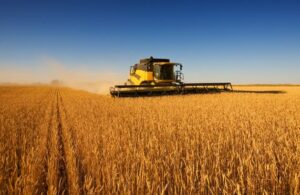
Over recent decades, agricultural commodities have been transformed from goods into financial assets. Markets anticipate future disruptions and push prices up faster than underlying conditions would justify. Credit: Bigstock

By Mihaela Siritanu
LONDON, Apr 29 2026 – As the United States and Israel’s 2026 attack on Iran remains on pause, most eyes have fixed on oil. Tankers reroute around the Strait of Hormuz, oil benchmarks climb, and insurance costs spike. But while the headlines focus on energy, warning signs are already flashing from the food commodities markets.

Middle East tensions continue to escalate, but global wheat and maize supplies remain relatively well stocked and production has not been significantly disrupted. Yet UK wheat futures have risen to almost £183 per tonne — their highest level since mid-November — after rising more than £2.60 in a single week. At the same time, fertiliser prices — a key input for future harvests — have doubled since the start of the year, even though the main impacts on crop production have yet to materialise.

These are early warning signs — not of a harvest failure, but of how today’s food system responds to crisis. Food prices are beginning to rise, with the FAO Food Price Index steadily increasing in February and March 2026, even though crops have not yet failed, harvests have not collapsed, and global production remains broadly stable. The crisis is unfolding in real time, before any physical shortage has fully materialised.

Of course, real factors matter — but they operate very differently. When oil prices rise, they feed into food production through higher fertiliser costs, more expensive transport, and increased energy use on farms.

But these are gradual pressures: they work their way through the system over months, as farmers purchase inputs, plant crops, and bring harvests to market. Prices linked to these costs would normally rise slowly, in step with actual changes in production.

Instead, prices are moving immediately, driven less by current shortages than by expectations of what might happen. Markets anticipate future disruptions and push prices up faster than underlying conditions would justify. In this system, financial markets are no longer simply reflecting reality — they are actively reshaping it.

Over recent decades, agricultural commodities have been transformed from goods into financial assets. Wheat, maize, and rice are now traded not only by farmers and merchants, but by hedge funds, investment banks, and institutional investors seeking returns.

In wealthier countries, higher food prices squeeze household budgets. In much of the Global South, where food accounts for a larger share of income, the same increases can push families into hunger. Import-dependent countries must pay prices set on global markets even when local supply conditions remain stable

Financial instruments such as commodity index funds channel large volumes of capital into these markets, often detached from real supply and demand. Large trading firms straddle both physical and financial markets, allowing them to profit from volatility, rather than mitigate it.

When geopolitical shocks occur, this capital moves quickly. Investors position themselves ahead of expected disruptions, driving up futures prices that then feed through to importers, retailers, and consumers. The Iran crisis is therefore not just raising costs, it is activating a financial system primed to amplify them.

The consequences are global but uneven. In wealthier countries, higher food prices squeeze household budgets. In much of the Global South, where food accounts for a larger share of income, the same increases can push families into hunger. Import-dependent countries must pay prices set on global markets even when local supply conditions remain stable.

These pressures do not remain purely economic. Food price spikes can have destabilising political effects. Rising costs of staple foods have long been linked to social unrest, including in the lead-up to the Arab Spring, when increases in bread prices contributed to protests across North Africa and the Middle East. This reflects a broader pattern in which rising food costs – amplified by market speculation – increase the likelihood of unrest by intensifying existing social and economic grievances.

This helps explain a persistent paradox: hunger continues to rise in a world that produces more than enough food. The problem is not simply production, but access – and increasingly, how prices are formed.

That system was built over decades: on one hand through the deregulation of commodity markets in the Global North, which opened the door to large-scale speculative investment, and on the other, deregulation exported globally through IMF and World Bank programmes that promoted market liberalisation, privatisation, and the dismantling of public price stabilisation mechanisms, leaving many countries exposed to volatility.

The emerging food price pressures linked to the Iran conflict should therefore be understood as more than a temporary shock. They are a warning signal. If prices can spike before shortages occur, then food insecurity is no longer just a matter of supply. It is a function of how markets are organised.

Until that system is addressed, each new geopolitical crisis — whether in Iran or elsewhere — will continue to reverberate through food markets in ways that deepen inequality and intensify hunger. The next food crisis is not just growing in the fields. It is already being priced in.

Mihaela Siritanu is a political economist for the Bretton Woods Project


Pacific Islanders Combat Mercury Poisoning of the Environment

Coastal villages throughout the Solomon Islands rely on selling fish for household incomes. Selling fish in Auki, Malaita Province, Solomon Islands. Credit: Catherine Wilson/IPS

Coastal villages throughout the Solomon Islands rely on selling fish for household incomes. Selling fish in Auki, Malaita Province, Solomon Islands. Credit: Catherine Wilson/IPS

By Catherine Wilson
SYDNEY, Australia, Apr 29 2026 – It is an invisible contaminant that has been found in fisheries, an essential part of the food chain for many Pacific Islanders. Mercury, emitted from fossil fuel power generation and other industrial processes around the world, has now penetrated marine ecosystems in the Pacific Islands with detrimental consequences for people’s health and wellbeing.

But island states, supported by scientific expertise at the Secretariat of the Pacific Regional Environment Program (SPREP), the United Nations Environment Program (UNEP) and funding by the Global Environment Facility (GEF), the world’s largest multilateral fund  for the environment, are implementing the action needed. The Mercury Free Pacific campaign is forging progress to protect islanders and their natural habitats from poisoning.

“Our communities face mercury risks from two main sources: what we eat, fish, and what we use in our homes and workplaces,” Emelipelesa Sam Panapa, Chemical Management Officer at the Department of Environment in the Polynesian atoll island nation of Tuvalu, told IPS. “Fish is the most widespread and challenging risk. It is not just food; it is central to our culture, livelihood and food security.”


The Mercury Free Pacific Campaign has brought together Pacific Island nations and the expertise of the SPREP and UNEP and been made possible with funding by the GEF. Credit: GEF

The Mercury Free Pacific Campaign has brought together Pacific Island nations and the expertise of the SPREP and UNEP and been made possible with funding by the GEF. Credit: GEF

Mercury is a natural element in the Earth that has been released into the atmosphere for millennia through volcanic events and rock erosion. But human-generated, mostly industrial, processes have accelerated the build-up of mercury emissions. Metal processing facilities, cement works, the production of vinyl monomer and coal-fired power stations are the biggest contributors to the high levels of mercury in the atmosphere today.

From 2010 to 2015 alone, global anthropogenic mercury emissions rose by 20 percent, reports the UNEP. Coal-burning processes account for about 21 percent of all emissions. And this is projected to increase if a further 1,600 planned coal-driven power stations, on top of the existing 3,700 worldwide, are built. Already mercury in the atmosphere is about 450 percent above natural levels, reports UNEP.

After travelling long distances, mercury emissions then deposit in oceans. And toxicity begins when natural bacteria in aquatic environments mix with mercury, transforming it into Methylmercury, which is a neurotoxin. In the Pacific region, Methylmercury has contaminated beaches, coral reefs and fisheries, including swordfish, shark, tuna and mackerel, that are commonly consumed daily. Seafood is an important source of protein for up to 90 percent of Pacific Islanders and contributes to cash-based livelihoods for about 50 percent, reports the Food and Agriculture Organisation (FAO).

Today mercury is named one of the top ten chemicals of concern to public health by the World Health Organization (WHO) and the danger is especially acute in women and children. It can, in higher doses, inflict damage on cardiovascular organs, kidneys and the nervous systems of pregnant women and subsequently affect organ development of the foetus.

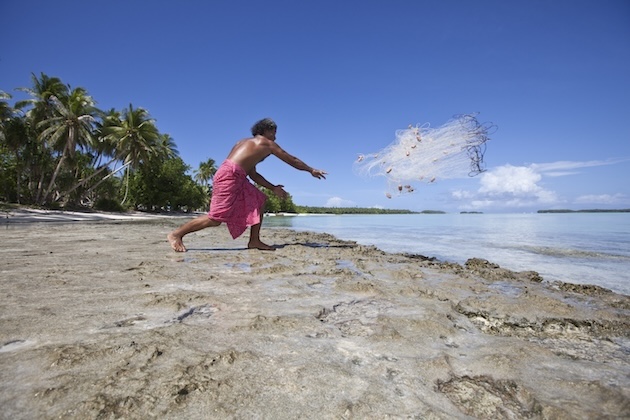
A fisherman on the coast of Funafuti, Tuvalu, throwing a weighted net out into the seawater, a traditional form of fishing. Credit: Rodney Dekker / Climate Visuals

A fisherman on the coast of Funafuti, Tuvalu, throwing a weighted net out into the seawater, a traditional form of fishing. Credit: Rodney Dekker / Climate Visuals

The results of a medical study conducted by the Biodiversity Research Institute (BRI) confirmed health concerns.  Testing for traces of mercury in 757 women, aged 18-44 years, in the developing island states of the Caribbean, Indian and Pacific Oceans, including the Cook Islands, Tuvalu, Kiribati, Tonga and Marshall Islands, revealed that 58 percent possessed a level in their bodies that exceeded the safe threshold of 1ppm Hg. Researchers concluded the most likely cause was the high consumption of contaminated fish. In comparison, women who consumed lower amounts of fish and seafood recorded the lowest levels of mercury.

However, islanders also encounter toxicity in their households. Mercury is used in the production of common imported consumer products, such as fluorescent light tubes, electrical switches, dental amalgam fillings and skin lightening cosmetics. But it is when these products reach the end of their lives and are discarded that mercury is at risk of lingering indefinitely in the environment.

“The core of the problem is that mercury-added products are not being separated from municipal solid waste, and there are no local facilities for the environmentally sound disposal of mercury waste,” Soseala Tinilau, SPREP’s Hazardous Waste Management Advisor, told IPS. Also, “medical waste incineration sites are identified as potential sources of mercury emissions to the air.” And in some locations, raw sewerage flows have contributed mercury waste due to affected products being washed down drains into waterways and the sea.

A challenge is that waste management systems in many Pacific Island countries are constrained by lack of capacity, technology, resources and infrastructure. “There are no local facilities for the environmentally sound disposal of mercury waste. Therefore, a system for packing, exporting and disposing of this waste in an approved facility abroad is a critical need,” Tinilau specified.

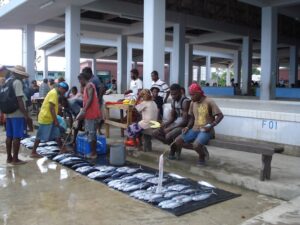
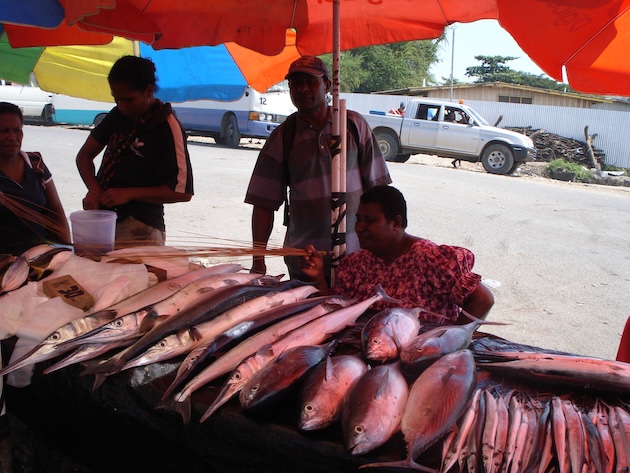
Fisheries, susceptible to mercury contamination, are a major source of food and protein for Pacific Islanders. Fish market, Port Moresby, Papua New Guinea. Credit: Catherine Wilson/IPS

Fisheries, susceptible to mercury contamination, are a major source of food and protein for Pacific Islanders. Fish market, Port Moresby, Papua New Guinea. Credit: Catherine Wilson/IPS

Several years ago, numerous Pacific Island states, including Kiribati, Palau, Tonga, Tuvalu and Vanuatu, joined the Minamata Convention. The first global agreement to reform the ways in which mercury is used, phase it out in industries and develop better waste management practices, among other measures, came into effect in 2017.

Now governments in the region are drawing further on the power of multilateral collaboration in the Mercury Free Pacific initiative. The expansive mandate of the GEF-funded project includes conducting national surveys of mercury contamination, educating local communities about the risks, reviewing exposure to mercury-added consumer products, reforming waste management practices and assisting governments to develop relevant legislation.

The GEF is funding US$12.6 billion in environmental projects currently underway globally, which are expected to generate a further US$80.5 billion in co-financing. And it has a long view of its commitment to the Mercury Free Pacific project through its GEF Islands program, with goals outlined until at least 2030.

Anil Bruce Sookdeo, the GEF’s coordinator for Chemicals and Waste, elaborated that in the Pacific the GEF has provided US$1.5 million for gathering mapping data, its analysis and developing action and remedial plans in eleven Pacific Island nations, including the Federated States of Micronesia, Samoa, Kiribati, Tuvalu and Vanuatu.

A further US$2 million is allocated to supporting national responses, such as devising effective legislation, community awareness programs and improving waste management processes. The campaign “represents a long-term regional objective, rather than a time-based project and requires sustained commitment and coordinated action by Pacific countries, regional institutions and partners,” he emphasised.

GEF funding has empowered Tuvalu, a country comprising nine coral islands and 11,800 people in the South Pacific, to make strides in its whole-of-society response to the issue.  The government has been able to strengthen its capacity and expertise, organise media awareness campaigns and oversee consultation with industries, communities and civil society organisations.

“For the first time, we have a national estimate of where mercury is coming from…we are beginning to understand the risks to our people and we have a roadmap for future action,” Panapa said in outlining the benefits of the Mercury Free Pacific initiative. At the same time, “these efforts represent the beginning of a longer journey to build community understanding and change behaviours related to mercury-added products, waste disposal and dietary choices.”

But a mitigation goal at the top of the list is to prevent mercury from reaching the islands. “Making marine life safe from mercury contamination is not about eliminating mercury already present in the ocean, but about preventing further contamination and managing the risk of exposure,” Tinilau said.

This means, among other measures, restricting the importation of mercury-added consumer products and galvanising global action to halt mercury emissions. Global consensus on phasing out coal-fired power stations and reforming industrial processes would be a start.

Pacific Island countries are demonstrating the political will and action with “regional coherence, national ownership and sustained momentum toward reducing mercury risks to human health, the environment and food systems in the Pacific,” emphasised Sookdeo from the GEF. Now, big emitters need to heed the urgency of reducing emissions at their source.

Notes: The Eighth Global Environment Facility Assembly will be held from May 30 to June 6, 2026, in Samarkand, Uzbekistan.
This feature is published with the support of the GEF. IPS is solely responsible for the editorial content, and it does not necessarily reflect the views of the GEF.

IPS UN Bureau Report


!function(d,s,id){var js,fjs=d.getElementsByTagName(s)[0],p=/^http:/.test(d.location)?’http’:’https’;if(!d.getElementById(id)){js=d.createElement(s);js.id=id;js.src=p+’://platform.twitter.com/widgets.js’;fjs.parentNode.insertBefore(js,fjs);}}(document, ‘script’, ‘twitter-wjs’);


Breaking Barriers in Krugerrand Trading: ISA Gold Launches Next-Gen Krugerrand Platform

JOHANNESBURG, April 29, 2026 (GLOBE NEWSWIRE) — As global uncertainty continues to shape financial markets, South African investors are increasingly turning to gold as a store of value, with Krugerrands at the centre of this trend. Known for their liquidity and global recognition, gold and silver Krugerrands continue to attract both long-term holders and active traders. In response to this growing demand, ISA Bullion Dubai has launched ISA Gold in South Africa, a dedicated platform designed to modernise Krugerrand trading by enabling clients to buy and sell their coins in real time through a more transparent and efficient system.

Recent market conditions have reinforced gold’s role in portfolios. With currency volatility and inflation concerns persisting, investors are seeking assets that can preserve purchasing power over time. In South Africa, this has translated into growing demand for physical coins, particularly Krugerrands, which offer accessibility and strong resale value.

“Gold demand remains resilient as investors seek stability and diversification in uncertain economic conditions,” said Shaokai Fan, Global Head of Central Banks at the World Gold Council.

Krugerrands continue to stand out for individual investors due to their flexibility. They can be bought, held, and sold relatively easily, making them suitable for both long-term holding and active trading.

However, despite this demand, the process of trading physical coins has not always kept pace with modern expectations. Pricing inconsistencies, delays, and limited transparency have often created friction for investors trying to enter or exit the market efficiently.

This evolving landscape is driving demand for more transparent and cost-efficient trading solutions. Platforms such as ISA Gold are setting a new benchmark with some of the most competitive pricing in the South African market, with no hidden fees. Unlike traditional dealers with wider, often unclear spreads, ISA Gold offers a simple and transparent model that allows investors to trade Krugerrands with confidence while maximising value on both buying and selling.

“In most cases, investors lose a significant premium when they sell,” said Aziz Moti, COO of ISA Gold. “We’ve reduced the buy-and-sell difference to just R200 to R300 per ounce, which means there’s effectively no real premium lost on exit, giving investors the flexibility to trade more actively.”

The shift toward digital accessibility is also playing a key role. As more investors become comfortable managing their finances online, expectations are rising for real-time pricing, simplified execution, and greater transparency. This is gradually reshaping how physical assets like Krugerrands are traded across South Africa.

Looking ahead, the outlook for gold remains closely tied to global economic conditions, interest rate cycles, and geopolitical developments. For South African investors, the enduring appeal of Krugerrands lies not only in market performance but also in their legacy as one of the world’s most trusted bullion coins.

As gold demand remains strong and trading habits continue to evolve, specialised platforms such as ISA Gold are becoming an integral part of South Africa’s changing Krugerrand investment landscape.

Media Contact:
Email: [email protected]
Website: www.isagold.com

A photo accompanying this announcement is available at https://www.globenewswire.com/NewsRoom/AttachmentNg/420c215d-2c3c-45a5-a252-3c9c893bc6fc


GLOBENEWSWIRE (Distribution ID 9709288)