New Chickpea Variety to Drive Climate Resilience in Africa

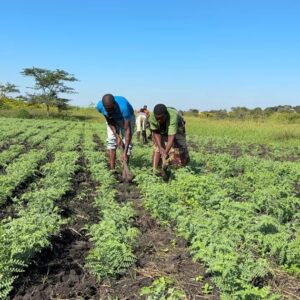
Chickpea farmers in Malawi where the new variety is being piloted. Picture supplied.

By Ignatius Banda
BULAWAYO, Zimbabwe , Aug 5 2026 – New chickpea seed research and production have become the new frontier of climate resilience in southern Africa as farmers battle failing cereal production.

Farmers in Zambia, Malawi and Mozambique are benefiting from a new chickpea variety which researchers say requires lower nitrogen fertiliser at a time such agriculture inputs have become the latest victim of global trade disruptions that are driving production costs.

The variety, high in its nutritional value, is also boosting farmer incomes while also driving exports, researchers say.

For a long time African farmers have struggled with both poor yields and low-nutrition crops amid concerns of stunted growth, especially among children.

These agriculture science interventions come at a time of concerns about how best the Global South, affected by climate change, can navigate what has increasingly become the complex nature of food production.

The International Crops Research Institute for the Semi-Arid Tropics (ICRISAT), with support from the Food and Agriculture Organization of the United Nations (FAO) through the Benefit-Sharing Fund (BSF) of the International Treaty on Plant Genetic Resources for Food and Agriculture (ITPGRFA), is driving the efforts to “reduce dependency on costly agricultural inputs”.

According to a recent ICRISAT briefing, “The initiative is particularly relevant at a time when geopolitical instability, fertiliser supply disruptions, and rising production costs are affecting vulnerable dryland farming systems across Southern Africa.”

As a result of the disruption of global food distribution networks, prices of basic commodities have soared in Africa as governments scramble to boost both production and farmer incomes, while international finance institutions continue to urge governments to do away with agriculture subsidies.

“With fertiliser prices and agricultural production costs continuing to rise globally, resilient legume crops such as chickpeas are becoming increasingly important in helping farmers across Malawi and Southern Africa maintain productivity, strengthen food security, and reduce dependence on costly agricultural inputs,” said Dr Himanshu Pathak, ICRISAT director general.

Several southern African countries have experienced a series of climate and economic pressures, highlighting the urgency of strengthening resilience, ICRISAT researchers say.

According to the Famine Early Warning System Network, countries such as Zimbabwe will also face cereal deficits in low-rainfall regions up to the beginning of 2027, further highlighting the urgency of new drought-resistant varieties.

While developed countries have for years pledged to support poorer countries in dealing with the impact of climate change on food production, researchers say little has emerged to address Africa’s historic food insecurity.

According to the latest ICRISAT research, “chickpea requires lower nitrogen fertiliser inputs, making it an attractive option for farmers facing rising production costs and climate pressures.”

“Notably adapted to the semi-arid tropics, chickpea exhibits remarkable resilience in harsh environmental conditions, including heat and drought,” notes an ICRISAT update.

“Its high nutritional content, long shelf life, and culinary versatility make it a favourite ingredient in various traditional and modern dishes, further cementing its role in global diets,” the agency adds in a briefing charting the benefits of the chickpea variety.

“Across many dryland regions, farmers are facing rising production costs, declining soil fertility, and increasingly unpredictable weather patterns,” said Dr James Mwololo, a scientist leading the ICRISAT legume breeding project.

“Chickpea is emerging as a strategic crop for dryland agriculture because it offers farmers a viable pathway to maintain productivity and incomes under increasingly difficult growing conditions,” said Mwololo, who is also the project’s principal investigator.

Chickpea yields remain low in Malawi, with farmers harvesting a little over 800 kilograms per hectare last year “despite improved varieties having the potential to produce up to 3 tonnes per hectare,” Mwololo added.

“With greater access to quality seed, national production is expected to increase more than threefold from the 2022 baseline of 2,570 metric tonnes, while the number of farming households reached could expand from 22,000 to more than 66,000 by 2027,” Mwololo said.

These science-based interventions have been welcomed by farmer representatives, who say they see market opportunities for the new chickpea variety that ICRISAT says will improve incomes at the household level.

“Our partnership with ICRISAT goes beyond traditional improved seed development,” said Gloria Pekani, chief executive officer of Milele Agro-processors in Malawi.

“It is also about creating both stronger market opportunities and supporting livelihoods for farmers, processors, and communities that increasingly depend on resilient crops such as chickpea,” Pekani said.

Malawi is considered one of the poorest countries in the world, where nutrition concerns persist, and is among several countries where agro-science is touted as a long-term panacea for food insecurity.

In countries such as Sudan, the Food and Agriculture Organisation (FAO) says cereal production is at an all-time low because of the “ongoing conflict, rising agricultural inputs costs and disruptions to livelihoods and markets, further exacerbating food insecurity across the country”.

The new chickpea research is expected to address these concerns across the African continent, where countries such as Mozambique, where the research is being piloted, face the same civil conflict challenges as Sudan that have disrupted rural agricultural activities.

IPS UN Bureau Report


!function(d,s,id){var js,fjs=d.getElementsByTagName(s)[0],p=/^http:/.test(d.location)?’http’:’https’;if(!d.getElementById(id)){js=d.createElement(s);js.id=id;js.src=p+’://platform.twitter.com/widgets.js’;fjs.parentNode.insertBefore(js,fjs);}}(document, ‘script’, ‘twitter-wjs’);


  

Tokenized Equities Surge 140% in 2026 as New DeFiLlama Research Maps the Market

VICTORIA, Seychelles, Aug. 05, 2026 (GLOBE NEWSWIRE) — Bitget, the world's largest Universal Exchange (UEX), today highlighted key findings from a new independent DeFiLlama research report examining the rapid growth and evolving market structure of tokenized equities. According to the report, tokenization’s active market capitalization has grown by more than 140% in 2026, increasing from $814 million at the beginning of the year to nearly $2 billion at the time of publication. The research explores how leading tokenized equity platforms are evolving across market structure, liquidity, settlement, and execution quality as adoption continues to accelerate.

The report evaluates leading tokenized equity platforms across brokerage integration, reserve verification, dividend treatment, settlement mechanisms, and trading infrastructure. It also benchmarks quoted liquidity and execution quality across multiple venues, providing an independent assessment of how the tokenized equities market is evolving.

DeFiLlama's analysis found that Bitget recorded the lowest median bid-ask spread at 0.83 basis points and the deepest top-of-book liquidity across all five tokenized equity markets evaluated. In its broader execution benchmark covering 36 stock perpetuals and eight metals and commodity perpetuals, Bitget led 32, 34 and 33 contracts across the 5, 10 and 50 basis point depth measurements respectively, while also recording the greatest aggregate order-book depth across all measured depth ranges. The findings suggest that as tokenized equity infrastructure matures, execution quality and liquidity are becoming increasingly important differentiators between platforms.

“A tokenized stock is only as good as the market behind it. Investors don't care how the asset is packaged if they can't trade it efficiently,” said Gracy Chen, CEO of Bitget. “That's why liquidity and execution matter. DeFiLlama found Bitget recorded the lowest median bid-ask spread and the deepest top-of-book liquidity across the markets they evaluated. As this market grows, those are the things investors will increasingly expect.”

The report also examines adoption trends within Bitget's Reality rTokens, which generated more than $1.16 billion in cumulative trading volume between June and July. Semiconductor and technology-linked assets accounted for the majority of activity, underscoring continued demand for tokenized exposure to innovation-driven public companies.

For more information, read the full DeFiLlama report here.

About Bitget

Bitget is the world's largest Universal Exchange (UEX), serving over 125 million users and offering access to over 2M crypto tokens, 500+ tokenized stocks, ETFs, commodities, FX, and precious metals such as gold. The ecosystem is committed to helping users trade smarter with its AI agent, which co-pilots trade execution. Bitget is driving crypto adoption through strategic partnerships such as MotoGP™. Aligned with its global impact strategy, Bitget has joined hands with UNICEF to support blockchain education for 1.1 million people by 2027. Bitget currently leads in the tokenized TradFi market, providing the industry's lowest fees and highest liquidity across 150 regions worldwide.

For more information, visit: Website | X | Telegram | LinkedIn | Discord

For media inquiries, please contact: [email protected]

Risk Warning: Digital asset prices are subject to fluctuation and may experience significant volatility. Investors are advised to only allocate funds they can afford to lose. The value of any investment may be impacted, and there is a possibility that financial objectives may not be met, nor the principal investment recovered. Independent financial advice should always be sought, and personal financial experience and standing carefully considered. Past performance is not a reliable indicator of future results. Bitget accepts no liability for any potential losses incurred. Nothing contained herein should be construed as financial advice. For further information, please refer to our Terms of Use.

A photo accompanying this announcement is available at https://www.globenewswire.com/NewsRoom/AttachmentNg/9e07fe00-fe20-4588-a783-9681ef299933


GLOBENEWSWIRE (Distribution ID 1001255982)

Green transition: Pay the Least, Benefit the Most

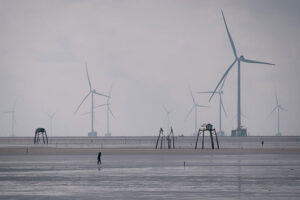
Workers are patrolling in a wind power plant on Tan Thanh beach, Go Cong city of Viet Nam. Countries in Asia and the Pacific are moving towards green transitions in the wake of higher oil prices. Credit: Unsplash/Thompson Le

By Michał Podolski
BANGKOK, Thailand, Aug 5 2026 – Inaction and maintaining the status quo of fossil fuel dependence carry significant costs. The recent closure of the Strait of Hormuz, for instance, caused enormous losses to the global economy, with many Asia-Pacific countries bearing disproportionately larger adverse impacts. Had these economies had a more diversified energy mix, they would have benefited from such resilience under current circumstances.

Green transition, however, comes at a significant cost – investment in environmental sustainability. This investment brings tangible returns and benefits, such as cleaner air, better health, a vibrant natural environment or reduced negative climate impacts. What is the overall balance of these costs and benefits, opportunities seized or lost, innovation, or status quo maintenance?

This overall balance amounts to decisions for a faster or slower shift towards environmental sustainability and green transition. Each carries fiscal, investment and financing consequences with differing socioeconomic outcomes. Overall, because of these countless dimensions, decision-making for green transition is inherently complex. In principle, humanity has never undertaken a green transition before and lacks established blueprints.

ESCAP’s Economic and Social Survey of Asia and the Pacific 2026 sheds light on this challenge. The report identifies decarbonisation pathways that offer lower costs and higher benefits, highlights bottlenecks that inflate expenses, clarifies current priorities, and examines socioeconomic impacts. In short, the Survey 2026 identifies cheaper options with greater impacts.

For instance, in some Asia-Pacific countries, the choices on decarbonisation are relatively straightforward. With limited fossil fuel dependence, low risks of asset stranding and minimal vested interests in coal, oil and gas industries, these economies are advancing renewable energy expansion. They are leapfrogging decarbonisation hurdles and reaping steady benefits from carbon-free energy.

However, economies heavily reliant on fossil fuels are confronting tougher dilemmas. Faster carbon withdrawal brings higher immediate costs, offset only by longer-term benefits. Labour markets face greater pressure from anticipated reskilling and green sector development. These economies face elevated risks and must proceed cautiously. Ultimately, the green transition demands strong and prosperous economies capable of delivering goods and services to build a carbon-free world.

As for labour markets, net employment effects of green transition can be positive overall, yet uneven across countries and sectors. Fossil fuel job losses, potentially abrupt ones, are often concentrated in mineral-rich areas, with knock-on effects on related industries. Historical coal phase-outs without prompt government support reveal prolonged unemployment, youth out-migration, and community decline. Older workers are particularly at risk of exiting the labour force permanently. In contrast, green jobs emerge more gradually, often elsewhere, and require different skills. This mismatch highlights the need for proactive government planning – including funded reskilling and economic diversification – to redeploy skills from declining sectors.

Inflation provides another example of dilemmas faced by policymakers that are or want to pursue green transition. Higher inflation undermines economic activity and complicates transition-oriented policymaking. For instance, green transition policies, such as carbon pricing, can gradually increase prices, and thus inflation. This can raise interest rates, hinder capital-intensive green investments and pose financial stability challenges for central banks. Economies may tolerate modest and stable inflation, but high and volatile inflation will undermine the green transition efforts.

The Survey 2026 also highlights that government interventions like subsidies can be beneficial but can also lock-in suboptimal technologies. Too much of a good thing can be harmful. Government policies should guide objectives and priorities, for example, the need for better and cheaper energy storage, and enable people and enterprises to discover the most effective solutions. Market-friendly policy tools, such as technology-neutral emission limits, clear long-term plans and streamlined permitting, are all important policy adjustments.

Take the right decisions, allow markets to work in a fair way” was a message on climate action by the UN Secretary-General António Guterres in 2025. The Survey 2026 builds on this, emphasising that market mechanisms can drive decarbonisation by identifying the best opportunities. The report also reinforces the call for “right decisions” to ensure a just and inclusive transition.

There are often easier and harder paths to the same goal. With due regard to diverse national circumstances, Asia-Pacific economies must progressively move to a low-carbon future, while safeguarding socioeconomic well-being of their people. There is no universal set of policies, but there is one clear direction. Although some costs may seem high today, inaction would prove far more expensive. At the end, optimal paths require pragmatic, evidence-based judgement: gradual where necessary, ambitious where feasible, and always mindful of who bears today’s costs versus tomorrow’s benefits.

Michal Podolski is Associate Economic Affairs Officer, ESCAP

IPS UN Bureau


!function(d,s,id){var js,fjs=d.getElementsByTagName(s)[0],p=/^http:/.test(d.location)?’http’:’https’;if(!d.getElementById(id)){js=d.createElement(s);js.id=id;js.src=p+’://platform.twitter.com/widgets.js’;fjs.parentNode.insertBefore(js,fjs);}}(document, ‘script’, ‘twitter-wjs’);  


Sun Hung Kai Properties Hong Kong Cyclothon Returns on 11 October

HONG KONG, Aug. 05, 2026 (GLOBE NEWSWIRE) — Mark your calendar for Sunday, 11 October, as the Sun Hung Kai Properties Hong Kong Cyclothon (Hong Kong Cyclothon) returns. Organised by the Hong Kong Tourism Board (HKTB), Hong Kong’s largest annual cycling event this year features two scenic rides – a 56km Ride and a 32km Ride – inviting visitors and cycling aficionados from around the world to enjoy a unique cycling journey through Hong Kong's iconic bridges, tunnels and urban landscapes. Participants can look forward to a distinctive cycling experience like nowhere else, while immersing themselves in the vibrant energy of the Events Capital of Asia. Registration for the event opens at 10am (Hong Kong Time) on 20 August. Be among the first to secure your spot and experience Hong Kong from a rare perspective.

Beyond the cycling routes, visitors can further discover Hong Kong's charm as a dynamic metropolitan destination, where urban excitement meets breathtaking natural landscapes and a wealth of outdoor adventures.

56km Scenic Ride with an All-New Route Takes Cyclists Through Hong Kong's Diverse Cityscapes to Showcase Different Sides of Hong Kong


The Hong Kong Cyclothon will once again feature two popular non-competitive rides, both set against the breathtaking backdrop of Victoria Harbour's signature skyline. More than 6,000 cyclists from around the world will set off from the heart of the city at West Kowloon Cultural District, passing through multiple Hong Kong landmarks along major roads while taking in Hong Kong’s distinctive scenery blending a dynamic metropolis with a picturesque harbour. Whether taking on the more challenging 56km Ride featuring an all-new route or the shorter 32km Ride, participants will have the rare opportunity to cycle on major roads that are closed to all traffic, savouring the thrill of riding through the hustle and bustle of Hong Kong.


The excitement of the Hong Kong Cyclothon will extend far beyond the cycling routes. On event day, the HKTB will present an action-packed Cyclothon Carnival at the West Kowloon Cultural District, featuring a fascinating array of activities from morning until dusk. Spanning sports, entertainment, family-friendly experiences and gourmet offerings, the carnival will immerse cyclists, visitors and locals alike in a vibrant celebration that captures Hong Kong's dynamic city charm.

Registration for the 2026 Sun Hung Kai Properties Hong Kong Cyclothon will open on 20 August at 10am (Hong Kong Time). Cycling enthusiasts and visitors are invited to experience this premier annual sporting event. Stay tuned for more event and registration details at https://www.discoverhongkong.com/eng/events/cyclothon.html.

An Autumn Escape to Discover the Natural Wonders Found “Only in Hong Kong”

Autumn is one of the best times to visit Hong Kong, thanks to its mild and pleasant weather. Beyond the adrenaline-pumping Cyclothon, visitors can also embrace the city’s spectacular natural landscapes and remarkable geological wonders through a wide variety of outdoor experiences. Home to an abundance of natural attractions, Hong Kong offers everything from lush countryside and scenic outlying islands to magnificent hiking and cycling trails. Visitors can transition effortlessly from the electrifying city to tranquil natural surroundings in less than an hour. From exploring iconic routes such as Dragon's Back, The Victoria Peak Walk and the MacLehose Trail, to discovering the extraordinary coastal scenery of the Hong Kong UNESCO Global Geopark and enjoying various water sports in GO PARK Sai Sha (Aqua), you can experience the unique proximity of urban and natural environments that can be found “Only in Hong Kong”. For more inspiration on Hong Kong's outdoor experiences, visit https://www.discoverhongkong.com/eng/outdoors.html.

Images can be accessed at: https://assetlibrary.hktb.com/assetbank-hktb/action/browseItems?categoryId=2528&categoryTypeId=2&cachedCriteria=1

For media enquiries, please contact:

Mr Chokie Cheng Tel: 2807 6342 Email:[email protected]
Ms Elisa Luk Tel: 2807 6236 Email:[email protected]

Photos accompanying this announcement are available at

https://www.globenewswire.com/NewsRoom/AttachmentNg/900dd658-f47f-4339-9c6a-695725dd2040

https://www.globenewswire.com/NewsRoom/AttachmentNg/56a3197e-5d7b-40ec-b274-eb8b840e8af3

https://www.globenewswire.com/NewsRoom/AttachmentNg/3303af86-f707-4abc-81a2-c43906b85c12


GLOBENEWSWIRE (Distribution ID 9804105)

CHINA: ‘The Ethnic Unity Law Means There Is One Acceptable Way to Be Chinese’

By CIVICUS
Aug 5 2026 –  
CIVICUS speaks about China’s recently implemented Ethnic Unity Law with Gulchehra Hoja, a correspondent for Reporters Without Borders and a Uyghur activist and journalist known for her reporting on human rights abuses against Uyghur people in China.

Gulchehra Hoja

On 1 July, China’s Law on Promoting Ethnic Unity and Progress came into effect. The law requires state and social bodies to foster a single national identity, gives Mandarin priority in education and government affairs, and can be applied beyond China’s borders to people accused of undermining ethnic unity or inciting separatism. The government says the law is consistent with international practice, but civil society fears it will deepen the forced assimilation of Tibetans and Uyghurs and extend the state’s reach over critics living in other countries.

What does the new Ethnic Unity Law state?

This new law means there is one acceptable way to be Chinese and requires every part of society, not just the state, to work towards it. Culture, faith and language become things to be managed rather than rights to be protected.

But none of this is new. The law formalises practices that are already in place and turns repression into official state policy. For years the Chinese government has closed Uyghur-language schools, demolished mosques, imprisoned intellectuals, separated children from their families and sent more than a million Uyghurs and other Turkic peoples into detention camps. Ordinary expressions of Uyghur identity can attract suspicion.

Every government wants security and stability. The question is how those goals are pursued and who ends up defined as a threat. Under this law the answer is anyone whose identity does not fit. The Ethnic Unity Law strengthens Communist Party authority, not minority rights. It tells minorities that loyalty to the Communist Party matters more than their identity and that even the most ordinary parts of life are subject to state control.

Doesn’t China’s constitution protect minority languages and autonomy?

On paper, Article 4 guarantees all ethnic groups the right to use their own languages and preserve their cultures. But there is an enormous gap between what the law says and what happens.

I come from the Xinjiang Uyghur Autonomous Region. For Beijing, it is a strategic asset that connects China to Central Asia, holds vast natural resources and plays a central role in the country’s long-term economic and security ambitions. But for Uyghurs, it’s our home. It is where generations of our people have lived and built their lives.

The region is officially described as autonomous, but autonomy must include genuine local political participation, real cultural protection and the right to use and teach our language freely. Where those are missing, autonomy exists in name only.

Which communities does the law reach, and how is it enforced?

Uyghurs are the first victims, but we are certainly not the only ones. The law reaches Hong Kong activists, religious communities, Southern Mongolians and Tibetans. It can even be applied to Chinese citizens whose beliefs or identities just don’t fit the Communist Party’s vision. And because it applies beyond China’s territory, it reaches all of them wherever they live.

Paramilitary institutions, police, security agencies and universities work together, so every part of society is drawn into monitoring and reshaping people’s identities. Students from China’s National Security College, for example, were sent to East Turkistan to study governance centres, neighbourhood grid management, police stations and the Xinjiang Production and Construction Corps, the state-owned paramilitary body that runs its own cities, courts, police and prisons across the region. This was not an academic visit. It was training in how to put a population under surveillance.

What are the risks of speaking out?

I know them personally. In authoritarian systems, telling the truth can be treated as a crime. I was branded a terrorist not because I committed violence but because I practised journalism and dared to speak out. And it was not only me who paid for it. After I reported on what was happening in East Turkistan, 25 members of my family were detained.

I am not alone in this. The Chinese government fears independent reporting, and that is why it works so hard to control information. Foreign journalists have been expelled, local journalists imprisoned and many Uyghur journalists working for international media have seen relatives disappeared, imprisoned or sent to detention camps simply for continuing to report.

The new law gives Beijing further justification to present peaceful advocacy as a threat to national unity. It also sends a message to Uyghurs living in Canada, Europe, Latin America, Turkey and the USA: we are still watching you. That is what transnational repression means.

What should the international community do?

Governments should not judge this law by its title but by its consequences. They should continue documenting human rights abuses, expose China’s efforts to intimidate critics abroad, sanction the officials responsible for these policies and strengthen protections for Uyghur journalists and refugees. We’ll keep documenting these stories even when access is restricted, but we can’t do it alone.

This is not only about Uyghurs. It is about whether a government can erase a people’s culture, history, language and religion and call it unity. That question should concern everyone.

CIVICUS interviews a wide range of civil society activists, experts and leaders to gather diverse perspectives on civil society action and current issues for publication on its CIVICUS Lens platform. The views expressed in interviews are the interviewees’ and do not necessarily reflect those of CIVICUS. Publication does not imply endorsement of interviewees or the organisations they represent.

GET IN TOUCH
Website
Facebook
LinkedIn
Twitter
YouTube
Gulchehra Hoja/LinkedIn

SEE ALSO
Transnational repression: ‘China feels emboldened to globalise its political red lines’ CIVICUS Lens | Interview with Barbora Bukovská 19.May.2026
China: ‘The state is using generative AI to engineer reality through informational gaslighting’ CIVICUS Lens | Interview with Fergus Ryan 12.Mar.2026
The long reach of authoritarianism CIVICUS Lens 20.Mar.2024


!function(d,s,id){var js,fjs=d.getElementsByTagName(s)[0],p=/^http:/.test(d.location)?’http’:’https’;if(!d.getElementById(id)){js=d.createElement(s);js.id=id;js.src=p+’://platform.twitter.com/widgets.js’;fjs.parentNode.insertBefore(js,fjs);}}(document, ‘script’, ‘twitter-wjs’);  


Bitget intègre les graphiques TradingView pour le marché des matières premières (CFD)

VICTORIA, Seychelles, 05 août 2026 (GLOBE NEWSWIRE) — Bitget, la plus grande bourse universelle (ou UEX, de l’anglais Universal Exchange) au monde, a amélioré sa plateforme CFD grâce à une intégration native de TradingView, réunissant l’analyse de marché de niveau professionnel et l’exécution des ordres au sein d’une interface unique. Cette évolution s’inscrit dans une tendance plus large de conception des plateformes de trading, où la réduction des frictions est devenue aussi importante que l’élargissement de l’accès aux marchés.

À mesure que les traders interviennent sur un nombre croissant de classes d’actifs, l’expérience de trading s’est fragmentée entre les outils d’analyse et les outils d’exécution. Les traders actifs s’appuient souvent sur des plateformes graphiques externes pour surveiller les marchés avant de revenir sur leur plateforme d’échange afin de passer leurs ordres, ce qui entraîne des délais inutiles dans des conditions de marché particulièrement volatiles. La dernière mise à jour de Bitget élimine cette rupture en intégrant directement TradingView à l’expérience de trading CFD.

TradingView devient désormais l’interface graphique par défaut de Bitget CFD, permettant aux utilisateurs d’analyser les marchés et d’exécuter leurs transactions depuis un seul et même écran. L’intégration comprend des configurations de graphiques personnalisables, la surveillance des marchés en écran partagé, une vaste bibliothèque d’indicateurs techniques ainsi que des outils de dessin avancés. Les traders peuvent ainsi suivre plusieurs marchés simultanément et exécuter leurs positions sans quitter la plateforme.

« Grâce à cette intégration, nous avons supprimé les frictions liées au passage d’un graphique en direct à l’autre dans le cadre du trading CFD, offrant ainsi davantage d’efficacité aux traders pour saisir les opportunités de marché », a déclaré Gracy Chen, PDG de Bitget.

Cette mise à niveau s’inscrit dans la vision plus large de Bitget pour son Universal Exchange, qui consiste à créer un environnement de trading unifié couvrant différentes classes d’actifs. Alors qu’une grande partie du secteur se concentre sur l’élargissement de l’accès à de nouveaux marchés, Bitget accorde également une importance particulière à la simplification de l’interaction des utilisateurs avec ces marchés, en réduisant la complexité opérationnelle entre la recherche, l’analyse et l’exécution.

Bitget CFD permet aux utilisateurs de négocier les marchés financiers mondiaux, notamment les matières premières, les devises et les indices, à partir d’un compte unique réglé en USDT. L’ajout de TradingView renforce encore les capacités analytiques de la plateforme tout en favorisant un flux de travail plus fluide pour les traders actifs à la recherche d’outils de niveau institutionnel au sein d’une expérience de trading unifiée.

Pour en savoir plus, cliquez ici.

À propos de Bitget

Bitget est la plus grande bourse universelle (UEX) au monde. Au service de plus de 125 millions d’utilisateurs, elle donne accès à plus de 2 millions de jetons crypto et à plus de 500 actions tokenisées, ETF, matières premières, devises et métaux précieux comme l’or. L’écosystème s’engage à aider les utilisateurs à trader plus intelligemment grâce à son agent IA qui copilote l’exécution des transactions. Bitget entend promouvoir l’adoption des cryptomonnaies grâce à des partenariats stratégiques tels que MotoGP™. En accord avec sa stratégie d’impact mondial, Bitget s’est associée à l’UNICEF pour soutenir la formation à la blockchain auprès de 1,1 million de personnes d’ici à 2027. Actuellement leader sur le marché de la finance traditionnelle tokenisée, Bitget propose les frais les plus bas du secteur et la liquidité la plus élevée dans plus de 150 régions du monde.

Pour en savoir plus, veuillez consulter : Site Internet | X | Telegram | LinkedIn | Discord

Pour toute demande média, veuillez nous contacter à l’adresse suivante : [email protected]

Mise en garde sur les risques : les cours des actifs numériques peuvent fluctuer et connaître une forte volatilité. Il est conseillé aux investisseurs de n’engager que les fonds qu’ils peuvent se permettre de perdre. La valeur de votre investissement peut être affectée et il est possible que vous n’atteigniez pas vos objectifs financiers ou que vous ne parveniez pas à récupérer votre investissement principal. Il est toujours recommandé de solliciter l’avis d’un spécialiste financier indépendant et de tenir compte de votre expérience et de votre situation financière personnelles. Les performances passées ne préjugent pas des résultats futurs. Bitget décline toute responsabilité en cas de pertes potentielles. Les informations figurant dans le présent communiqué ne constituent en aucun cas un conseil financier. Pour tout complément d’information, consultez nos Conditions d’utilisation.

Une photo annexée au présent communiqué est disponible à l’adresse suivante : http://www.globenewswire.com/NewsRoom/AttachmentNg/bf6e9eb6-0cc1-4859-a740-a547f08c0045


GLOBENEWSWIRE (Distribution ID 1001256081)