Sonablate Announces Landmark Global Strategic Alliance with Eleven Ventures to Advance AI-Powered Precision Medicine

JEDDAH, Saudi Arabia and CHARLOTTE, N.C., Aug. 06, 2026 (GLOBE NEWSWIRE) — Sonablate, a U.S.-based AI-powered precision medicine company developing intelligent, image-guided therapeutic ultrasound technologies, today announced the signing of a strategic agreement with Eleven Ventures, an investment platform founded by His Royal Highness Prince Abdulaziz bin Turki Al Saud. The agreement establishes a long-term collaboration to accelerate the global development, commercialization, and adoption of Sonablate's non-invasive precision medicine technologies.

As part of the collaboration, Eleven Ventures will serve as Sonablate's strategic capital partner in the Middle East, with a commitment to facilitate up to $200 million in equity financing from leading regional sovereign wealth funds and private investment institutions, subject to customary processes and approvals. In addition, the agreement outlines plans for Sonablate equipment to be deployed overseas as early as Q4 of 2026.

Built on more than two decades of U.S. scientific innovation, Sonablate's therapeutic ultrasound portfolio is designed to expand precision medicine across a growing range of clinical applications. The agreement was executed during a signing ceremony in Jeddah and reflects both organizations' shared vision to expand global access to intelligent, non-invasive therapies that improve patient outcomes while preserving quality of life.

The collaboration represents a significant milestone in Sonablate's continued transformation into a diversified AI-powered therapeutic ultrasound company, expanding its technology portfolio globally as research and regulatory pathways continue to advance.

Sonablate's expanding therapeutic ecosystem includes high-intensity focused ultrasound (HIFU), low-intensity focused ultrasound (LIFU), low-output focused ultrasound (LOFU), Sonatherm®, and SonaTripsy™, creating a comprehensive technology suite designed to support future AI-assisted, image-guided therapies across multiple clinical applications. Together, these technologies form the foundation of Sonablate's long-term precision medicine roadmap as the company advances new treatment opportunities through continued research, clinical development, and global collaboration.

This announcement also comes as new research from Imperial College Healthcare NHS Trust demonstrates the long-term effectiveness of focal HIFU therapy for localized prostate cancer, reinforcing growing global recognition of non-invasive treatment approaches. Sonablate's technology was used to treat 100% of HIFU cases in the study, accounting for 85% of the total data. The other 15% used cryotherapy treatment. As momentum continues to build around focused ultrasound, this agreement positions Sonablate to further expand its global reach and broaden access to proven, high-quality patient care.

Eleven Ventures selected Sonablate based on its differentiated AI-powered therapeutic portfolio, scientific heritage, proprietary technology, and extensive intellectual property supported by regulatory approvals in more than 50 countries, as well as its long-term potential to enable innovation across a broad range of clinical applications. While Sonablate's first commercial application is prostate tissue ablation, its therapeutic ultrasound technologies are being developed for future applications in oncology, neuromodulation, cardiovascular disease, women's health, and other emerging therapeutic areas.

Beyond capital formation, the alliance encompasses a broad range of initiatives designed to support long-term growth and regional impact. These include potential expansion of commercialization activities throughout the Middle East and North Africa (MENA), evaluation of regional assembly and manufacturing capabilities in the Kingdom of Saudi Arabia, and the establishment of a regional headquarters serving the Gulf Cooperation Council (GCC).

The collaboration also includes exploration of future joint venture opportunities in Saudi Arabia, support for clinical research across emerging therapeutic applications, regulatory and market access engagement, and public awareness initiatives to advance understanding of AI-powered, non-invasive therapeutic ultrasound technologies.

His Royal Highness Prince Abdulaziz bin Turki Al Saud will provide strategic leadership to advance Sonablate's international growth strategy, supporting government engagement, capital formation, strategic partnerships, and long-term market development through the Global Strategic Partnership Committee.

Together, Sonablate and Eleven Ventures share a vision of helping establish AI-powered therapeutic ultrasound as one of the defining non-invasive healthcare technologies shaping the future of precision medicine.

“This partnership reflects growing global confidence in Sonablate's long-term vision to transform precision medicine through intelligent, AI-powered therapeutic ultrasound technologies,” said Richard Yang, CEO of Sonablate. “As healthcare shifts toward more personalized, non-invasive treatment, we believe our expanding technology suite is uniquely positioned to meet that need. Together with Eleven Ventures' investment vision, regional leadership, and strategic relationships, we have an opportunity to accelerate innovation, expand global access, and help shape the future of precision medicine.”

“The future of healthcare will be shaped by international collaboration, scientific innovation, and long-term investment in transformative technologies. Through our partnership with Sonablate, we look forward to supporting the global advancement of intelligent, non-invasive precision medicine for the benefit of patients and healthcare systems worldwide,” said His Royal Highness Prince Abdulaziz bin Turki Al Saud.

The alliance comes at a pivotal moment for healthcare, as demand for precision medicine, AI-enabled technologies, and non-invasive treatment options continue to accelerate. Market analysts project the global precision medicine market will more than double over the next decade as healthcare systems increasingly invest in technologies that enable more personalized, targeted care. Against this backdrop, Sonablate and Eleven Ventures are building a long-term international partnership designed to accelerate innovation, expand access across borders, and establish AI-powered therapeutic ultrasound as one of the defining non-invasive technologies shaping the future of precision medicine.

About Sonablate Corp.

Sonablate Corp. is a U.S.-based AI-powered precision medicine company developing intelligent, image-guided therapeutic ultrasound technologies designed to advance non-invasive treatment across multiple disease areas. Built on more than two decades of American scientific innovation, the company's expanding therapeutic ultrasound portfolio—including HIFU, LOFU, LIFU, Sonatherm®, and SonaTripsy™—supports its long-term vision of transforming precision medicine through AI-powered, image-guided therapies. Sonablate's first commercial technology, the Sonablate® HIFU System, is FDA-cleared in the United States for prostate tissue ablation and has received regulatory approvals in more than 50 countries worldwide.

Media Contact:
Mannon Lindhorst
[email protected]

A photo accompanying this announcement is available at https://www.globenewswire.com/NewsRoom/AttachmentNg/e9b7e4f9-54ea-4375-b930-3c9a920ad148


GLOBENEWSWIRE (Distribution ID 9804866)

Bitget Signs Cooperation Agreement with Gelephu Mindfulness City Authority to Explore Licensed Digital Asset Presence in Bhutan

VICTORIA, Seychelles and GELEPHU, Bhutan, Aug. 06, 2026 (GLOBE NEWSWIRE) — Bitget, the world’s leading Universal Exchange, has signed a cooperation agreement with the Gelephu Mindfulness City Authority, marking a step toward establishing a local presence in Gelephu Mindfulness City, Bhutan.

The agreement sets out a framework for Bitget to establish a legal presence in GMC, prepare an application for the relevant Financial Services Licence under the regulatory framework administered by the Gelephu Financial Services Office, and work with GMCA on operational, regulatory and ecosystem-building workstreams. The cooperation is intended to support the growth of the digital asset ecosystem in GMC, subject to the required approvals.

“Bhutan is approaching digital assets with a rare mix of long-term thinking, clean-energy advantage and regulatory clarity,” said Gracy Chen, CEO at Bitget. “GMC is the emerging hotbed for digital finance, and Bitget looks forward to contributing exchange experience, infrastructure knowledge and local talent development as this ecosystem grows.”

Bhutan has become one of the most closely watched sovereign stories in digital assets. The country has used its hydropower resources to support green cryptocurrency mining as part of a broader strategy to stimulate economic growth, create new employment pathways and retain young talent.

GMC adds a new dimension to this story. As a Special Administrative Region in southern Bhutan, GMC is being developed as a next-generation international financial and innovation hub. Its financial services and virtual asset regime is governed by the Financial Services Act 2025 and subsidiary rulebooks, with firms carrying on regulated financial services or virtual asset activities in or from GMC required to obtain a Financial Services Licence from the GFSO.

“Our objective is to build a world-class digital asset ecosystem founded on robust regulation, institutional standards and long-term economic value. Partners such as Bitget play an important role in bringing global expertise while contributing to the development of local capabilities and the broader financial ecosystem,” said Jigdrel Singay, Board Director of Gelephu Mindfulness City.

Bhutan’s broader openness to responsible digital innovation has already drawn international attention. In Dec 2025, through the Bitcoin Development Pledge, Bhutan has signalled its long-term commitment to responsibly integrating digital assets into its economic development strategy, while fostering an ecosystem built on sound regulation, institutional participation and long-term value creation.

Through this cooperation, Bitget intends to contribute global exchange experience, market infrastructure knowledge and digital asset industry expertise to GMC’s emerging ecosystem. The planned local setup includes local hiring and office presence over time, helping support GMC’s wider focus on substance, talent development, knowledge transfer and long-term capability building.

About Bitget

Bitget is the world's largest Universal Exchange (UEX), serving over 125 million users and offering access to over 2M crypto tokens, 500+ tokenized stocks, ETFs, commodities, FX, and precious metals such as gold. The ecosystem is committed to helping users trade smarter with its AI agent, which co-pilots trade execution. Bitget is driving crypto adoption through strategic partnerships such as MotoGP™. Aligned with its global impact strategy, Bitget has joined hands with UNICEF to support blockchain education for 1.1 million people by 2027. Bitget currently leads in the tokenized TradFi market, providing the industry's lowest fees and highest liquidity across 150 regions worldwide.

For more information, visit: Website | X | Telegram | LinkedIn | Discord

For media inquiries, please contact: [email protected]

Risk Warning: Digital asset prices are subject to fluctuation and may experience significant volatility. Investors are advised to only allocate funds they can afford to lose. The value of any investment may be impacted, and there is a possibility that financial objectives may not be met, nor the principal investment recovered. Independent financial advice should always be sought, and personal financial experience and standing carefully considered. Past performance is not a reliable indicator of future results. Bitget accepts no liability for any potential losses incurred. Nothing contained herein should be construed as financial advice. For further information, please refer to our Terms of Use.

About Gelephu Mindfulness City

The Gelephu Mindfulness City Special Administrative Region is a visionary initiative creating a world-class economic hub in southern Bhutan, centered on mindfulness, sustainability, and innovation. The SAR integrates traditional Bhutanese values with globally recognized legal frameworks, cutting-edge design and technology, while harnessing the Kingdom’s abundant renewable energy resources to serve as a global exemplar of holistic development.

For more information, visit www.gmc.bt or contact [email protected]

Investment inquiries: [email protected]

A photo accompanying this announcement is available at https://www.globenewswire.com/NewsRoom/AttachmentNg/9844bc4e-17d8-4724-af40-c4fa909e340a


GLOBENEWSWIRE (Distribution ID 1001256219)

Bitget signe un accord de coopération avec l’autorité de la Gelephu Mindfulness City afin d’évaluer les perspectives d’une implantation sous licence dans le secteur des actifs numériques au Bhoutan

VICTORIA, Seychelles, et GELEPHU, Bhoutan, 06 août 2026 (GLOBE NEWSWIRE) — Bitget, l’une des plus grandes bourses universelles au monde, a signé un accord de coopération avec l’autorité de la Gelephu Mindfulness City, marquant ainsi une étape décisive vers l’établissement d’une présence locale au Bhoutan, au sein de la Gelephu Mindfulness City.

Cet accord établit un cadre permettant à Bitget de mettre en place une présence juridique au sein de la GMC, de préparer une demande de licence de services financiers pertinente au titre du dispositif réglementaire administré par le Gelephu Financial Services Office (GFSO) et de collaborer avec la GMCA sur des volets opérationnels, réglementaires et de développement de l’écosystème. Cette coopération vise à soutenir la croissance de l’écosystème des actifs numériques au sein de la GMC, sous réserve des autorisations requises.

« Le Bhoutan adopte une approche des actifs numériques qui repose sur une combinaison rare : une vision à long terme, un avantage énergétique grâce à ses ressources propres et un cadre réglementaire clair », a déclaré Gracy Chen, PDG de Bitget. « La GMC s’impose comme un pôle émergent de la finance numérique, et Bitget se réjouit de pouvoir contribuer à l’essor de cet écosystème en apportant son expérience des plateformes d’échange, son expertise en matière d’infrastructures ainsi que son soutien au développement des talents locaux. »

Le Bhoutan incarne désormais l’une des trajectoires souveraines les plus scrutées dans le secteur des actifs numériques. Le pays a mis à profit ses ressources hydroélectriques afin de soutenir le minage écologique de cryptomonnaies dans le cadre d’une stratégie plus globale visant à stimuler la croissance économique, à créer de nouvelles perspectives d’emploi et à retenir les jeunes talents.

La GMC ajoute une nouvelle dimension à cette démarche. En tant que Région administrative spéciale située dans le sud du Bhoutan, la GMC ambitionne de devenir un pôle international de nouvelle génération dédié à la finance et à l’innovation. Le régime qu’elle applique aux services financiers et aux actifs virtuels est régi par le Financial Services Act de 2025 ainsi que par les réglementations d’application. À ce titre, les entreprises exerçant des activités réglementées de services financiers ou liées aux actifs virtuels au sein de la GMC ou depuis celle-ci sont tenues d’obtenir une licence de services financiers auprès du GFSO.

« Notre objectif est de bâtir un écosystème d’actifs numériques de classe mondiale, fondé sur une réglementation solide, des normes institutionnelles et une valeur économique à long terme. Des partenaires tels que Bitget jouent ici un rôle majeur en apportant une expertise internationale tout en contribuant au développement des capacités locales et de l’écosystème financier dans son ensemble », a déclaré Jigdrel Singay, membre du conseil de gouvernance de la Gelephu Mindfulness City.

L’ouverture accrue du Bhoutan à l’innovation numérique responsable a déjà attiré l’attention de la communauté internationale. En décembre 2025, par le biais du Bitcoin Development Pledge, le Bhoutan a marqué son engagement à long terme en faveur d’une intégration responsable des actifs numériques dans sa stratégie de développement économique, tout en favorisant un écosystème fondé sur une réglementation solide, la participation des acteurs institutionnels et la création de valeur pérenne.

Grâce à cette collaboration, Bitget entend apporter à l’écosystème émergent de la GMC son expérience internationale des plateformes d’échange, ses connaissances en matière d’infrastructures de marché ainsi que son expertise du secteur des actifs numériques. Le dispositif local envisagé prévoit des recrutements sur place et l’ouverture progressive de bureaux, contribuant ainsi aux objectifs plus larges de la GMC en matière d’ancrage économique réel, de développement des talents, de transfert de connaissances et de renforcement des capacités à long terme.

À propos de Bitget

Bitget est la plus grande bourse universelle (UEX) au monde. Au service de plus de 125 millions d’utilisateurs, elle donne accès à plus de 2 millions de jetons crypto et à plus de 500 actions tokenisées, ETF, matières premières, devises et métaux précieux comme l’or. L’écosystème s’engage à aider les utilisateurs à trader plus intelligemment grâce à son agent IA qui copilote l’exécution des transactions. Bitget entend promouvoir l’adoption des cryptomonnaies grâce à des partenariats stratégiques tels que MotoGP™. En accord avec sa stratégie d’impact mondial, Bitget s’est associée à l’UNICEF afin de soutenir la formation à la blockchain auprès de 1,1 million de personnes d’ici à 2027. Actuellement leader sur le marché de la finance traditionnelle tokenisée, Bitget propose les frais les plus bas du secteur et la liquidité la plus élevée dans plus de 150 régions du monde.

Pour en savoir plus, veuillez consulter : Website | X | Telegram | LinkedIn | Discord

Pour toute demande média, veuillez nous contacter à l’adresse suivante : [email protected]

Mise en garde sur les risques : les cours des actifs numériques peuvent fluctuer et connaître une forte volatilité. Il est conseillé aux investisseurs de n’engager que les fonds qu’ils peuvent se permettre de perdre. La valeur de votre investissement peut être affectée et il est possible que vous n’atteigniez pas vos objectifs financiers ou que vous ne parveniez pas à récupérer votre investissement principal. Il est toujours recommandé de solliciter l’avis d’un spécialiste financier indépendant et de tenir compte de votre expérience et de votre situation financière personnelles. Les performances passées ne préjugent pas des résultats futurs. Bitget décline toute responsabilité en cas de pertes potentielles. Les informations figurant dans le présent communiqué ne constituent en aucun cas un conseil financier. Pour tout complément d’information, veuillez consulter nos Conditions d’utilisation.

À propos de la Gelephu Mindfulness City

La Région administrative spéciale (RAS) de la Gelephu Mindfulness City est le fruit d’une initiative visionnaire visant à créer un pôle économique de classe mondiale dans le sud du Bhoutan, axé sur la pleine conscience, la durabilité et l’innovation. Cette RAS combine les valeurs traditionnelles du Bhoutan avec des cadres juridiques reconnus à l’échelle internationale ainsi qu’avec une conception innovante et des technologies de pointe, tout en exploitant les abondantes ressources d’énergie renouvelable du Royaume en vue de s’imposer comme un modèle mondial de développement holistique.

Pour obtenir de plus amples informations, veuillez consulter le site www.gmc.bt ou nous contacter à l’adresse suivante : [email protected]

Demandes relatives aux investissements : [email protected]

Une photo annexée au présent communiqué est disponible à l’adresse suivante : http://www.globenewswire.com/NewsRoom/AttachmentNg/9844bc4e-17d8-4724-af40-c4fa909e340a


GLOBENEWSWIRE (Distribution ID 1001256394)

Shandong-Africa Cultural Carnival Opens in Jinan: 23 African Nations Join Civilizational Rendezvous

JINAN, China, Aug. 06, 2026 (GLOBE NEWSWIRE) — On Aug. 4, the 2026 “Sino-African Friendship Enters Shandong — Shandong-Africa Cultural Carnival” commenced in Jinan under the theme “Harmony of Mountains and Seas, A Shared Tapestry of Beauty.” His Majesty King Letsie III of Lesotho and Queen Masenate attended the opening ceremony. Diplomatic envoys, cultural tourism professionals, and artists from 23 African nations including Somalia and Angola gathered in the City of Springs for a cultural dialogue. As a major regional event marking the 2026 China-Africa Year of People-to-People Exchanges, the carnival was co-hosted by the Chinese People's Association for Friendship with Foreign Countries and the Shandong Provincial People's Government, and co-organized by the Foreign Affairs Office of the CPC Shandong Provincial Committee, the Department of Commerce of Shandong Province, and other relevant authorities.

The event also opened to the public the “Great Rivers, Great Lands” Shandong-Africa Art Dialogue Exhibition and the Shandong-Africa Treasures Bazaar. The exhibits featured Shandong's intangible cultural heritage handicrafts, traditional African crafts, ecological photography from both regions, and collaborative artworks produced by young creators from China and Africa. Artisans from both sides delivered live demonstrations, showcasing the distinct identities and shared creative spirit of the two civilizations. At the bazaar, Egyptian papyrus paintings, Mauritian handwoven creations, and Shandong's Fuli earthenware were displayed side by side. Visitors could try on African attire and engage in hands-on intangible heritage workshops, while many local residents held face-to-face exchanges with African creators.

During the opening ceremony, ten Shandong-Africa cultural cooperation projects were officially unveiled, covering practical fields such as museums, cultural tourism, and archaeology.

During the event, African guests will also visit Weifang and Yantai to explore intangible cultural heritage and coastal cultural tourism resources. The organizers noted that the carnival leverages culture as a bond to deepen mutual understanding between peoples, opening tangible, implementable new pathways for sub-national cooperation between China and Africa.

Source: Foreign Affairs Office of CPC Shandong Provincial Committee

A photo accompanying this announcement is available at https://www.globenewswire.com/NewsRoom/AttachmentNg/4abd0361-840d-4b60-809e-a6877391f947


GLOBENEWSWIRE (Distribution ID 9805154)

OpenFX Acquires Global Ledger to Launch Multi-Currency Accounts for Fintechs

MIAMI, Aug. 06, 2026 (GLOBE NEWSWIRE) — OpenFX, the real-time cross-border money movement platform, announced today that it has acquired Global Ledger, founded by Tyler McIntyre. McIntyre previously built and co-founded Novo, a neo-bank serving >300,000 business last valued at over $700M. McIntyre is joining as Head of Banking to accelerate OpenFX’s product expansion and launch multi-currency accounts, with a waitlist available today.

These accounts will let a company's customers pay it locally in their own currency, and let the company hold what arrives rather than converting on receipt. OpenFX is launching with named USD accounts that send and receive over ACH, Fedwire and SWIFT, paying into and out of more than 100 countries, with more to follow. The rails on either side do not need to match: a company can hold dollars and pay a supplier in India over UPI, or give a counterparty a vIBAN and receive USDC in its wallet near instantly.

Multi-currency accounts are the second pillar of the company's Embedded FX strategy, designed to bring API-driven, reliable, end-to-end payment solutions to treasury product managers. Because they sit alongside OpenFX's world-class liquidity product, clients will be able to book a currency conversion and hold the converted funds immediately, without moving assets to an outside bank or reconciling against a third-party statement.

As Head of Banking, McIntyre will lead the accounts product, the growth of OpenFX's licensing footprint across the markets its clients operate, and the work of enhancing their world-class APIs to ensure every account is fully programmable from launch. The goal is for clients to soon be able to offer these accounts to their own customers.

Fintechs operating across borders generally need a separate banking relationship in every market they serve, and companies that touch digital assets have persistent difficulty obtaining and keeping those accounts. Closures often come with no stated reason, and only a few weeks' notice. In a survey of crypto and Web3 firms published by the UK Cryptoasset Business Council, Startup Coalition and Global Digital Finance, half of respondents had either been rejected when applying to a major bank or had an account closed, and only 14 percent opened an account they were able to keep. Three quarters reported turning to institutions they considered riskier.

“Traditional financial institutions often see payment companies as more risky than they are because they don't fully understand the structure of their business, so their best answer is to de-bank them,” said Prabhakar Reddy, founder and CEO of OpenFX. “We already move billions of dollars for these companies every day. We know these flows well, which is why we can provide them with more reliable service. Tyler has spent a decade building accounts that businesses want to use, and he saw earlier than almost anyone what modernizing rails mean for banking. We share the same goal, no one should have to think about how their banks works, it should just work.”

“Stablecoins are the first payment rail that works instantly everywhere and never closes. The obvious thing to build on top of a rail like that is an account,” said Tyler McIntyre, Head of Banking at OpenFX. “I started Global Ledger so a business could hold, send and receive money in any market as if it banked there. OpenFX had already built the settlement network and the liquidity product those accounts depended on, working together felt like a no-brainer.”

Terms of the acquisition were not disclosed.

The waitlist is open at [openfx.com/accounts]. The first 100 companies to join will receive $30,000 in fee credits to offset the cost of migrating.

OpenFX's platform settles transactions across more than 40 currency pairs, with the majority completing in under an hour, and operates continuously, including weekends and holidays, when traditional settlement systems are closed.

About OpenFX

OpenFX is building the financial market infrastructure for the modern economy through its real-time cross-border money movement platform and settlement network. By combining stablecoin rails with innovative last-mile liquidity sourcing models, OpenFX enables near-instant FX settlements across borders, making money transfers 99 percent faster, up to 90 percent less expensive, and available 24/7/365. Founded in 2024 by serial entrepreneur Prabhakar Reddy, former co-founder of FalconX, the company has grown to a global team operating across the U.S., UK, UAE and India. OpenFX's platform supports more than 40 trading pairs and serves established fintech companies, neobanks, remittance providers and global payroll platforms. Learn more at www.openfx.com.

Press Kit: https://brandfetch.com/openfx.com

A photo accompanying this announcement is available at https://www.globenewswire.com/NewsRoom/AttachmentNg/9068cb3c-eef6-4007-80c6-b8c01b220851


GLOBENEWSWIRE (Distribution ID 1001256377)

The Year of Pastoralists Must Be More Than Symbolic

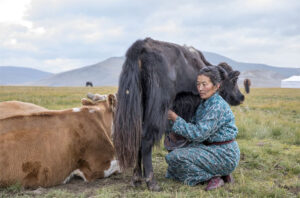
Woman milks a cow in northern Mongolia. Credit by Katiekk, Shutterstock

By Solange Bandiaky-Badji
WASHINGTON DC, Aug 6 2026 – This is supposed to be the year the world finally sees and recognizes pastoralists. The United Nations has designated 2026 as the International Year of Rangelands and Pastoralists, bringing long-overdue attention to communities who have sustained some of the world’s most fragile and important landscapes for generations.

Yet right now, the world is on fire… quite literally. All eyes are on the wildfires in France, Spain, and Canada. California is coming up on wildfire season. And scientists are predicting the strongest El Niño in history.

As climate-fueled disasters become more frequent and severe, now is an important moment to learn from pastoralists, whose traditional knowledge, adaptive land management practices, and deep understanding of living with climate variability have helped sustain people and landscapes through centuries of environmental change.

In August, governments will gather in Mongolia for COP17 of the United Nations Convention to Combat Desertification (UNCCD COP17), where rangelands, land degradation and climate resilience will be central to the global agenda.

This will be the first UNCCD COP since the e.stablishment of the Caucus of Indigenous Peoples and the Caucus of Local Communities—hard-won victories at COP16—with “Land and People Day and tenure rights included formally on the COP17 agenda.

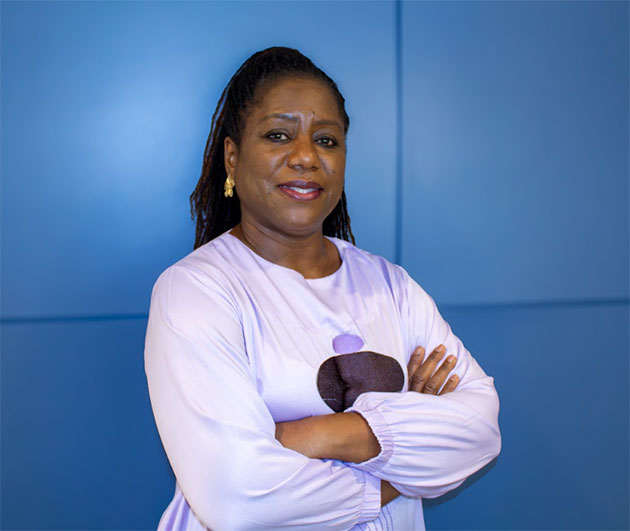
Dr. Solange Bandiaky-Badji is Coordinator and President of the Rights and Resources Initiative (RRI)

Yet the scale of what is at stake is enormous. Rangelands cover more of the Earth’s surface than any other land use type, and up to 500 million people directly rely on pastoralism for their livelihoods. These lands are central to food security, biodiversity, climate resilience, and the survival of communities across Africa, Asia, Latin America and beyond. Yet pastoralists remain among the least protected and understood land stewards in the world.

This year of recognition must become more than a symbolic milestone. Unless governments and institutions use this moment to move from visibility to rights, pastoralists will continue to be praised in speeches while being pushed further to the margins in law, policy and investment.

Resilience Is Not Invulnerability

Pastoralists are incredibly resilient. Across drylands, savannahs, mountains and rangelands, they have adapted to shifting seasons, scarce water, and fragile ecosystems through sophisticated systems of mobility, customary governance, and ecological knowledge. Their way of life is one of the world’s most climate-adapted livelihood systems. But resilience should not be confused with invulnerability.

At a New York Climate Week event last year focused on Indigenous pastoralist knowledge and nature-based solutions, pastoralist leaders described the reality their communities face every day. One speaker from the Sahel spoke of droughts, severe flooding and wildfires that continue to destroy livelihoods and cost lives. She recalled stories from her grandmother about struggling to find even a grain to eat in order to survive and warned that extreme weather is threatening their lives.

While Climate change is intensifying the pressures on lands and livelihoods that were already under strain, it is only part of the story. Pastoralists are also being squeezed by policies and development models that misunderstand and overlook how their systems work and focus on a narrative that pastoralists are a threat to ecosystems. Their livelihoods depend on mobility, but many legal frameworks are built around fixed land ownership and permanent settlement. Their governance systems are collective and customary, but many governments recognize only formal administrative structures. Their territories include grazing corridors, water points and seasonal routes, but these are rarely treated as essential infrastructure. Even where policies exist focusing on pastoralism, they often do so from restrictive approaches that only center pastoralists as part of a chain of production or tourism exploitation.

The Gap Between Recognition and Rights

A recent analysis by the Rights and Resources Initiative across Kenya, Niger, Tanzania, Mongolia, Nepal, Bolivia and Peru found a persistent gap between recognition on paper and protection in practice. While governments may acknowledge pastoralist land access in some form, mobility—the foundation of pastoralist livelihoods—is rarely protected in law. Among the countries studied, Niger stands out as the lone exception explicitly recognizing mobility as a fundamental right. The legal gap among the rest of the countries has real consequences.

Across regions, rangelands are being fragmented by agricultural expansion, infrastructure projects, extractive industries, conservation restrictions, carbon initiatives and green energy projects. These pressures are often presented as development or climate solutions. But when they are imposed without pastoralists’ full participation and consent, they deepen inequality, fuel conflict and weaken the very systems that have protected rangelands for generations.

Invisible in Data, Invisible in Policy

That exclusion is also statistical. Pastoralists are too often missing from the data systems that shape national priorities, development financing and climate policy. When governments do not accurately count pastoralist communities, map their mobility routes, measure their economic contributions, or document the pressures they face, their needs and contributions remain invisible. When communities are invisible in the data, they are often invisible in budgets, laws and global commitments.

This is especially alarming given the scale of pastoralists’ contributions. In Africa, pastoralists produce much of the continent’s milk and a significant share of its meat. They sustain local markets, support rural economies, manage vast rangelands and carry knowledge that is essential to climate resilience and biodiversity protection. Yet their contributions are rarely matched by legal protection, public investment or meaningful political representation.

Women face even greater barriers. Pastoralist women are central to livestock economies, food systems, households and community resilience. But they are often excluded from land ownership, mobility rights, leadership and formal decision-making. Any serious effort to strengthen pastoralist systems must address women’s rights directly, not as an afterthought.

Tenure Redefined

At COP17, land tenure returns to the agenda as a standing policy item, carried forward from previous sessions alongside rangelands and pastoralists. That is progress. But tenure conceived as titles, boundaries and fixed parcels cannot secure people whose security depends on movement. The United Nations Declaration on the Rights of Peasants (UNDROP) already names transhumant, nomadic and semi-nomadic communities as rights holders and requires states to protect their land rights, an obligation that cannot be met by extending sedentary tenure models to mobile peoples. Pastoralist tenure must be redefined: adaptive, embedding mobility, recognizing shared use, seasonal occupation and overlapping claims and anchored in customary governance. For pastoralists, secure tenure is flexible tenure.

The Solutions Are Clear

The good news is that pastoralists are not waiting for the world to act on their behalf. They are organizing. There is a growing movement across Africa, Asia and Latin America. They may be communities separated by continents and colonial borders, but they are connected by shared histories, livelihoods and struggles.

First, governments must recognize pastoral mobility as a legal right. Movement is not a weakness of pastoralist systems; it is what allows communities to manage climate variability, protect ecosystems and sustain livestock in changing conditions.

Second, states must protect the physical infrastructure of pastoralism, including grazing corridors, water points, dry season reserves and seasonal migration routes. These are as essential to pastoral economies as roads and ports are to national economies.

Third, customary governance systems must be legally recognized and supported. Pastoralist communities have long managed land, water and conflict through local institutions that are adapted to their realities. Replacing these systems with rigid, top-down frameworks weaken both rights and resilience.

Fourth, pastoralist women must have equal rights to land, mobility, resources and leadership. Climate resilience cannot be built while half the community is excluded from decisions that affect them and shape our collective future.

Finally, climate finance, conservation funding and development investments must reach pastoralist communities directly and respect their rights. Projects that restrict access to land without consent or compensation undermine both livelihoods and global environmental goals.

COP17 in Mongolia is an opportunity to turn this year of recognition into a year of action. Governments should arrive prepared not only to discuss rangelands, but to listen to the people who know them best. Pastoralists must be at the table as rightsholders, experts and partners.

The world cannot meet its goals on climate resilience, food security, biodiversity or land restoration while ignoring the communities already holding these systems together.

This is the year of pastoralists. Now it must become the year the world finally recognizes their rights.

Dr. Solange Bandiaky-Badji, is President and Coordinator, Rights and Resources Initiative

IPS UN Bureau


!function(d,s,id){var js,fjs=d.getElementsByTagName(s)[0],p=/^http:/.test(d.location)?’http’:’https’;if(!d.getElementById(id)){js=d.createElement(s);js.id=id;js.src=p+’://platform.twitter.com/widgets.js’;fjs.parentNode.insertBefore(js,fjs);}}(document, ‘script’, ‘twitter-wjs’);  


Rohingya Refugees Seeking Safe Haven in Bangladesh Hit by Fresh Disasters

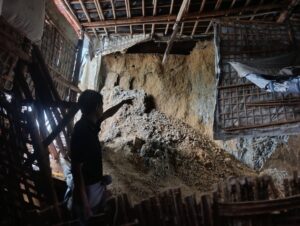
A Rohingya refugee points to the landslide that killed two of Abdu Rozork’s daughters and two of their children in their bamboo shelter in a refugee camp in Cox’s Bazar, Bangladesh, last month. Credit: Mohammed Zonaid/IPS

A Rohingya refugee points to the landslide that killed two of Abdu Rozork’s daughters and two of their children in their bamboo shelter in a refugee camp in Cox’s Bazar, Bangladesh, last month.
Credit: Mohammed Zonaid/IPS

By Mohammed Zonaid
COX’S BAZAR, Bangladesh, Aug 6 2026 – Abdu Rozork awoke suddenly to the sound of children screaming. Heavy monsoon rains had sent a landslide barrelling into the section of their bamboo shelter where the women and children were sleeping.

Neighbours rushed to help dig through the mud with their bare hands, but it was too late. Two of Rozork’s daughters and two grandchildren were killed.

Having fled war in Myanmar only two years earlier, Rozork had believed his family would finally find safety among the over one million Rohingya refugees living in densely packed camps in Cox’s Bazar, southeast Bangladesh.

“I escaped conflict in Rakhine State to save my family,” he told IPS. “But I could not save them here.”

Early waves of Muslim minority Rohingya fleeing violence and persecution in Myanmar were housed in the first large-scale camps set up in Cox’s Bazar in the early 1990s. In 2017 a devastating crackdown by the Myanmar military against the Rohingya community and militants in Rakhine State forced another mass exodus, this time of over 700,000 refugees, creating the world’s largest refugee settlement.

Since 2024 and the disintegration of Myanmar amidst civil war, these overcrowded camps have been joined by further waves of civilians fleeing a complex conflict between the junta and the Arakan Army (AA), an ethno-nationalist insurgent group that has seized control over much of Rakhine State, as well as the involvement of Rohingya militants. According to data released by UNHCR, by June those new arrivals in Cox’s Bazar numbered 153,640.

But no new land has been allocated to this recent wave of refugees for building shelters. Many families now have to share with relatives or build makeshift homes on steep hillsides vulnerable to landslides and flooding. Cutbacks in international funding have also led to cuts in classes for children and reduced food rations.

Days of heavy rain since early July triggered landslides and flooding in several of the camps, killing at least 17 people and displacing more than 3,000, according to Human Rights Watch.

Rozork said he had repeatedly asked humanitarian agencies for help with tarpaulins and to make a retaining wall. His bamboo shelter stood at the foot of a hill, and rainwater was coming in.

But organisations responsible for site management told him assistance was unavailable because his family had only recently arrived in Bangladesh. “No one warned us that the shelter was in a dangerous place,” he said. Days later the mud swept down.

His family’s tragedy is one of many among the newest Rohingya arrivals who escaped one crisis only to enter another.

Mohammed Kayes, now 13, was attending school in Buthidaung Township in northern Rakhine when fighting intensified between the Myanmar military and the AA, spreading towards his village. Schools closed, food became scarce, and medical services disappeared.

His family fled through forests and villages for seven days before reaching the Bangladesh border. During the journey, Kayes said Arakan Army members detained his family. After several days, they released them but later took his father away for what they described as questioning. He never returned.

After finally reaching Bangladesh, tragedy struck again. His mother, suffering from a stomach tumour, died after months of illness despite efforts to obtain treatment.

Kayes now helps care for his younger siblings while living with his grandmother. He receives food rations, but with the loss of his mother, they do not qualify for gas cylinders to cook.

His dream is to become a teacher. “I want to study,” he told IPS. “I want to build my future.”

Sawfowan’s dream is to work for the United Nations, but conflict also engulfed his village in Buthidaung, closing schools. “We heard gunfire almost every day,” the 17-year-old said. The men in the family had to flee over a year ago to avoid forced conscription by the AA.

His family struggled to obtain medicine for his diabetic mother, so in May they also decided to flee. According to Sawfowan, Bangladesh border authorities twice pushed the family back across the frontier, but they managed to enter on a third attempt and reunite with relatives inside the camps. Several families now share a single bamboo and tarpaulin shelter.

“I feel safer here,” he said. “But life is still very difficult.”

Community leaders say such experiences are increasingly common among the newest arrivals.

Mohammed Musa, a Rohingya youth leader, said families consistently report forced displacement, disappearances, movement restrictions and food shortages in Rakhine.

“Many arrive carrying deep trauma after losing relatives or surviving repeated displacement inside Myanmar,” he said. “But once they reach Bangladesh, they face another struggle.”

UNHCR says newly arrived refugees receive food assistance, cooking gas, core relief items and protection services under existing government approvals. However, the agency acknowledges that the absence of new land and severe funding shortages have limited humanitarian efforts to relocate families to safer areas or improve shelter conditions.

“The recent loss of lives due to the heavy monsoon rains is a tragic reminder of how vulnerable the camps remain,” Shari Nijman, UNHCR Bangladesh Communications Officer, said.

As conflict continues in Myanmar, Bangladeshi authorities say Rohingya are crossing the border every week despite tighter controls.

The Arakan Army now controls most of Rakhine State but the capital, Sittwe, and has driven Rohingya from their homes. Survivors and rights groups have documented allegations of forced recruitment and mass killings of Rohingya in the village of Hoyyar Siri by the Arakan Army in May 2024, as well as drone attacks on people gathering on the border, burning of villages, arbitrary arrests, and other abuses. The AA denies it carried out the Hoyyar Siri massacre.

Myanmar military airstrikes also continue to displace civilians across the state.

Rohingya fleeing the violence have also been pushed back at the Bangladesh border, while hundreds have died attempting dangerous sea crossings and falling victim to traffickers.

As in many conflicts worldwide, Bangladesh and the international community are faced with a complex crisis where divisions between refugees and combatants become blurred.

Despite the risks, the exodus has not stopped. “Our reports suggest that every week 50 to 60 new Rohingya are entering Bangladesh,” Refugee Relief and Repatriation Commissioner Mizanur Rahman told The Daily Star in July.

IPS UN Bureau Report


!function(d,s,id){var js,fjs=d.getElementsByTagName(s)[0],p=/^http:/.test(d.location)?’http’:’https’;if(!d.getElementById(id)){js=d.createElement(s);js.id=id;js.src=p+’://platform.twitter.com/widgets.js’;fjs.parentNode.insertBefore(js,fjs);}}(document, ‘script’, ‘twitter-wjs’);