OpenFX Adquire Global Ledger para Lançar Contas Multimoedas para Fintechs

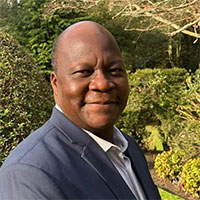
MIAMI, Aug. 07, 2026 (GLOBE NEWSWIRE) — OpenFX, a plataforma de movimento de dinheiro transfronteiriço em tempo real, anunciou hoje que adquiriu a Global Ledger, fundada por Tyler McIntyre. McIntyre criou e cofundou a Novo, um neobanco que atende a mais de 300.000 negócios avaliados em mais de US$ 700 milhões. McIntyre passa ser Dirigente do Setor Bancário para acelerar a expansão dos produtos da OpenFX e lançar contas em multimoedas, com uma lista de espera disponível hoje.

Essas contas viabilizarão que os clientes de uma empresa efetuem pagamentos localmente na sua própria moeda e que mantenha os valores recebidos, em vez de convertê-los no momento do recebimento. A OpenFX está sendo lançada com contas nominais em USD que realizam envios e recebimentos via ACH, Fedwire e SWIFT, possibilitando pagamentos de e para mais de 100 países, com outros a serem adicionados posteriormente. As infraestruturas de cada lado não precisam ser as mesmas: uma empresa pode deter dólares e pagar um fornecedor na Índia via UPI, ou fornecer um vIBAN a uma contraparte e receber USDC na sua carteira quase instantaneamente.

As contas multimoedas são o segundo pilar da estratégia de câmbio incorporado da empresa, desenvolvida para oferecer soluções de pagamento integrais, confiáveis e orientadas por API para gerentes de produtos de tesouraria. Por operarem em conjunto com a solução de liquidez internacional da OpenFX, os clientes poderão realizar a conversão de moeda e manter os recursos convertidos imediatamente, sem a necessidade de transferir ativos para um banco externo ou realizar conciliações com base em extratos de terceiros.

Como Dirigente do Setor Bancário, McIntyre irá liderar o produto de contas, a expansão da presença de licenciamento da OpenFX nos mercados em que seus clientes operam e o trabalho de aprimorar suas APIs de classe mundial para garantir que todas as contas sejam totalmente programáveis desde o lançamento. O objetivo é que os clientes logo possam oferecer essas contas aos seus próprios clientes.

As Fintechs que operam internacionalmente geralmente precisam de um relacionamento bancário separado em todos os mercados atendidos, e as empresas que lidam com ativos digitais enfrentam dificuldades constantes para obter e manter essas contas. Os fechamentos geralmente vêm sem motivo declarado e com apenas algumas semanas de antecedência. Em uma pesquisa com empresas de criptoativos e Web3 publicada pelo UK Cryptoasset Business Council, pela Startup Coalition e pela Global Digital Finance, metade dos entrevistados foi rejeitada ao tentar abrir uma conta ou teve sua conta encerrada em um grande banco, e apenas 14% conseguiram abrir e manter uma conta ativa. Três quartos relataram recorrer a instituições consideradas mais arriscadas.

“As instituições financeiras tradicionais frequentemente consideram as empresas de pagamento mais arriscadas do que realmente são por não entenderem realmente a estrutura dos seus negócios; por isso, decidem encerrar o relacionamento bancário com elas”, disse Prabhakar Reddy, fundador e CEO da OpenFX. “Nós movimentamos bilhões de dólares para essas empresas todos os dias. Conhecemos bem esses fluxos, e é por isso que podemos fornecer um serviço mais confiável. Tyler passou uma década criando contas que as empresas querem usar, podendo observar antes de quase qualquer um o que a modernização das infraestruturas significa para os bancos. Compartilhamos o mesmo objetivo, ninguém deve ter que pensar em como um banco funciona, ele deve simplesmente funcionar.”

“As stablecoins são a primeira infraestrutura de pagamento que funciona instantaneamente em todos os lugares e nunca fecha. A coisa óbvia a ser desenvolvida em uma infraestrutura como essa é uma conta”, disse Tyler McIntyre, Dirigente do Setor de Bancos da OpenFX. “Criei a Global Ledger para que uma empresa pudesse guardar, enviar e receber dinheiro em qualquer mercado como se operasse localmente. A OpenFX já havia desenvolvido a rede de liquidação e o produto de liquidez dos quais essas contas dependiam; trabalhar em conjunto foi uma decisão óbvia.”

Os termos aquisição não foram divulgados.

A lista de espera está aberta em [openfx.com/accounts]. As primeiras 100 empresas a aderir receberão US$ 30.000 em créditos de taxas para compensar o custo da migração.

A plataforma da OpenFX liquida transações em mais de 40 pares de moedas, com a maioria sendo concluída em menos de uma hora, operando ininterruptamente, inclusive nos fins de semana e feriados, quando os sistemas tradicionais de liquidação estão fechados.

Sobre a OpenFX

A OpenFX está criando a infraestrutura do mercado financeiro para a economia moderna com a sua plataforma de movimentação transfronteiriça de recursos em tempo real e com a sua rede de liquidação. Ao combinar a infraestrutura de stablecoins com modelos inovadores de obtenção de liquidez da última milha, a OpenFX viabiliza liquidações cambiais transfronteiriças quase instantâneas, tornando as transferências de recursos 99% mais rápidas, até 90% mais baratas e disponíveis 24 horas, durante todo o ano. Fundada em 2024 pelo empreendedor em série Prabhakar Reddy, ex-cofundador da FalconX, a empresa cresceu e conta hoje com uma equipe global que atua nos EUA, no Reino Unido, nos Emirados Árabes Unidos e na Índia. A plataforma da OpenFX dá suporte a mais de 40 pares de negociação, atendendo empresas de fintech consolidadas, neobancos, provedores de serviços de remessa e plataformas globais de folha de pagamento. Saiba mais em www.openfx.com.

Kit de Imprensa: https://brandfetch.com/openfx.com

Foto deste comunicado disponível em http://www.globenewswire.com/NewsRoom/AttachmentNg/9068cb3c-eef6-4007-80c6-b8c01b220851


GLOBENEWSWIRE (Distribution ID 1001256559)

OpenFX acquiert Global Ledger afin de lancer des comptes multidevises destinés aux fintechs

MIAMI, 07 août 2026 (GLOBE NEWSWIRE) — OpenFX, la plateforme de transfert de fonds transfrontalier en temps réel, a annoncé aujourd’hui l’acquisition de Global Ledger, société fondée par Tyler McIntyre. Tyler McIntyre a précédemment créé et cofondé Novo, une néobanque au service de plus de 300 000 entreprises et dont la dernière valorisation dépassait les 700 millions de dollars. Il rejoint OpenFX en tant que responsable des services bancaires afin d’accélérer le développement de l’offre de produits de l’entreprise et de lancer des comptes multidevises, dont la liste d’attente est disponible dès aujourd’hui.

Ces comptes permettront aux clients d’une entreprise de la payer localement dans leur propre devise, tout en permettant à l’entreprise de conserver les fonds reçus dans cette devise au lieu de les convertir dès leur réception. OpenFX lance des comptes libellés en USD qui permettent d’effectuer et de recevoir des virements via les réseaux ACH, Fedwire et SWIFT, ainsi que des paiements vers et depuis plus de 100 pays, avec d’autres destinations à venir. Les différents canaux de paiement peuvent fonctionner indépendamment les uns des autres : une entreprise peut ainsi détenir des dollars et payer un fournisseur en Inde via UPI, ou communiquer un vIBAN à une contrepartie et recevoir des USDC dans son portefeuille quasi instantanément.

Les comptes multidevises constituent le second pilier de la stratégie Embedded FX de l’entreprise, conçue pour offrir aux responsables de produits de trésorerie des solutions de paiement intégrées de bout en bout, fiables et pilotées par API. Grâce à leur intégration aux solutions de liquidité de premier plan d’OpenFX, les clients pourront effectuer des opérations de change et conserver immédiatement les fonds convertis, sans avoir à transférer des actifs vers une banque externe ni à effectuer des rapprochements avec des relevés fournis par un tiers.

En tant que responsable des services bancaires, McIntyre dirigera l’offre de comptes, l’expansion du périmètre des licences d’OpenFX sur les marchés où ses clients exercent leurs activités, ainsi que l’optimisation des API de pointe de l’entreprise afin de garantir que chaque compte soit entièrement programmable dès son lancement. L’objectif est de permettre prochainement aux clients d’OpenFX de proposer eux-mêmes ces comptes à leurs propres utilisateurs.

Les fintechs opérant à l’international ont généralement besoin d’une relation bancaire distincte sur chaque marché qu’elles desservent, tandis que les entreprises actives dans les actifs numériques peinent constamment à obtenir et à conserver ces comptes. La fermeture de ces comptes intervient souvent sans motif explicite et avec un préavis de quelques semaines seulement. Selon une enquête menée auprès d’entreprises du secteur des cryptomonnaies et du Web3 par le UK Cryptoasset Business Council, la Startup Coalition et Global Digital Finance, la moitié des répondants s’étaient vu refuser l’ouverture d’un compte auprès d’une grande banque ou avaient subi la fermeture d’un compte existant, tandis que seuls 14 % étaient parvenus à ouvrir un compte qu’ils avaient pu conserver par la suite. Les trois quarts des répondants ont indiqué s’être tournés vers des établissements qu’ils jugeaient plus risqués.

« Les établissements financiers traditionnels perçoivent souvent les sociétés de paiement comme plus risquées qu’elles ne le sont réellement, car ils ne comprennent pas pleinement la structure de leur activité ; leur solution de facilité consiste donc à rompre leurs relations bancaires avec elles », a déclaré Prabhakar Reddy, fondateur et PDG d’OpenFX. « Nous transférons déjà quotidiennement des milliards de dollars pour le compte de ces entreprises. Nous connaissons parfaitement ces flux, ce qui nous permet de leur offrir un service plus fiable. Tyler a passé dix ans à concevoir des comptes que les entreprises souhaitent utiliser ; il a été l’un des premiers à comprendre ce que la modernisation des infrastructures de paiement pouvait apporter au secteur bancaire. Nous partageons le même objectif : personne ne devrait avoir à se soucier du fonctionnement de sa banque ; le service doit tout simplement fonctionner. »

« Les stablecoins constituent le premier réseau de paiement qui fonctionne instantanément partout et qui ne ferme jamais. Il est donc tout naturel de bâtir un système de comptes sur une telle infrastructure », a déclaré Tyler McIntyre, responsable des services bancaires chez OpenFX. « J’ai fondé Global Ledger afin de permettre à une entreprise de détenir, d’envoyer et de recevoir des fonds sur n’importe quel marché, comme si elle y disposait d’un compte bancaire. Dans la mesure où OpenFX avait déjà mis en place le réseau de règlement et le produit de liquidité dont ces comptes avaient besoin pour fonctionner, cette collaboration s’imposait comme une évidence. »

Les modalités de l’acquisition n’ont pas été communiquées.

La liste d’attente est ouverte à l’adresse suivante : [openfx.com/accounts]. Les 100 premières entreprises à rejoindre le service bénéficieront de 30 000 $ de crédits sur les frais pour compenser les coûts de migration.

La plateforme d’OpenFX assure le règlement des transactions sur plus de 40 paires de devises, dont la majeure partie est finalisée en moins d’une heure, et fonctionne en continu, y compris les week-ends et les jours fériés, périodes durant lesquelles les systèmes de règlement traditionnels sont fermés.

À propos d’OpenFX

Grâce à sa plateforme de transfert de fonds transfrontalier en temps réel et à son réseau de règlement, OpenFX bâtit l’infrastructure des marchés financiers adaptée à l’économie moderne. En combinant les infrastructures de paiement fondées sur les stablecoins avec des modèles innovants d’approvisionnement en liquidité pour le « dernier kilomètre », OpenFX permet d’obtenir des règlements de change transfrontaliers quasi instantanés, rendant ainsi les transferts de fonds 99 % plus rapides, jusqu’à 90 % moins onéreux et disponibles 24 heures sur 24, 7 jours sur 7 et 365 jours par an. Fondée en 2024 par l’entrepreneur en série Prabhakar Reddy, ancien cofondateur de FalconX, l’entreprise s’est développée pour devenir une équipe internationale opérant aux États-Unis, au Royaume-Uni, aux Émirats arabes unis et en Inde. La plateforme d’OpenFX prend en charge plus de 40 paires de devises et dessert des sociétés fintech établies, des néobanques, des prestataires de services de transfert de fonds ainsi que des plateformes mondiales de gestion de la paie. Pour en savoir plus, consultez le site www.openfx.com.

Dossier de presse : https://brandfetch.com/openfx.com

Une photo annexée au présent communiqué est disponible à l’adresse suivante : http://www.globenewswire.com/NewsRoom/AttachmentNg/9068cb3c-eef6-4007-80c6-b8c01b220851


GLOBENEWSWIRE (Distribution ID 1001256559)

Dmitry Shubov Consulting Advisory: Extended U.S. Enterprise Sales Cycles Can Put Southeast Asian Startups Under Liquidity Pressure

CEBU CITY, Philippines, Aug. 07, 2026 (GLOBE NEWSWIRE) — Dmitry Shubov Consulting today issued an advisory for Southeast Asian startups expanding into the U.S. enterprise market, warning that sales cycles often take longer than founders budget for and can strain cash flow before revenue starts coming in. The advisory points to Forrester’s The State Of Business Buying, 2026 report, which shows just how many people can get involved in a single B2B purchase. On average, 13 people inside the company and nine outside participants help shape the decision. Procurement is also showing up earlier in the process, with teams acting as decision-makers in 53% of buying cycles.

That matters because enterprise buyers are increasingly cautious. More than 60% now require some form of trial or pilot before moving forward with a purchase. For startups entering North America, that can mean a strong first reaction from the buyer — followed by a long stretch of legal review, security checks, procurement approvals, and executive sign-off.

“A lot of founders get excited when a U.S. buyer says yes to a meeting,” said Dmitry Shubov, Founder of Dmitry Shubov Consulting. “But that’s usually just the beginning. After that, there are security reviews, legal questions, procurement, and a lot of waiting. If you’re not planning for that, it can get stressful pretty quickly.”

To help founders prepare, Dmitry Shubov Consulting recommends three practical steps for scaling into North America:

  • Share compliance materials early. SOC 2 reports, privacy documentation, and security frameworks should be ready at the beginning of the sales process.
  • Set firm pilot deadlines. Trials should have clear success criteria and decision dates so they don’t turn into open-ended evaluations.
  • Plan for longer sales cycles. Financial forecasts should account for real procurement timelines rather than best-case close dates.

For international startups, the takeaway is simple: enterprise interest is not the same as enterprise revenue. Planning for the delay can help protect capital during expansion. Planning like this can take place with a consulting firm, which can walk you through the process and establish a roadmap. For more information about expanding into the U.S. market, reach out to Dmitry Shubov Consulting.

About Dmitry Shubov Consulting

At Dmitry Shubov Consulting, our mission is to connect accredited investors with groundbreaking legal technology startups, fostering innovation and growth across Southeast Asia and helping Asian businesses enter the U.S. market. For more information, please visit our website or contact us directly.

Media Contact:

[email protected]


GLOBENEWSWIRE (Distribution ID 9805687)

Changan Automobile Showcases New Energy Lineup at FILDA 2026, Deepening Strategic Layout in Africa

LUANDA, Angola, Aug. 07, 2026 (GLOBE NEWSWIRE) — From July 21 to 26, the 41st Luanda International Fair (FILDA 2026) was successfully held in Luanda, the capital of Angola. Far more than an auto show, FILDA, the nation's largest and most important international business event, offered Changan Automobile an important platform to reaffirm its enduring commitment to the Angolan market. Together with local dealers and partners, the company presented its latest product line-up on a significantly larger exhibition area than in previous participations, outlining a comprehensive blueprint for its globalization strategy in Angola and the broader African markets.

At the stand, Changan showcased a line-up of star models that drew sustained attention: the DEEPAL S05, DEEPAL G318, CHANGAN CS75 PLUS, and the New CHANGAN UNI-S. These vehicles embodied Changan’s brand positioning of intelligence, dynamism and advanced technology, sparking great interest among visitors and potential partners eager to experience the brand’s cutting-edge vehicles and technologies in person.

Changan’s presence at FILDA 2026 underscores the acceleration of its global strategy. Since launching the Vast Ocean Plan in 2023, the company has embraced the principles of long-term development, localization and systematization, transitioning from product exports to comprehensive industrial globalization, strengthening cooperation with upstream and downstream partners across the global supply chain. Today, Changan operates across 118 countries and regions, supported by a global network of 22 manufacturing bases and a worldwide sales and service footprint, along with a 24,000-strong R&D team spanning six countries and ten locations in a 24/7 collaborative workflow to deliver competitive, locally adapted products.

Within this framework, the Middle East and Africa region stands as one of Changan's five core regional pillars, alongside Europe, Eurasia, Southeast Asia and Latin America. Across Africa, Changan is building a complete ecosystem covering sales, service, after-sales and parts support, guided by a clear principle of “no sales without spare parts, no long-term growth without reliable customer service.”

CHANGAN aims to accompany Africa’s modernization journey, creating value for customers, opportunities for partners, and momentum for the region’s economic diversification. This approach embodies the company’s mission: to “lead sustainable mobility and benefit human life.”

Contact information:
Chongqing Changan Automobile Co., Ltd.
E-mail: [email protected]

Photos accompanying this announcement are available at:

https://www.globenewswire.com/NewsRoom/AttachmentNg/8fb5c783-a904-4e39-882b-f7b21084420d

https://www.globenewswire.com/NewsRoom/AttachmentNg/59389559-ad8a-4caf-bcf6-6f92799a04d6

https://www.globenewswire.com/NewsRoom/AttachmentNg/b3c41902-4398-431e-a23c-bf1c9ab82705


GLOBENEWSWIRE (Distribution ID 9805892)

Hiroshima’s Question: Will We Continue to Live Under the Nuclear Shadow?

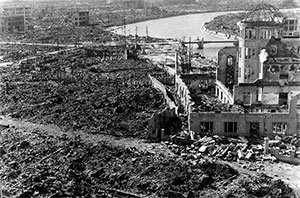
Young people facing Hiroshima’s Atomic Bomb Dome as storm clouds give way to morning light—a metaphor for humanity’s choice between living under the nuclear shadow and building a world without nuclear weapons. Credit: INPS Japan

By Katsuhiro Asagiri
HIROSHIMA, Japan, Aug 7 2026 – This year’s Hiroshima Peace Declaration did not begin with words of remembrance alone. It opened instead with what the declaration called “military invasions using nuclear weapons as tools of intimidation,” “imperious actions by major powers in violation of international law,” and the failure of the Nuclear Non-Proliferation Treaty, or NPT, Review Conference — for the third consecutive time — to adopt a final document.

The order was deliberate. The catastrophe of 81 years ago is not a memory sealed off in the past. It is directly connected to a present in which nuclear weapons are once again invoked as a means of projecting state power and coercing adversaries.

Hiroshima’s mayor, Kazumi Matsui, described a world in which distrust breeds retaliation, and retaliation is used to justify further violence. Such cycles, he warned, could ultimately result in “another Hiroshima or Nagasaki.”

At the same ceremony, Izumi Nakamitsu, the U.N. under-secretary-general and high representative for disarmament affairs, delivered a message from Secretary-General António Guterres that distilled the warning into a single question: What has humanity learned from Hiroshima? Will it choose a peaceful future, or continue to live under the shadow of nuclear annihilation?

This was not a rhetorical flourish reserved for a commemorative ceremony. What followed was an account of a world in which decades of nuclear arms reductions are being reversed, the norm against nuclear testing is under strain, military spending is surging and nuclear threats are increasingly used as instruments of intimidation.

One message spoke through the memories of survivors; the other through the crisis confronting the international system. But both arrived at the same place. Will the world continue to call an order sustained by fear “security”? Or will it restore dialogue, diplomacy, international law and trust — all of them slow and difficult — to the center of security policy?

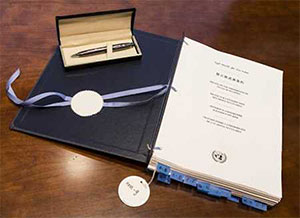
The remains of the Prefectural Industry Promotion Building, after the dropping of the atomic bomb, in Hiroshima, Japan. This site was later preserved as a monument. Credit: UN Photo/DB

From Personal Memory to a World in Crisis

At the heart of the Peace Declaration was not nuclear strategy, but human experience.

It recalled a woman who could never forget her sister, whose skin had peeled away and whose face had been horribly disfigured by the bombing. It spoke of another woman who was exposed to the bomb at the age of 3, suffered repeated illnesses and lived in fear of what disease might strike next.

And there was a man who survived the bombing at 9. Watching civilians die in Russia’s invasion of Ukraine, he told young people that building a world without conflict must begin with overcoming the impulse toward conflict within themselves and making an effort to understand the perspectives of others.

Credit: UN photo

Such testimony is a reminder that the damage caused by nuclear weapons does not end with the blast. Radiation-related illness, the loss of family, discrimination and anxiety about the future can shape a life for decades. When strategists calculate the value of possessing nuclear weapons, it is this long span of human time that most easily disappears from view.

Mr. Guterres’s message noted that as the number of hibakusha, the atomic bomb survivors, declines, the importance of their words only grows. Their testimony is more than a record of tragedy. It is evidence that brings the abstract concept of nuclear deterrence back to the reality of human bodies and human lives.

Mr. Matsui called on citizens and young people to build connections across national borders with those who hold different values. Mr. Guterres urged governments to choose dialogue over division and cooperation over confrontation. The proposals may appear to operate on different scales, but they share a premise: Distrust among nations deepens when societies lose the capacity to understand those they see as different.

The Nuclear “Bargain” Nations Can No Longer Agree On

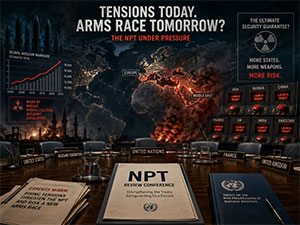
To understand the present crisis, it is necessary to examine the bargain on which the NPT rests.

Non-nuclear-weapon states agree not to acquire nuclear arms. Nuclear-weapon states undertake to pursue nuclear disarmament in good faith. And all parties retain the right to the peaceful use of nuclear energy under international safeguards. The treaty bound these three commitments together as a single grand bargain.

The framework was never complete. India, Pakistan and Israel remain outside the treaty, while North Korea has declared its withdrawal. Nor have the nuclear-weapon states recognized by the treaty fully honored their longstanding commitment to disarm.

NPT under pressure. Credit: INPS Japan

At the 2026 Review Conference, that imbalance collided with intensifying geopolitical conflict.

One dispute over the final document concerned language stating that Iran must not seek nuclear weapons. The United States and others pressed for stronger wording on Iran’s uranium enrichment and its cooperation with the International Atomic Energy Agency, or IAEA. Iran objected to being singled out and argued that attacks by the United States and Israel on its nuclear facilities had themselves damaged international law and the nonproliferation regime.

But Iran was not the sole cause of the breakdown. It was where a deeper fracture came to the surface.

In the war in Ukraine, the safety of nuclear-related sites, including the Zaporizhzhia Nuclear Power Plant, has repeatedly been placed at risk. In the Middle East, a zone free of nuclear weapons and other weapons of mass destruction, first promised in 1995, has still not been established. And under AUKUS, the security partnership among Australia, Britain and the United States, the planned transfer of nuclear-powered submarine technology to a non-nuclear-weapon state has raised questions about safeguards and the precedent it may set.

Meanwhile, China is expanding its nuclear forces, arms control between the United States and Russia is receding, and all nine nuclear-armed states are modernizing their arsenals. If nuclear powers and their allies place ever greater importance on deterrence while demanding restraint only from non-nuclear states, suspicion will inevitably grow that the treaty is less a mechanism for preventing proliferation than a system for preserving the privileges of those that already possess the bomb.

The NPT Review Conference has now failed to agree on a final document three times in succession — in 2015, 2022 and 2026. The last consensus was reached in 2010.

The treaty will not disappear tomorrow, and there is no alternative framework with anything close to its near-universal membership. But institutions do not always collapse overnight. Each time promises are deferred, criticism of violations is applied selectively and a conference ends without agreement, a little more faith is lost in the proposition that states are safer when they abide by the system.

As Ms. Nakamitsu observed after the Review Conference, nonproliferation and disarmament are two sides of the same coin. Nuclear-weapon states cannot indefinitely demand that others forgo nuclear arms while failing to meet their own obligations under Article VI of the NPT. The problem is not the wording of the treaty. It is whether governments still believe in the bargain it represents.

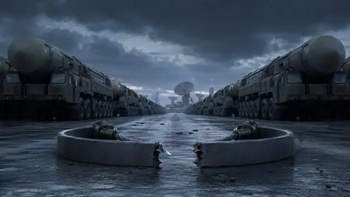
An AI-generated conceptual illustration shows opposing rows of strategic missile launchers beyond a broken restraint, symbolizing the collapse of binding arms-control limits and a renewed nuclear arms race in which each side’s pursuit of security increases the danger for all. Credit: Katsuhiro Asagiri

When Disarmament Goes Into Reverse

The signs of eroding trust extend far beyond the conference room.

The New Strategic Arms Reduction Treaty, or New START, which imposed verifiable limits on the strategic nuclear forces of the United States and Russia, expired on Feb. 5, 2026. For the first time in more than half a century, the strategic arsenals of the two countries that possess most of the world’s nuclear weapons are no longer subject to legally binding limits.

The norm against nuclear testing is also under pressure. In 2025, the U.S. president spoke of resuming “testing,” without making clear whether he meant nuclear explosive tests or missile trials. Against that backdrop, the United States became the only country to vote against a draft resolution in the U.N. General Assembly’s First Committee calling for the entry into force of the Comprehensive Nuclear-Test-Ban Treaty, or CTBT. Even if no explosive test takes place, ambiguity from a major power about its support for a longstanding norm can give other countries a pretext to weaken it in turn.

Military spending is climbing as well. According to the Stockholm International Peace Research Institute, or SIPRI, global military expenditure reached a record $2.887 trillion in 2025, marking an 11th consecutive annual increase in real terms. Spending rose by 14 percent in Europe and by 8.1 percent in Asia and Oceania.

Every government has an explanation: Russia’s invasion, China’s rise, uncertainty about alliance commitments, preparations for regional conflict. Considered separately, each can be understood as a response to a security concern. But one country’s defense appears to another as a threat. One side arms in response to the other, prompting the other to build up again. This is the security dilemma: Actions taken in the name of safety can make the system as a whole more dangerous.

Supporters of nuclear deterrence point to the fact that nuclear weapons have not been used in war since Hiroshima and Nagasaki as evidence that deterrence works. Yet there have also been numerous episodes in which false alarms, equipment failures, misread intelligence or errors of judgment brought the world dangerously close to nuclear war.

At a discussion held alongside the 2026 NPT Review Conference, the lesson was expressed in a stark phrase: “Luck is not a security strategy.” Nuclear deterrence requires every future leader, every intelligence assessment and every communications system to function correctly in every crisis. As artificial intelligence is incorporated into warning and command-and-control systems, faster decision-making could also leave less time to recognize and correct a mistake.

Whether nuclear deterrence played a role in the past and whether it can remain safe indefinitely are not the same question.

What the Ban Treaty Can Do — and What It Cannot

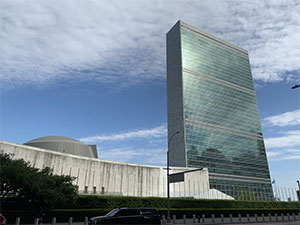
The 2nd meeting of state parties to TPNW toook place at the United Nations Headquarters in New York between 27 November and 1 December in 2023. Credit: Katsuhiro Asagiri, President of INPS Japan.

Against this backdrop, the first Review Conference of the Treaty on the Prohibition of Nuclear Weapons, or TPNW, will meet at United Nations headquarters in New York from Nov. 30 through Dec. 4. The conference will be presided over by South Africa, a country that once dismantled its own nuclear arsenal.

Tonga’s accession in July 2026 brought to 100 the number of countries that have signed, ratified or acceded to the treaty. Of these, 75 are states parties.

The TPNW comprehensively prohibits the development, testing, production, possession, use and threat of use of nuclear weapons. It also requires states parties to assist people harmed by nuclear weapons use and testing and to remediate contaminated environments.

That is where it differs from the NPT. While the NPT primarily manages the relationship between nuclear-weapon and non-nuclear-weapon states, the TPNW treats nuclear weapons themselves as a humanitarian issue and a matter of international law. It asks not who should be permitted to possess nuclear arms, but whether possessing them can be considered acceptable at all.

The Review Conference is expected to focus on a political declaration rejecting nuclear use and threats of use without exception; progress in carrying out the 2022 Vienna Action Plan; the work of the Scientific Advisory Group; mechanisms for victim assistance and environmental remediation; the designation of an international authority to verify the elimination of nuclear weapons; and the further universalization of the treaty.

Particular attention will fall on a proposed international trust fund for victim assistance and environmental remediation. The effects of nuclear weapons use and testing are still felt in Hiroshima and Nagasaki, at the Semipalatinsk test site in Kazakhstan, in the Marshall Islands and across other Pacific islands. If the fund takes shape, disarmament will no longer be only a negotiation over future numbers of nuclear warheads. It will also become a question of nuclear justice: Who bears responsibility for harm already done?

The TPNW has an obvious limitation. No nuclear-armed state has joined it, and the treaty alone cannot compel the elimination of nuclear warheads. Ignoring that fact would obscure the distance between establishing a prohibition and achieving actual disarmament.

But three consecutive failures at NPT Review Conferences have also shown that waiting for agreement among the nuclear powers will not produce progress on its own. The NPT can preserve the legal obligation to disarm, while the TPNW develops the norm of prohibition and practical approaches to victim assistance, environmental remediation and verification. The two treaties can be treated not as rivals, but as complementary frameworks, each addressing gaps left by the other.

Where Does Japan Stand?

The Treaty on the Prohibition of Nuclear Weapons, signed 20 September 2017 by 50 United Nations member states. Credit: UN Photo / Paulo Filgueiras

The Hiroshima Peace Declaration called on the Japanese government to begin by attending the TPNW Review Conference as an observer and then to ratify the treaty without delay.

Attending as an observer would not commit Japan to immediate accession. Some NATO countries that rely on the U.S. nuclear deterrent have attended previous meetings of states parties after explicitly setting out their differences with the treaty.

Japan’s participation would expose the tension between its reliance on nuclear deterrence and its identity as the only country to have suffered atomic bombings in war. But it would also allow Japan to draw on its extensive experience in medical care for survivors, research on the effects of radiation, preservation of testimony, victim assistance, environmental remediation and disarmament education to help build practical mechanisms.

For years, the Japanese government has described its role as a “bridge” between nuclear-weapon and non-nuclear-weapon states. But building a bridge requires listening, in the same room, to what each side fears and what each considers unjust. That claim loses credibility if Japan remains anchored to only one bank.

Rethinking What We Call “Reality”

Both messages called on citizens to act because nuclear policy is not shaped by governments and experts alone.

Through education, journalism, elections, culture, investment and everyday language, societies learn to regard nuclear weapons either as a guarantee of security or as an unacceptable humanitarian threat. That shared understanding, in turn, defines the range of policies a government believes it can pursue.

A future lived under the shadow of nuclear fear may not be chosen all at once by a single leader. It can also be chosen through an accumulation of small acts of acceptance: tolerating nuclear threats when they come from one’s own side, equating military expansion with security, and confining the testimony of atomic bomb survivors and nuclear test victims to commemorative anniversaries.

A world without nuclear weapons will not be achieved at a single conference, either. It will require people to learn what happened in the atomic bombings and nuclear tests; speak with those who hold different views; reject nuclear threats whether they come from an ally or an adversary; press governments to fulfill their disarmament obligations and attend the TPNW conference; and support victims and disarmament education. Each step may be modest. Each can also help change the standards by which society judges nuclear weapons.

What Hiroshima offered the world this year was not an optimistic prediction. It was a choice.

A future in which humanity continues to balance one nuclear terror against another — or a future in which nations build a common security that no longer requires nuclear weapons.

No one needs to be an expert to answer that question, and no one needs to wait for a government’s permission. Can security that depends on the threat of incinerating cities truly be called security? Asking ourselves that question is the first political act.

This article is brought to you by INPS Japan in collaboration with Soka Gakkai International in consultative status with UN ECOSOC.


!function(d,s,id){var js,fjs=d.getElementsByTagName(s)[0],p=/^http:/.test(d.location)?’http’:’https’;if(!d.getElementById(id)){js=d.createElement(s);js.id=id;js.src=p+’://platform.twitter.com/widgets.js’;fjs.parentNode.insertBefore(js,fjs);}}(document, ‘script’, ‘twitter-wjs’);  


Excerpt:

On the 81st anniversary of the atomic bombing, Hiroshima’s Peace Declaration and the U.N. secretary-general’s message set out two possible futures as the global nuclear order frays

Burkina Faso’s Cancelled Democracy

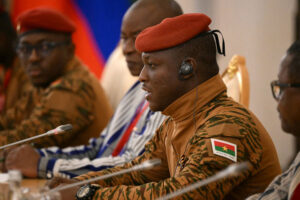
Burkina Faso’s junta leader Captain Ibrahim Traoré attends a meeting with Russian president Vladimir Putin in Moscow on 10 May 2025. Credit: Angelos Tzortzinis/AFP

By Andrew Firmin
LONDON, Aug 7 2026 – Burkina Faso’s charismatic young military leader, army captain Ibrahim Traoré, has stopped pretending. In April, he declared that people should ‘forget about the question of democracy’ because ‘democracy isn’t for us’. When Traoré seized power in September 2022, ousting a leader who’d staged a coup earlier that year, he promised elections by June 2024. The junta broke that pledge, pushing any transition back to 2029. Now Traoré has confirmed he has no intention of restoring democracy. Instead, Burkina Faso’s military junta is tightening its repression, while working with neighbouring states to internationalise its dangerously undemocratic model.

Crackdown intensifies

Repression has unfolded in a context of jihadist insurgency. Frustration with the democratically elected government’s security failures helped fuel the conditions that led to military rule, but the army hasn’t turned things around. The insurgency has grown, and civilians are paying the price. All sides are accused of crimes against humanity and war crimes, and since the coup, there’s evidence that Burkina Faso’s armed forces and allied militias have increasingly targeted civilians, particularly members of the Fulani ethnic group.

A military seen to be failing against the insurgency and killing civilians would lose any claims to legitimacy. That makes the junta determined to control the narrative, silence dissent and crush any perceived challenge to its power.

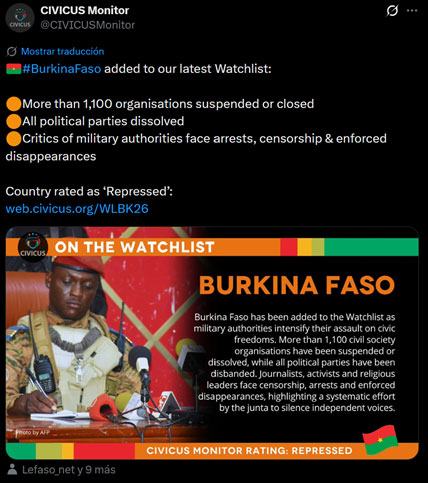
Traoré backs his anti-democratic rhetoric with actions. In January, the government dissolved all political parties, claiming they sowed division and weakened the social fabric. The junta is also targeting civil society organisations (CSOs). In recent months, authorities have suspended over a thousand organisations. In April, the government dissolved 118 CSOs, citing non-compliance with a July 2025 law that imposed strict and onerous registration, compliance and reporting requirements. The law supposedly gave CSOs a year to comply, but the government dissolved them before the deadline expired. It targeted human rights organisations such as the African Meeting for the Defence of Human Rights, the Burkinabè Coalition for Women’s Rights and Christian Action for the Abolition of Torture.

Religious associations and student groups have fared little better. Association As Salam and the Coordination of Young Muslims of Burkina have no explicit human rights focus, but authorities have suspended both for alleged public disorder and activities said to fall outside their stated purpose. In May, the government suspended the General Student Union of Burkina Faso, the country’s biggest student group, after it issued a statement criticising the government’s security record, which the government claimed glorified terrorism.

Authorities have suspended several media outlets, typically over their reporting on the security situation. In May, the state media regulator indefinitely suspended French TV channel TV5 Monde, accusing it of siding with terrorist groups.

Anybody who speaks out risks arrest, detention, enforced disappearance, forced conscription into the armed forces and torture. Burkina Faso’s LGBTQI+ people are particularly exposed, since in 2025 the junta criminalised same-sex relations, with jail sentences of up to five years. The government has also granted itself the power to strip citizenship from anyone deemed to be acting against the national interest. Last December, repression took an even more ominous turn when the junta announced its intention to reinstate the death penalty.

Due to these actions, Burkina Faso has recently been added to the CIVICUS Monitor Watchlist, which identifies countries where a severe deterioration in the quality of civic space is taking place.

Repressive alliance

Burkina Faso isn’t working alone. Under Traoré, it has forged close relations with two neighbouring military regimes, Mali and Niger. Together, they’re promoting a model that rejects democracy and international scrutiny. In January 2025, they completed their joint withdrawal from the key regional organisation, the Economic Community of West African States (ECOWAS), a year after forming their rival Alliance of Sahel States. The move was clearly a response to ECOWAS pressure to restore civilian rule.

The three states have now formally begun the process to leave the International Criminal Court (ICC). They’ve denounced the court as a ‘tool of neocolonial oppression’ and promised to set up an alternative, although any body they create is unlikely to retain the ICC’s power to issue arrest warrants against sitting heads of state and other senior figures. For survivors of human rights atrocities, withdrawal from the ICC and the ECOWAS Community Court of Justice removes vital potential routes to justice.

In February, Burkina Faso suspended the UN Human Rights Office, which had operated in the country since 2019, in retaliation for a statement by UN human rights chief Volker Türk urging the junta to reverse its ban on political parties and open up civic space. The UN has now concluded it has no choice but to close its office.

These moves shield military leaders and security forces from external accountability. They’re part of a wider realignment that has seen Burkina Faso and its allies turn away from former colonial power France and other democratic states and towards Russia, a partner with no interest in human rights. Burkina Faso’s relations with Russia have extended beyond military cooperation to stronger economic ties. Last year the two countries signed a gold-mining deal.

Even as he rejects international scrutiny, Traoré has cultivated a global following. Through adept use of social media and a steady stream of disinformation, he casts himself as a pan-African leader in the mould of liberation-era icons such as Thomas Sankara, Burkina Faso’s revolutionary former president. His message taps into real anger about colonialism and the power imbalances in relations with western states.

But the people whose rights he tramples aren’t westerners. The civilians being slaughtered by the army and the activists and journalists being silenced are Burkinabe people. There’s nothing un-African about democratic freedoms, and nothing pan-African about a leader who denies them. African democracies have the most to lose if Traoré’s model spreads, and are the most able to challenge it. They should refuse to normalise his narrative and press him to restore fundamental freedoms, rebuild a path to democratic rule and recognise the value of international accountability.

Andrew Firmin is CIVICUS Editor-in-Chief, co-director and writer for CIVICUS Lens and co-author of the State of Civil Society Report.

For interviews or more information, please contact [email protected]


!function(d,s,id){var js,fjs=d.getElementsByTagName(s)[0],p=/^http:/.test(d.location)?’http’:’https’;if(!d.getElementById(id)){js=d.createElement(s);js.id=id;js.src=p+’://platform.twitter.com/widgets.js’;fjs.parentNode.insertBefore(js,fjs);}}(document, ‘script’, ‘twitter-wjs’);  


The World’s Aid Workers Must Be Protected

The World’s Aid Workers Must Be Protected

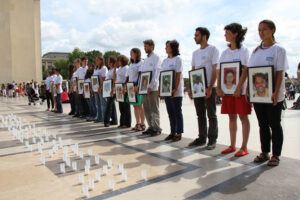
Action Against Hunger holds a commemoration event for the 17 staff members killed in Muttur, Sri Lanka on August 4th, 2006. Credit: Action Against Hunger

By Rotimy Djossaya
NAIROBI, Kenya, Aug 7 2026 – This summer, an ambush on a marked humanitarian convoy in Duk County, South Sudan, left 17 dead and five injured. While the UN called for an immediate investigation, history suggests the victims’ families will wait indefinitely for answers.

We suspended field movements in the area pending a security review, which means communities already facing crisis levels of hunger lost access to life-saving assistance, at least temporarily.

The emblem on a vehicle or a vest once offered protection: a shared understanding, codified in international law, that those delivering food, water, medical care and other basic relief would not be targets of violence. That understanding is breaking down.

In the past three years, more than 1,000 humanitarian workers have been killed, most notably in Gaza, Sudan, South Sudan, and the Democratic Republic of Congo. Worryingly, 2024 was the worst year on record with 383 aid workers killed worldwide. That’s more than one each day.

This year, the recent ambush brought the toll to 29 in South Sudan alone — and it is only August. Roughly 90% of those attacked are local and national staff, the people furthest from headlines and closest to the danger.

Twenty years ago this month, seventeen of our colleagues were executed in our office in Muttur, Sri Lanka, wearing shirts that clearly identified them as humanitarian aid workers. It remains one of the deadliest attacks of its kind. Two decades later, despite evidence pointing to the likely responsibility of state security forces, no one has been held accountable. We are still calling for a new, independent investigation.

Rotimy Djossaya, Chief Impact Officer for Action Against Hunger

My organization operates in more than 55 countries and is made up of nearly 9,000 people, most of them locals from the communities we serve. When I ask them to travel a road in Jonglei State or run a nutrition site in Sudan, I am asking them to accept a risk that many people in the world would refuse. Donors, governments, and agencies like mine share a duty to reduce that risk so that every humanitarian worker comes home at the end of the day.

There is a framework for addressing this. In 2024, the UN Security Council passed Resolution 2730, which calls on States to respect and protect United Nations and humanitarian personnel in accordance with their obligations under international law. Last year saw the introduction of the Declaration for the Protection of Humanitarian Personnel, a commitment to uphold international humanitarian law, prevent attacks, and pursue accountability. Over 110 countries have signed on, from every region and political tradition. While the issue still generates broad agreement, it is increasingly polarized, and the declaration’s enforcement is weak.

When a marked humanitarian vehicle is attacked with impunity, the international laws designed to protect humanity become nothing more than abstract targets.

The recent cuts to international aid budgets make a challenging situation even harder. Although it’s not clear that recent funding cuts led directly to any violence, it’s evident that NGOs have far less money to spend on security response management. The 2025 Aid Worker Security Report documented what the funding collapse means for safety: organizations are cutting security positions, communications, and risk analysis, with the danger falling overwhelmingly on local organizations.

In principle, localization is smart, and the humanitarian reset is a chance to build a system that is locally led, globally supported, and more efficient. But it only works if resources move with the risk. Local NGOs are routinely excluded from security funding, training, and data-sharing. They are expected to work in the world’s most dangerous places without the protections international agencies take for granted. They face a difficult choice: abandon some of the people and places they serve or accept greater risk to the safety of their staff.

The aid workers this summer were traveling in a marked humanitarian convoy. Five of them were staff of our local partner, the John Dau Foundation, an organization founded by one of the “lost boys” of South Sudan, who fled unimaginable violence as a child and answered it by building clinics and feeding children in the very county where this attack took place. That people who devoted their lives to healing were met with this violence shows how badly protections for humanitarian workers have eroded. The markings on their vehicle were supposed to shield them, but they did not.

As we mark World Humanitarian Day on August 19 and approach the UN General Assembly in September, the global community and member states must act. They must mandate and fund security allocations directly for local partners, insist on independent investigations for harmed personnel, and enforce UN Security Council Resolution 2730. Commitments on paper only protect lives when perpetrators face consequences. Those who step into the crossfire to feed the world’s forgotten children should not have to pay for that humanity with their lives.

Together, let’s honor those who have served, stand with those who continue to serve, and act for humanity.

Rotimy Djossaya is, Chief Impact Officer at Action Against Hunger.

IPS UN Bureau


!function(d,s,id){var js,fjs=d.getElementsByTagName(s)[0],p=/^http:/.test(d.location)?’http’:’https’;if(!d.getElementById(id)){js=d.createElement(s);js.id=id;js.src=p+’://platform.twitter.com/widgets.js’;fjs.parentNode.insertBefore(js,fjs);}}(document, ‘script’, ‘twitter-wjs’);  


US Arms Stockpiles Hit by Iran War

Credit: White House/Getty images

By Thalif Deen
UNITED NATIONS, Aug 7 2026 – The highly- unpredictable five-month-old US-Iran war has been plagued by on-again, off-again peace agreements — with such monotonous regularity– the conflict seems never ending. But according to several news reports, the US faces a new threat– it may soon run out of key weapons systems.

According to a CNN report, August 5, the US military has used up nearly 80% of its interceptors for a key missile defense system, leaving stockpiles “dangerously low” as mediators work to revive talks between Washington and Tehran.

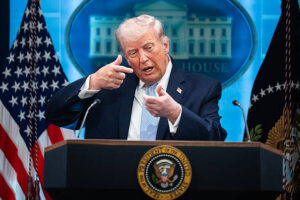
“Gulf allies are also worried that dwindling US air defense stockpiles could leave them more vulnerable if President Donald Trump escalates the ongoing conflict. Several of those countries rely on US air defense systems and acknowledge the shortage could hinder their ability to intercept Iranian missile and drone attacks.”

Meanwhile the New York Times of August 4 provided a more detailed breakdown, including the US deployment of 1,200 Patriot missiles (out of a military inventory of 2,330) and more than 1,000 Tomahawk missiles, out of 3,000. The US has also deployed more than 1,100 Joint Air-to-Surface Standoff Missiles out of 4,400 and 190 to 290 Terminal High Altitude Defense or THAAD missiles out of 300, among others

At a Camp David summit last weekend, according to one report, President Trump demanded answers from Defense Secretary Pete Hegseth over “extreme munitions shortages”

But as reports of dwindling arms stockpiles continued to spread widely, President Trump publicly denied the possible shortfall. “We have massive amounts of arms”, he wrote on Truth Social. “Additionally, large amounts are being manufactured and shipped to the U.S. as needed. Defense companies are building the largest number of plants and factories in our country’s history.”

Professor Simon Adams, Academic Chair of Human Rights, School of Humanities, Arts and Social Sciences at Murdoch University, Australia told Inter Press Service (IPS):, “Trump’s war of choice against Iran has not only impacted weapons stockpiles, it has depleted the ability of some politicians in Washington DC to see people and places on a map as more than targets and annoyances that can impact petrol prices.

Iran is a country of 90 million people and not just the Strait of Hormuz. From the 120 schoolgirls who were killed in an airstrike in Minab to the latest civilian casualties, too many innocent people have died. No more blood should be spilled.

Ongoing threats by President Trump to bomb Iran into the Stone Age and annihilate Iranian civilization constitute an open threat to commit war crimes, he said.

Meanwhile Iran’s rulers continue to publicly hang protesters and deny Iranians their fundamental human rights, said Adams, former President and CEO of the Center for Victims of Torture – a leading international human rights and humanitarian NGO.

The only people who are ‘winning’ this senseless war are weapons manufacturers, oil companies and supporters of theocracy and authoritarianism in both Iran and the United States, declared Adams.

Meanwhile some of the agreements that fell by the wayside include:

    • April 2026: An initial short-term, two-week ceasefire was brokered by Pakistan, which was later extended indefinitely before breaking down into intermittent fighting.
    • June 15, 2026: President Trump and Iranian officials announced that a framework for an interim peace deal and memorandum of understanding (MOU) had been reached to end hostilities and reopen the Strait of Hormuz.
    • June 17, 2026: The two nations formally signed the agreement—often referred to as the Islamabad Memorandum—establishing an expanded ceasefire and kicking off a 60-day window to negotiate a final, comprehensive peace treaty.

IPS UN Bureau Report


!function(d,s,id){var js,fjs=d.getElementsByTagName(s)[0],p=/^http:/.test(d.location)?’http’:’https’;if(!d.getElementById(id)){js=d.createElement(s);js.id=id;js.src=p+’://platform.twitter.com/widgets.js’;fjs.parentNode.insertBefore(js,fjs);}}(document, ‘script’, ‘twitter-wjs’);  


PU Prime étend ses activités de commerce de l’or avec le lancement de XAUUSD247

EBENE, Île Maurice, 07 août 2026 (GLOBE NEWSWIRE) — L’or, dont le cours continue de réagir rapidement à la situation géopolitique, aux décisions monétaires des banques centrales, aux prévisions d’inflation et aux changements de sentiment des investisseurs, reste l’un des actifs refuges les plus négociés au monde. Alors que les investisseurs évoluent de plus en plus sur des marchés actifs en permanence, PU Prime a lancé le produit XAUUSD247 sur la plateforme MT5, pour permettre à ses clients de négocier l’or 24 heures sur 24, 7 jours sur 7.

Au mois de janvier, le cours de l’or a grimpé en flèche pour atteindre près de 5 600 dollars américains l’once, alors que les investisseurs se précipitaient sur les valeurs refuges face à l’escalade des tensions au Moyen-Orient. Même si ce pic de début d’année est resté inégalé depuis, l’or reste l’un des actifs les plus performants de l’année écoulée, selon l’enquête du World Gold Council.

« Les CFD sur l’or figurent régulièrement parmi les produits les plus négociés sur la plateforme PU Prime », a déclaré Daniel Bruce, directeur général de PU Prime« Alors que les cours évoluent en permanence pour de nombreuses raisons tout au long de la journée, les traders privilégient de plus en plus la souplesse afin de pouvoir réagir dès qu’une opportunité se présente. Avec le lancement de XAUUSD247, les clients peuvent négocier des CFD sur l’or 24 heures sur 24, 7 jours sur 7, gagnant ainsi un accès ininterrompu à ce métal précieux. »

Le produit XAUUSD247 permet aux traders d’accéder au marché de l’or en continu tous les jours, y compris le week-end, leur offrant ainsi une flexibilité maximale au-delà des horaires de négociation habituels. Alors que les marchés financiers fonctionnant en continu sont de plus en plus courants, PU Prime continue de proposer à ses clients des solutions misant sur la flexibilité, la praticité et l’accès aux opportunités mondiales.

À propos de PU Prime

Fondée en 2015, PU Prime est une fintech internationale de premier plan avec une activité de courtage en CFD reconnue. Elle propose actuellement des produits financiers réglementés dans les secteurs des devises, des matières premières, des indices, des actions et des obligations. Présente dans plus de 190 pays, PU Prime, dont l’application a été téléchargée plus de 40 millions de fois, propose des plateformes de trading innovantes ainsi qu’une fonctionnalité de copy trading intégrée, permettant aux traders du monde entier d’effectuer leurs opérations financières en toute confiance.

Pour toute demande média, veuillez contacter : [email protected].

Une photo annexée au présent communiqué est disponible à l’adresse http://www.globenewswire.com/NewsRoom/AttachmentNg/f315574d-1cf1-4071-a8f5-070032e191c6.


GLOBENEWSWIRE (Distribution ID 1001256385)

PU Prime Expands Gold Trading with the Launch of XAUUSD247

EBENE, Mauritius, Aug. 06, 2026 (GLOBE NEWSWIRE) — Gold remains one of the world's most actively traded safe-haven assets, with prices continuing to respond rapidly to geopolitical developments, central bank policy decisions, inflation expectations and shifts in investor sentiment. Investors increasingly navigate markets that move around the clock, where PU Prime has introduced XAUUSD247, enabling clients to trade gold 24 hours a day, seven days a week on MT5.

Earlier this year, gold surged to nearly US$5,600 per ounce in January as investors flocked to safe-haven assets amid escalating tensions in the Middle East. While prices have since retreated from their peak, the World Gold Council's research notes that gold remains one of the top-performing assets over the past year.

“Gold CFDs have consistently been among the most actively traded products on the PU Prime platform,” said Daniel Bruce, Managing Director at PU Prime. “With many factors continuing to influence prices at all times of the day, traders increasingly expect flexibility to react whenever opportunities arise. The launch of XAUUSD247 enables clients to trade gold CFDs 24 hours a day, seven days a week, giving them uninterrupted access to this precious metal.”

The introduction of XAUUSD247 allows traders to access the gold market continuously throughout the week, including weekends, providing greater flexibility beyond conventional trading hours. As financial markets increasingly operate around the clock, PU Prime remains focused on delivering trading solutions that provide clients with greater flexibility, convenience and access to global opportunities.

About PU Prime

Founded in 2015, PU Prime is a leading global fintech company and trusted CFD broker. Today, it offers regulated financial products across forex, commodities, indices, shares, and bonds. Operating in over 190 countries with more than 40 million app downloads, PU Prime provides innovative trading platforms and an integrated copy trading feature, empowering traders worldwide to achieve financial success with confidence.

For media enquiries, please contact: [email protected]

A photo accompanying this announcement is available at https://www.globenewswire.com/NewsRoom/AttachmentNg/f315574d-1cf1-4071-a8f5-070032e191c6


GLOBENEWSWIRE (Distribution ID 1001256160)