Bitget Launches “Fan Story: UEX Through Your Eyes” Campaign with 100,000 USDT Prize Pool

VICTORIA, Seychelles, May 07, 2026 (GLOBE NEWSWIRE) — Bitget, the world’s largest Universal Exchange (UEX), today launched its new community campaign, “Bitget Fan Story: UEX Through Your Eyes,” inviting eligible users worldwide to share their Bitget journey on social media for a chance to claim a share of a prize pool worth up to 100,000 USDT, along with exclusive Bitget Fan Club merchandise.

The campaign, running from May 7, 2026 to May 20, 2026, aims to spotlight the voices of Bitget users, from early adopters and long-term traders to community contributors and feature testers, whose experiences reflect the platform's evolution and global expansion. Participants are encouraged to share their real experiences with Bitget's one-stop Universal Exchange (UEX) ecosystem – how it helps them access more products, asset types, and trading opportunities, all in one place. The prize pool will grow as participation increases, with a community milestone mechanism that adds to the reward pool for every 500 new participants, up to a total of 100,000 USDT.

“Bitget’s community is built by users from all walks of life, not only top traders, but anyone who engages, contributes, and grows with us,” said Gracy Chen, CEO of Bitget. “With this campaign, we want to spotlight the voices of the people who make our Universal Exchange possible. Their stories are what shape our community and inspire the future of Bitget.”

“Every trade, every holding, every story matters,” Bitget said in its campaign announcement. “We want to hear how our users discovered new opportunities, expanded their trading boundaries, and grew with Bitget through every market cycle.”

To participate, users are encouraged to:

  1. Share their Bitget story on a social platform such as X, Telegram, Reddit, LinkedIn or Discord in text + image/video format
  2. Include the hashtag #BitgetFanStory in the post
  3. Submit the entry through this form.

Bitget noted that AI tools may be used to enhance visuals, such as image generation or video editing, but the story itself must be based on the user’s real experience. Fully AI-generated written submissions will not be accepted.

The campaign offers multiple levels of rewards:

  • Top 3 winners: 1,000 to 3,000 USDT each
  • Top 20 winners: minimum 100 USDT each
  • Unlimited Honorable Mentions: 50 USDT Each
  • All winners: exclusive Bitget Fan Club merchandise

For full terms and conditions and details on how to participate, please refer to Bitget’s official announcement here.

About Bitget

Bitget is the world's largest Universal Exchange (UEX), serving over 125 million users and offering access to over 2M crypto tokens, 100+ tokenized stocks, ETFs, commodities, FX, and precious metals such as gold. The ecosystem is committed to helping users trade smarter with its AI agent, which co-pilots trade execution. Bitget is driving crypto adoption through strategic partnerships with LALIGA and MotoGP™. Aligned with its global impact strategy, Bitget has joined hands with UNICEF to support blockchain education for 1.1 million people by 2027. Bitget currently leads in the tokenized TradFi market, providing the industry's lowest fees and highest liquidity across 150 regions worldwide.

For more information, visit: WebsiteXTelegramLinkedIn | Discord

For media inquiries, please contact: [email protected]

Risk Warning: Digital asset prices are subject to fluctuation and may experience significant volatility. Investors are advised to only allocate funds they can afford to lose. The value of any investment may be impacted, and there is a possibility that financial objectives may not be met, nor the principal investment recovered. Independent financial advice should always be sought, and personal financial experience and standing carefully considered. Past performance is not a reliable indicator of future results. Bitget accepts no liability for any potential losses incurred. Nothing contained herein should be construed as financial advice. For further information, please refer to our Terms of Use.


GLOBENEWSWIRE (Distribution ID 1001180568)

Elegance Moves the World: LEPAS L6 PHEV Global Journey of Elegant Driving Wraps Up

WUHU, China, May 07, 2026 (GLOBE NEWSWIRE) — During the 2026 International Business Summit, LEPAS, Chery Group’s premium new energy vehicle (NEV) brand, completed the LEPAS L6 PHEV Global Journey of Elegant Driving across China. As a key validation stage within LEPAS’s three-step strategy — “debut, validation, and co-creation”—the journey began at Auto China 2026, regrouped in Wuxi, and concluded at the LEPAS Global Partner Conference in Wuhu. Covering diverse road conditions and real-world scenarios, it showcased the model’s overall strength while reinforcing the brand vision of “Elegance Moves the World.”

Throughout the journey, participants explored how a globally oriented NEV brand can redefine mobility aesthetics through elegant technology.

The first stop, Wuxi, provided a setting where traditional Chinese elegance meets European sophistication—mirroring the “Leopard Aesthetics” design of the LEPAS L6 PHEV. Against Renaissance-style architecture, the vehicle’s low, wide stance conveyed both confidence and refinement. Signature elements such as the “Hunting Eye” LED headlights and sculpted shoulder lines combined classical proportions with modern aerodynamics, transforming the car into a moving expression of design and identity.

As the convoy transitioned from urban boulevards to highways, the focus shifted to performance validation. Built on the Intelligent LEX Platform, the LEPAS L6 PHEV demonstrated strong chassis stability, refined ride comfort, and smooth power delivery across varying speeds. International test drivers, including participants from Australia, highlighted the vehicle’s responsiveness, high-speed control, and composure on uneven surfaces—underscoring its engineering quality.

With a leading 44.5% thermal efficiency and extended combined driving range, the model delivered excellent energy management under demanding conditions. Seamless coordination between the internal combustion engine and electric system ensured efficient power distribution, reducing range anxiety and enhancing long-distance usability. This balance allows drivers to focus on both the journey and in-cabin comfort, reflecting LEPAS’s focus on emotional and practical user value.

In complex driving scenarios—such as highway merging or obstacle avoidance—the vehicle demonstrated precise perception and millisecond-level response, enabling smooth, controlled maneuvers. Guests from Southeast Asia particularly praised its practicality in congested urban environments, noting how intuitive human-machine interaction simplifies driving while maintaining a sense of control. This integration of intelligence and usability reflects LEPAS’s approach to making advanced technology feel natural and effortless.

The journey concluded in Yixing, where participants experienced traditional Zisha pottery-making. This activity highlighted parallels between cultural craftsmanship and LEPAS’s approach to intelligent manufacturing—both rooted in precision, patience, and attention to detail. From its 65.2% space utilization efficiency to sustained comfort over long distances, the LEPAS L6 PHEV reflects a philosophy that extends beyond performance: mobility as an expression of refined living.

This Global Journey marks a significant milestone for the LEPAS L6 PHEV, transitioning from debut to real-world validation. From Milan to Beijing and across global markets, the model demonstrates how technological excellence, design, and lifestyle integration define modern elegance—ensuring every journey is confident, composed, and effortless.

Chery Group
Peiwen Tan
Email: [email protected]
Website: lepasinternational.com
Dateline: Wuhu

Photos accompanying this announcement are available at https://www.globenewswire.com/NewsRoom/AttachmentNg/5d305261-e8cc-4cea-b0a5-538789433a9b

https://www.globenewswire.com/NewsRoom/AttachmentNg/65153ba1-5e29-469c-95f7-879df4f9974c

https://www.globenewswire.com/NewsRoom/AttachmentNg/d26d395e-7ee8-44d1-852f-d2fd189aca8d

https://www.globenewswire.com/NewsRoom/AttachmentNg/d8bc5ce2-f4c0-44ed-86b1-3f48800baa06


GLOBENEWSWIRE (Distribution ID 9715449)

Al Tamimi and Company Participated in Construction Week Dispute Resolution on 6 May 2026

DUBAI, United Arab Emirates, May 07, 2026 (GLOBE NEWSWIRE) — Al Tamimi and Company was approached by Construction Week magazine to participate in its Dispute Resolution Question Time Dubai, which took place on 6 May 2026 at Dubai Knowledge Park. This event attracted market leaders and pioneers in the construction, infrastructure and energy industry.

The firm was represented by Dispute Resolution Partner Khushboo Shahdadpuri, who was invited to speak at the event alongside leading practitioners and industry experts. The session brought together senior legal and construction professionals to discuss key developments, emerging challenges, and evolving best practices in resolving complex and high-value construction, infrastructure and energy disputes in the UAE and wider GCC region.

Commenting on her participation, Khushboo Shahdadpuri, Partner said:

“Resolving disputes in construction, infrastructure and energy projects continue to evolve rapidly, particularly in a region as dynamic as the Middle East. Platforms, such as this, are thus invaluable for exchanging practical insights on how parties can effectively avoid disputes without escalation to achieve more commercially effective outcomes. Even where escalation is required, there are different strategies and approaches that can be taken on board to achieve robust outcomes.”

Khushboo Shahdadpuri’s participation reflected Al Tamimi and Company’s continued commitment to contributing to industry dialogue and sharing thought leadership on complex construction and dispute resolution matters across the region.

The event served as a key platform for engaging with peers, sharing perspectives, and reinforcing best practices within the construction disputes landscape.

About Al Tamimi and Company

Al Tamimi and Company is the leading full-service law firm in the UAE and MENA region, with 17 offices across 10 countries. Since 1989, we have delivered innovative, cost-effective legal solutions to address complex business challenges.

Our team of 580+ legal professionals combine deep expertise with practical insights, offering commercially focused advice that drives client success. With a commitment to diversity and inclusion, we foster a dynamic environment that attracts top talent and empowers us to deliver outstanding results across industries.

Media Contact
Hadi Ayedh
Public Relations and Communications Manager
+971505490461
[email protected] 


GLOBENEWSWIRE (Distribution ID 1001180591)

Cleaning Up the Fields: Across Africa and Asia GEF is Helping Farmers Rewrite Their Pesticide Story

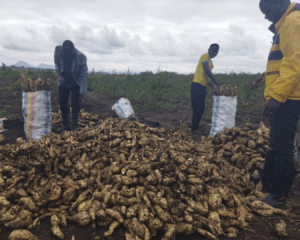
Malawian Farmers harvest sweet potatoes in fields where no chemicals have been used. Credit: Albert Khumalo

Malawian Farmers harvest sweet potatoes in fields where no chemicals have been used. Credit: Albert Khumalo

By Benson Kunchezera and Tanka Dhakal
LILONGWE & VIENTIANE, May 7 2026 – For decades, pesticides have been a quiet pillar of Malawi’s agriculture, guarding crops against pests, improving yields, and sustaining millions of livelihoods. But beneath this success story lay a troubling reality: weak regulation, unsafe handling practices, and growing threats to human health and the environment.

Between 2015 and 2023, USD 2.55 million by the Global Environment Facility (GEF) set out to confront these challenges head-on. Today, it is leaving behind a legacy that is transforming how Malawi manages pesticides from importation to disposal and reshaping the way farmers think about crop protection.

At the centre of this shift is a stronger institutional framework. The project supported a comprehensive review of national pesticide regulations, bringing them closer to international standards. It also invested in training regulatory staff in pesticide registration, monitoring, enforcement, and lifecycle management, areas that had long remained underdeveloped.

“We invested heavily in strengthening systems, not just solving immediate problems,” said Precious Chizonda, Registrar of the Pesticides Control Board of Malawi and former National Coordinator for the GEF project. “This has positioned Malawi to better manage pesticides across their entire lifecycle, from importation to disposal.”

A major milestone was the development of a strategic plan for the Pesticides Control Board (PCB), aimed at improving efficiency and aligning operations with global best practices. Collaboration played a crucial role. The Malawi Bureau of Standards provided laboratory services for pesticide quality testing, while the Ministry of Agriculture ensured policy coordination. Together, these institutions helped elevate the PCB’s effectiveness and national visibility.

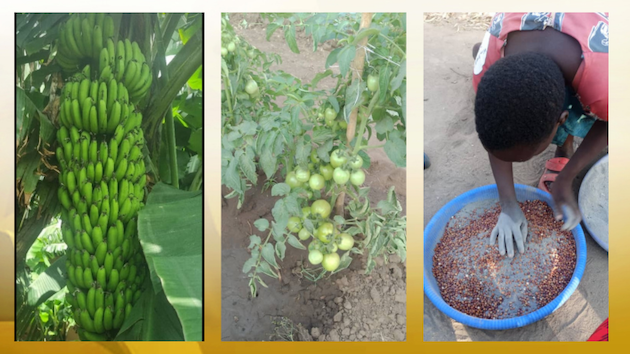
Some examples of pesticide-free farming include bananas grown using manure and tomatoes grown using neem water to deter pests and a woman farmer is shown mixing ash with her pigeon peas for storage to protect them from weevils. Credit: Albert Khumalo

Some examples of pesticide-free farming include bananas grown using manure and tomatoes grown using neem water to deter pests and a woman farmer is shown mixing ash with her pigeon peas for storage to protect them from weevils. Credit: Albert Khumalo

Obsolete Pesticides

The project also delivered concrete environmental results. Approximately 208 tonnes of obsolete pesticides — including highly hazardous persistent organic pollutants — were safely destroyed through high-temperature incineration. Another 40 tonnes of contaminated waste were secured in an engineered landfill. These efforts eliminated long-standing sources of soil and water pollution, protecting ecosystems and communities.

Equally significant was the introduction of a pilot system for managing empty pesticide containers. Initially constrained by regulatory challenges, the initiative has since gained traction and continues beyond the project’s lifespan. Supported by industry stakeholders such as CropLife, it now collects used containers from farms across the country, demonstrating a viable model for environmentally sound waste management.

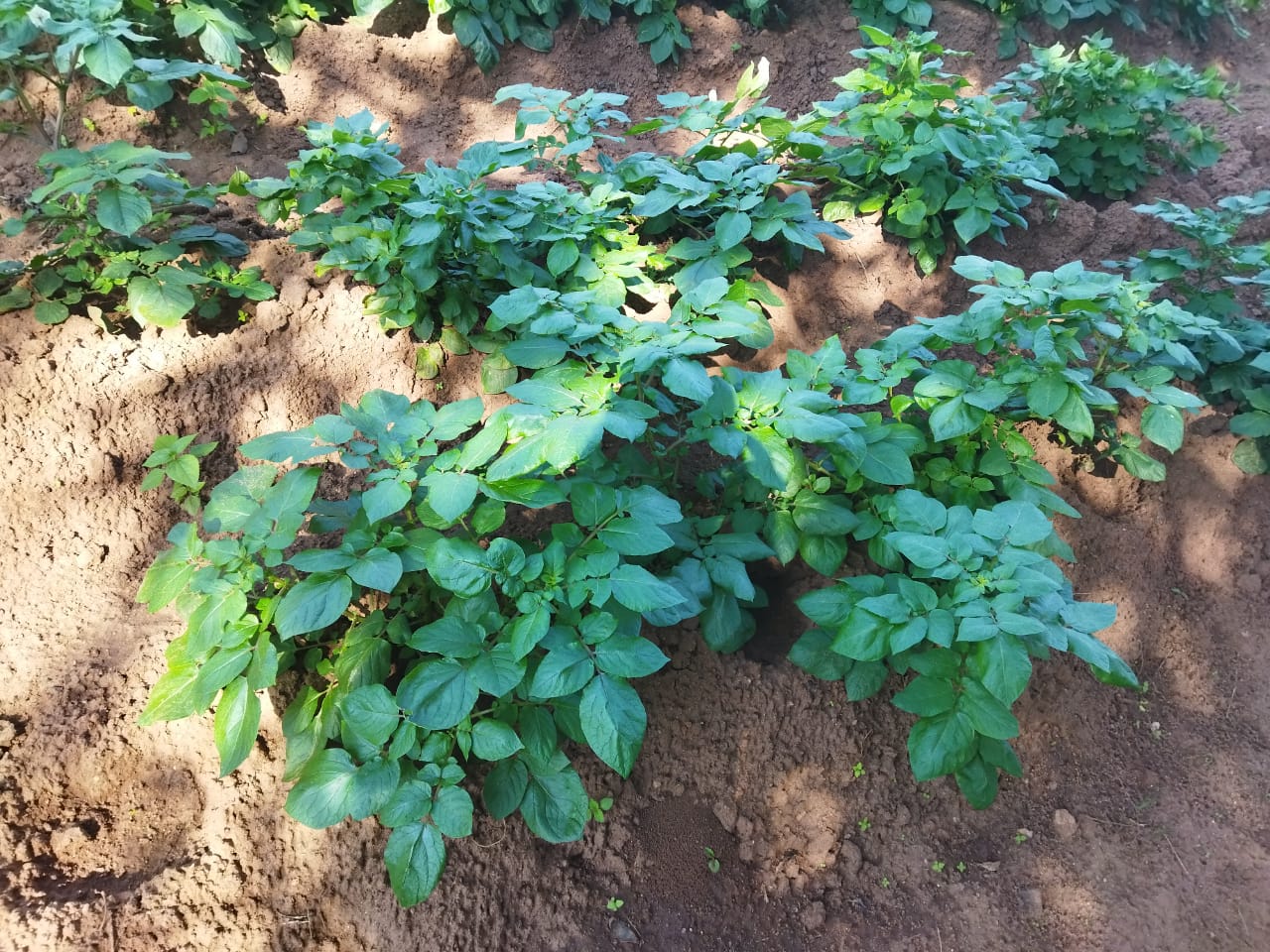
A field of irish potatoes grown without using chemicals. Credit: Albert Khumalo

A field of irish potatoes grown without using chemicals. Credit: Albert Khumalo

Farm Level Changes

But perhaps the most profound change is happening at the farm level.

In Lichenza, under Chiladzulu’s Thumbwe Extension Planning Area, 39-year-old farmer Emily Zuwedi recalls how deeply rooted pesticide use once was. “We used to believe in pesticides when growing our crops, but that is now a thing of the past,” she said.

Zuwedi joined a farmer training group in 2017, where she learned about integrated pest management (IPM) and alternative methods that reduce reliance on chemicals. Today, she grows onions and beans using these techniques, cutting costs while protecting her health and the environment.

“I am spending less money now, and my crops are still doing well,” she said.

Her experience reflects a broader shift among smallholder farmers. Albert Khumalo, an Extension Development Officer in Chiladzulu, said the transition was not immediate. “At first it was difficult for farmers to accept, but after the trials they get along,” he explained.

Since 2024, Khumalo and his team have trained at least 100 farmers in pesticide-free farming methods. The results are encouraging – farmers are reducing production costs, improving soil health, and becoming more environmentally conscious.

“This program is helping farmers conserve the environment while also saving money,” Khumalo said. “And those who learn are now able to share knowledge with others.”

The project has also strengthened Malawi’s compliance with international chemical conventions by building expertise in risk assessment and regulatory procedures, an area where the country previously faced challenges.

While gaps remain, particularly in scaling up initiatives to reach more smallholder farmers, the progress is undeniable. Malawi is demonstrating that agricultural productivity and environmental protection do not have to be at odds.

Across the country’s fields, a quiet transformation is underway – one in which safer practices, stronger systems, and informed farmers are cultivating not just crops but also a more sustainable future.

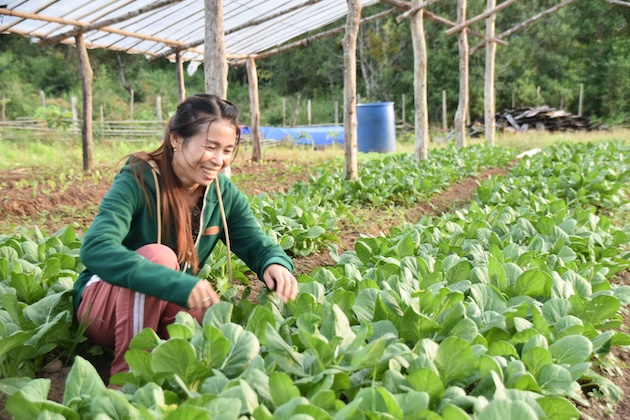
In Laos, a $4.2 million GEF-funded FARM project is led by the UNDP and the Ministry of Agriculture and Forestry. Credit: Lao farmer network

In Lao PDR, the UNDP and the Ministry of Agriculture and Forestry lead a $4.2 million GEF-funded FARM project. Credit: Lao farmer network

Laos Sustainable Farming

However, GEF funding is being used in several parts of the world, including Asia.

In Lao PDR, GEF funding is helping farmers adopt and apply practices that promote sustainable agriculture.

Laos farmers are being trained and given extension support to “reduce dependence on hazardous pesticides while integrating environmentally friendly pest management approaches”, Saithong Phengboupha, project manager at the Department of Agriculture under the Ministry of Agriculture and Environment, said.

“This aligns their practices with good agricultural standards, translating upstream policy gains into tangible on-farm change.”

According to the Ministry, GEF funding has been helpful to create the foundation by strengthening the legislative and regulatory environment governing pesticide and agricultural input management.

“Key milestones include the promulgation of the Law on Crop Production and the development of decrees on fertiliser regulation and good agricultural practices (GAP), currently in the final stages. The instruments establish the legal basis for sustained enforcement and compliance beyond the project lifecycle,” Phengboupha said, explaining how FARM funding is being used to improve the agricultural future of the country.

The $4.2 million initiative through the FARM project is led by the UNDP and the Ministry of Agriculture and Forestry.

The FARM project is establishing a pilot on agrochemical container and plastic waste management in Viengphoukha District, Luang Namtha Province.

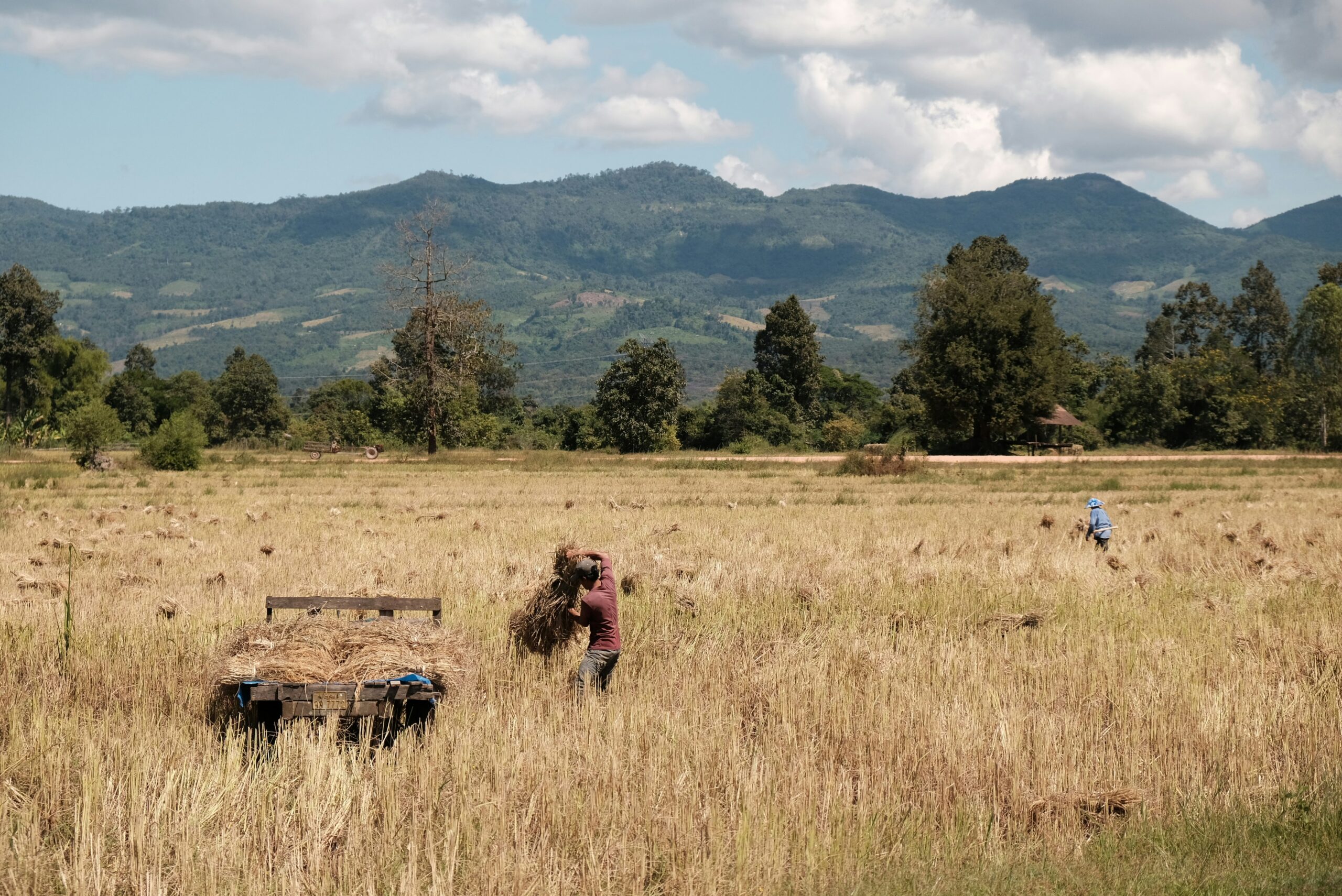
Smallholder farmers have responded to the pesticide management training and promotion of alternatives to chemical pesticides. Credit: Marco J Haenssgen/Unsplash

Smallholder farmers have responded to the pesticide management training and promotion of alternatives to chemical pesticides. Credit: Marco J Haenssgen/Unsplash

Integrated Pest Management

According to the ministry, the pilot is designed to demonstrate the effectiveness of a structured approach for the collection, interim storage, and environmentally sound management of empty pesticide containers.

“It also aims to strengthen institutional coordination among relevant government agencies, local authorities, and private sector stakeholders, while enhancing farmer awareness and compliance with recommended practices, including triple rinsing, segregation, and safe return mechanisms,” he said.

The project has supported awareness-raising and capacity building among local authorities, extension workers, and farmers on the risks associated with obsolete and banned pesticides, as well as on safe handling, repackaging, and temporary storage practices. In selected locations, pilot measures have been introduced to improve containment, labelling, and secure storage to minimise environmental and health risks.

Phengboupha says smallholder farmers in Lao PDR have generally responded positively to Integrated Pest Management (IPM) training and the promotion of alternatives to chemical pesticides supported by the FARM project. He added “training interventions have contributed to improved understanding of pest ecology, safer pesticide use practices, and the benefits of adopting non-chemical and low-toxicity control methods, including biological control, cultural practices, and mechanical measures.”

However, adoption rates vary depending on access to extension services, market pressures, availability of alternative inputs, and perceived short-term effectiveness of chemical pesticides.

“Constraints remain, including limited access to certified biopesticides, weak input supply chains for IPM alternatives, and continued reliance on agrochemical vendors for technical advice in some areas,” he added.

Note: The Eighth Global Environment Facility Assembly will be held from May 30 to June 6, 2026, in Samarkand, Uzbekistan.

This feature is published with the support of the GEF. IPS is solely responsible for the editorial content, and it does not necessarily reflect the views of the GEF.

IPS UN Bureau Report


!function(d,s,id){var js,fjs=d.getElementsByTagName(s)[0],p=/^http:/.test(d.location)?’http’:’https’;if(!d.getElementById(id)){js=d.createElement(s);js.id=id;js.src=p+’://platform.twitter.com/widgets.js’;fjs.parentNode.insertBefore(js,fjs);}}(document, ‘script’, ‘twitter-wjs’);


Why it is Time to Rewrite Africa’s Malaria Story

Why it is Time to Rewrite Africa’s Malaria Story

In Guinea-Bissau, malaria continues to place a heavy burden on families and health systems, underscoring the need for prevention, early treatment and stronger development-led responses. Credit: UNDP Guinea-Bissau

By Michael Adekunle Charles and Aissata De
NEW YORK, May 7 2026 – If you woke up with severe fever, would you stay home from work? What if the choice meant losing a week’s wages, or deciding if you could afford the trip to a doctor at all?

For families facing financial hardship, these are not theoretical choices. Malaria is not only a health crisis—it is a poverty trap. With 282 million cases in 2024 alone, the consequences are far-reaching, persistent and deeply unequal.

As Africans, we know this story well. Despite significant progress, Africa remains the epicentre of the malaria epidemic. Malaria causes up to half a billion lost workdays each year and slows GDP growth by up to 1.3 percent.

It accounts for half of preventable school absences, undermining learning and opportunity. Health systems already under strain are forced to divert scarce resources, weakening care for all.

We know malaria hinders development. But the reverse is also true: the lack of development fuels malaria.

Recent analysis in Uganda found that districts with low development indicators are five times more likely to experience a high number of malaria cases. Poverty, weak infrastructure, limited services, and environmental risk do not just coexist with malaria; they actively sustain it.

Understanding where and how this vicious cycle bites hardest can help us design smarter malaria responses and accelerate development at the same time.

In Kapelebyong district in Uganda, malaria treatment can cost households a significant 120,000 shillings a year, often requiring long journeys to clinics facing staff and medicine shortages. Even livelihoods are implicated: crops that feed families can also harbour malaria-transmitting mosquitoes, exposing farmers to infection.

“The little money gained from harvests mostly goes to managing disease,” said Paul Omaido Ojilong, a local official supporting environmental health.

Sick workers are less productive—or absent altogether—weakening the very economic activity that builds resilience and prosperity. Families and local leaders are forced into impossible trade-offs, prioritizing immediate survival over long-term prevention.

And so, the cycle continues.

For two decades, countries have delivered life-saving medical innovations that dramatically reduced malaria cases and deaths. Those gains matter—but rising cases in Africa show that health services are no longer enough.

At a time when global aid disruptions are renewing calls for stronger African health sovereignty, this is a moment to rethink how malaria is tackled.

First, integrate malaria action into broader development strategies by embedding it into key sectors such as livelihoods, education, environment, infrastructure and governance. Community leaders, health workers, farmers, educators, executives and policymakers must play a role—working together, not in silos.

Second, promote local leadership as a central pillar of malaria elimination, by empowering district councils and local stakeholders to jointly set health and development priorities, coordinate action, and hold one another accountable.

Through the Pathfinder Endeavour, this approach centres countries in malaria interventions and champions joint global and national efforts, in line with the RBM Partnership to End Malaria’s support for the Big Push.

It promises stronger coordination and national accountability, more efficient resource utilization based on reliable data, and the more effective introduction and acceptance of new malaria solutions.

In Uganda, estimates suggest that the Pathfinder Endeavour’s coordinated multisectoral action could deliver transformative results. With modest investment, about US $60,000 over three years per district, economic and social gains of 11-12 percent are possible.

Malaria incidence could fall by 14 percent, extracting far greater value from existing health spending. Accountability efforts alone account for nearly half the projected gains.

In short, local leadership and multisectoral action can rewrite the malaria story.

But the window is closing. Even with more financing, conflict, climate change and rising drug and insecticide resistance threaten hard-won progress. Promising tools like vaccines will fall short if they are not embedded in development systems that protect health over time.

The prize is enormous. Ending malaria by 2030 could add US $231 billion to African economies and boost global trade by US $80.7 billion, moving millions from vulnerability to opportunity and prosperity.

Achieving the Africa we want by 2063—inclusive, sustainable, peaceful and prosperous—means meeting this moment with new ambition and ways of working. Together, UNDP, the RBM Partnership to End Malaria, the Global Fund to Fight AIDS, Tuberculosis and Malaria and partners across sectors can support African leaders to write a new story—one where development and malaria elimination advance hand in hand.

Dr Michael Adekunle Charles is the CEO of the RBM Partnership to End Malaria, and
Aissata De is the Deputy Regional Director for Africa at the United Nations Development Programme (UNDP)

IPS UN Bureau


!function(d,s,id){var js,fjs=d.getElementsByTagName(s)[0],p=/^http:/.test(d.location)?’http’:’https’;if(!d.getElementById(id)){js=d.createElement(s);js.id=id;js.src=p+’://platform.twitter.com/widgets.js’;fjs.parentNode.insertBefore(js,fjs);}}(document, ‘script’, ‘twitter-wjs’);  


Data Gaps are Hiding the Most Excluded Children

Data Gaps are Hiding the Most Excluded Children

Students at GH Rusheshe School in Kucikiro District, Rwanda, identified through the monitoring system through the ZERO Out of School initiative.

By Noor Muhammad Ansari
DOHA, Qatar, May 7 2026 – In 2024, 273 million children, adolescents, and youth were out of school globally as per the UNESCO Institute for Statistics. While that is a staggering number, the figure is incomplete. The 2026 Global Education Monitoring report warns that the global out of school population may be undercounted by at least 13 million once humanitarian sources are used to correct data gaps in conflict-affected contexts.

When education data fails, the children most likely to be excluded are not just the ones out of school. There are also those who are completely missing from the systems meant to find them.

This is why data gaps are not simply a technical issue, they are a structural driver of exclusion. If a child is not in the dataset, they are less likely to appear in school planning processes, teacher-allocation formula, textbook procurements systems, transport route, or targeted social protection programmes that could have kept them enrolled.

The 2026 GEM Report highlights the depth of the challenge. In primary and secondary education, one in three countries does not report disparities by urban–rural location and one in two does not report disparities by wealth. When such information is missing, education policies that rely on national averages mask the children who are furthest behind.

Why Children Disappear from Education Data

An Education Above All Foundation Occasional Paper on counting out-of-school children explains how administrative enrolment figures can diverge from reality in predictable ways. Systems may undercount children who attend but are not registered; undercount late registrants when data are captured only once at the start of the year; or overstate participation by counting registered children who never attend.

And, these are not minor measurement errors. They are precisely how children slip through institutional cracks, especially those affected by poverty, displacement, disability, language barriers, and gender discrimination.

Finding the Children who are Missing

Consider what happens when programmes treat identification as seriously as instruction.

In our joint project with Educate Girls in rural Rajasthan in India we found that official child-tracking data often missed children in remote hamlets. To address this, community volunteers conducted door-to-door surveys at scale, across more than three million households in over 9,000 villages to identify out of school girls.

The effort enabled the programme to identify, enrol, and retain tens of thousands of girls who had previously been absent from official records. The lesson from this exercise was straightforward: it is hard to serve children you cannot see. But when systems invest deliberately in identification and verification, those learners can be found.

The same challenge applies to children with disabilities, who are too often hidden by stigma and undercounted by systems that do not measure disability consistently. In our ten-country inclusive education programme implemented with Humanity & Inclusion across Africa, we sought to “bring children out of the shadows”, through community outreach, disability-sensitive identification tools, and sustained tracking of participation, the programme successfully enrolled more than 32,000 out of school children with disabilities and supported strong retention outcomes.

These experiences show that exclusion is not only about access to education. It is also about whether systems can identify and track children who face multiple barriers to participation.

What Stronger Education Data Systems Can Do

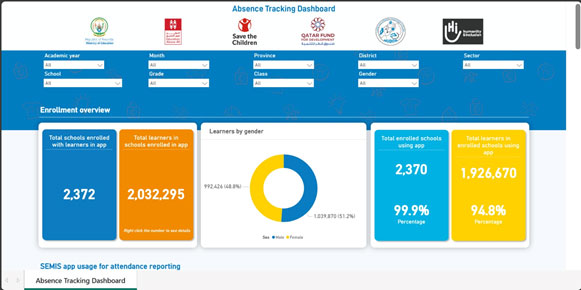
Across many countries, governments and partners are beginning to recognise that stronger education data systems are essential to identifying and supporting the most excluded learners. For instance, in Rwanda, the Zero Out of School Children initiative uses the Waliku application, a digital monitoring tool developed with partners including Save the Children and the Ministry of Education.

Teachers use the mobile platform to register out of school children, record attendance, and track patterns of absence. When repeated absences occur, the system generates follow-up alerts so schools or community workers can contact families and support re-enrolment.

In partnership with UNICEF and Government of The Gambia, efforts are underway to integrate education data with health and civil registration systems through DHIS2 for Education, helping authorities identify children who are missing from school records and coordinate responses across sectors.

Other partnerships illustrate how digital tools can strengthen identification and monitoring in different contexts.

In Nigeria, a partnership project with UNICEF developed the Tracking Re-entry of Children to Education (TRACE) system that combines community mapping and school records to track children from identification through enrolment and progression.

In Kenya, under EAA Foundation-UNICEF partnership, a Digital Attendance Application enables near real-time monitoring of school attendance, allowing schools to detect patterns of absenteeism and intervene early.

Digital systems are also proving valuable in fragile contexts. In Syria, the EAA Foundation-UNICEF partnership project developed a Self-Learning Programme Child Monitoring System to track children participating in alternative learning pathways when formal schooling has been disrupted.

In Zanzibar, the EAA Foundation-UNICEF partnership project developed a mobile-based monitoring tool that supports community-level identification and follow-up of out-of-school children, while the EAA Foundation-World Bank partnership project in Djibouti developed digital tools that help track participation in alternative education programmes and support transitions into formal schooling.

In Zanzibar, a mobile-based monitoring tool that supports community-level identification and follow-up of out-of-school children.

Taken together, these initiatives illustrate an important shift: Education systems are moving from periodic aggregate reporting toward child-level identification, real-time monitoring, and early-warning systems.

As these systems evolve, particularly with advances in analytics and artificial intelligence, they offer the potential to predict dropout risks and guide targeted interventions, helping ensure that every child remains visible within the education system.

Rwanda’s school attendance register and tracking system, Waliku Application. Teachers use the mobile platform to register out of school children, record attendance, and track patterns of absence.

So, what should change?

Governments must treat education data as an inclusion tool, not only a reporting obligation. This means investing in learner-level education information systems that can uniquely identify learners, track attendance and progression, and safely link education data with civil registration, health, and social protection systems where appropriate.

Governments should also routinely combine and integrate data from various sources to correct blind spots in national statistics.

Secondly, development partners should fund data systems as core public infrastructure. It is untenable to finance classrooms, teachers, and learning materials while leaving ministries without the capacity to know which children are missing, where they are, and what barriers they face.

Results-based financing should also reward governments and implementers for verified inclusion outcomes, not only aggregate enrolment.

Education agencies and partners should standardise how the world counts ‘excluded.’ Globally tested tools already exist. For example, the UNICEF–Washington Group Child Functioning Module, provides a standardised approach for identifying children with disabilities in surveys and administrative systems.

For displaced learners, stronger coordination between education and humanitarian data systems is essential. According to UNHCR, there are 12.4 million refugee children of school age worldwide, and nearly 46% of them out of school.

The takeaway is straightforward: The most excluded children are often the least counted.

Closing the education gap requires closing the education data gap, so that every child is visible, reachable, and supported well before exclusion becomes permanent.

IPS UN Bureau


!function(d,s,id){var js,fjs=d.getElementsByTagName(s)[0],p=/^http:/.test(d.location)?’http’:’https’;if(!d.getElementById(id)){js=d.createElement(s);js.id=id;js.src=p+’://platform.twitter.com/widgets.js’;fjs.parentNode.insertBefore(js,fjs);}}(document, ‘script’, ‘twitter-wjs’);  


Excerpt:

Noor Muhammad Ansari is Director Monitoring and Evaluation, at Education Above All Foundation’s Educate a Child (EAC) Programme