A New Chapter Is Emerging in Pakistan-China Relations

ISLAMABAD, May 30, 2026 (GLOBE NEWSWIRE) — The Ministry of Information and Broadcasting (MoIB) is responsible for promoting and managing the official narrative surrounding Prime Minister Shehbaz Sharif's visit to China, which celebrates the 75th anniversary of diplomatic relations.

For most of the last decade, Pakistan-China engagement was defined in terms of highways, energy infrastructure, ports, and the broader CPEC-based infrastructure projects, all of which revolutionized Pakistan's economy, enhanced connectivity, and solved long-drawn energy crises. However, the Islamabad-Beijing partnership today is transcending into something much wider and a great deal more strategic.

This change was abundantly clear in the recent visit to China by the Prime Minister. The meeting with the Chinese Premier, Li Qiang, attendance at the Pakistan-China Third B2B Investment Forum and meetings with China's tech giants were evident symbols of this shift in the Pakistan-China cooperation away from the traditional economic cooperation toward the newer dimensions like technology, innovation, industry and strategic cooperation.

The atmosphere of the visit itself was meaningful. Pakistan and China were not just looking at the volume of trade or individual deals. Instead, they were discussing a convergence in vision and future-focused industries and development plans in an era of fast-changing technological and political global economy.

The PM during his talks with Premier Li Qiang in Beijing, stated that the Pakistan-China All-Weather Strategic Cooperative Partnership would continue to remain the centerpiece of Pakistan's foreign policy. The two sides expressed happiness with the gradual progress in the relationship and assured each other of support on each other's core issues. Although this is a standard boilerplate statement made at diplomatic negotiations, however the context of the visit itself suggests that the two sides are moving ahead with the relationship to a new plane.

That transition is evident in CPEC too. It has been evolving from a focus mainly on large-scale infrastructure and connectivity to a model that encompasses industrialization, modernization of agriculture, digitization, clean energy, science, and high technology cooperation. This trend itself mirrors the realities of global developments. In today’s world, economic power and influence do not solely rely on locations or routes of trade but on technology, innovation and digital connectivity.

It seems that the Pakistani leadership has taken notice of that too. Prime Minister Shehbaz Sharif stressed the necessity of bringing China's 15 th Five-Year Plan into sync with Pakistan's “Uraan Pakistan” development agenda in order to speed up the practical cooperation and long-term economic coordination between the two countries. It has become clear that the discourse from Islamabad is that it is an aspiring participant in Asia's technological and industrial future rather than restricted to traditional economic models.

An obvious manifestation of that increasing cooperation was evident during the Prime Minister's visit to the headquarters of the Alibaba Group in Hangzhou. Pakistani delegation was given a warm welcome by Chairman Joe Tsai where both sides saw the signing of number of strategic MOUs between Alibaba Group and Pakistani public/private sector institutions. The areas of cooperation are mainly the digitalization process, technological enhancement and developing further cooperation in emerging sectors.

Yet the importance of the meeting extended beyond business alone. Joe Tsai acknowledged Pakistan’s efforts toward regional and global peace and stability while also appreciating the government’s focus on technological innovation and creating an environment attractive for international investment. Such remarks reflected growing Chinese confidence in Pakistan’s direction and broader regional role.

As such, Alibaba's activity in Pakistan should be contextualised not simply as an isolated corporate venture, but as an extension of a broader pattern. Pakistani institutions and businesses are beginning to consider China not merely as the source of investment in physical infrastructure, but as a partner for enduring economic and technological development.

This macro-level transformation was in evidence during the entire visit. Repeated conversations revolved around digital transformation, science, connectivity, industrial growth and new technologies. The youth in Pakistan, with an increasing digital economy and growing tech sector, will increasingly become vital to its future ties with China.

The momentum was again deepened at the Pakistan-China Third B2B Investment Forum. Prime Minister Shehbaz Sharif proudly proclaimed that 30 percent of the MOUs between the two nations had “already converted to formal agreements,” and that this was an unprecedented event. Most international investment forums are fraught with lofty declarations that never follow through. It seemed the priorities between Islamabad and Beijing remained constant: implementation, persistence, and results.

The symbolic aspect of the visit also counted. At the forum, Prime Minister Shehbaz Sharif remarked that Pak-China friendship is “deeper than the oceans and higher than the Himalayas,” but with the launching of the space program, the friendship was now “touching the skies.” While at any other time, such comments could easily be dismissed as nothing more than rhetoric, given recent circumstances, they pointed towards a relationship that has now entered sectors that would eventually define the future global economy.

Collaboration in space appears as one of the most direct illustrations. PM Shehbaz Sharif spoke of Pakistani astronauts’ selection to the China space station program as a demonstration of growing trust and cooperation in the strategic, high-technology areas. Collaboration in space is not just of scientific and technological interest but of symbolically great value: it is a show of trust, long-term perspective and readiness to work on extremely strategic, hi tech areas.

The same is true of discourse on artificial intelligence and emerging technologies. No nation will freely allow cooperation in strategic technology fields without genuine political trust. It seems that Pakistan and China are moving into a phase where they appear not only economically aligned but in how they perceive long term regional stability and development.

Of course, security remains a key element. The assurances given by Prime Minister Shehbaz Sharif regarding the safety and security of Chinese nationals and projects in Pakistan were still relevant, as a sustained economic partnership depends on confidence, stability, and continuity on both sides.

More broadly, the significance of the visit highlights where Pakistan is headed. For so long, the international dialogue with Pakistan was one of just security or economic crises and political instability. While all these remain present and accounted for, another narrative has been unfolding simultaneously.

Slowly but surely, Pakistan is moving towards its place in a globalized world of technology, connectivity, and economic partnerships. China’s constant faith in Pakistan provides more than just investment to Islamabad; it lends a sense of strategic credibility in a world which is becoming more fractured and unstable geostrategically.

The Pakistan-China relationship is not only about roads, ports and power plants anymore. Roads, ports, and power plants were and still are the basic building blocks of the relationship but it is clear that the collaboration is expanding into fields such as Artificial Intelligence, Digital Trade, Industrial modernization, clean energy, science and space technology.

That transition may ultimately define the next chapter of Pakistan-China relations. The first phase focused on building physical connectivity across regions. The next phase appears focused on building technological, industrial, and strategic connectivity for the future.

Photos accompanying this announcement are available at

https://www.globenewswire.com/NewsRoom/AttachmentNg/60eb09f0-644c-4431-9994-42a8d520018a

https://www.globenewswire.com/NewsRoom/AttachmentNg/e6a16230-f821-4587-b375-c132f467ea9e 


GLOBENEWSWIRE (Distribution ID 9729074)

Two Babylonian Kings, an Egyptian Customs Official and a Corsican Hoard Lead TimeLine's 2 June Antiquities & Ancient Art Auction

HARWICH, United Kingdom, May 29, 2026 (GLOBE NEWSWIRE) — TimeLine Auctions, the British saleroom known for museum-level antiquities, will hold its Antiquities & Ancient Art Auction on 2 June 2026. Day One has headline pieces from Mesopotamia, Egypt, Greece and the western Mediterranean, within a wider sale spanning the Palaeolithic to the medieval period.

Two named Mesopotamian kings sit at the top of the catalogue. A hemispherical bronze bowl carries the five-sign cuneiform name of Manishtushu of Akkad (c. 2270–2255 B.C., lot 249), one of the earliest named royal inscriptions to come to market in recent years. From the Kassite period come an agate eye-bead bearing the name of Kurigalzu II (lot 250), and a banded agate cylinder seal with a Sumerian prayer to the storm god Adad (lot 216).

The Egyptian section is headed by a forty-centimetre basalt figure of the Saite customs official Wahibre, kneeling to support a wide offering basin. Separated in the nineteenth century, the two parts moved through different collections and salerooms before coming together here for the first time at auction (lot 61). Other Egyptian highlights include a seventy-centimetre hollow-cast bronze Osiris of the 26th Dynasty (lot 81), and a painted wooden stele linking Amun at Luxor to Osiris at Abydos (lot 65).

Two Attic vessels lead the Greek section. A 6th-century B.C. black-figure pyxis shows the chariot procession of an Athenian bride, with the reception at her new house around the lid (lot 96). A fifth-century red-figure column krater pairs Europa with a Dionysiac triad, two scenes of divine power on one vessel (lot 88).

From the western Mediterranean come the Gravona bronzes, ten objects recovered from a railway cutting in Corsica in the 1880s and published by Robert Forrer in 1924.

Following Day One, the auction continues online-only from 3 June, with ancient art across multiple collecting categories. The programme concludes with an Ancient Coins sale on 9-10 June, alongside weights, tokens, medals and books.

Auction start time: 8am US Eastern / 1pm BST.

Bidding: Absentee, by telephone, or live online via TimeLine's bidding platform, LiveAuctioneers, Invaluable or The Saleroom.

Payments: GBP accepted. Worldwide shipping available.

Questions: +44 (0) 1277 815121 or [email protected].
Online: https://timelineauctions.com

https://www.globenewswire.com/NewsRoom/AttachmentNg/6c350ee3-943d-4407-9634-d55fd6940c48

https://www.globenewswire.com/NewsRoom/AttachmentNg/d11d6df8-af6c-456d-a263-16a46d0e7564


GLOBENEWSWIRE (Distribution ID 1001184791)

Dmitry Shubov Consulting Issues Briefing on Why Small-Business Resilience Planning Matters More in 2026

FREMONT, Calif., May 29, 2026 (GLOBE NEWSWIRE) — Dmitry Shubov Consulting today issued a briefing on small-business resilience planning in 2026, saying the topic is becoming more relevant as companies balance growth goals with a more uncertain operating environment. The briefing points to the U.S. Chamber of Commerce's Small Business Index, Q1 2026, as one sign that business leaders are having to think more carefully about continuity, risk, and day-to-day stability.

Dmitry Shubov Consulting says resilience planning is no longer limited to contingency planning alone. For many growing companies, it now includes workforce stability, access to capital, cybersecurity awareness, internal process discipline, and the ability to adjust when conditions shift unexpectedly.

“At Dmitry Shubov Consulting, we see resilience planning becoming more closely tied to growth planning,” said Dmitry Shubov, Founder of Dmitry Shubov Consulting. “Founders are not only thinking about how to expand, but also how to keep their teams, systems, and decision-making steady when market conditions become more difficult or less predictable.”

The firm says this broader view of resilience may be especially relevant for businesses moving beyond the earliest startup stage and into a more demanding phase of execution. In that setting, resilience is not simply about preparing for disruption. It is also about building the internal capacity to respond to change without losing momentum.

Dmitry Shubov Consulting believes companies that treat resilience as an operating capability, rather than a back-office concern, may be better positioned to sustain growth and manage uncertainty more effectively in 2026. For more information, reach out to Dmitry Shubov Consulting, as a consulting firm can be a valuable resource.

About Dmitry Shubov Consulting

At Dmitry Shubov Consulting, our mission is to connect accredited investors with groundbreaking legal technology startups, fostering innovation and growth across Southeast Asia and helping Asian businesses enter the U.S. market. For more information, please visit our website or contact us directly.

Media Contact:

[email protected]


GLOBENEWSWIRE (Distribution ID 9728614)

World Vape Day: South Africa Is Getting Tobacco Policy Wrong

JOHANNESBURG, May 29, 2026 (GLOBE NEWSWIRE) — Tomorrow is World Vape Day 2026. On May 31st, the WHO marks World No Tobacco Day by calling for tighter restrictions on vapes and nicotine pouches. South Africa's lawmakers appear to be listening to the wrong side of that debate.

This year's World Vape Day theme is One Switch – Everyone Wins. When a smoker switches, it is not just their own health that changes. Secondhand smoke raises children's risk of asthma, pneumonia, and bronchitis. Maternal smoking causes low birth weight, preterm birth, and stillbirth. Children of smokers are up to four times more likely to become regular smokers themselves. One switch removes almost all of that from the home.

“Restricting or banning less harmful alternatives does not protect South African families. It keeps them exposed to smoke. The countries that gave smokers a real way out are now reaping the results. South Africa can do the same,” said Liza Katsiashvili, Director of Operations, World Vapers' Alliance.

Health Minister Motsoaledi has called harm reduction a flawed premise. The results from countries that tried it tell a different story. Sweden is almost smoke-free. The UK halved its smoking rate. New Zealand cut smoking among under-25s to around 3% by actively promoting vaping and giving smokers honest information about less harmful alternatives.

South Africa also has a serious illicit trade problem. “Pushing consumers away from regulated less harmful alternatives does not make nicotine disappear. It hands the market to cigarettes and unregulated black market products, which helps nobody,” Katsiashvili added.

For media enquiries: [email protected]

A photo accompanying this announcement is available at https://www.globenewswire.com/NewsRoom/AttachmentNg/32b4ce27-9762-4ca6-ab6c-6af482310e1d


GLOBENEWSWIRE (Distribution ID 9728746)

US-Israeli Ceasefire: You Cease, We Fire

US-Israeli Ceasefire: You Cease, We Fire

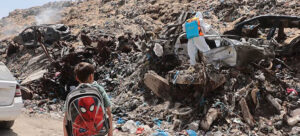
As Gaza’s fragile ceasefire frays and humanitarian conditions deteriorate, a senior UN envoy warned the Security Council last week that delays in implementing the Council-backed transition plan for the enclave will only increase suffering and undermine recovery. Credit: UN News

By James E. Jennings
ATLANTA, USA, May 29 2026 – If you have been paying attention to the ongoing wars in Ukraine, Iran, Lebanon, and many other places, perhaps you have noticed that battles today are far different from those of the last century. Now it’s not only tanks and planes but also scores of long-range missiles and massive flights of drones linked to cybernetic warfare.

The tragedy of military and civilian deaths continues, however, with the number of casualties among Russian soldiers in Ukraine reportedly reaching an astonishing 25,000 every month. As always in warfare, civilians are unfairly targeted and suffer the most, with senseless random missile and drone attacks killing innocent people on both sides with regularity.

Professed lovers of peace, like US President Trump and Israel’s Mr. Netanyahu, both of whom have agreed to brokered ceasefire agreements in Gaza and in Lebanon, continue to bomb the other side with impunity. For the most part they are getting away with it, without protests from anybody except a few ineffective agencies and lonely voices.

That is indeed a new, inventive way of war: the combatants agree to a ceasefire, and then one side keeps bombing but insists that the other stop because of the agreed ceasefire. Under such circumstances, all a ceasefire really means is “Your side must stop firing—but we’ll fire at will.”

Such nonsense is a game of meaningless words with no resolution in sight. The increasingly Nazified Likud Party in Israel continues to bomb cities, villages, and individual homes and apartment buildings in Lebanon as if it were licensed to do so, with little effective pushback from the world community.

That is perhaps to be expected since the world has largely stood by silently for almost four years during the certifiable genocide in Gaza. And by now more than 1.2 million people have been driven out of their homes in South Lebanon into a life of desperation and uncertainty.

The efficient US-backed Israeli killing machine in Lebanon has continued to smash residential buildings with impunity and pile up an obscene list of civilians murdered—innocent mothers, fathers, grandparents, and many children.

In Gaza, Palestinian sources have recorded more than 2,000 Israeli violations of the so-called “ceasefire” between October 2025 and March 2026, with a total of over 700 Palestinians killed.

Only a temporary hold from the United States has kept Israel from continuing to bomb Iran. Israel refuses to listen to any restrictions on bombing Lebanon even though there is supposedly a ceasefire in effect.

Deaths there since the short April 17 “ceasefire” continue to escalate day by day. In Iran, both Israel and the US have promised to keep obliterating what was long ago announced as already obliterated.

The number of Iranians killed and wounded in the first three months of the joint US-Israeli aggression has been announced by the Tehran government as in the tens of thousands, and the war is not over yet. Most memorable is the massacre of 120 schoolchildren, mainly girls, on the first day of US bombing at Minab, Iran. Casualties so far on the US side number 13 killed and several dozens wounded. That’s the definition of one-sided warfare.

Modern wars may puzzle observers, but the art of twisting words and phrases and their associated meanings is as old as time. Lying, obfuscation, and obscene claims are the essence of war’s primary weapon, deception. Words can kill and do. “Ceasefire” is the latest lie. For Israel and the US, it means “You cease—we fire.”

James E. Jennings is the Founder and President of the aid agency Conscience International www.conscienceinternational.org and a longtime Middle East Peace Advocate.

IPS UN Bureau


!function(d,s,id){var js,fjs=d.getElementsByTagName(s)[0],p=/^http:/.test(d.location)?’http’:’https’;if(!d.getElementById(id)){js=d.createElement(s);js.id=id;js.src=p+’://platform.twitter.com/widgets.js’;fjs.parentNode.insertBefore(js,fjs);}}(document, ‘script’, ‘twitter-wjs’);  


When UN Elections Were Once Tainted by Trade-Offs, Cheque Book Diplomacy & Luxury Cruises…

When UN Elections Were Once Tainted by Trade-Offs, Cheque Book Diplomacy & Luxury Cruises…

Voting by secret ballot. Credit: United Nations

By Thalif Deen
UNITED NATIONS, May 29 2026 – The year 2026 seems to be an eventful year at the United Nations –a new President of the General Assembly (PGA), who will officially preside over the 81st session in mid-September, plus the election and appointment of a new Secretary-General (SG) who will takeover in January 2027 after the conclusion of a 10-year tenure by the outgoing SG Antonio Guterres.

When UN member states competed in elections– or sought votes for membership in the Security Council or in various UN bodies– the voting in the 1960s and 70s was largely tainted by cheque-book diplomacy — while promises of increased aid to the world’s poorer nations came mostly with heavy strings attached.

In the 1950s and 60s, voting was by a show of hands, particularly in committee rooms. But in later years, a more sophisticated electronic board, high up in the General Assembly Hall, tallied the votes or in the case of elections to the Security Council or the International Court of Justice, the voting was by secret ballot.

In one of the hard-fought elections many moons ago, there were rumors that an oil-soaked Middle Eastern country was doling out high-end, Swiss-made wrist watches and also stocks in the former Arabian-American Oil Company, then one of the world’s largest oil companies, to UN diplomats as a trade-off for their votes.

So, when hands, both from right-handed and left-handed delegates, went up at voting time in the Committee room, the largest number of hands raised in favor of the oil-blessed candidate sported Swiss watches.

As anecdotes go, it symbolized the corruption that once prevailed in voting in inter-governmental organizations, including the United Nations — perhaps much like most national elections the world over.

Just ahead of a crucial election, one Western European country offered free Mediterranean luxury cruises in return for votes while another country dished out — openly in the General Assembly hall— boxes of gift-wrapped expensive Swiss chocolates.

Fathulla Jameel, a former UN Ambassador and later Foreign Minister of the Maldives told Inter Press Service of how his resource-poor island nation, categorized by the UN as a Small Island Developing State (SID), would appeal to richer nations to help fund some of country’s infrastructure projects.

At least one rich Asian country, a traditional donor, was the first to respond – and magnanimously too, he said. The project would be fully funded —free, gratis and for nothing. But there was a catch: “If there is a vote at the UN, and it is not of any national interest to your country”, said the donor country’s foreign ministry, “we would like to get your vote.”

Perhaps for life – the life of the island nation itself which was threatened with sea-level rise and in danger of being wiped off the face of the earth. The offer was a clever political payback. Development aid with no visible strings attached.

There was at least one instance when the president of the General Assembly, the highest policy making body at the United Nations, was elected, on the luck of a draw -– following a dead heat.

With the Asian group failing to field a single candidate, the politically-memorable battle took place ahead of the 36th session of the General Assembly back in 1981 when three Asian candidates contested the presidency: Ismat Kittani of Iraq, Tommy Koh of Singapore and Kwaja Mohammed Kaiser of Bangladesh (described as the “battle of three Ks”—Kittani, Koh and Kaiser).

On the first ballot, Kittani got 64 votes; Kaiser, 46; and Koh, 40. Still, Kittani was short of a required majority — of the total number of members voting. On a second ballot, Kittani and Kaiser tied with 73 votes each (with 146 members present, and voting).

In order to break the tie, the outgoing General Assembly President drew lots, as specified in Article 21 relating to the procedures in the election of the president (and as recorded in the Repertory of Practice of the General Assembly).

And the luck of the draw, based purely on chance, favored Kittani, in that unprecedented General Assembly election. But according to a joke circulating at that time, it was rumored that the winner was decided by the flip of a coin — but the tossed coin apparently had two heads and no tail.

In more recent years, however, the regional groups, including the Asian, African, Latin American and Caribbean and the Western and Other Groups (WEOG) have called for a virtual ceasefire as they took turns according to geographical rotation. The Groups would name their candidates who get elected without any opposition.

But the seriousness of the UN’s far-reaching mandate has been tempered by occasional moments of levity which have rocked the Glass House by the East River— with laughter. The UN is a rich source of anecdotes—both real and apocryphal– in which the General Assembly (UNGA), takes center stage, along with the Security Council (UNSC) as a political sidekick.

When UN ambassadors and delegates congregate in the cavernous General Assembly hall at voting time, they have one of three options: either vote for, against, or abstain.

The most intriguing, however, is a fourth option: to be suddenly struck with an urge to rush to the toilet. The frantic attempt to leave your seat vacant — and consequently be counted as “absent”– takes place whenever the issue is politically-sensitive.

When delegates are unable to vote with their conscience– don’t want to incur the wrath of mostly Western aid donors or are taken unawares with no specific instructions from their capitals– they flee their seats and head for the toilet

At a lunch for reporters in his town house bordering Park Avenue in Manhattan, (“this was once owned by Gucci, now it is Fulci”), Ambassador Francesco Paolo Fulci, an Italian envoy with a sharp sense of humor, described the fourth option as the “toilet factor” in UN voting.

And he jokingly suggested that the only way to resolve the problem is to install portable toilets in the back of the General Assembly hall so that delegates can still cast their votes while contemplating on their toilet seats. But for obvious reasons, there were no takers.

In most instances, the various regional groups and coalitions—including the Group of 77, the Latin American and Caribbean States, the African Union (AU) and the Western European and Others (WEOG)— take decisions behind closed doors ahead of voting and voted by consensus,

In the 1970s and 80s, the 116-member Non-Aligned Movement (NAM), founded in Belgrade in 1961, was one of the largest and most powerful political coalitions at the UN led by countries such as Yugoslavia, India, Egypt, Ghana, Indonesia, Zambia, Cuba and Sri Lanka.

As a general rule, all 116 countries vote in unison on General Assembly resolutions rarely breaking ranks. A Sri Lankan ambassador once recounted a message transmitted from his Foreign Ministry in Colombo – primarily directed at newly-arrived delegates which read— “If you are faced with an unscheduled surprise vote, and do not have any instructions from the Foreign Ministry, look to the right to see how Yugoslavia is voting and look to the left to see how India is voting. If both ambassadors are seen bolting from their seats, just follow them to the toilet”.

This article contains excerpts from a book on the United Nations titled “No Comment – and Don’t Quote Me on That” authored by Thalif Deen, Senior Editor at Inter Press Service news agency. A former member of the Sri Lanka delegation to the General Assembly sessions, he is a Fulbright scholar with a Master’s Degree in Journalism from Columbia University, New York, and twice (2012-2013) shared the gold medal for excellence in UN reporting awarded annually by the UN Correspondents Association (UNCA). The book is available on Amazon. The link to Amazon via the author’s website follows: https://www.rodericgrigson.com/no-comment-by-thalif-deen/

IPS UN Bureau Report


!function(d,s,id){var js,fjs=d.getElementsByTagName(s)[0],p=/^http:/.test(d.location)?’http’:’https’;if(!d.getElementById(id)){js=d.createElement(s);js.id=id;js.src=p+’://platform.twitter.com/widgets.js’;fjs.parentNode.insertBefore(js,fjs);}}(document, ‘script’, ‘twitter-wjs’);  


“The Heat Is No Longer Distant: A Global Climate Reckoning“

By James Alix Michel
VICTORIA, Seychelles, May 29 2026 – ‘As record heat sweeps the world, the climate crisis is no longer a warning for the future, but a reality of the present.’

James Alix Michel

Last week, Western Europe found itself under a blistering heat dome, with temperatures soaring 10 to 15°C above seasonal norms. For some, these headlines may still appear as alarming but isolated anomalies. For others—particularly those from climate-vulnerable regions—they evoke something far more immediate: recognition, and deep concern.

Across the globe, records are not just being challenged; they are being shattered.

In the United Kingdom and Ireland, London has reached an unprecedented 35.1°C, breaking all-time May records. Wales has climbed to 32.9°C, while Ireland recorded a remarkable 28.6°C in County Clare. Continental Europe is faring no better. France has seen temperatures rise to 36°C in the southwest, Austria’s Alpine regions—once symbols of climatic stability—have surged to 32.7°C, and Milan is enduring 35.5°C, nearly 9°C above average. Spain now braces for a potentially dangerous 40°C weekend.

Beyond Europe, the pattern intensifies. Northern India has been locked in a prolonged heatwave exceeding 45°C, while Pakistan is experiencing temperatures up to 6°C above seasonal norms. In parts of the Middle East, forecasts warn of temperatures approaching 52°C.

These are not isolated events. Nor are they seasonal aberrations. They are interconnected manifestations of a destabilizing climate system.

For decades, scientists have warned of precisely this trajectory. Small Island Developing States (SIDS), in particular, have consistently sounded the alarm, emphasizing that climate change is not merely an environmental issue, but an existential one.

I do not write about this from a distance. During my time as President of Seychelles, I carried this message across continents—from Copenhagen to Abu Dhabi, from Samoa to Addis Ababa, and in engagements spanning the United Nations to Washington. Alongside many others, I urged the international community to recognize both the acute vulnerability of SIDS and the broader systemic dangers posed by global warming. Too often, these warnings were acknowledged, but not matched by action at the scale or urgency required.

What is changing now is not the science—but the scale and visibility of impact.

The climate crisis is no longer confined to distant geographies or vulnerable coastlines. It is disrupting major economies, straining infrastructure in developed nations, and reshaping the daily lives of populations once considered insulated. Heatwaves are affecting transport systems, reducing agricultural productivity, and increasing risks to public health, particularly among the most vulnerable.

From melting asphalt in London to strained power grids in Milan, from intensifying wildfires and prolonged droughts to sudden floods and violent storms, the signals are converging into a single, unmistakable message: climate change is no longer a future threat. It is a present and accelerating reality.

This moment demands a fundamental reframing.

Climate change is not only about sea-level rise. It is not only an “island issue.” It is a systemic global crisis affecting every nation, every economy, and every community. The notion that some regions may remain insulated has been decisively disproven.

And yet, despite the mounting evidence, global responses remain insufficient.

International commitments, while important, continue to fall short of the scale and urgency required. Current emissions trajectories are not aligned with the goals of the Paris Agreement. Adaptation financing remains limited and unevenly distributed. Mechanisms addressing loss and damage, though increasingly recognized, are still evolving relative to the magnitude of need.

This gap between ambition and implementation is no longer sustainable.

To today’s global leaders, look out your windows – the message is clear: the evidence is no longer abstract, nor confined to scientific reports. It is unfolding in real time—in ecosystems under strain, in extreme heat, in disrupted food systems, and in growing human insecurity.

The climate crisis recognizes no borders. No country is insulated. No society is immune.

This shared exposure must now translate into shared responsibility and accelerated action.

Mitigation efforts must intensify through rapid and sustained reductions in greenhouse gas emissions. Adaptation must be elevated as a global priority, with investments in resilient infrastructure, early warning systems, and climate-smart development. Climate finance must be significantly scaled up and delivered equitably, reflecting both historical responsibility and present need. Above all, multilateral cooperation must be strengthened, as fragmented approaches will not meet a challenge of this magnitude.

We are no longer in an era of warning. We are in an era of consequence.

The decisions taken today will shape not only the trajectory of global warming, but also the resilience of our societies, the stability of our economies, and the future habitability of our planet.

Earth is our only home. The window for meaningful action is narrowing.

This must become the defining global call to action of our generation.

The time for hesitation is over.

James Alix Michel is the former President of Seychelles (2004–2016) and a global advocate for the blue economy, ocean conservation and climate resilience.

IPS UN Bureau


!function(d,s,id){var js,fjs=d.getElementsByTagName(s)[0],p=/^http:/.test(d.location)?’http’:’https’;if(!d.getElementById(id)){js=d.createElement(s);js.id=id;js.src=p+’://platform.twitter.com/widgets.js’;fjs.parentNode.insertBefore(js,fjs);}}(document, ‘script’, ‘twitter-wjs’);