Countdown Grant Explores How Cells Remove Damaged Mitochondria — Opening New Possibilities Across Parkinson’s, Chronic Disease, Rare Disease, and Aging

ATLANTA, May 15, 2026 (GLOBE NEWSWIRE) — Countdown, a nonprofit accelerating mitochondrial science and medicine across the full spectrum of human health, announced a new research grant awarded to Dr. Elias Adriaenssens at the Research Institute of Molecular Pathology (IMP) in Vienna, Austria. 

The funding will support a groundbreaking project titled From Hypoxia to Therapy: Unlocking Mitochondrial Clearance Pathways for Disease Treatment, focused on understanding how cells identify, clear, and renew damaged mitochondria, the tiny structures responsible for producing the energy every cell in the body needs to survive and function. 

Mitochondrial dysfunction is a foundational and shared driver across many of today’s most pressing health challenges, from rare and chronic disease to neurodegeneration, metabolic disease, and age-related decline. Yet despite mitochondria’s central role in human health, many of the underlying cellular quality-control mechanisms remain poorly understood. 

One of the most promising emerging areas in mitochondrial medicine is hypoxia therapy, the controlled reduction of oxygen exposure to activate protective cellular pathways. Hypoxia has emerged as a potential therapeutic strategy across a broad range of conditions and diseases, including primary mitochondrial diseases, Parkinson’s, ischemic injury, and age-related decline. Yet despite its therapeutic promise, chronic systemic hypoxia is difficult to implement clinically, requiring prolonged exposure to tightly controlled low-oxygen environments that are not realistically compatible with everyday life. Moreover, systemic hypoxia can induce widespread stress responses and undesirable biological adaptations across multiple tissues.

Dr. Adriaenssens’ research seeks to solve one of the field’s most important challenges: how to isolate the beneficial mitochondrial effects of hypoxia without exposing patients to its dangerous systemic consequences. Every cell has a built-in system for removing damaged mitochondria and maintaining cellular health. When that process breaks down, damaged mitochondria can accumulate inside cells, triggering inflammation, dysfunction, and tissue damage throughout the body. 

The project focuses on a poorly understood mitochondrial quality-control pathway, which appears to act as a brake on the cell’s mitochondrial renewal system. The research aims to identify how to selectively activate protective mitochondrial clearance pathways associated with hypoxia, without triggering the dangerous systemic effects of whole-body hypoxia. 

The long-term goal is to help lay the foundation for therapies that could mimic the protective effects of hypoxia through patient-compatible treatments, eliminating  the impractical and potentially dangerous need for continuous low-oxygen exposure or hypoxic chambers. 

What makes this research especially significant is that cells contain multiple pathways for removing damaged mitochondria, yet science has only deeply understood one of them. By uncovering alternative mitochondrial clearance mechanisms, this research could open new therapeutic possibilities across a wide range of diseases and conditions where mitochondrial dysfunction plays a central role.

The findings may also help advance one of medicine’s most promising emerging frontiers: mitochondrial transplantation. While early studies suggest transplanted mitochondria could help rescue damaged tissues, one of the biggest barriers remains that healthy mitochondria are often recognized and destroyed by the cell before they can successfully integrate and function. Understanding these newly identified quality-control pathways may help overcome that challenge and make mitochondrial transplantation more durable and effective. 

“Countdown funds research at a cellular level, the shared biology beneath conditions that most organizations address in isolation,” said Mitzi Solomon, Founder and President of Countdown. “This grant exemplifies the broad-reaching implications of mitochondrial research, as the molecular insight Dr. Adriaenssens is pursuing could ultimately benefit patients across rare disease, neurodegeneration, heart disease, transplantation, and aging — all at once.” 

“For patients with mitochondrial dysfunction, the options today are still largely supportive. This research moves us toward something genuinely different, a way to selectively activate the cell’s own renewal machinery without the side effects of systemic approaches,” said Dr. Elias Adriaenssens, Research Institute of Molecular Pathology (IMP), Vienna. “Countdown’s investment gives us the runway to do the work that makes rational drug design possible.” 

The grant is made in honor of Countdown board member Gerry King, whose commitment to advancing mitochondrial research while living with Parkinson’s disease reflects the urgency and importance of this work. 

“We are all overwhelmed by the endless requests for support across countless causes and organizations,” said Gerry King, Countdown Board Member. “I made the decision to place my commitment behind Countdown because of its uncompromising passion to uncover the root causes beneath diseases affecting all walks of life. Mitochondrial dysfunction impacts all of us, and I believe mitochondrial research has the potential to change not only the lives of people living with Parkinson’s disease, but the future of human health itself. My support of Countdown and this mission will continue until meaningful breakthroughs — and ultimately cures — are found.” 

 Founded on the belief that mitochondrial health is not a niche concern but a window into nearly every major disease challenge of our time, Countdown funds research across six interconnected pillars — Early Detection & Precision Diagnostics, Women’s Health & Hormonal Longevity, Primary Mitochondrial & Rare Genetic Disease, Chronic Disease & Aging, Brain Energy & Cognitive Resilience, and Advanced Therapeutics & Frontier Innovation. The organization unites scientists, clinicians, philanthropists, and industry partners to move the field forward faster, accelerating discoveries that shape a future where mitochondrial science is central to how we understand, treat, and prevent disease.

About Countdown 

Countdown is a nonprofit focused on accelerating mitochondrial science and medicine across the full spectrum of human health to improve how people feel, function, and age. By focusing on mitochondria — the shared biological network underlying many of the most pressing diseases of our time — Countdown is driving a more integrated approach to accelerating scientific breakthroughs that transform how we understand, prevent, and treat disease at its source. We fund research, expand awareness, and unite scientists, clinicians, philanthropists, industry leaders, and visionary brands to drive real-world impact. Join the Countdown to change the future of health. 

For more information, visit www.joincountdown.org 

About Elias Adriaenssens
Elias Adriaenssens is a postdoctoral researcher in the laboratory of Tim Clausen at the Research Institute of Molecular Pathology (IMP) at the Vienna BioCenter. He joined the Vienna BioCenter in 2019 as a postdoctoral researcher at the neighbouring Max Perutz Labs.

Adriaenssens completed his PhD in molecular biology at the University of Antwerp in Belgium. He also holds a Master’s degree in pharmacology from the University of Oxford (2014), as well as undergraduate and Master’s degrees in biochemistry from the University of Antwerp.

He has received several awards and honours, including a Medical Research Council (MRC) Studentship Award (2013) / Wolfson College High Profile Achievement Award (2014); a Rotary Hope-in-Head Grant (2019); and a Marie Skłodowska-Curie Actions (MSCA) Postdoctoral Fellowship.

About the IMP
The Research Institute of Molecular Pathology (IMP) in Vienna is a basic life science research institute largely sponsored by Boehringer Ingelheim. With over 220 scientists from 40 countries, the IMP is committed to scientific discovery of fundamental molecular and cellular mechanisms underlying complex biological phenomena. The IMP is part of the Vienna BioCenter, one of Europe’s most dynamic life science hubs with 2,800 staff members from over 80 countries in seven research institutions, two universities, and 42 biotech companies. www.imp.ac.at, www.viennabiocenter.org  

Follow Countdown on Instagram, Facebook, LinkedIn, X and YouTube

Contact:
Mitzi Solomon, Founder and President
[email protected] | +1 (917) 715-2381


GLOBENEWSWIRE (Distribution ID 9721487)

Market Analysis: Dmitry Shubov Remarks on Bridging the $3B Gap Between U.S. Capital and S.E.A. Multilingual Legal AI

FREMONT, Calif., May 15, 2026 (GLOBE NEWSWIRE) — The global contract management space is expanding rapidly, with Grand View Research projecting the market to exceed $3 billion by 2030. However, as the sector grows, a significant operational bottleneck has emerged: the struggle for enterprises to efficiently review complex, multi-language contracts across borders. Dmitry Shubov, founder of Dmitry Shubov Consulting, is addressing this gap by issuing a new industry brief on the surge of U.S. venture interest in Southeast Asian (S.E.A.) legal-tech. His analysis points to a “nuance crisis” where off-the-shelf AI models—while impressive in general settings—may not be equipped to handle the strict, culturally dependent intricacies of international legal work.

The Investor Differentiator: Contextual Intelligence

Citing recent industry data from Ironclad, the brief identifies a growing “nuance gap” where standard AI models can sometimes struggle with the subtle differences between U.S. and APAC regulations. According to Shubov’s analysis, venture funds are beginning to prioritize startups that offer:

  • Linguistic Contextualization: Moving beyond word-for-word translation to recognize how legal clauses are interpreted under different regional legal systems (e.g., Asian civil law vs. U.S. common law).
  • Operational Proof of Concept: A requirement for data from stateside pilot programs that demonstrate reduced cross-border review times and administrative streamlining.
  • Supply Chain Resilience: The ability to organize and process complex vendor agreements for U.S. businesses operating throughout the Asia-Pacific region.
  • Dynamic Language Processing: Instantly handling documents that bounce between two or more languages while maintaining 100% of the original formatting.

Navigating the Expansion Threshold

Through his advisory work at Dmitry Shubov Consulting, Shubov argues that for S.E.A. founders, technical superiority is only one part of the equation. Success in the American market requires a strategic framework that translates technical value into a language U.S. institutional investors can execute on.

“It’s one thing to translate a document; it’s another thing entirely to understand the liability inside it. The $3 billion gap we’re seeing in contract management could be a gap in trust. Investors want to know that the tech can handle the heavy lifting of international law without a human having to double-check every idiom. That’s where the real opportunity lies for S.E.A. founders today,” says Dmitry Shubov.

As the S.E.A. legal-tech corridor continues to mature, partnering with a consulting firm can be a strategic move. For more information on entering the U.S. market, please visit Dmitry Shubov Consulting.

About Dmitry Shubov Consulting

At Dmitry Shubov Consulting, our mission is to connect accredited investors with groundbreaking legal technology startups, fostering innovation and growth across Southeast Asia and helping Asian businesses enter the U.S. market. For more information, please visit our website or contact us directly.

Media Contact:

[email protected]


GLOBENEWSWIRE (Distribution ID 9720975)

Power of Diversity Grants 2026 – Call for Proposals

Bonn, Germany, May 15, 2026 (GLOBE NEWSWIRE) — Opportunity crops are getting a boost in six countries thanks to the Power of Diversity Funding Facility. On 12 May 2026, the Facility issued a Call for Proposals, officially launching a EUR 2.2 million grant program in Kenya, Nigeria, Zambia, Tanzania, Uganda and Colombia. The Power of Diversity Grants program is calling for proposals to support targeted action in those countries to improve production, processing and consumer awareness of opportunity crops.
The Power of Diversity Grants program will fund targeted projects that strengthen the value chains of selected opportunity crops – nutritious, climate-resilient crops that are well adapted to challenging environments but remain underutilized. Specific target crops for increased investments were identified through national stakeholder consultations in the six countries in 2025.
Each grant will fund a high-impact, scalable project that strengthens specific opportunity crop value chains. The project should address one or several of the intervention areas for each value chain and crop, as national stakeholders identified potential to:

  • Increase productivity through seed system development and good agricultural practices
  • Strengthen post-harvest and processing capacities
  • Improve market access and enhance value chain efficiency 
  • Increase consumer awareness

Enhancing the value chains of opportunity crops holds great potential to provide better nutrition, open economic opportunities and improve lives and livelihoods for communities. The Power of Diversity Grants program marks a step forward for investment into these opportunity crops and for resilience and food security in these countries.

Apply for a Power of Diversity Grant

To apply for a Power of Diversity Grant 2026, please follow this step-by-step guide to see if your organization is eligible and instructions on how to submit a proposal.  

  1. Check the countries, crops and activities – The Funding Facility is working with stakeholder-selected crops in specific countries. Value chain analyses have identified 24 intervention areas, with a specific scope of activity to strengthen the value chain identified by crop and country. See more details on the scope of activities in the table below and at the Power of Diversity Grants online portal.
  2. Check your eligibility – Technical eligibility based on in-country experience and expertise is required, along with financial capacity. Check to ensure your organization has the required experience and capacity to manage the project. 
  3. Propose a project – Eligible organizations are invited to propose a targeted project to enhance the value chain of a specific crop or crops as outlined in the identified intervention for that crop.
  4. Submit your proposal – Visit the Power of Diversity Grants online portal to review and download all application documents. Then, complete and upload the documents and answer all eligibility questions to submit your proposal.

The Crop Trust is looking to find the best fit to deliver positive impact, whether its for pigeon pea seed systems in Nigeria or consumer awareness of chayote in Colombia. All organizations are invited to explore the project interventions, find your fit and submit a proposal.

Countries, Crops and Activities

The Power of Diversity Grants 2026 will be awarded to promote specific opportunity crops selected by stakeholders in countries supported by the Power of Diversity Funding Facility. Project proposals should be relevant to the following countries and crops, with specific intervention scope of activities for each crop available below.

Applicant Eligibility

Grant applicants should be organizations that demonstrate the experience, expertise and eligibility to perform all proposed activities. Technical eligibility must include in-country experience of at least three years. Applicants must be able to prove their annual average revenue turnover from 2023 to 2025 exceeds their proposed project budget, with the budget amounts specified in scope of activities and usually ranging from 100,000 to 200,000 USD. Proposals can be submitted for one or multiple project intervention areas. 

Proposal Parameters

Proposals should present a clear and coherent project logic that demonstrates how the proposed activities will achieve the aims of the intervention outlined. Please note that a proposal may include one or more crops and activities in one or more countries, and each should include:

  • Defined activities and expected results
  • Timeline of project activities, milestones and deliverables
  • A project pathway to scale and sustainability elements
  • Integration of crop diversity conservation and use, including the role of national genebanks 
  • Strong linkages with existing initiatives and stakeholders
  • A cost proposal that is well-justified and aligned with proposed activities

Submit the Proposal

Proposals must be completed using the provided templates and submitted through the Power of Diversity Grants online portal. All templates are available on the Portal. 
To answer any questions about the project or process to apply, a virtual briefing session will be held on 29 May at 3:00 pm CEST. Registration is required, so please register today to attend. Questions for response at the briefing session must be submitted in advance by 25 May by email at [email protected].   
Submissions outside of the portal will not be accepted. Proposals, including all accompanying documentation, should be submitted in English. Questions should be addressed to [email protected].

Proposal Timeline

  • Application deadline – 3 July 2026
  • Notification of successful grantees – 10 August 2026
  • Project kick-off – 1 October 2026
  • Project completion deadline – Before 31 March 2029 

Selection Procedure 

All applications will be reviewed by an expert panel established by the Crop Trust. Proposals will compete with other interventions in the value chain, as well as with similar types of interventions across value chains. The selection process aims to ensure a portfolio of interventions that covers all value chains and pilots a variety of approaches from seed systems to consumer awareness. 
The selection panel may contact applicants to request any necessary clarifications regarding the received proposals. Approval of an application does not guarantee project funding. Crop Trust reserves the right to sustain or abandon the call for proposals at any time before the signing of the contract.

Attachments


GLOBENEWSWIRE (Distribution ID 9721157)

عمانتل تطلق مركز التميز للذكاء الاصطناعي وبرنامج للشركات التقنية الناشئة

مسقط، سلطنة عمان, May 15, 2026 (GLOBE NEWSWIRE) —

أعلنت عمانتل عن مركز التميز للذكاء الاصطناعي، والذي يمثل منصة متكاملة لدعم الابتكار وتسريع تحويل الأفكار والتطبيقات الواعدة في المجال إلى منتجات رقمية قابلة للتطبيق والتوسع عبر قطاعات متعددة. ويأتي ذلك من خلال إطلاق برنامج الشركات الناشئة للذكاء الاصطناعي -كأحد المسارات الرئيسية للمركز- في خطوة استراتيجية تهدف إلى تسريع تبنّي منتجات وتقنيات الذكاء الاصطناعي عبر مختلف عمليات عمانتل وقطاعات أعمالها، وتعزيز مكانتها كمزود رقمي وتقني رائد على المستويين الإقليمي والدولي.

ويأتي البرنامج ضمن استراتيجية عمانتل للذكاء الاصطناعي “الذكاء الاصطناعي للجميع”، التي تهدف إلى تمكين تبنّي تطبيقات الذكاء الاصطناعي بصورة عملية وقابلة للتوسع، بما يدعم تطوير منظومة رقمية متقدمة ويحقق أثرًا ملموسًا للمشتركين وقطاعات الأعمال والشركات التقنية الناشئة.

ويستهدف برنامج الشركات الناشئة للذكاء الاصطناعي حاليًا الشركات التي تم تسريعها من خلال مختبرات عمانتل للابتكار وهي ديكويل وريمدي وأوركي وديب أسترا وشركة ويا. إذ يتيح البرنامج لهذه الشركات فرصة المساهمة في تطوير وتوسيع منتجات الذكاء الاصطناعي ضمن البيئة التشغيلية والتجارية لعمانتل، بما يعزز انتقالها من مرحلة التجريب إلى مرحلة التوسع والنمو.

من جانبه صرح علاء الدين بيت فاضل، الرئيس التنفيذي لعمانتل
:”تمثل استراتيجية الذكاء الاصطناعي للجميع رؤية طموحة لتعزيز تبنّي الذكاء الاصطناعي بصورة عملية وقابلة للتوسع، بما يدعم مسيرة التحول الرقمي ويخلق قيمة مستدامة. ومن خلال مركز التميز للذكاء الاصطناعي وبرنامج الشركات الناشئة للذكاء الاصطناعي التوليدي، نعمل على بناء منظومة ابتكار متكاملة تجمع بين الشركات التقنية الناشئة والخبرات التشغيلية والبيئات التطبيقية الفعلية، بما يسرّع تطوير منتجات رقمية قادرة على المنافسة إقليميًا وعالميًا.”
وستتمكن الشركات المشاركة من الاستفادة من البنية الأساسية المتقدمة لعمانتل، وبيئات البيانات المتكاملة، والخبرات التقنية المتخصصة، إضافة إلى شبكة شراكاتها الإقليمية والدولية، بما يدعم تطوير المنتجات وتسريع جاهزيتها للتوسع في أسواق عالية النمو ضمن قطاعات تشمل الاتصالات، والخدمات المالية، والطاقة، والرعاية الصحية، والخدمات الحكومية.
ومن خلال مركز التميز للذكاء الاصطناعي وبرنامج للشركات التقنية الناشئة، تواصل عمانتل تعزيز منظومة الابتكار وريادة الأعمال التقنية، وترسيخ دورها في دعم الاقتصاد الرقمي وتمكين التقنيات الناشئة، انسجامًا مع مستهدفات رؤية عمان 2040.

وقد نجحت عمانتل، من خلال تكامل عملياتها وخبراتها الواسعة في مجال الاتصالات والتقنية الرقمية، في ترسيخ مكانتها كمجموعة رائدة للاتصالات في سلطنة عُمان والمنطقة. وأسهمت حلولها المبتكرة في تقديم خدمات متقدمة لمختلف فئات المشتركين وذلك ضمن سعيها إلى تقديم تجربة استثنائية لمشتركيها وتجاوز توقعاتهم. تعمل الشركة على تحقيق أهداف رؤية عُمان 2040 من خلال الاستثمار في التقنيات الناشئة، وتوفير حلول متقدمة في مجالات الحوسبة السحابية، والذكاء الاصطناعي، والحلول الذكية، والأمن السيبراني، وغيرها، بالإضافة إلى تسخير قدراتها التقنية لتعزيز الابتكار والريادة في التقنيات الحديثة والمتقدمة.

لمزيد من المعلومات، يرجى التواصل مع:

منى المعمري

مدير الصحافة الرقمية والإعلام

هاتف: 24242743 968+

البريد الإلكتروني: [email protected]

الصورة المصاحبة لهذا الإعلان متاحة على

https://www.globenewswire.com/NewsRoom/AttachmentNg/fc046e98-de77-442c-9859-59b15ef635a4


GLOBENEWSWIRE (Distribution ID 1001182138)

Omantel Launches AI Centre of Excellence and AI Startups Program

MUSCAT, Oman, May 15, 2026 (GLOBE NEWSWIRE) — Omantel has announced the launch of its AI Centre of Excellence, an integrated platform designed to accelerate the adoption of advanced artificial intelligence technologies and support the transformation of promising ideas and applications into scalable digital products across multiple sectors. The centre brings together advanced infrastructure, integrated data environments, operational expertise, and innovation capabilities to enable practical and scalable AI implementation across industries.

As one of the centre’s key tracks, Omantel also launched the AI Startups Program, a strategic program focused on connecting technology startups with Omantel’s internal teams and real operational environments to support the co-creation and scaling of commercially viable AI products and solutions.

The program forms part of Omantel’s broader “Everyone AI” strategy, which aims to enable the practical and scalable adoption of artificial intelligence applications, while supporting the development of an advanced digital ecosystem and creating tangible impact for customers, business sectors, and technology startups.

The AI Startups Program currently engages startups accelerated through Omantel Innovation Labs, including Decoil, Remedy, ORKI, DeepAstra, and Wiya. Through the program, these startups contribute to the development and expansion of AI products within Omantel’s operational and commercial ecosystem, supporting their transition from experimentation to growth and commercialization.

Commenting on the lunch, Aladdin Baitfadhil, Chief Executive Officer of Omantel, said: “Omantel’s ‘Everyone AI’ strategy represents an ambitious vision to drive the practical and scalable adoption of artificial intelligence in a way that supports digital transformation and creates sustainable value. Through the AI Centre of Excellence and the AI Startups Program, we are building an integrated innovation ecosystem that brings together technology startups, operational expertise, and real-world implementation environments to accelerate the development of digital products capable of competing regionally and globally.”

Participating startups will benefit from Omantel’s advanced infrastructure, integrated data environments, specialized technical expertise, and regional and international partnerships, supporting product development and accelerating expansion into high-growth markets across sectors including telecommunications, financial services, energy, healthcare, and government services.

Through the AI Centre of Excellence and the AI Startups Program, Omantel continues to strengthen its innovation ecosystem and support technology entrepreneurship, while reinforcing its role in enabling digital transformation and advancing emerging technologies in line with Oman Vision 2040.

Omantel has succeeded, through the integration of its operations, processes, and extensive expertise in the field of communications and digital technology, in establishing its position as a leading telecommunications company within the Sultanate of Oman and beyond. The company's innovative approaches have contributed to providing state-of-the-art solutions to different consumer and business sectors. The company aims to deliver an unparalleled, exceptional experience to its customers and strives to always exceed their expectations. To achieve the objectives of Oman Vision 2040, Omantel invests in emerging technologies and provides cutting-edge ICT solutions, such as cloud solutions, AI, Smart solutions, cybersecurity, and much more, in addition to harnessing its technological capabilities to enhance innovation and leadership in new and advanced technologies.

For Media Inquiry:

Muna Al Maamri

Manager of Digital Press & Media

Omantel

Tel: +968 24242743

Email: [email protected]

A photo accompanying this announcement is available at https://www.globenewswire.com/NewsRoom/AttachmentNg/fc046e98-de77-442c-9859-59b15ef635a4


GLOBENEWSWIRE (Distribution ID 1001182138)

Rapport UEX de Bitget : les investisseurs particuliers s’orientent vers d’autres actifs que les cryptomonnaies, 52 % d’entre eux investissant dans des actions et 51 % utilisant l’IA

VICTORIA, Seychelles, 15 mai 2026 (GLOBE NEWSWIRE) — Bitget, la plus grande bourse universelle (ou UEX, de l’anglais Universal Exchange) du monde, a publié le rapport Bitget User Asset Allocation Report 2026, dont les données montrent que les investisseurs particuliers élargissent désormais leurs placements au-delà des cryptomonnaies vers les matières premières, les actions et l’investissement assisté par l’intelligence artificielle, à mesure que la composition des portefeuilles se diversifie à travers les classes d’actifs mondiales. Les conclusions combinent l’activité de trading sur Bitget et les réponses de plus de 6 000 utilisateurs dans le monde.

Les cryptomonnaies sont restées la principale source d’activité de trading au premier trimestre 2026, avec 86 % des utilisateurs interrogés détenant des actifs cryptographiques. Les cryptomonnaies représentaient presque l’intégralité du volume d’échange début janvier avant de se stabiliser dans une fourchette comprise entre 60 % et 80 % en mars, à mesure que la participation s’étendait à d’autres marchés. Sur la même période, le trading d’actifs traditionnels, mené par l’or, est passé de presque zéro à entre 20 % et 40 % de l’activité totale, marquant la plus forte hausse trimestrielle jamais enregistrée pour les actifs non cryptographiques sur Bitget.

Les données montrent que 52 % des utilisateurs dans le monde détiennent désormais des actions en plus des cryptomonnaies, tandis que 35 % possèdent de l’or ou d’autres métaux précieux, faisant des matières premières la catégorie d’actifs non cryptographiques la plus adoptée parmi les participants interrogés. L’IA et les métaux précieux ou le pétrole brut sont apparus comme les deux thèmes que les utilisateurs associent le plus étroitement aux opportunités d’investissement en 2026.

Chez les participants à forte valeur patrimoniale, la diversification s’accélère encore davantage. Les utilisateurs de Bitget ont enregistré un rendement annuel moyen de 13 % en 2025, tandis qu’environ 6 % des utilisateurs VIP ont atteint des rendements annuels compris entre 51 % et 100 %. Parmi les utilisateurs à forte valeur interrogés, 74 % ont déclaré prévoir d’étendre leurs investissements aux cryptomonnaies, aux actions et aux matières premières en 2026 afin de gérer les risques de manière plus active.

Les préférences régionales de trading continuent de refléter les conditions macroéconomiques locales. En Asie de l’Est, 60 % des utilisateurs ont indiqué que le fait d’éviter les conversions de devises constituait une raison clé d’utiliser des règlements en USDT, tandis que 48 % privilégiaient l’évitement des exigences traditionnelles d’ouverture de compte. En Asie du Sud-Est, 46 % des utilisateurs ont identifié l’accès à l’effet de levier comme une raison majeure de négocier des actifs traditionnels. En Amérique latine, 78 % ont déclaré que la diversification et la protection contre l’inflation ou la dépréciation monétaire étaient leurs principales motivations pour détenir à la fois des cryptomonnaies et des actifs traditionnels.

L’adoption de l’IA devient également un élément central des comportements de trading. 51 % des utilisateurs interrogés ont déclaré utiliser déjà des outils d’IA pour soutenir leurs décisions d’investissement. Les produits d’IA de Bitget, notamment GetAgent, GetClaw et Agent Hub, sont de plus en plus utilisés pour interpréter les publications de résultats financiers, les mouvements des prix des matières premières, les évolutions macroéconomiques et les signaux on-chain à travers différentes classes d’actifs.

Gracy Chen, PDG de Bitget, a déclaré : « Le comportement des traders particuliers devient de plus en plus sensible aux dynamiques macroéconomiques. Les utilisateurs déplacent leurs capitaux entre différentes classes d’actifs en fonction de la liquidité, de la volatilité et de l’accès au marché, et ils attendent de plus en plus qu’une seule plateforme puisse prendre cela en charge efficacement. Le règlement basé sur les stablecoins devient un point d’entrée pratique vers une participation plus large aux marchés. La demande croissante pour les matières premières, les actions et les outils d’IA montre que les utilisateurs construisent leurs portefeuilles autour de signaux globaux, et non autour d’une seule catégorie d’actifs. »

Les résultats de l’enquête montrent également une forte demande pour le modèle de bourse universelle. 71 % des utilisateurs ont identifié le règlement en USDT comme la fonctionnalité la plus importante, tandis que 65 % considèrent la possibilité de passer rapidement des cryptomonnaies aux actions, aux devises et aux matières premières au sein d’un seul compte comme une priorité absolue. Les utilisateurs décrivent systématiquement la plateforme de trading idéale comme un système combinant l’accès aux actifs mondiaux, les règlements en stablecoins, une liquidité centralisée, une vérification transparente des réserves et des outils d’aide à la décision assistés par IA.

Pour en savoir plus, cliquez ici.

À propos de Bitget
Bitget est la première bourse universelle (UEX) du monde, avec plus de 125 millions d’utilisateurs. Cette plateforme donne accès à plus de 2 millions de jetons crypto, ainsi qu’à plus de 100 actions tokenisées, ETF, matières premières, devises et métaux précieux comme l’or. L’écosystème vise à aider les utilisateurs à faire du trading de manière plus avisée grâce à son agent IA qui accompagne l’exécution des ordres. Bitget entend promouvoir l’adoption des cryptomonnaies grâce à des partenariats stratégiques conclus avec LALIGA et MotoGP™. En accord avec sa stratégie d’impact mondial, Bitget s’est associée à l’UNICEF pour soutenir la formation à la blockchain auprès de 1,1 million de personnes d’ici à 2027. Actuellement leader du marché de la finance traditionnelle tokenisée, Bitget propose les frais les plus bas du secteur et la liquidité la plus élevée dans plus de 150 régions à travers le monde.

Pour en savoir plus, veuillez consulter : Site Internet | Twitter | Telegram | LinkedIn | Discord
Pour toute demande média, veuillez nous contacter à l’adresse suivante : [email protected]

Mise en garde sur les risques : les cours des actifs numériques peuvent fluctuer et connaître une forte volatilité. Il est conseillé aux investisseurs de n’engager que les fonds qu’ils peuvent se permettre de perdre. La valeur de votre investissement peut être affectée et il est possible que vous n’atteigniez pas vos objectifs financiers ou que vous ne parveniez pas à récupérer votre investissement principal. Nous vous encourageons à toujours solliciter les conseils d’un spécialiste financier indépendant et à tenir compte de votre expérience et de votre situation financière personnelles. Les performances passées ne constituent pas un indicateur fiable des résultats futurs. Bitget décline toute responsabilité en cas de pertes potentielles encourues. Les informations contenues dans le présent communiqué ne constituent en aucun cas un conseil financier. Pour tout complément d’information, consultez nos Conditions d’utilisation.

Une photo annexée au présent communiqué est disponible à l’adresse suivante : http://www.globenewswire.com/NewsRoom/AttachmentNg/db27ba82-5ba8-43e0-a8b9-9187d81c991b


GLOBENEWSWIRE (Distribution ID 1001182121)

Relatório Bitget UEX: Investidores de Varejo Vão Além das Criptomoedas, 52% Adicionam Ações e 51% Usam IA

VICTORIA, Seychelles, May 15, 2026 (GLOBE NEWSWIRE) — Bitget, a maior Universal Exchange (UEX) do mundo, divulgou o Relatório de Alocação de Ativos do Usuário Bitget 2026 com dados que mostram que os investidores de varejo estão se expandindo além das criptomoedas para commodities, ações e investimentos assistidos por IA, com a ampliação do portfólio mais diversificada em todas as classes de ativos globais. O relatório combina a atividade de negociação na Bitget com respostas de mais de 6.000 usuários em todo o mundo.

As criptomoedas continuaram sendo a principal fonte de atividade de negociação no primeiro trimestre de 2026, com 86% dos usuários pesquisados detendo criptoativos. As criptomoedas representaram quase todo o volume de negociação no início de janeiro, antes de se estabilizar em uma faixa de 60% a 80% em março, diante da ampliação da participação em outros mercados. No mesmo período, a negociação de ativos tradicionais liderados pelo ouro subiu de quase zero para entre 20% e 40% de atividade total, o maior aumento trimestral registrado para ativos não cripto na Bitget.

Os dados destacaram que 52% dos usuários em todo o mundo agora detêm ações juntamente com criptomoedas, enquanto 35% detêm ouro ou outros metais preciosos, tornando as commodities a categoria de ativos não cripto mais amplamente adotada pelos participantes pesquisados. A IA e os metais preciosos ou o petróleo bruto surgiram como os dois temas que os usuários mais associam às oportunidades de investimento em 2026.

Entre os participantes de alto patrimônio líquido, a diversificação está acelerando ainda mais. Os usuários da Bitget registraram um retorno médio anual de 13% em 2025, enquanto cerca de 6% dos usuários VIP obtiveram retornos anuais entre 51% e 100%. Entre os usuários de alto valor pesquisados, 74% disseram que pretendem expandir para criptomoedas, ações e commodities em 2026, para gerenciar o risco de forma mais ativa.

A preferência comercial regional continua a refletir as condições macro locais. No Leste Asiático, 60% dos usuários classificaram evitar a conversão de moeda como uma das principais razões para usar a liquidação em USDT, enquanto 48% priorizaram evitar os requisitos tradicionais de abertura de contas. No Sudeste Asiático, 46% dos usuários identificaram o acesso à alavancagem como um dos principais motivos para a negociação de ativos tradicionais. Na América Latina, 78% disseram que a diversificação e a proteção contra a inflação ou a depreciação da moeda são os principais motivos para manter ativos cripto e tradicionais.

A adoção da IA também está se tornando parte do comportamento central da negociação. 51% dos usuários entrevistados disseram que já usam ferramentas de IA para tomar decisões de investimento. Os produtos de IA da Bitget, incluindo GetAgent, GetClaw e Agent Hub, estão sendo cada vez mais usados para interpretar lançamentos de ganhos, movimentos de preços de commodities, desenvolvimentos macroeconômicos e sinais onchain em todas as classes de ativos.

Gracy Chen, CEO da Bitget, disse: “O comportamento do comércio de varejo está se tornando mais consciente dos fatores macroeconômicos Os usuários estão movimentando capital entre as classes de ativos com base na liquidez, volatilidade e acesso ao mercado, e esperam cada vez mais que uma plataforma ofereça suporte a isso de forma eficiente. A liquidação baseada em stablecoin está se tornando um ponto de entrada prático para uma participação mais ampla no mercado. A demanda mais forte por commodities, ações e ferramentas de IA mostra que os usuários estão criando portfólios em torno de sinais globais, e não em torno de uma única categoria de ativos.”

Os resultados da pesquisa também mostram uma forte demanda pelo modelo de Universal Exchange. 71% dos usuários identificaram a liquidação em USDT como o recurso mais importante, enquanto 65% classificaram a troca rápida de criptomoedas, ações, forex e commodities em uma conta como a principal prioridade. Os usuários descreveram consistentemente a plataforma de negociação ideal como a que combina acesso global a ativos, liquidação de stablecoins, liquidez centralizada, verificação transparente de reservas e ferramentas de decisão assistidas por IA em um único sistema.

Para mais informações, visite aqui.

Sobre a Bitget
A Bitget é a maior Universal Exchange (UEX) do mundo, atendendo a mais de 125 milhões de usuários com acesso a mais de 2 milhões de tokens de criptomoedas, mais de 100 ações tokenizadas, ETFs, commodities, FX e metais preciosos como ouro. O ecossistema está comprometido em ajudar os usuários a negociar de forma mais inteligente com seu agente de IA sendo o copiloto para executar ordens de trade. A Bitget está impulsionando a adoção de criptomoedas por meio de parcerias estratégicas com a LALIGA e a MotoGP™. Alinhada com sua estratégia de impacto global, a Bitget se uniu à UNICEF em apoio ao ensino de blockchain para 1,1 milhão de pessoas até 2027. A Bitget atualmente lidera o mercado de TradFi tokenizado, fornecendo as taxas mais baixas do setor e a maior liquidez em 150 regiões em todo o mundo.

Para mais informação, visite: Website | Twitter | Telegram | LinkedIn | Discord
Para perguntas da mídia, contate: [email protected]

Aviso de Risco: Os preços dos ativos digitais estão sujeitos a flutuações e podem ser significantemente voláteis. Os investidores são aconselhados a alocar apenas os fundos que podem perder. O valor de qualquer investimento pode ser afetado, e existe a possibilidade de que os objetivos financeiros não sejam atingidos, nem que o investimento principal recuperado. Aconselhamento financeiro independente deve sempre ser obtido, e a experiência financeira pessoal e a posição devem ser cuidadosamente consideradas. O desempenho passado não é um indicador confiável de resultados futuros. A Bitget não se responsabiliza por quaisquer perdas potenciais incorridas. Nada contido neste documento deve ser interpretado como aconselhamento financeiro. Para mais informações, consulte nossos Termos de Uso.

Foto deste comunicado disponível em http://www.globenewswire.com/NewsRoom/AttachmentNg/db27ba82-5ba8-43e0-a8b9-9187d81c991b


GLOBENEWSWIRE (Distribution ID 1001182121)

DIGITAL RIGHTS: ‘The Priority Should Be Holding Tech Companies Accountable, Not Banning Children from the Digital World’

By CIVICUS
May 15 2026 –  
CIVICUS discusses the rising trend of social media bans for children with Marie-Ève Nadeau, Head of International Affairs of the 5Rights Foundation, an organisation that promotes children’s rights in the digital environment.

Marie-Ève Nadeau

Four countries have banned children from accessing social media, five more have passed laws awaiting implementation and around 40 more are considering bans. What Australia began when it banned under-16s from 10 social media platforms is rapidly becoming a global trend. Children need protection from the documented harms caused by early and heavy social media use, but whether bans offer effective protection is a live question for policymakers worldwide.

Are social media bans an effective way of protecting children?

Today, one in three internet users is a child, and digital technologies increasingly mediate all aspects of their lives, from the classroom to the playground, from their first friendships to how they see themselves. As evidence of harms and risks mounts, lawmakers around the world are racing to impose age limits on children’s access to social media. The instinct to act is right, but the current direction risks missing the point.

The real issue is the conditions children face when online. Children are growing up in a digital environment designed without their distinct rights, needs and vulnerabilities in mind. This is a deliberate choice. Tech companies’ business models prioritise commercial gain over children’s safety and wellbeing, deliberately embedding persuasive design, relentless engagement loops and extractive data practices by default. Fixing this requires more than blocking children’s access.

Age restrictions are not new, yet their effectiveness remains inconclusive. Banning children from specific services while leaving the underlying system untouched lets tech companies off the hook for recommender systems that push harmful content, persuasive design that keeps children compulsively engaged and data practices that exploit their attention for profit. Used in isolation, bans create an illusion of protection while the same harmful design practices continue unchallenged. Children are pushed towards other unregulated environments, such as AI chatbots, gaming platforms and educational technology services, where they face equivalent risks with even less scrutiny.

What do these bans mean for children’s rights to expression and information?

Children’s rights are interdependent and indivisible, and the United Nations Convention on the Rights of the Child General Comment No. 25 makes clear that all children’s rights apply fully in the digital environment. This includes the right to protection from harm, but also to the rights of access to information, expression and participation. In practice, tech companies have made these rights conditional on the commercial surveillance, exploitation and manipulation of children, eroding their privacy, safety, critical thinking and agency.

Age-based bans that restrict access without addressing underlying design practices create a false choice between freedom and safety. Children need both protection from harm and meaningful access to expression, information and participation. Restricting access without reforming the systems that embed risk fails to uphold the full range of children’s rights.

Who is most harmed by these bans, and what gaps do they create?

Children’s rights apply until the age of 18, yet proposed restrictions often only cover children under 16 and a narrow set of high-risk services. This creates gaps. Children above the age threshold, and those who circumvent poorly implemented restrictions, end up in unregulated spaces outside the scope of bans.

Bans can also entrench inequality. Children are not a homogeneous group, and those facing intersecting vulnerabilities linked to disability, gender, political opinion, race, religion or ethnic, national or social origin may heavily rely on digital spaces for expression, identity safety and support.

At the same time, engagement-based platform design often rewards and amplifies divisive and harmful content, for example on gender-based violence, heightening risks for excluded communities. Blanket bans do not create safer spaces, nor eliminate these harms. Instead, they displace them to less visible, less regulated and even less accountable spaces. Effective protection must ensure children can exercise their rights and have safe spaces of support and community.

How does age verification work, and what does it mean for children’s privacy?

Tech companies routinely invest heavily in targeting advertising and personalising content yet fail to apply the same rigour to protecting children. Age assurance, an umbrella term for both age estimation and age verification solutions, allows companies to recognise the presence of children and act accordingly. It must be lawful, rights-respecting and proportionate to risk. Data collection should be limited to what’s strictly necessary to establish age, and used only for that purpose.

Global privacy regulators found that 24 per cent of services lack any age assurance mechanism and 90 per cent of those relying on self-declaration are easily bypassed. Yet robust solutions exist. Australia’s age assurance technology trial demonstrates that privacy-preserving age verification can confirm age without exposing identity. Technical standards, such as the 2089.1-2024 Standard for Online Age Verification published by the Institute of Electrical and Electronics Engineers, show that independently audited frameworks, like those used in product safety or pharmaceuticals, are both feasible and necessary to ensure age assurance systems are secure, proportionate and compliant.

For low-risk services appropriate for all users, there should be no requirement to establish age. Where services or functionalities present risk to children, companies should address or mitigate specific high-risk features rather than gatekeeping entire services.

What should governments demand from platforms to protect children?

Age restrictions have become part of a global playbook, notably in data protection regimes like the US Children’s Online Privacy Protection Act (COPPA), which sets 13 as the threshold for consent to data collection. Poor implementation and enforcement of COPPA and similar laws have allowed tech companies to hide behind obscure disclaimers while failing to meaningfully restrict access and profiting from embedding risk into children’s digital experiences.

There’s another way forward. The priority should be holding tech companies accountable, not banning children from the digital world. That means banning exploitative practices, regulating risky features such as addictive design, manipulative recommender systems and extractive data practices, and requiring privacy, safety and age-appropriate design as the baseline.

It also means shifting to systemic risk management: companies should be legally required to anticipate, assess and mitigate how their products expose children to risk. This baseline already exists in other high-risk sectors such as aviation, food safety and medicine, where products must demonstrate safety before reaching the market.

A growing global consensus points to a clear path forward: embedding age-appropriate design, requiring child rights impact assessments, mandating privacy and safety by design and default, establishing effective enforcement mechanisms and ensuring independent auditing. Over 55 leading organisations and experts from all continents have endorsed the 10 best-practice principles developed by the 5Rights Foundation.

CIVICUS interviews a wide range of civil society activists, experts and leaders to gather diverse perspectives on civil society action and current issues for publication on its CIVICUS Lens platform. The views expressed in interviews are the interviewees’ and do not necessarily reflect those of CIVICUS. Publication does not imply endorsement of interviewees or the organisations they represent.

GET IN TOUCH
Website
BlueSky
Instagram
LinkedIn
Spotify
Twitter
Marie-Ève Nadeau/BlueSky
Marie-Ève Nadeau/LinkedIn

SEE ALSO
Child social media bans: a growing global problem CIVICUS Lens 05.May.2026
Technology: Innovation without accountability CIVICUS | State Of Civil Society Report 2026
North Macedonia: ‘The solution cannot be to cut children off social media, but to make it safer’ CIVICUS Lens | Interview with Goran Rizaov 23.Apr.2026


!function(d,s,id){var js,fjs=d.getElementsByTagName(s)[0],p=/^http:/.test(d.location)?’http’:’https’;if(!d.getElementById(id)){js=d.createElement(s);js.id=id;js.src=p+’://platform.twitter.com/widgets.js’;fjs.parentNode.insertBefore(js,fjs);}}(document, ‘script’, ‘twitter-wjs’);  


Building Resilient Food Systems in an Age of Disruption

Building Resilient Food Systems in an Age of Disruption

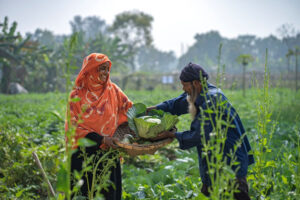
Farmers in Bangladesh. Credit: Heifer International

 
As conflict in the Middle East disrupts critical fuel and fertilizer supply routes, smallholder farmers across Asia are once again caught in the crossfire of global shocks. This piece argues that repeated crises are exposing a deeper structural flaw in agri-food systems—Overdependence on External Inputs. It presents a compelling case for regenerative agriculture as a pathway to resilient food systems in Asia.

By Neena Joshi
UTTAR PRADESH, India, May 15 2026 – The latest shock to global food systems, triggered by conflict in the Middle East and disruptions around the Strait of Hormuz, has once again exposed a fragile truth: the world’s food systems remain highly vulnerable to external shocks.

For Asia, especially South Asia, where agriculture underpins millions of livelihoods, the consequences are immediate and severe. Rising fuel prices, supply chain disruptions, and limited access to fertilizers are pushing already fragile systems to the brink.

The Strait of Hormuz is not just a geopolitical chokepoint; it is a lifeline for fuel and agricultural inputs across Asia. A significant share of fertilizers and their raw materials, including natural gas, transit through or originate from this route.

For countries such as India, Bangladesh, and Nepal, where agriculture employs between 38 and over 60 percent of the workforce, this dependency creates systemic risk. When supply chains falter, the effects cascade quickly: input costs rise, planting cycles are disrupted, and farmer incomes shrink.

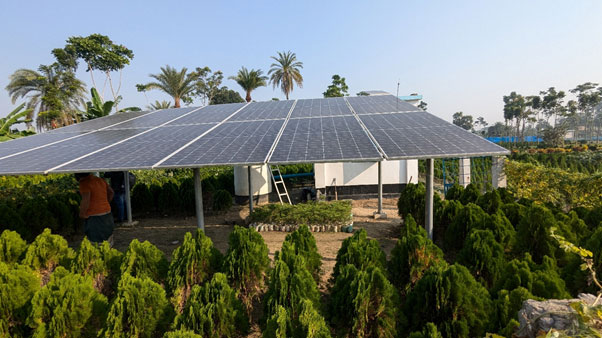
Solar panels installed in a farm in Bangladesh. Credit: Heifer International

Even if shipping routes reopen, recovery will be slow

Damage to energy infrastructure and continued geopolitical uncertainty mean price volatility and supply constraints can persist for months. For smallholder farmers, this creates a dual crisis. Exporting produce becomes difficult due to logistical bottlenecks, while fuel shortages hamper domestic distribution. At the same time, the next cropping cycle looms, with essential fertilizers either unavailable or unaffordable.

This is not an isolated disruption. From the COVID-19 pandemic to the war in Ukraine, global shocks are becoming more frequent and interconnected. Each crisis compounds the last, pushing smallholder farmers, the backbone of global food production, into deeper uncertainty. The question is no longer whether disruptions will occur, but how prepared our systems are to withstand them.

At the heart of the problem is overdependence on external, input-intensive systems, chemical fertilizers, fossil fuels, and long, fragile supply chains. Reducing this dependence is central to building resilience.

Regenerative Agriculture and Renewable Energy Offer a Compelling Pathway Forward.

At its core, regenerative agriculture restores soil health, enhances biodiversity, improves water retention, and reduces reliance on synthetic inputs. Practices such as crop diversification, organic soil enrichment, reduced tillage, and integrated pest management shift farming from an extractive to a restorative model.

By rebuilding natural soil fertility, these approaches reduce dependence on external inputs. Instead of relying heavily on urea in rice cultivation, regenerative systems promote nutrient cycling and biological nitrogen fixation through legumes, alongside the use of compost and manure to strengthen soil organic matter and ensure a steady, natural nutrient supply.

Integrating renewable energy further strengthens resilience. Solar-powered irrigation replaces fuel-based inputs with clean, reliable energy, lowering operational costs and improving water-use efficiency—especially critical during periods of disruption.

The evidence base for these approaches is both growing and compelling. In Bangladesh, multiple studies show that solar irrigation consistently outperforms diesel systems, delivering higher returns, improving food security, and reducing irrigation costs by 20–50 percent, while significantly boosting profitability (Rana, 2021; Buisson, 2024; Sunny, 2023; Sarker, 2025).

Research also shows that bio-based inputs like compost, biochar, and green manure can partially replace synthetic fertilizers, often without yield loss, while improving soil health (Naher, 2021; Ferdous, 2023; Behera, 2025).

Regenerative Agriculture is Not Just an Environmental Solution—It is an Economic One

By reducing dependence on volatile external inputs such as chemical fertilizers and fossil fuels, regenerative agriculture shields farmers from global price shocks while improving long-term productivity and profits.

Emerging evidence from Nepal and India reinforces this trend: while yields generally remain stable, reduced input costs significantly increase farm profitability (Magar, 2022; Dhakal, 2022; Berger, 2025).

A broader analysis by the Observer Research Foundation (2025) finds that although yields may dip slightly during transition, most cases report higher yields over time, alongside improved income stability driven by lower input dependence.

Similar trends are being observed globally, reinforcing that regenerative approaches can deliver both resilience and profitability across diverse farming systems (link).

Importantly, these outcomes are already visible on the ground in South Asia. Through programs led by Heifer International, smallholder farmers are adopting regenerative and climate-smart practices that reduce costs, improve yields, and strengthen resilience.

In Bangladesh’s Jashore district, for instance, women farmers organized into cooperatives have reduced irrigation costs, improved productivity, and strengthened market access through solar irrigation, organic soil management, and collective action.

As one farmer, Shirin Akter, shares: “Adopting climate-smart practices and pooling resources through my cooperative allowed me to grow diverse crops. When drought hit, I still had harvests to sell, and my cooperative helped me recover quickly.”

For farmers like Shirin, these shifts are transformative, turning vulnerability into resilience through diversified systems, lower input dependence, and stronger collective support. Similar models in Nepal show how regenerative, community-based approaches can reduce resource pressure while improving incomes.

Scaling this Transition Requires Action Beyond the Farm

To transition to a resilient and sustainable food system, a multi-stakeholder approach is essential. Policymakers should realign incentives to support sustainable practices and reduce dependence on imported inputs. Financial institutions and insurers should recognize the lower risk profiles of regenerative systems.

Businesses must embed sustainability into core decisions, prioritizing sourcing from farmers adopting regenerative practices and building longer-term, stable supply relationships. At the same time, marketing teams can shape consumer demand by communicating the value of sustainably produced food. Together, these shifts can align supply chains and markets in support of more resilient food systems.

The stakes are high. The World Food Programme warns that roughly 45 million more people could be pushed into hunger if current disruptions persist, adding to the 318 million people already food insecure.

We cannot continue rebuilding fragile food systems after every shock. We must redesign them. Regenerative agriculture offers a pathway to reduce dependence on volatile external inputs, restore ecological balance, and build resilience where it matters most—at the farm level.

To replenish what has been used up is not just an environmental necessity—it is the foundation of more secure, equitable, and resilient food systems across Asia.

Neena Joshi is the Senior Vice President for Asia Programs at Heifer International. With over 20 years of experience, she leads initiatives to build inclusive, sustainable agrifood systems and empower smallholder farmers, especially women and youth, across Asia.

IPS UN Bureau


!function(d,s,id){var js,fjs=d.getElementsByTagName(s)[0],p=/^http:/.test(d.location)?’http’:’https’;if(!d.getElementById(id)){js=d.createElement(s);js.id=id;js.src=p+’://platform.twitter.com/widgets.js’;fjs.parentNode.insertBefore(js,fjs);}}(document, ‘script’, ‘twitter-wjs’);  


Field-Based Research Is a Lifeline for Zimbabwe’s Food Security

Agriculture sustains millions of people in Zimbabwe, serving as a vital source of both food and income. But climate-related pressures affecting land, crops, rainfall patterns, and increasing pest outbreaks are threatening smallholder farmers’ harvests, leaving them food insecure. Scientists at the International Maize and Wheat Improvement Center (CIMMYT) in the capital, Harare, have teamed up […]