
‘Do More With Less’: GEF CEO Claude Gascon on Speed, Scale and Reform

Claude Gascon, Interim CEO and Director of Strategy and Operations at the Global Environment Facility. Credit: The GEF

Claude Gascon, Interim CEO and Director of Strategy and Operations at the Global Environment Facility. Credit: The GEF

By Stella Paul
WASHINGTON D.C. & HYDERABAD, India, May 19 2026 – As governments prepare for the Eighth Assembly of the Global Environment Facility (GEF) – scheduled to be held from May 30 to June 6 in Samarkand, Uzbekistan – the stakes are unusually high.

Climate change, biodiversity collapse, pollution, debt distress and geopolitical fragmentation are converging at a moment when environmental finance is under growing scrutiny. For many countries in the Global South, the challenge is no longer only about ambition but also about whether global systems can deliver fast enough and fairly enough.

For Claude Gascon – Interim CEO and Director of Strategy and Operations at the GEF – the question facing the organisation is how to turn urgency into action while operating in an increasingly volatile world.

“A meaningful outcome is turning urgency into action,” Gascon says in an exclusive interview with IPS, describing what success at the upcoming Assembly would look like. That includes public confirmation of country pledges to the GEF and final approval of a strong GEF9 package that will guide investments for the next four years. He also points to endorsement of several priorities that the institution sees as central to its future direction: integrated programming, blended finance, whole-of-government approaches, and stronger support for Least Developed Countries (LDCs), Small Island Developing States (SIDS), and Indigenous Peoples and local communities (IPLCs).

“All this signals that multilateralism is delivering and positions us to accelerate impact in the final sprint toward the 2030 global environmental goals,” he says.

Gascon stepped into the role of Interim CEO during a period of overlapping crises and mounting pressure on international institutions. While many governments continue to demand bigger environmental outcomes, donor fatigue, economic instability and competing geopolitical priorities are tightening the availability of public finance.

“We need to do more with less, and to accomplish that, we chose disciplined ambition,” he says.

The full interview follows:

IPS: The Eighth GEF Assembly comes at a time of overlapping crises – climate change, biodiversity loss, and pollution. What, in your view, would define a meaningful outcome from this Assembly?

Claude Gascon: A meaningful outcome is turning urgency into action. This includes public confirmation of country pledges to the GEF and final approval of a strong GEF-9 package that will guide our investments for the next four years. The Assembly is also an opportunity for clear endorsement of the ambitious priorities we’ve agreed on: a focus on integration and integrated programs, mainstreaming blended finance to mobilise private capital, whole-of-government and whole-of-society approaches, and strengthened support for Least Developed Countries (LDCs), Small Island Developing States (SIDS), and Indigenous People and local communities (IPCLs). All this signals that multilateralism is delivering and positions us to accelerate impact in the final sprint toward the 2030 global environmental goals.

IPS: As the Interim CEO, you are navigating a volatile global context. What difficult trade-offs have you had to make between ambition and feasibility?

Gascon: We need to do more with less, and to accomplish that, we chose disciplined ambition. For example, we are channelling resources through integrated programs in nature, food, urban, energy, and health systems and setting a target of programming 25 percent of our resources to mobilise private capital and stretch scarce public funds. We are also simplifying access and speeding decisions, so countries see real progress sooner. And finally, we are working to expand our partnerships with new stakeholders such as private philanthropies to collaborate on joining our public investments with the private investments of foundations so that together we can scale up the outcomes that are critical to achieving the 2030 goals.

IPS: Countries facing debt and instability say targets feel out of reach. Should expectations be recalibrated or should financing mechanisms evolve?

Claude Gascon: We need to acknowledge these difficulties, but our response must be by evolving financing and delivery instead of lowering the goals. The GEF-9 opens more space for innovation and expands tracking of socio-economic co-benefits and transformational outcomes. There will also be a full review of the resource allocation model during the GEF-9 investment cycle to inform comprehensive changes in the GEF-10 cycle (from 2030 to 2034). The aim is faster, more flexible access that mobilises private and domestic finance alongside official development assistance (ODA). We must also work to support countries in their efforts to align national policies and eliminate perverse subsidies that could help in achieving global environmental goals.

IPS: With climate finance increasingly tied to geopolitical priorities, is there a risk of weakening multilateral funds like the GEF?

Claude Gascon: The opposite signal is coming through this replenishment. Even amid competing priorities, contributors have pledged an initial US$3.9 billion, with final approval due at the end of May from the GEF Council and public country announcements at the Assembly. The GEF’s family of funds and role across six international environmental conventions uniquely positions us to align diverse finance streams with agreed-upon global goals. That provides coherence and stability countries can count on.

IPS: Several Global South governments argue the GEF cycles are still too slow. What concrete changes can countries expect in speed and flexibility?

Gascon: I can give you three examples of practical shifts. First, the GEF is expanding the successful model of the Global Biodiversity Framework Fund’s one-step project approval process where appropriate. Second, we are increasing multi-trust-fund programming so countries can access multiple windows through a single operation. And finally, we have a cap on allocation of resources per GEF Implementing Agency that increases competition and a target to increase disbursements through Multilateral Development Banks. All these measures are designed to move from pledge to project to results faster.

IPS: The GEF is a connector across CBD, UNFCCC, and UNCCD. How can it strengthen this role without overstretching?

Gascon: By doing what only the GEF can: translate multiple international environmental conventions’ mandates into integrated programs while fostering policy coherence. We operate a family of funds under a shared architecture, coordinating smarter, sharing what works, and aligning with 2030 milestones. This means that one GEF dollar invested can deliver multiple benefits across several of the Conventions.

IPS: Private finance is key to closing gaps, but investors avoid fragile contexts. How realistic is this approachand what lessons has the GEF learned so far about both its potential and its risks?

Claude Gascon: It’s realistic when structured well. From GEF-6 to GEF-8, US$369.5 million in GEF blended finance mobilised US$6.4 billion in co-financing. That is 17 dollars for each GEF dollar, with more than US$3.5 billion coming from private sources. The GEF also has deep experience with fragile contexts: over the last 35 years, 45 percent of our investments have included at least one conflict-affected country and 88 percent of country-level projects were in fragile situations. The main lesson we learned is to pair risk-sharing instruments and strong local partners around projects that fit local realities.

IPS: How is the GEF improving tracking and communication of real-world impact, especially at the community level?

Claude Gascon: The GEF-9’s results framework strengthens environmental outcome tracking and explicitly expands measurement of socio-economic co-benefits and contributions to transformational change. A Council-approved Knowledge Management & Learning strategy aligns data, learning, and communications, and we will continue spotlighting community-level results through platforms like the Small Grants Program and the Inclusive Conservation Initiative, with expanded inclusion under the whole-of-society approach.

IPS: Critics say global environmental finance reflects donor priorities more than recipient needs. How is the GEF addressing equity, voice, and decision-making for the Global South?

Claude Gascon: Equity is built into GEF-9. We have a goal of allocating 35% of total programming to benefit LDCs and SIDS; and an aspirational target of 20% of GEF-9 financing directed to support IPLCs. These targets are supported by updated guidance and a policy to strengthen IPLC engagement. It is also important to note that all funding decisions are made by recipient countries as to the use of GEF resources. This means that recipient country priorities are well supported in the GEF model.

IPS: How will the GEF remain relevant in an increasingly crowded and complex landscape?

The GEF will stay relevant by being more catalytic, coherent, and faster to impact. We will deepen systems-focused integrated programs; mainstream blended finance, maintain a high but disciplined innovation risk appetite, and streamline access and delivery so countries can deliver once and meet several global goals at the same time.

Note: This feature is published with the support of the GEF. IPS is solely responsible for the editorial content, and it does not necessarily reflect the views of the GEF.

IPS UN Bureau Report


!function(d,s,id){var js,fjs=d.getElementsByTagName(s)[0],p=/^http:/.test(d.location)?’http’:’https’;if(!d.getElementById(id)){js=d.createElement(s);js.id=id;js.src=p+’://platform.twitter.com/widgets.js’;fjs.parentNode.insertBefore(js,fjs);}}(document, ‘script’, ‘twitter-wjs’);


 

UN Weather Agency Warns of Escalating Climate Extremes Across Caribbean and Latin America

A cruise ship docks in Roseau, Dominica. The World Meteorological Organization says parts of the Caribbean are experiencing sea level rise above the global average as climate impacts intensify across the region. Credit: Alison Kentish/IPS

A cruise ship docks in Roseau, Dominica. The World Meteorological Organization says parts of the Caribbean are experiencing sea level rise above the global average as climate impacts intensify across the region. Credit: Alison Kentish/IPS

By Alison Kentish
CASTRIES, Saint Lucia , May 19 2026 – Faster-than-average sea level rise, intensifying hurricanes, extreme heat and worsening swings between drought and flooding are increasing pressure on Latin America and the Caribbean, according to a new report released Monday, May 18 by the World Meteorological Organization (WMO).

The State of the Climate in Latin America and the Caribbean 2025 report warns that rising land and ocean temperatures, increasingly erratic rainfall patterns and rapidly intensifying tropical cyclones are hurting food systems, water security, public health and coastal communities across the region.

“The signs of a changing climate are unmistakable across Latin America and the Caribbean,” WMO Secretary-General Celeste Saulo said in a statement accompanying the report, warning that climate impacts are intensifying across both coastal and inland communities.

The report found that parts of the tropical Atlantic and Caribbean are experiencing sea level rise above the global average, while marine heatwaves and ocean acidification are compounding risks for fisheries, coral reefs and coastal ecosystems.

Extreme weather events affected communities across the region throughout 2025. The report highlighted Hurricane Melissa, which became the first Category 5 hurricane on record to make landfall in Jamaica, causing 45 deaths and economic losses estimated at US$8.8 billion,  more than 41 percent of the country’s gross domestic product.

Despite the unprecedented storm, the WMO noted that advance preparedness measures and risk modelling helped reduce loss of life.

Heat-Related Illness and Mortality

The report also warned of growing public health risks linked to extreme heat. Recurrent heatwaves pushed temperatures beyond 40 degrees Celsius across large parts of Central and South America, with experts warning that heat-related mortality in the region is likely underreported.

In Latin America and the Caribbean, rainfall patterns are also becoming increasingly erratic, with longer dry spells and more intense rainfall events contributing to both severe drought and devastating flooding.

While some parts of the region experienced deadly floods and landslides in 2025, severe drought conditions and water shortages affected sections of Central America, the Caribbean and South America, impacting agriculture, reservoirs and food production.

“As extreme heat events intensify, reducing avoidable mortality will require moving from recognition to institutionalized action,” the report stated.

It urged governments to strengthen climate-informed health surveillance systems, improve tracking of heat-related illnesses and deaths, and better integrate meteorological warnings into public health planning.

It also called for greater investment in heat-resilient health infrastructure and stronger coordination between climate and health agencies as extreme heat events become more frequent and severe.

The WMO said climate impacts are increasingly affecting agro-food systems across the region, threatening rural livelihoods, food access and economic stability.

The report comes as Caribbean Small Island Developing States continue to face disproportionate climate risks despite contributing minimally to global greenhouse gas emissions.

Scientists and regional leaders have repeatedly warned that rising ocean temperatures are contributing to stronger storms, coral bleaching and ecosystem disruption across the Caribbean Sea.

Early Warning Systems to Save Lives

The report also highlighted the growing importance of early warning systems and climate services as extreme weather events become more frequent and severe across the region.

The findings come as the United Nations continues to expand its “Early Warnings for All” initiative, which aims to ensure every person on Earth is protected by early warning systems by 2027. It is a goal seen as particularly critical for climate-vulnerable Caribbean Small Island Developing States.

The WMO said advances in forecasting, disaster preparedness and risk modelling are helping countries better anticipate and respond to climate-related hazards, particularly hurricanes, floods and heatwaves.

Jamaica’s response to Hurricane Melissa was highlighted as an example of how advance planning and risk modelling can help reduce loss of life even during unprecedented events.

Despite progress, the WMO warned that gaps remain in climate monitoring and early warning coverage across parts of Latin America and the Caribbean, particularly for vulnerable communities with limited adaptive capacity.

“Climate information is not only about data. It is about people,” Saulo said. “It is about protecting communities from floods, droughts, hurricanes, heatwaves and other hazards.”

For Caribbean nations already grappling with rising seas, stronger storms and mounting economic vulnerability, the report adds to growing calls for greater investment in climate adaptation, resilient infrastructure and early warning systems – tools the WMO says will be critical to helping vulnerable communities adapt to a warming world.

IPS UN Bureau Report


!function(d,s,id){var js,fjs=d.getElementsByTagName(s)[0],p=/^http:/.test(d.location)?’http’:’https’;if(!d.getElementById(id)){js=d.createElement(s);js.id=id;js.src=p+’://platform.twitter.com/widgets.js’;fjs.parentNode.insertBefore(js,fjs);}}(document, ‘script’, ‘twitter-wjs’);

 

Governing the Ungovernable

Credit: Osugi / shutterstock.com

By Jordan Ryan
May 19 2026 –  
Where does real power reside in the UN development system? A new policy brief from Cepei, a Colombian development policy institute, and the German Institute of Development and Sustainability (IDOS), presented earlier in May, poses this deceptively simple question. The answer matters because institutions that cannot govern fairly or transparently struggle to sustain legitimacy, and legitimacy is essential for peace.

The Cepei-IDOS diagnosis identifies a “triple disconnect” that structures contemporary development governance. Formal oversight bodies (the Executive Boards, ECOSOC, the General Assembly) set policy directions but control only a fraction of financing. Real resources flow through bilateral arrangements between major donors and agency leadership, operating largely beyond collective scrutiny. The ten largest donors shape system priorities through informal channels of influence. Meanwhile, the programme countries that host the vast majority of UN development operations report significantly weaker upstream influence than traditional donor states. This misalignment between authority, resources and voice is no longer incidental. It has become embedded in the way the system operates.

What transforms this observation from an efficiency problem into a peace imperative is the reality that ungovernable systems cannot respond to prevention and peacebuilding needs. A development architecture shaped disproportionately by donor priorities and limited programme-country voice lacks the legitimacy, flexibility and democratic accountability required to address the structural drivers of conflict. When host countries experience UN operations as imposed rather than negotiated, and when funding priorities reflect donor interests rather than local prevention priorities, the development system becomes an actor in grievance production, not prevention.

The governance–legitimacy nexus works in both directions. Ungovernable institutions erode the multilateral system’s credibility in the Global South. Successive rounds of ineffective UN reform, driven by incremental adjustments within existing power structures, signal to programme countries that the system is designed to resist their inclusion. This perception is strengthened when donors can navigate around formal governance bodies through bilateral arrangements. Over time, institutional opacity breeds delegitimation. The UN is then weakened as a platform for both development cooperation and conflict prevention, because confidence in its democratic character has fractured.

The Cepei-IDOS brief positions the first 1000 days of the next Secretary-General’s term as a narrow window for visible structural change. The argument is neither revolutionary nor naive. It does not propose wholesale redesign of the UN system. Rather, it suggests that an incoming Secretary-General with political capital and an informed strategic agenda can make power visible, realign financial flows with governance decisions, strengthen coordination across fragmented programme delivery, and treat programme country inclusion not as charitable consultation but as an operational requirement. Small shifts in how decisions are made, where resources are allocated and whose voice is heard can accumulate into meaningful redistributions of power.

For those committed to multilateral peace and development, the brief is important precisely because it refuses the false choice between institutional realism and structural ambition. It recognises that the current system is durable and resistant to change. It also demonstrates that durability does not mean immutability. The Secretary-General occupies a unique position to convene, name problems and propose sequenced shifts in practice. Whether that role is exercised for incremental adjustment or for visible realignment of power depends on the strategic choices made in the first 1000 days, when institutional attention is high and political mandates are fresh.

The launch event captured something essential about the moment. Participants acknowledged that the system is ungovernable as presently designed while recognising that accepting that reality is not the same as accepting its inevitability. The brief itself can serve as an anchor for what peace advocates and policymakers need to argue in the months ahead: that the next Secretary-General should treat governance reform not as a technical fix but as a peace imperative. When multilateral institutions are trusted by the countries they purport to serve, they become more effective instruments of prevention and cooperation. When they are experienced as vehicles for donor capture, they become part of the problem they claim to address.

If the next Secretary-General treats governance reform as a peace imperative rather than a technical exercise, the UN development system can begin to rebuild the legitimacy it is steadily losing among the countries and communities it exists to serve.

Related articles from this author:
The Secretary-General This Moment Demands
From Reform to Reinvention: Reimagining the United Nations for the 21st Century
The UN’s Withering Vine: A US Retreat from Global Governance

Jordan Ryan is a member of the Toda International Research Advisory Council (TIRAC) at the Toda Peace Institute, a Senior Consultant at the Folke Bernadotte Academy and former UN Assistant Secretary-General with extensive experience in international peacebuilding, human rights, and development policy. His work focuses on strengthening democratic institutions and international cooperation for peace and security. Ryan has led numerous initiatives to support civil society organisations and promote sustainable development across Africa, Asia, and the Middle East. He regularly advises international organisations and governments on crisis prevention and democratic governance.

This article was issued by the Toda Peace Institute and is being republished from the original with their permission.

IPS UN Bureau


!function(d,s,id){var js,fjs=d.getElementsByTagName(s)[0],p=/^http:/.test(d.location)?’http’:’https’;if(!d.getElementById(id)){js=d.createElement(s);js.id=id;js.src=p+’://platform.twitter.com/widgets.js’;fjs.parentNode.insertBefore(js,fjs);}}(document, ‘script’, ‘twitter-wjs’);  


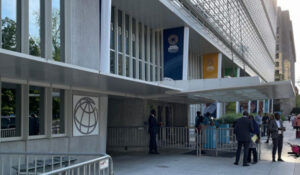
The World Bank Wants to Change the Way It Manages Complaints: The Fixes That Could Make It Better

The World Bank Wants to Change the Way It Manages Complaints: The Fixes That Could Make It Better

The World Bank Group is consulting publicly on whether to merge its three independent complaint mechanisms. This note explains what is being proposed and how civil society organizations can participate in the consultation.

By Danny Bradlow and David Hunter
PRETORIA, South Africa / WASHINGTON DC, USA , May 19 2026 – The World Bank made history in 1994 by creating the Inspection Panel, the first independent accountability mechanism, at any international organisation. Its function is to investigate complaints from communities who allege they were harmed because the bank failed to comply with its own policies and procedures.

By establishing the three-member Inspection Panel, the World Bank showed support for a democrati Soth Arica/c vision of international governance based on the rule of law and the rights of individuals to take part in development decisions that affect their lives.

To date, the panel has received 186 complaints. Fifty-two have been from Africa. They involved projects in 56 countries, including 26 African countries. The complaints have raised issues such as the World Bank’s failure to comply with its own policies regarding public consultations, environmental and social impact assessments and involuntary resettlement in the projects that it funds.

The board has expanded the bank’s accountability process to include both compliance reviews and dispute resolution processes. Today, the World Bank Group has three independent accountability mechanisms:

    • the Inspection Panel, which focuses on compliance reviews in public sector projects
    a separate dispute resolution mechanism for public sector projects
    • the Compliance Advisor Ombudsman, which offers both compliance reviews and dispute resolution services for private sector projects, primarily funded by the International Finance Corporation.

These accountability mechanisms have operated with mixed success. There have been some wins, for example in a case in Uganda involving risks for women and children associated with the building of a road. And some failures. An example is the Compliance Advisor Ombudsman finding against the International Finance Corporation for noncompliance in a coal fired power plant in India that was ignored.

We were involved, as legal academics and working with civil society organisations, in the establishment of the Inspection Panel. We have been following the activities of these independent accountability mechanisms for over 30 years. We are concerned about their future.

The World Bank Group is seeking to become a “bigger and better” bank. This involves promoting more collaboration between the five entities that make up the group. It is doing so under the banner of “One WBG”. This is an important development because the World Bank is the only global multilateral development bank. It offers developing countries both financial and advisory services. For example, it is the biggest funder of development projects in Africa.

The increasing collaboration between the different institutions in the bank raises concerns about which of their policies are applicable to a particular project. It also raises the issue of whether the bank should integrate the group’s independent accountability mechanisms so that there is no question about which mechanism is applicable to the project.

We believe that resolving this issue offers the bank’s board an opportunity to improve the structure of its independent accountability mechanisms and their contribution to the bank’s operations.

The dangers

The board appointed a two-person task force in September 2025 to advise it on the feasibility of integrating the three organisations in a way that does not reduce their independence, accessibility and effectiveness. The task force prepared a thorough and well-reasoned draft report.

The report was finalised after public consultations and is being considered by the board. It shows that integration of the mechanisms is a feasible, but complex exercise. The existing mechanisms have different operating cultures, policies and practices and human resource needs. The report describes various models for integrating the existing mechanisms.

The report also demonstrates that if mishandled, the exercise could result in a less independent and less effective accountability mechanism. To avoid this risk, we propose that the board adopt a model consisting of two separate independent accountability mechanisms. One to cover compliance reviews across the entire group. The other to cover dispute resolution across the group. This will enable both functions to operate independently and efficiently.

Our proposal raises four issues.

First, it is important that each mechanism is independent of the bank’s management. Each mechanism must have sufficient resources to undertake effective compliance reviews or dispute resolutions. Their processes must also be robust enough to result in meaningful outcomes for the complainants.

Second, the new compliance mechanism must retain a three-member panel appointed by and reporting to the bank’s board. The panel should have a permanent chair serving a six-year term. The chair must have the authority to decide which cases need the panel’s attention. The other two panel members should also serve staggered six-year terms.

A three-person panel allows for some geographic, technical and experiential diversity. Gaining a consensus among the panel members improves the quality and increases the credibility of the panel reports. A three-member panel is better able to withstand pressure from the bank’s management and other stakeholders than is a mechanism headed by one person.

Third, the dispute resolution mechanism should be headed by an experienced dispute resolution professional at the vice-president level. This official should report to the president of the bank. Our view is that this arrangement could encourage the institution to play a more proactive role in resolving disputes.

To ensure that the unit has some independence it should also have regularly scheduled meetings with the board. The head of the unit should also be able to request a meeting with the board whenever they deem it necessary and without requiring the prior approval of the bank’s president.

Fourth, the process of consolidating accountability mechanisms will be complex. Consequently, the board should first decide on the basic structure: a compliance review unit headed by a three-member panel and a separate dispute resolution unit headed by a senior professional.

It should delay any decisions on the policies, principles and practices of the mechanisms until it receives advice from a multi-stakeholder working group that includes external stakeholders and management and is co-chaired by one person from each of the units being merged.

An opportunity to fix things

The bank has the opportunity to strengthen its development mission. The changes it makes should be designed to:

    • help make the bank a better institution that supports higher quality projects
    • make the bank a learning institution that openly accepts criticism and looks to implement solutions
    • ensure it becomes an institution that recognises that people affected by bank-funded projects are stakeholders in its operations who may be forced to risk their well-being for the greater good.

Source: The Conversation Africa May 17, 2026

Daniel Bradlow is Professor/Senior Research Fellow, Centre for Advancement of Scholarship, University of Pretoria; David Hunter is Professor Emeritus, The American University Washington College of Law, American University.

IPS UN Bureau


!function(d,s,id){var js,fjs=d.getElementsByTagName(s)[0],p=/^http:/.test(d.location)?’http’:’https’;if(!d.getElementById(id)){js=d.createElement(s);js.id=id;js.src=p+’://platform.twitter.com/widgets.js’;fjs.parentNode.insertBefore(js,fjs);}}(document, ‘script’, ‘twitter-wjs’);  


One of the Oldest Agricultural Innovations Needs New Actions

Sustainable beekeeping is increasingly recognized as a key asset for not only farming communities but for sustainable agrifood systems, the environment and the global community as a whole. Credit: Farai Shawn Matiashe/IPS

Sustainable beekeeping is increasingly recognized as a key asset for not only farming communities but for sustainable agrifood systems, the environment and the global community as a whole. Credit: Farai Shawn Matiashe/IPS

By Thanawat Tiensin
ROME, May 19 2026 – For thousands of years, humans have kept bees. Beekeeping is a key agricultural activity, yet its full potential remains largely unrealized. Beekeeping produces far more than honey and generates far more income than many have chosen to acknowledge.

The contribution of bees to global agrifood systems runs to hundreds of billions of dollars annually, a figure that should anchor national policy and investment decisions, not appear as a footnote in environmental reports.

The case for investing more substantially in sustainable beekeeping and pollinator conservation can be and has been made at the farm level. When farming practices actively support pollinator health through crop diversification, reduced agrochemical use, and biodiversity-friendly habitat management, the results are measurable and can be significant.

As an example, in cashew cultivation in South India, agroecological farming practices increased the abundance of insect pollinators visiting flowers by nearly 400 percent, with yields trending substantially higher as a result.

Beekeeping generally requires relatively low capital investment, generates income across multiple product streams, and is well-suited to the resource constraints of small-scale producers

Cashew, like many high-value crops, suffers acute yield losses in the absence of pollinators, losses that better conservation of bees and other pollinators can directly address.

Beekeeping generally requires relatively low capital investment, generates income across multiple product streams, and is well-suited to the resource constraints of small-scale producers. In increasingly fragile and climate-stressed environments where other agricultural activities face growing uncertainty, beekeeping has shown unusual resilience.

Of the roughly 25,000 bee species on Earth, only 8 to 11 are honeybees. Around those species, humanity has built very advanced management systems, refined over millennia and now increasingly integrated with modern science. Many countries across the world have made beekeeping a pillar of rural livelihoods, and in 2017 World Bee Day officially entered the United Nations calendar.

Celebrated each year on 20 May, it marks the birthday of Slovenian Anton Janša, a founding figure of modern apiculture. We have made great strides in raising awareness of the importance of bees and other pollinators and the role they play in our lives and now we need to step up our efforts.

One important action that can promote sustainable beekeeping and realize its true economic and food security potential is to recognize bees as a valuable natural asset. When governments include beekeeping in national agriculture investments and support its potential to generate income, they can promote fair and just development of domestic value chains for a range of hive products.

This enables beekeepers to earn higher prices in international markets by producing honey that is sustainable and traceable. FAO’s “Good Beekeeping Practices for Sustainable Apiculture” provide guidelines for sustainable colony management, integrated pest and disease control, habitat stewardship, and the value chain development that allows beekeepers to generate returns beyond raw honey.

These practices, which have been tested across developing country contexts can raise both hive productivity and beekeeper income.

Another key action is to promote sustainable beekeeping through improving extension services, input subsidies, and training programs; these should be designed to help small-scale producers to integrate beekeeping into their production systems, capturing both the pollination benefits and the income from hive products that conventional farm support systems often overlook.

A further and equally important action is to ensure that benefits from beekeeping are accessible and reach those who need them most. Women and young people represent a growing segment of the global beekeeping community and have a lot to gain from having diversified income sources. When they can access training, equipment, and markets on equal terms, productivity and hive health have shown to improve.

The partnership between humans and bees has lasted for thousands of years and continues to evolve.

From the forests of Ethiopia to the pine slopes of Turkey, from the clover fields of Argentina to the manuka hillsides of New Zealand; farmers and beekeepers have long understood what agricultural policy is only beginning to recognize: that sustainable beekeeping and pollinator conservation can be a key asset for not only farming communities but for sustainable agrifood systems, the environment and the global community as a whole.

Thanawat Tiensin is the Assistant Director-General, Director, Animal Production and Health Division, FAO

Bitget Lança Delta Neutral Mode para Estratégias de Negociação Hedged

VICTORIA, Seychelles, May 19, 2026 (GLOBE NEWSWIRE) — Bitget, a maior Universal Exchange (UEX) do mundo, lançou o Delta Neutral Mode na sua Unified Trading Account, adicionando um novo recurso de gerenciamento de risco desenvolvido para traders que usam estratégias de hedge e arbitragem nos mercados spot, de margem e de futuros. O recurso aplica o tratamento de classificação de autodesalavancagem (ADL) automática diferenciada a posições cobertas elegíveis quando as contas atendem aos critérios predefinidos de neutralidade de delta.

O Delta Neutral Mode possibilita que os usuários combinem negociação spot, de margem cruzada e de futuros cruzados em uma única estrutura de conta unificada, enquanto o sistema avalia a exposição direcional da conta e dos ativos. As posições elegíveis que satisfazem os limites de neutralidade recebem menor prioridade de ADL durante condições extremas de mercado, ajudando a reduzir a probabilidade de autodesalavancagem automática em estratégias adequadamente cobertas.

O recurso foi desenvolvido para traders que executam arbitragem de taxa de financiamento, negociação de base, estratégias neutras em relação ao mercado e modelos de hedge quantitativo. Ele suporta futuros USDT-M, USDC-M e Coin-M em ambientes de negociação ao vivo e de demonstração, com lançamento contínuo na web, aplicativo e canais de acesso à API.

“A infraestrutura de negociação continua evoluindo para ambientes multiestratégia mais sofisticados, onde os usuários gerenciam ativa e simultaneamente a exposição nos mercados spot, derivativos e on-chain. O Delta Neutral Mode adiciona mais flexibilidade para os traders que usam estratégias de hedge e arbitragem, ao mesmo tempo em que aprimora a forma como o tratamento de risco é tratado dentro de uma estrutura de conta unificada”, disse Gracy Chen, CEO da Bitget.

O lançamento expande a estrutura mais ampla da Unified Trading Account da Bitget, desenvolvida para aprimorar a eficiência de capital e simplificar a execução de negociações entre mercados. O sistema avalia a neutralidade da conta usando cálculos de exposição delta em relação ao patrimônio total da conta, além de verificar se as posições de futuros estão efetivamente cobertas pelas participações spot no mesmo ativo subjacente.

A introdução do Delta Neutral Mode segue a expansão contínua da Bitget da infraestrutura de negociação de estilo institucional em todo o seu ecossistema Universal Exchange, incluindo acesso à negociação de vários ativos, produtos financeiros tokenizados e funcionalidade de garantia entre mercados. A Bitget continua desenvolvendo ferramentas que dão suporte a estratégias de negociação mais avançadas, mantendo o gerenciamento unificado de contas em vários tipos de mercado.

Para mais informações, clique aqui.

Sobre a Bitget

A Bitget é a maior Universal Exchange (UEX) do mundo, atendendo a mais de 125 milhões de usuários com acesso a mais de 2 milhões de tokens de criptomoedas, mais de 100 ações tokenizadas, ETFs, commodities, FX e metais preciosos como ouro. O ecossistema está comprometido em ajudar os usuários a negociar de forma mais inteligente com seu agente de IA sendo o copiloto para executar ordens de trade. A Bitget está impulsionando a adoção de criptomoedas por meio de parcerias estratégicas com a LALIGA e MotoGP™. Alinhada com sua estratégia de impacto global, a Bitget se uniu à UNICEF em apoio ao ensino de blockchain para 1,1 milhão de pessoas até 2027. A Bitget atualmente lidera o mercado de TradFi tokenizado, fornecendo as taxas mais baixas do setor e a maior liquidez em 150 regiões em todo o mundo.

Para mais informação, visite: Website | Twitter | Telegram | LinkedIn | Discord

Para perguntas da mídia, contate: [email protected]

Aviso de Risco: Os preços dos ativos digitais estão sujeitos a flutuações e podem ser significantemente voláteis. Os investidores são aconselhados a alocar apenas os fundos que podem perder. O valor de qualquer investimento pode ser afetado, e existe a possibilidade de que os objetivos financeiros não sejam atingidos, nem que o investimento principal recuperado. Aconselhamento financeiro independente deve sempre ser obtido, e a experiência financeira pessoal e a posição devem ser cuidadosamente consideradas. O desempenho passado não é um indicador confiável de resultados futuros. A Bitget não se responsabiliza por quaisquer perdas potenciais incorridas. Nada contido neste documento deve ser interpretado como aconselhamento financeiro. Para mais informações, consulte nossos Termos de Uso.

Foto deste comunicado disponível em:
http://www.globenewswire.com/NewsRoom/AttachmentNg/aa9baad4-a7b9-4668-a674-7960ad9c5611


GLOBENEWSWIRE (Distribution ID 1001182698)

Bitget lance le mode Delta Neutral pour les stratégies de trading couvertes

VICTORIA, Seychelles, 19 mai 2026 (GLOBE NEWSWIRE) — Bitget, plus grande bourse universelle (ou UEX, de l’anglais Universal Exchange) au monde, a annoncé le lancement du mode Delta Neutral au sein de son compte de trading unifié (Unified Trading Account). Cette nouvelle fonctionnalité de gestion du risque est destinée aux traders utilisant des stratégies de couverture et d’arbitrage sur les marchés au comptant, sur marge et à terme. Elle applique un traitement différencié du classement d’auto-désendettement (ADL) aux positions couvertes éligibles lorsque les comptes respectent des critères prédéfinis de neutralité delta.

Le mode Delta Neutral permet aux utilisateurs de combiner le trading au comptant, sur marge croisée et sur contrats à terme croisés au sein d’une structure de compte unifiée unique, tandis que le système évalue l’exposition directionnelle à la fois au niveau du compte et des actifs. Les positions éligibles répondant aux seuils de neutralité bénéficient d’une priorité ADL réduite en cas de conditions de marché extrêmes, contribuant ainsi à limiter le risque d’auto-désendettement pour les stratégies correctement couvertes.

Cette fonctionnalité s’adresse aux traders mettant en œuvre des stratégies d’arbitrage de taux de financement, d’arbitrage de base, des stratégies neutres au marché ainsi que des modèles de couverture quantitatifs. Elle prend en charge les contrats à terme USDT-M, USDC-M et Coin-M, aussi bien en environnement de trading réel qu’en mode démo, avec un déploiement progressif sur les canaux d’accès Web, l’application et l’API.

« Les infrastructures de trading évoluent vers des environnements multi-stratégies de plus en plus sophistiqués, dans lesquels les utilisateurs gèrent simultanément leur exposition sur les marchés au comptant, les produits dérivés et les marchés on-chain. Le mode Delta Neutral apporte davantage de flexibilité aux traders utilisant des stratégies de couverture et d’arbitrage, tout en améliorant le traitement du risque dans une structure de compte unifiée », a déclaré Gracy Chen, PDG de Bitget.

Ce lancement renforce l’écosystème de compte de trading unifié de Bitget, développé afin d’améliorer l’efficacité du capital et de simplifier l’exécution des stratégies intermarchés. Le système évalue la neutralité des comptes sur la base des calculs d’exposition delta par rapport aux capitaux propres totaux du compte, tout en vérifiant que les positions sur contrats à terme sont effectivement couvertes par des positions au comptant portant sur le même actif sous-jacent.

L’introduction du mode Delta Neutral s’inscrit dans la poursuite du développement par Bitget d’une infrastructure de trading de niveau institutionnel au sein de son écosystème de bourse universelle, incluant notamment l’accès multi-actifs, des produits financiers tokenisés et des fonctionnalités de collatéral intermarchés. Bitget continue de développer des outils destinés aux stratégies de trading avancées tout en conservant une gestion unifiée des comptes sur plusieurs types de marchés.

Pour tout complément d’information, rendez-vous ici.

À propos de Bitget

Bitget est la première bourse universelle (UEX) du monde. Au service de plus de 125 millions d’utilisateurs, elle donne accès à plus de 2 millions de jetons crypto et à plus de 100 actions tokenisées, ETF, matières premières, devises et métaux précieux comme l’or. L’écosystème vise à aider les utilisateurs à trader plus intelligemment grâce à son agent IA qui agit en tant que copilote pour l’exécution des ordres. Bitget entend promouvoir l’adoption des cryptomonnaies grâce à des partenariats stratégiques conclus avec LALIGA et MotoGP™. Conformément à sa stratégie d’impact mondial, Bitget s’est associée à l’UNICEF afin de soutenir l’éducation à la blockchain de 1,1 million de personnes à l’horizon 2027. Actuellement leader du marché de la finance traditionnelle tokenisée, Bitget propose les frais les plus bas du secteur et la plus forte liquidité dans plus de 150 régions à travers le monde.

Pour en savoir plus, veuillez consulter : Site Internet | Twitter | Telegram | LinkedIn | Discord

Pour les demandes médias, contacter : [email protected]

Mise en garde sur les risques : les cours des actifs numériques peuvent fluctuer et connaître une forte volatilité. Il est conseillé aux investisseurs de n’engager que les fonds qu’ils peuvent se permettre de perdre. La valeur de votre investissement peut être affectée et il est possible que vous n’atteigniez pas vos objectifs financiers ou que vous ne parveniez pas à récupérer votre investissement principal. Nous vous encourageons à toujours solliciter les conseils d’un spécialiste financier indépendant et à tenir compte de votre expérience et de votre situation financière personnelles. Les performances passées ne constituent pas un indicateur fiable des résultats futurs. Bitget décline toute responsabilité en cas de pertes potentielles encourues. Les informations contenues dans le présent communiqué ne constituent en aucun cas un conseil financier. Pour tout complément d’information, veuillez consulter nos Conditions d’utilisation.

Une photo annexée au présent communiqué est disponible à l’adresse suivante :
http://www.globenewswire.com/NewsRoom/AttachmentNg/aa9baad4-a7b9-4668-a674-7960ad9c5611


GLOBENEWSWIRE (Distribution ID 1001182698)